.svg)


%201.svg)
Key Takeaways
- Pinterest users arrive on the platform in a planning and discovery mindset, making them fundamentally different from audiences on platforms built around entertainment. This intent context makes brand content more welcome and more effective.
- Idea Pins are a sequential format supporting video, static images, text overlays, and interactive stickers across up to twenty pages per pin, functioning as a native storytelling experience within Pinterest.
- Unlike standard Pinterest pins, Idea Pins do not support outbound links from within the pin itself. The commercial strategy must account for this by building brand desire and driving profile visits rather than direct clicks to external pages.
- Pinterest's algorithm favours fresh, original content created natively on the platform. Repurposed content from Instagram or TikTok consistently underperforms content built specifically for Pinterest's format and audience.
- Australian brands in visual and lifestyle categories have a particular advantage on Pinterest given the platform's strong domestic audience in home, food, fashion, travel, and wellbeing.
- Idea Pin content has a significantly longer shelf life than content on other platforms. A thoroughly constructed Idea Pin can continue attracting views and saves months or years after publication.
- Keyword optimisation in the title, description, and text elements of an Idea Pin influences discovery through Pinterest Search, making SEO thinking relevant to the content creation process.
Understanding the Pinterest Audience Mindset
Before any discussion of Idea Pins as a format is useful, it is worth understanding why Pinterest as a platform deserves more serious strategic consideration than it typically receives from Australian brands.
Pinterest is not a social media platform in the conventional sense. Users do not primarily go there to connect with people they know, follow news, or consume entertainment. They go there with intent: to plan a kitchen renovation, find a recipe for a dinner party, explore outfit ideas for a particular occasion, research a travel destination, or gather inspiration for a home office redesign. This planning and discovery mindset is fundamentally different from the passive scrolling behaviour that characterises most other platforms, and it makes every brand appearance on Pinterest more commercially valuable than it might first appear.
According to Pinterest's own business research, 85 percent of weekly Pinterest users have made a purchase based on something they saw from a brand on the platform. This conversion rate from discovery to purchase is substantially higher than industry benchmarks for most other social platforms, and it reflects the specific intent with which Pinterest users approach the platform in the first place.
For Australian brands, the domestic Pinterest audience skews toward categories that align particularly well with the platform's visual and aspirational content environment. Home and garden, food and entertaining, fashion and beauty, travel, fitness, and health and wellbeing are all categories with strong Australian Pinterest audiences and high commercial intent. Brands operating in these spaces that are not investing in Pinterest content are effectively absent from a discovery channel that their most motivated potential customers use regularly.
What Idea Pins Are and How They Differ From Standard Pins
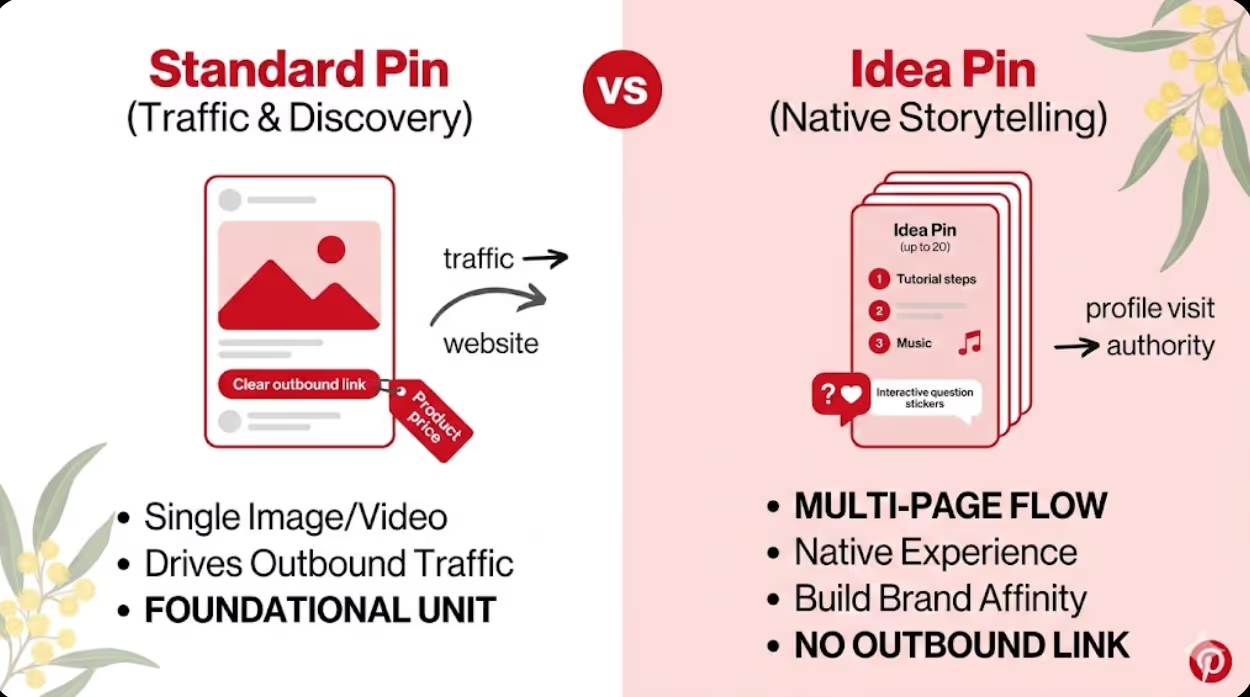
Standard Pinterest pins are single images or videos that link outward to a website, article, product page, or other external destination. They are the foundational unit of Pinterest's content ecosystem and remain effective as a traffic driver and product discovery tool.
Idea Pins are a distinct format introduced to give creators and brands a native storytelling experience across multiple pages that keeps users within Pinterest rather than directing them immediately elsewhere. An Idea Pin can contain up to twenty pages, each of which can include video clips, static images, music, text overlays, and interactive elements such as question stickers and product tags. The pages flow sequentially, and users tap through them in a format that will feel familiar to anyone who uses Instagram Stories, though Pinterest's implementation has specific characteristics that make it distinct in terms of audience, content expectations, and algorithmic behaviour.
The most important structural difference from standard pins is that Idea Pins do not include an outbound link from within the pin itself. This is a deliberate design decision by Pinterest and it shapes the commercial strategy for the format entirely. You cannot drive traffic directly to a product page or landing page from within an Idea Pin in the way you can from a standard pin. What you can do is build brand affinity, demonstrate product use, showcase expertise, and drive profile visits from which a user can access your linked website through your Pinterest profile.
This distinction is not a reason to avoid Idea Pins. It is a reason to approach them with a content strategy oriented toward building desire and authority rather than immediate conversion. Brands that understand this distinction and create Idea Pin content accordingly extract significant value from the format. Brands that try to use Idea Pins as a direct traffic driver and then conclude the format does not work have simply misunderstood what it is designed to do.
Building Idea Pins That Earn Algorithmic Favour
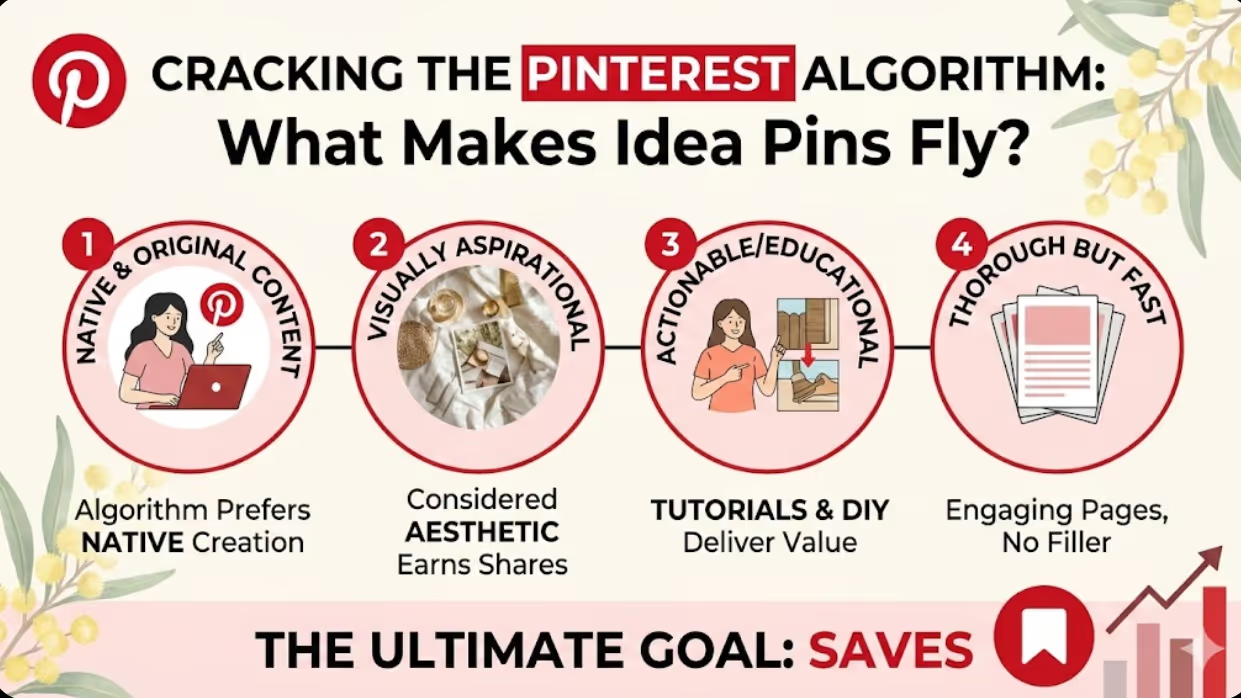
Pinterest's algorithm evaluates Idea Pins on several factors including the quality and originality of the content, the engagement signals it generates from saves and profile clicks, the keyword relevance of the title and description, and whether the content was created natively on Pinterest or repurposed from elsewhere.
The algorithm's preference for native content is worth taking seriously. Reposting an Instagram Reel or a TikTok video to Pinterest as an Idea Pin produces consistently weaker distribution than content created specifically for the Pinterest environment. This does not mean every Idea Pin requires a completely original production process, but it does mean that the content needs to be adapted and optimised for Pinterest's audience and aesthetic rather than simply posted across platforms without adjustment.
The content characteristics that earn strong distribution on Pinterest for Australian brands tend to share the following qualities.
They are visually distinct and aspirational. Pinterest users are in an mode of active seeking and inspiration, and content that feels genuinely beautiful, considered, and aspirational earns saves and shares at a higher rate than functional content without visual appeal. The production quality bar on Pinterest is higher than on some other platforms, but it does not require professional photography or videography for every piece. Thoughtful composition, good natural lighting, and a coherent visual style will carry most Idea Pins effectively.
They teach or show something specific. The strongest Idea Pin content on the platform consistently follows a tutorial, step by step, or behind the scenes structure. Showing a process, sharing a recipe, demonstrating a technique, revealing how something is made, or walking through a before and after transformation all perform well because they deliver tangible value to the viewer and are worth saving as a future reference. This saving behaviour is one of the strongest algorithmic signals on Pinterest and is what gives Idea Pin content its extended shelf life.
They are thorough without being slow. The format, which spans multiple pages, invites depth, but each page should advance the story or add new information rather than simply repeating or padding the content. A pin spanning five pages that delivers a complete and satisfying story outperforms a twelve page Idea Pin where half the pages feel like filler.
Keyword Strategy: The SEO Dimension of Idea Pins
Pinterest functions as a visual search engine as much as it functions as a social platform, and this search dimension makes keyword thinking directly relevant to how Idea Pins are created and optimised.
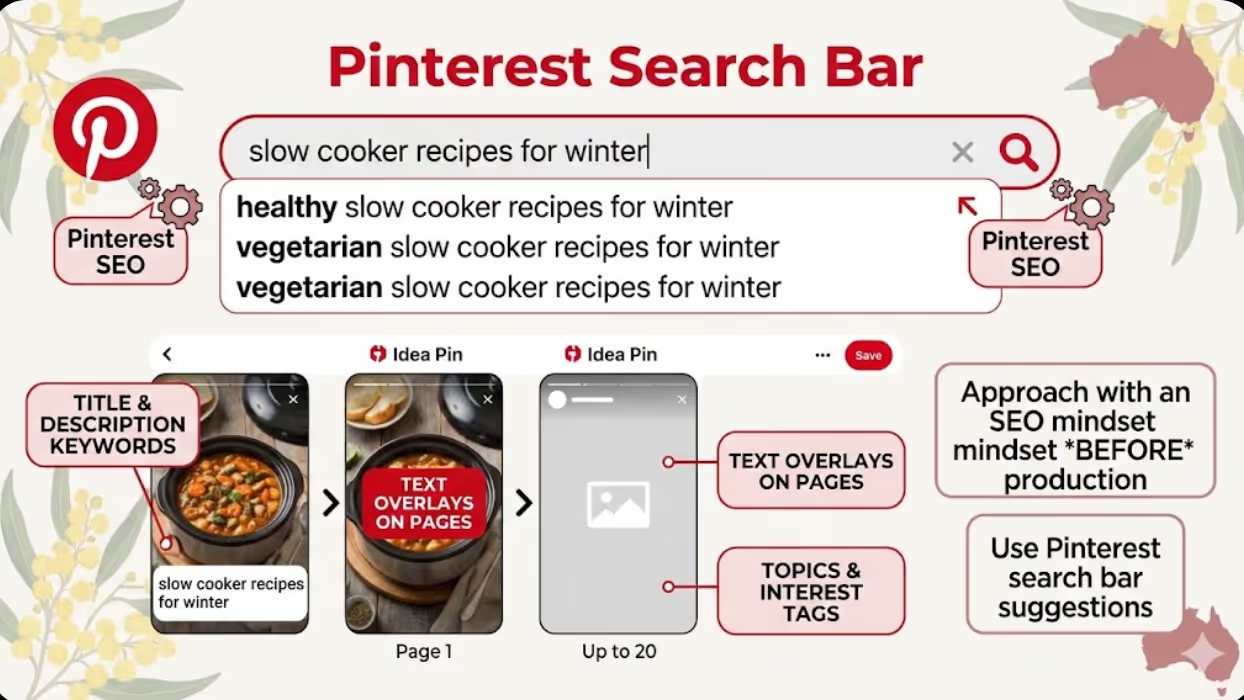
When a Pinterest user searches for "slow cooker recipes for winter" or "Scandi living room ideas" or "coastal garden plants Australia," Pinterest's search algorithm retrieves and ranks content based on relevance signals that include the text elements of each pin. For Idea Pins, the relevant text fields are the title, the description, the text overlays on individual pages, and the topics and interests tagged to the pin.
Australian brands creating Idea Pins should approach this with the same intentionality applied to any SEO content. Understanding the specific search terms your target audience uses on Pinterest, and including those terms naturally in the title, description, and page text of your Idea Pins, directly improves the discoverability of your content to users actively searching for what you offer.
Pinterest's own search bar is the most direct tool for keyword research on the platform. Typing a topic relevant to your brand into the Pinterest search bar surfaces the autocomplete suggestions that reflect what Pinterest users are actually searching for. These suggestions are a direct window into the language your audience uses when they are in discovery mode, and they should inform both the keyword choices and the content angles of your Idea Pins.
Pinterest's business resources on keyword strategy provide guidance on how the platform treats keyword relevance in search and distribution, and they are worth reviewing before building out a systematic Idea Pin content plan. The investment in keyword research before content production, rather than after, consistently improves the discoverability of Australian brands' Pinterest content.
Content Ideas for Australian Brands Across Categories
The practical application of Idea Pins varies significantly by category, but a few content structures apply across most Australian brand types.
Tutorial and step by step content is the strongest performing Idea Pin structure on the platform and suitable for almost any brand that can teach the audience something relevant to their purchase journey. A food brand can walk through a recipe. A paint company can demonstrate a colour blocking technique. A fitness apparel brand can guide a morning stretch routine. A florist can show how to arrange a bunch at home. The teaching structure earns saves as reference material and positions the brand as a genuinely useful resource rather than purely a promotional presence.
Behind the scenes content that reveals the people, process, or story behind a product builds the emotional connection that drives brand preference in competitive categories. An Australian ceramics brand showing the stages from clay to finished piece, a coffee roaster walking through their sourcing process, a fashion label showing how a garment moves from sketch to sample: these stories are differentiated by definition because they are unique to each brand, and Pinterest audiences respond strongly to the authenticity and craftsmanship narratives that behind the scenes content enables.
Seasonal content tied to occasions aligns Idea Pin creation with the moments in the year when Australian audiences are actively planning around specific occasions. Christmas entertaining, Australia Day outdoor gatherings, end of financial year home refreshes, back to school organisation, and winter wellness routines are all occasions that drive high search volume on Pinterest from Australian users. Creating Idea Pin content optimised for these seasonal moments well ahead of the peak search period, rather than at the moment itself, gives the content time to accumulate engagement and search visibility before the moment arrives.
Product styling and inspiration content that shows products in context rather than in isolation drives aspiration and purchase intent in a way that product page photography rarely achieves. Showing a homewares product styled in multiple different room settings, demonstrating a fashion item across different occasions, or presenting a skincare product within a complete morning routine context all answer the question "what would this look like in my life" that motivates many Pinterest users to make a purchase.
Consistency and Cadence: The Long Game on Pinterest
Unlike platforms where posting frequency drives immediate visibility, Pinterest rewards consistent, sustained publishing over a longer period. The platform's algorithm builds confidence in accounts that demonstrate regular content creation over months, and the longevity of individual Idea Pins means that an account with a strong archive of quality content continues growing its reach and saves organically long after each piece of content was created.
For Australian brands new to Idea Pins, a realistic starting cadence is two to three Idea Pins per week. This frequency is sufficient to signal consistent activity to the algorithm while remaining manageable for most marketing teams. Maintaining this cadence for three to six months before evaluating the channel's commercial contribution is important because Pinterest content performance compounds over time rather than delivering its full value in the first weeks after publication.
The analytics available through a Pinterest Business account provide the data needed to assess which Idea Pin topics, formats, and styles are earning the strongest engagement from Australian audiences. Tracking saves, profile visits, and impression trends per pin, rather than just aggregate account metrics, reveals the specific content directions worth doubling down on and those worth adjusting or abandoning.
FAQs
Can Idea Pins drive website traffic if there is no outbound link in the format?
Directly, no. Idea Pins do not contain clickable outbound links within the pin itself, which is a deliberate design choice by Pinterest. However, they do drive profile visits, and your Pinterest profile contains a link to your website that interested users can follow through to. Idea Pins that successfully build brand interest and desire create motivated profile visitors who are more likely to click through to your website than a user who arrives through a cold standard pin. For most Australian brands, the commercial strategy around Idea Pins should prioritise brand building and catalogue visibility, with standard pins continuing to carry the function of driving direct traffic.
How long should an Idea Pin be to perform well on Pinterest?
The optimal length depends on the content type, but most strongly performing Idea Pins sit between five and ten pages. Tutorial content that covers multiple steps benefits from more pages, with each page dedicated to a single step or idea. Inspirational or visual content can perform well with fewer pages if each one is visually strong and the overall flow feels complete. The measure of appropriate length is whether each page adds genuine value to the viewer. Pages that exist to reach a particular number rather than to advance the content are worth removing. A focused Idea Pin of six pages will outperform a padded one of twelve.
Is Pinterest worth investing in for Australian B2B brands?
Pinterest is predominantly a consumer platform, and the primary audience intent on the platform is personal planning and lifestyle inspiration rather than professional research. For most B2B brands, the platform will deliver limited commercial value compared to the investment required to maintain a quality presence. There are exceptions: B2B brands in architecture and interior design, professional catering and hospitality, creative agencies, and certain professional services with a visual dimension to their work do find genuine audiences on Pinterest. For most B2B brands, however, the platform is not the highest priority channel, and investing in LinkedIn Document posts, thought leadership content, and other platforms with stronger B2B audience concentration is likely to produce better returns.
Claim Your Space in the Discovery Stage
Pinterest is where Australian consumers go when they are planning something they genuinely want. The brands that show up in that moment with helpful, beautiful, and substantive Idea Pin content are not interrupting anyone. They are exactly what the audience came to find.
Maven Marketing Co helps Australian brands build Pinterest strategies that connect with audiences who arrive with genuine purchase intent at the discovery stage and translate that intent into commercial outcomes worth measuring.
Talk to the team at Maven Marketing Co →

Table of contents
read more blogs

6 Ways Digital Marketing Can Boost B2B Lead Generation
B2B lead generation is not about filling a CRM with as many names as possible. The real objective is to attract businesses that fit your offer, give the right people a reason to engage and create enough confidence for a genuine sales conversation to start.That distinction matters because B2B buying is usually more targeted than consumer marketing and often involves several people influencing the decision. Current LinkedIn lead-generation guidance makes the same point: more leads do not automatically mean better results if only a small proportion are genuinely relevant or likely to progress.Digital marketing helps by creating multiple paths into the business. Search can capture active demand. Paid media can put an offer in front of a tightly defined audience. Content can build authority before a buyer is ready to talk. Social media can keep the brand visible across a long decision cycle. Your website turns interest into action, while email helps nurture that interest over time.The strongest B2B digital marketing strategies do not treat these as six separate activities. They use them as one connected system designed to generate quality B2B leads, support sales and build a more dependable pipeline
How to Build a Brand Positioning Strategy That Sets Your Business Apart
Most businesses can explain what they sell. Far fewer can explain, in a sentence or two, why the right customer should choose them instead of another credible option. That gap is where brand positioning matters.A strong brand positioning strategy gives your business a clear place in the market and a clear place in the customer's mind. It helps your team decide who you are speaking to, what you want to be known for, which benefits deserve the most attention and how your marketing should sound and look across every channel.It is not a slogan exercise and it is not something reserved for large consumer brands. For an Australian service business, e-commerce brand, professional firm, or growing B2B company, positioning can make everyday decisions easier, from website copy and campaign messaging to pricing, sales conversations, and brand identity. The goal is not to look different for the sake of it. The goal is to be meaningfully different in a way the right customers understand and value.

The Role of Digital PR in Long Term SEO Growth
Building a solid online presence is basically more than just posting content now and then or sprinkling keywords across your website. Search engines such as Google tend to point users toward businesses that feel trustworthy, useful, and backed up by others online, even if it’s not always obvious at first. When a company puts together a well-thought-out digital PR strategy, it can bring in solid media mentions, earning high-quality backlinks and stronger brand awareness, all of which feed long-term SEO progress. Rather than obsessing solely over rankings, digital PR helps you build credibility plus authority, so your site looks more appealing to search engines and also to real people who might become customers. In this guide, we’ll walk through how digital PR supports SEO, what makes it such a key part of modern marketing, and the most effective approaches for sustainable growth in search results.