.svg)


%201.svg)
.avif)
Key Takeaways
- Pillar content provides exhaustive coverage of important topics through 3,000-10,000+ word comprehensive guides that become authoritative industry references attracting natural backlinks and search visibility
- Strategic topic selection identifies subjects with substantial search volume, clear business relevance, competitive differentiation opportunities, and backlink potential from industry publications and resource pages
- Research-intensive creation combines original insights, expert perspectives, data analysis, case studies, and comprehensive coverage creating genuinely valuable resources exceeding anything competitors publish
- On-page optimisation implements semantic SEO, strategic internal linking, scannable formatting, rich media integration, and technical excellence ensuring pillar pages rank competitively whilst engaging readers
- Promotion strategies including outreach to relevant publishers, strategic partnerships, social amplification, and repurposing for multiple formats maximise backlink acquisition and content ROI beyond organic search alone
A Sydney marketing agency published weekly 500-word blog posts covering social media tips, SEO basics, and content marketing fundamentals. Posts generated minimal traffic. Few ranked beyond page five in search results. Backlinks were nonexistent. After 18 months and 75+ posts, organic traffic remained stagnant at 200 monthly visits.
They pivoted strategy, investing three months researching and creating single 8,500-word comprehensive guide: "The Complete Guide to Content Marketing for Australian Small Businesses." The guide covered strategy development, content types, distribution channels, measurement frameworks, and Australian-specific considerations with original research, local case studies, expert interviews, and downloadable templates.
Within six months, the guide earned 47 backlinks from industry publications, marketing blogs, and business resources. Organic traffic increased to 2,400 monthly visits, with the pillar page ranking position one for multiple competitive keywords. The single pillar piece generated more traffic and backlinks than all 75 previous posts combined. This illustrates pillar content's leverage—concentrated effort producing disproportionate results.
According to research from HubSpot, pillar pages generate 4-5x more organic traffic than standard blog posts and attract significantly more backlinks due to their comprehensive nature and reference value.
Understanding Pillar Content and Its Strategic Value
.avif)
Pillar content represents fundamentally different approach from typical blog posts, requiring understanding of what defines pillar pieces and why they deliver superior results.
Pillar content definition encompasses comprehensive, authoritative guides that exhaustively cover important topics serving as go-to references within industries. Typical characteristics include substantial length (3,000-10,000+ words), comprehensive topic coverage addressing subject thoroughly, original insights beyond regurgitated advice, high production value through research and expert input, and evergreen relevance remaining valuable long-term. Pillar content represents invested effort creating definitive resources rather than quick posts.
Strategic differentiation from standard blog posts includes depth over breadth (exhaustive coverage of one topic versus surface treatment of many), quality over quantity (fewer premium pieces versus many mediocre posts), authority building versus traffic generation (establishing expertise versus chasing keywords), and long-term value versus immediate returns (sustained performance versus temporary traffic spikes). Pillar content prioritises lasting impact over publishing frequency.
Backlink attraction mechanisms explain why pillar content earns natural links. Comprehensive resources become reference material other publishers cite, original research and data provide quotable statistics, practical frameworks and templates offer genuine utility warranting attribution, and authoritative coverage positions content as industry standard worth linking. Quality naturally attracts backlinks whilst mediocre content doesn't regardless of outreach efforts.
SEO advantages beyond backlinks include topical authority signals demonstrating expertise, keyword clustering ranking for multiple related terms, increased dwell time from engaged readers consuming substantial content, and internal linking hubs connecting related content pieces. Pillar content strengthens entire site authority whilst individual posts provide diminishing returns.
Business value creation extends beyond rankings through lead generation via gated resources and email capture, sales enablement providing prospects valuable resources during consideration, thought leadership positioning organisations as industry experts, and competitive differentiation through superior content quality. Pillar content serves multiple business objectives simultaneously.
Resource investment requirements include research time (weeks of investigation, interviews, data collection), writing effort (days of drafting, editing, refining), design resources (formatting, graphics, layout), and promotion commitment (outreach, amplification, distribution). Pillar content demands significant upfront investment justified by superior long-term returns.
Publishing frequency differs dramatically from standard blogging. Whilst typical blogs might publish weekly or more frequently, pillar content typically releases quarterly or 4-6 times yearly. Lower frequency enables higher quality—attempting monthly pillar content usually dilutes quality to unsustainable levels. Quality over quantity defines pillar strategy.
Strategic Topic Selection and Research
Effective pillar content begins with strategic topic selection identifying subjects offering maximum business value, search opportunity, and backlink potential.
Business relevance assessment ensures topics align with commercial objectives. Topics should directly relate to products or services you offer, address problems your ideal customers face, support sales conversations and objections, and enable natural calls-to-action without forced promotion. Pillar content on irrelevant topics generates vanity metrics without business impact.
Search demand analysis identifies topics people actually search for. Use keyword research tools (Ahrefs, SEMrush, Google Keyword Planner) identifying search volume for primary keywords and related terms. Look for substantial monthly searches (500+ for niche topics, 2,000+ for broader subjects) indicating genuine demand. However, balance search volume against competition—extremely competitive topics may require unrealistic resources to rank competitively.
Competition analysis reveals content gaps and opportunities. Review existing content ranking for target keywords, assess comprehensiveness and quality of competitor pieces, identify missing information or perspectives you could provide, and evaluate backlink profiles of top-ranking content. According to Ahrefs research, longer, more comprehensive content tends to rank better and earn more backlinks—creating genuinely superior resources enables competitive advantage.
Backlink potential evaluation predicts link acquisition likelihood. Topics with high backlink potential include industry statistics and research (data-driven content earns citations), comprehensive how-to guides (practical resources warrant reference links), definitive topic overviews (become standard references), original frameworks and methodologies (unique approaches attract attribution), and tools and templates (practical utilities earn natural links). Topics unlikely to attract backlinks include opinion pieces, news commentary, and promotional content.
Topic clustering opportunities connect pillar content with supporting pieces. Pillar pages work best as hub content supporting cluster of related blog posts. Example: pillar page on "Content Marketing Strategy" connects to supporting posts on "Blog Post Optimisation," "Video Marketing Tips," "Social Media Content Calendar," etc. Topic clusters create topical authority whilst internal linking distributes link equity.
Australian market considerations influence topic selection for local businesses. Topics might address Australian regulatory environment (privacy laws, consumer protection), local market characteristics (seasonality, regional differences), Australian case studies and examples (local success stories), and Australian tool/platform alternatives (local providers versus international options). Australian-specific angles differentiate content whilst serving local audience better.
Evergreen versus timely balance determines long-term value. Pillar content should remain relevant for years, avoiding time-sensitive topics becoming outdated quickly. However, periodic updates keep content current—annual refreshes with new data, examples, or developments maintain relevance. Choose topics with enduring relevance whilst committing to maintenance.
Research-Intensive Content Development
.avif)
Superior pillar content requires depth of research and original insights that superficial posts can't match, demanding systematic investigation and expert input.
Primary research incorporation creates unique value through original surveys and studies generating quotable statistics, customer interviews providing real-world perspectives, expert consultations offering authoritative insights, and case study development documenting actual results. Primary research differentiates content whilst creating backlink-worthy data other publishers cite.
Secondary research synthesis aggregates existing knowledge comprehensively. Review academic research and industry studies, analyse competitor content and approaches, examine industry reports and whitepapers, and survey social media discussions and forums. Comprehensive secondary research ensures thorough topic coverage whilst identifying content gaps your pillar piece fills.
Expert perspective integration adds authority and credibility. Interview recognised industry experts, quote authoritative sources and publications, include practitioner insights from experienced professionals, and incorporate diverse viewpoints representing different approaches. Expert contributions elevate content beyond single-author limitations whilst networking with quoted experts can facilitate backlink acquisition.
Data analysis and visualisation makes research accessible and quotable. Original data analysis generates unique insights, statistical summaries distil complex information, visual presentations (charts, graphs, infographics) communicate data effectively, and comparative analyses highlight important distinctions. Data-driven content earns backlinks from publishers seeking statistics and evidence.
Framework and methodology development creates structured, actionable guidance. Step-by-step processes provide implementation roadmaps, decision frameworks help readers navigate choices, templates and worksheets enable practical application, and checklists ensure comprehensive execution. Practical frameworks make content valuable beyond information provision—readers can actually implement guidance.
Example and case study inclusion grounds abstract concepts in reality. Real-world examples illustrate principles, success stories demonstrate effectiveness, failure analyses reveal pitfalls to avoid, and before-and-after comparisons show transformation. Examples make content relatable whilst case studies provide social proof validating recommended approaches.
Australian context integration serves local audiences specifically. Australian business examples demonstrate local applicability, Australian regulations and standards ensure compliance guidance, Australian tools and platforms reflect accessible options, and Australian market dynamics acknowledge local conditions. Generic international content adapted for Australian context provides local differentiation.
Structural Organisation and Formatting
Pillar content structure determines readability and usability despite substantial length, requiring strategic organisation and scannable formatting.
Logical content architecture creates intuitive flow through clear hierarchical structure (h1, h2, h3 headings), progressive topic development (foundational concepts before advanced applications), modular sections allowing selective reading, and consistent section formatting aiding navigation. Well-structured content remains accessible despite length.
Compelling introduction hooks readers immediately through stating clear value proposition, acknowledging reader problems or questions, previewing content coverage and benefits, and establishing author credibility and expertise. Introduction determines whether readers commit to consuming substantial content—make value obvious immediately.
Comprehensive table of contents enables navigation through clickable links to major sections, hierarchical structure showing content organisation, and mobile-friendly accordion or expandable format. Table of contents serves dual purposes—navigation aid for readers and content preview for evaluators deciding whether to link.
Strategic heading usage improves scanability and SEO. Descriptive headings previewing section content, keyword integration without forced optimisation, consistent heading hierarchy maintaining structure, and formatting distinction (size, weight, colour) creating visual hierarchy. Headings enable skim reading whilst signalling topic coverage to search engines.
Visual content integration breaks text-heavy presentation through custom graphics illustrating concepts, charts and graphs presenting data visually, screenshots demonstrating processes, photographs adding human element, and infographics summarising complex information. Visual elements improve engagement whilst creating shareable assets for social promotion.
Formatting for readability maintains engagement through long content via short paragraphs (3-5 sentences maximum), bullet points and numbered lists breaking dense information, bold text emphasising key points (sparingly), white space preventing overwhelming density, and readable typography (appropriate fonts, sizes, line spacing). Formatting reduces perceived effort encouraging content consumption.
Internal linking strategy connects related content systematically. Link to relevant blog posts expanding on topics, connect to product/service pages where appropriate, reference other pillar content for related subjects, and link to resources and tools mentioned. Strategic internal linking distributes link equity whilst guiding readers through content ecosystem.
Call-to-action placement converts readers without disrupting flow. Include subtle CTAs within content (relevant product mentions, resource downloads), strategic mid-content engagement points (email signup for bonus materials), and strong conclusion CTA (next steps, consultation offers). CTAs should feel helpful rather than promotional—pillar content builds trust that CTAs leverage.
On-Page SEO and Technical Optimisation
Technical excellence and SEO optimisation ensure pillar content ranks competitively whilst providing superior user experience across devices and contexts.
Semantic SEO implementation targets topic comprehensively through primary keyword targeting in title, URL, and key positions, semantic keyword variations throughout content naturally, LSI (Latent Semantic Indexing) keywords demonstrating topic depth, and question-based keywords addressing user queries. Semantic approach ranks for keyword clusters rather than single terms.
Meta information optimisation improves click-through rates via compelling title tags (50-60 characters, keyword-inclusive, benefit-focused), descriptive meta descriptions (150-160 characters, summarising value, including keywords), and schema markup (Article schema, FAQ schema where applicable). Meta optimisation influences search visibility beyond ranking position.
URL structure creates clean, descriptive addresses through short, readable URLs reflecting content topic, primary keyword inclusion naturally, avoidance of dates or unnecessary parameters, and consistency with site architecture. Well-structured URLs signal content relevance whilst improving user trust.
Image optimisation balances quality and performance via compressed file sizes reducing load times, descriptive filenames including relevant keywords, comprehensive alt text serving accessibility and SEO, and appropriate formats (WebP with fallbacks, SVG for graphics). Image optimisation prevents visual content from degrading page speed.
Page speed optimisation maintains engagement and rankings through efficient code (minified CSS/JavaScript), optimised images and lazy loading, browser caching configuration, and CDN implementation when appropriate. Google's research shows page speed directly impacts both rankings and user engagement—slow pillar pages underperform despite content quality.
Mobile responsiveness serves Australia's mobile-dominant traffic via responsive design adapting to all screen sizes, readable typography without zooming, touch-friendly navigation and interactive elements, and mobile-optimised media preventing excessive data consumption. Mobile experience often determines content success given traffic distribution.
Structured data markup enhances search appearance through Article schema providing metadata, FAQ schema for question sections, HowTo schema for step-by-step guides, and Breadcrumb schema for navigation context. Structured data enables rich snippets improving visibility and click-through rates.
Content freshness maintenance sustains rankings long-term via scheduled content reviews and updates, adding new developments and information, updating statistics and examples, and revising outdated recommendations. Pillar content requires maintenance investment protecting initial creation effort—neglected pillar pages gradually lose rankings to maintained competitor content.
Backlink Acquisition and Promotion Strategies
Creating excellent pillar content represents half the equation—strategic promotion and outreach convert quality content into acquired backlinks and amplified reach.
Targeted outreach to relevant publishers identifies link prospects through industry publications covering your topic, resource pages and link roundups in your sector, complementary businesses serving similar audiences, and journalists and bloggers covering related subjects. Quality prospects have genuine reason to link beyond reciprocal arrangement—provide them valuable resource worth sharing.
Personalised outreach messaging improves response rates dramatically. Research recipient and publication understanding their content and audience, explain specifically why your pillar content serves their readers, highlight unique value (original data, expert insights, comprehensive coverage), and make linking easy (suggest anchor text, provide URL). Generic mass emails achieve poor results—personalisation demonstrates respect and relevance.
Resource page targeting places content in curated lists. Identify resource pages in your industry through Google searches ("industry + resources," "topic + useful links"), evaluate page authority and relevance, and pitch inclusion emphasising how your pillar content complements existing resources. Resource pages actively seek quality links making them receptive prospects.
Strategic partnerships create mutual value through guest posting on complementary sites (mentioning pillar content naturally), collaborative content creation (joint research, combined expertise), content syndication (republishing with canonical tags, attribution), and expert roundups (contributing to collaborative posts, citing your pillar content). Partnerships build relationships facilitating ongoing backlink opportunities.
Social media amplification extends organic reach via sharing on all relevant platforms, creating social-specific formats (quote graphics, video snippets, infographic excerpts), engaging with commenters and sharers building relationships, and participating in relevant LinkedIn groups or Twitter chats. Social shares don't directly impact SEO but increase content visibility to potential linkers.
Email marketing leverage reaches existing audience through dedicated email featuring pillar content, newsletter inclusion with compelling preview, segmented sends to most relevant subscribers, and encouraging forwards and social shares. Email list represents owned audience—leverage it for initial amplification seeding broader reach.
Paid promotion consideration accelerates initial visibility via social media advertising to relevant audiences, sponsored content on industry publications, influencer partnerships for content amplification, and retargeting to engaged visitors. Modest paid promotion can jumpstart organic growth particularly for new sites lacking established audiences.
PR and media outreach generates high-authority links through press releases for newsworthy pillar content (original research particularly), pitching stories to relevant journalists and publications, offering expert commentary related to pillar topics, and appearing on podcasts or webinars discussing pillar subjects. Media coverage generates authoritative backlinks whilst positioning you as industry expert.
.avif)
Measuring Success and Iterating
Strategic measurement tracks pillar content performance across multiple dimensions, informing optimisation and future content investment.
Organic traffic analysis monitors search visibility through Google Analytics tracking pillar page visits, identifying traffic sources and referring sites, analysing user behaviour (time on page, bounce rate, scroll depth), and comparing performance against other content. Organic traffic represents primary success metric for SEO-focused pillar content.
Backlink acquisition tracking measures link-building success via backlink monitoring tools (Ahrefs, SEMrush, Moz) tracking new links, evaluating link quality (domain authority, relevance, anchor text), identifying top linking domains and content types, and comparing against competitor backlink profiles. Quality backlinks drive pillar content ROI through sustained rankings.
Keyword ranking monitoring tracks search visibility across target terms including primary keyword position tracking, related keyword rankings (semantic terms, questions), ranking distribution (how many page-one rankings), and ranking trends over time. Rankings translate traffic potential into actual visits—monitor closely adjusting optimisation as needed.
Engagement metrics assessment reveals content quality through average time on page (longer indicates engagement), scroll depth (how far readers progress), social shares and comments, and return visitor rate. Engagement signals content resonance beyond traffic volume—engaged audiences convert better and amplify content further.
Conversion tracking measures business impact via form submissions and email signups, content download rates, consultation requests, and ultimately sales influenced by content. Pillar content should drive business outcomes beyond vanity metrics—track conversions proving ROI.
Competitive comparison contextualises performance through benchmarking against competitor pillar content, comparing backlink acquisition rates, evaluating ranking positions for shared keywords, and assessing content gaps and opportunities. Competitive context reveals whether performance represents success or underperformance.
Iterative optimisation improves performance continuously via content updates addressing gaps or weaknesses, format improvements enhancing readability, promotion expansion reaching additional prospects, and internal linking optimisation distributing link equity. Pillar content investment deserves ongoing optimisation maximising returns.
ROI calculation justifies continued investment through organic traffic value (traffic × average conversion rate × customer value), backlink value (comparing cost versus outreach service fees), time savings (pillar content replacing multiple smaller posts), and brand authority impact (thought leadership, competitive differentiation). Demonstrable ROI secures executive support for pillar content programmes.
Frequently Asked Questions
How long should pillar content actually be, and does longer always mean better for attracting backlinks and ranking in search results?
Effective pillar content length ranges 3,000-10,000+ words depending on topic complexity and competitive landscape, with length secondary to comprehensive coverage and value delivery. Research shows correlation between content length and backlinks—longer content generally attracts more links because comprehensiveness provides reference value. However, length alone doesn't guarantee success—10,000 words of fluff performs worse than 3,000 words of genuine insight. Focus on exhaustive topic coverage rather than arbitrary word counts. Stop writing when you've thoroughly addressed the topic, not when hitting predetermined length targets.
How many pillar content pieces should Australian businesses create annually, and how does pillar content fit within overall content marketing strategy?
Most Australian businesses benefit from 4-8 pillar pieces annually, balancing quality requirements against resource constraints whilst maintaining regular publication of supporting blog posts. Pillar content represents 10-20% of total content output but often generates 60-80% of organic traffic and backlinks through superior performance. Strategic approach creates quarterly pillar content supported by weekly or monthly blog posts expanding on pillar topics, addressing related questions, and linking back to pillar pages. This hub-and-spoke model builds topical authority whilst sustainable publishing frequency maintains quality standards essential for pillar success.
Can Australian small businesses with limited budgets create effective pillar content, or does it require resources only larger organisations possess?
Small businesses can absolutely create effective pillar content through strategic focus and resourcefulness, often outperforming larger competitors lacking subject matter expertise or authentic perspectives. Budget-conscious approaches include focusing on topics where you have genuine expertise (reducing research requirements), conducting original surveys through free tools (SurveyMonkey, Google Forms), leveraging existing customer relationships for case studies and testimonials, using free design tools (Canva) for visual content, and writing content in-house rather than outsourcing. Quality pillar content requires time investment more than money—dedicated effort over several weeks can produce competitive pillar pieces without substantial budget.
How should businesses promote pillar content to maximise backlink acquisition, and what outreach strategies work best for Australian organisations?
Effective backlink acquisition combines targeted outreach with strategic amplification rather than mass promotion. Identify 20-30 high-quality prospects (industry publications, resource pages, complementary businesses) genuinely benefiting from linking to your content. Craft personalised outreach explaining specific value for their audience, highlighting unique elements (original research, comprehensive coverage), and making linking effortless. Follow up once if no response. Complement outreach with social amplification, email marketing to existing audience, strategic partnerships with complementary businesses, and consideration of guest posting opportunities naturally mentioning your pillar content.
What makes pillar content genuinely link-worthy versus just long, and how can businesses ensure their comprehensive guides actually attract natural backlinks?
Link-worthy content combines comprehensive coverage with unique value other publishers can't easily replicate. Essential elements include original research and data (quotable statistics), expert insights from recognised authorities (credible perspectives), practical frameworks and templates (actionable utilities), comprehensive topic coverage (definitive references), and superior presentation quality (professional design, clear writing). Avoid common mistakes like regurgitating existing content at length, lacking original insights or perspectives, poor organisation making content difficult to navigate, or promotional focus undermining reference value. Test link-worthiness by asking: "Would I link to this from my own high-quality content?" If hesitant, improve before promotion.
How often should pillar content be updated to maintain rankings and backlink value, and what update processes work most efficiently?
Schedule comprehensive pillar content reviews annually at minimum, with quarterly checks for rapidly evolving topics or competitive keywords. Update triggers include ranking declines, new competitor content outperforming yours, significant industry changes or developments, outdated statistics or examples, and broken links or deprecated information. Efficient update process involves reviewing analytics identifying improvement opportunities, researching new developments since original publication, updating statistics and examples with current information, adding new sections addressing emerged topics, and refreshing introduction and conclusion. Substantial updates warrant republishing with updated date and renewed promotion—treated as new content launch.
Can pillar content work for local Australian businesses serving specific geographic markets, or is it primarily valuable for national or international organisations?
Pillar content delivers tremendous value for local businesses through geographic targeting and local authority building. Local pillar content approaches include comprehensive local market guides ("Complete Guide to Brisbane Property Investment"), local regulatory and compliance guides (Australian state-specific requirements), local industry directories and resources (curated local provider lists), and local market research and data (original surveys of local customers). Geographic specificity reduces competition whilst increasing relevance for local audiences. Local pillar content attracts backlinks from local publications, chambers of commerce, industry associations, and complementary local businesses whilst establishing local market expertise.
How does pillar content interact with Google's helpful content update and emphasis on experience, expertise, authoritativeness, and trustworthiness (E-E-A-T)?
Pillar content aligns perfectly with Google's helpful content criteria and E-E-A-T guidelines when created with genuine expertise and user focus. Demonstrate experience through case studies, real-world examples, and practical insights from actual implementation. Establish expertise via comprehensive coverage, accurate information, and expert contributions. Build authoritativeness through original research, citations from credible sources, and backlinks from industry publications. Create trustworthiness through transparent methodology, cited sources, author credentials, and regular updates. Avoid pitfalls like AI-generated content lacking genuine insight, search-first rather than user-first creation, and promotional content disguised as helpful resources. Pillar content created by genuine experts for genuine audience needs satisfies helpful content criteria whilst thin, keyword-stuffed content fails regardless of length.
Pillar Content Builds Sustainable Organic Growth
Pillar content represents strategic investment delivering disproportionate returns through backlink acquisition, search visibility, and authority establishment that superficial blog posts can't match. Australian businesses embracing comprehensive, research-intensive content creation differentiate competitively whilst building sustainable organic growth.
The frameworks outlined in this guide—strategic topic selection, research-intensive development, optimised structure, and promotion strategies—enable Australian organisations to create genuinely valuable pillar content earning natural backlinks and top rankings through superior quality rather than manipulative tactics.
Moving from quantity-focused blogging toward strategic pillar content creation requires mindset shift and resource reallocation, but measurable results through increased organic traffic, earned backlinks, and business outcomes justify the concentrated effort pillar content demands.
Ready to develop pillar content strategy establishing your Australian business as industry authority? Maven Marketing Co. provides comprehensive content marketing services including pillar content research, creation, optimisation, and promotion ensuring your investment delivers maximum SEO and business value. Let's create authoritative content that attracts backlinks and drives sustainable growth.

Table of contents
read more blogs

Is Google Ads Better Than SEO for My Business
One of the biggest questions business owners ask when they are planning online growth is whether they should invest in Google Ads or SEO. Both are strong marketing plays that help your company show up in Google search results, but they do things in separate lanes. Google Ads gives quicker visibility and can bring in leads fast, whereas SEO more or less focuses on slow, steady organic traffic that tends to grow the longer you keep building it. Picking the right direction depends on what you want to achieve, how much money you can spend, how crowded the market is, and how quickly you need results, like sooner rather than later. The good news is you don’t always have to choose one or the other; it’s not exactly a black-and-white situation. If you take time to understand the strongest points of both, you can put together a more sensible digital marketing plan that supports consistent expansion. In this guide, we’ll compare Google Ads vs SEO, explain the main differences, and help you figure out what option makes the most sense for your business.

When Should I Hire a Digital Marketing Agency
Growing a business today takes more than just having a website or throwing a post on social media; customers usually search around online, compare providers, skim reviews, and basically expect the brand to show up with a solid digital presence before they even think about buying. Many businesses try to run their marketing themselves, but there comes a point when “doing it all in-house” becomes clunky and hard to manage, all at once. Knowing when to hire a digital marketing agency can end up making a big, real difference for your growth. If you’re not getting enough leads, or your online visibility feels stuck, or sales are just not moving, the right agency can bring the know-how, plus a clear plan, to help you get noticeably better outcomes. In this guide, we’ll dig into what a digital marketing agency actually does, the usual signs it’s time to bring one on, and how picking the right marketing partner can help your business move forward at a faster pace.
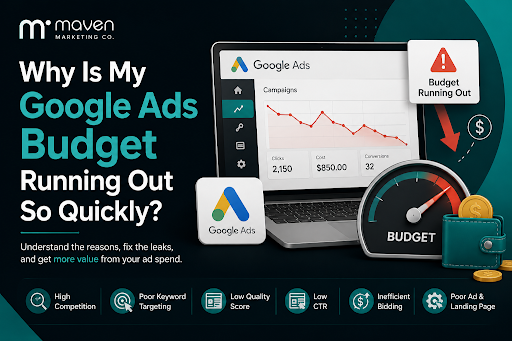
Why Is My Google Ads Budget Running Out So Quickly
Running a successful Google Ads budget isn’t only about throwing more money at it. It’s more like making every dollar, doing a bit extra. A lot of businesses start a Google Ads campaign with big hopes, then find out their daily budget is gone within a few hours, and that feels weird, right? After that, your ads stop showing effectively, new leads slip away, and your return on investment dips. So if your Google Ads budget is running out too fast, don’t stress. It’s a fairly common issue, and in most situations, it can be repaired with the right approach. There are multiple little things that can drain your advertising money quicker than you expected, from costly keywords to audience targeting that just doesn’t quite fit. In this guide, we’ll walk through why your budget disappears so quickly, how to cut wasteful spend, and the most reliable ways to boost your Google Ads ROI, even if your budget stays the same.