.svg)


%201.svg)
Key Takeaways
- Motion graphics outperform static content across all major social platforms, generating 2-3x higher engagement rates through movement-triggered attention capture and increased retention during crucial first seconds
- Effective social media animation balances immediate visual impact with clear messaging, using strategic motion, bold typography, and high-contrast colour to communicate within 3-second attention windows
- Platform-specific optimization requires different approaches for Instagram (square and vertical formats, 15-60 seconds), TikTok (vertical, fast-paced, trend-responsive), LinkedIn (professional tone, educational focus), and Facebook (auto-play silent with captions)
- Production workflows range from simple animated text using Canva or Adobe Express for beginners, to intermediate motion graphics in After Effects, to advanced 3D animation requiring specialized software and expertise
- Strategic motion graphics serve defined business objectives including brand awareness (entertaining, shareable content), lead generation (clear CTAs with value propositions), education (simplified complex concepts), and social proof (animated testimonials and statistics)
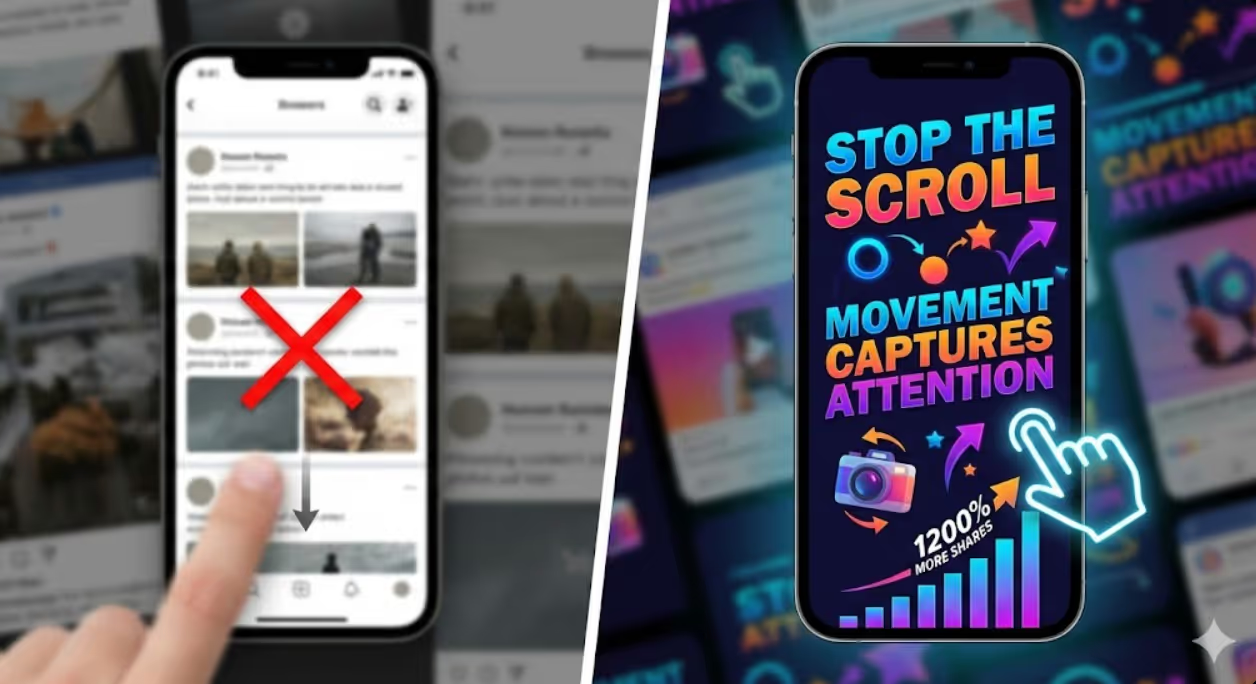
Scroll through your Instagram feed and notice what makes your thumb stop. It's rarely the perfectly composed static image. It's the text that appears word by word. The colourful shapes that bounce into frame. The statistics that count up dramatically. The product that rotates to reveal details. Movement captures attention in ways stillness can't compete with.
Your brain evolved to notice movement as survival mechanism. Motion signals potential threats or opportunities requiring immediate attention. Social platforms exploit this biological wiring through algorithms that prioritize video content, creating environment where motion graphics deliver massive engagement advantages over static alternatives.
Research from Biteable shows that social media posts with video generate 48% more views than those without, and motion graphics specifically achieve 1200% more shares than text and image content combined. For Australian businesses competing for attention in saturated feeds, motion graphics aren't optional enhancement—they're competitive necessity.
Why Motion Graphics Dominate Social Media Engagement
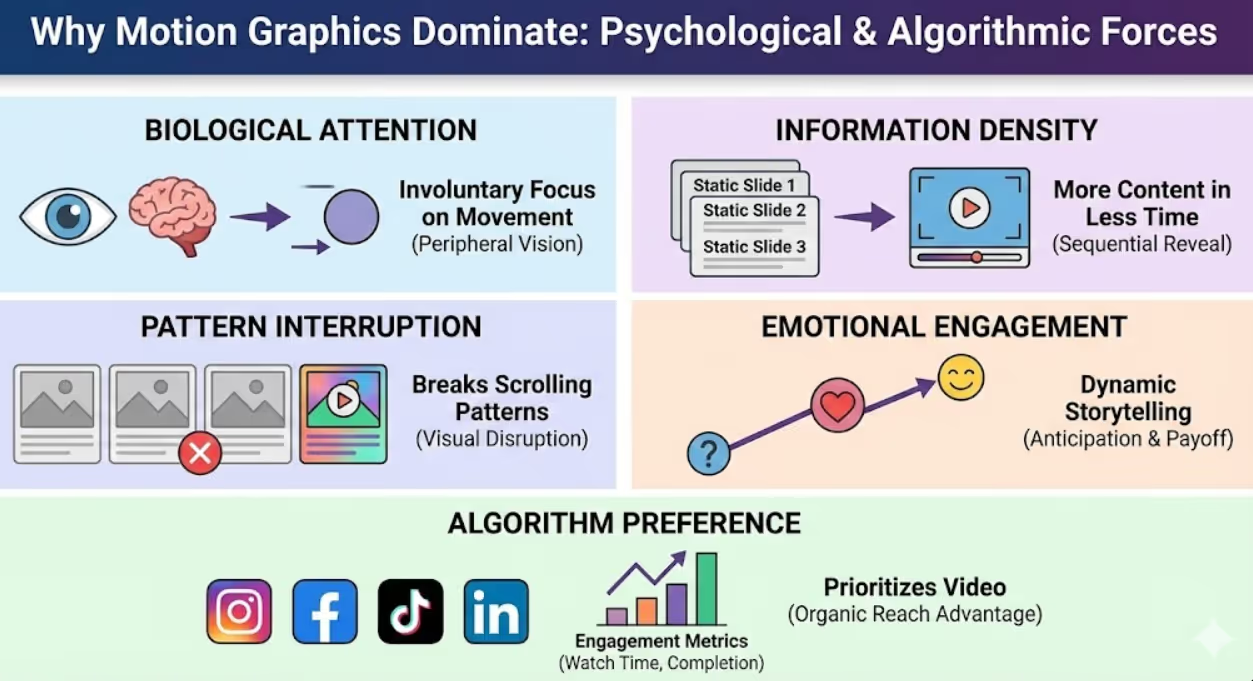
Understanding the psychological and algorithmic forces that make motion graphics effective reveals why they consistently outperform static content.
Biological attention triggers create involuntary focus on movement. Human peripheral vision detects motion before consciously processing static elements, causing heads to turn toward movement instinctively. Social media feeds exploit this by showing video content that starts playing automatically as users scroll, triggering attention capture before conscious choice to engage occurs. Motion graphics leverage this biological wiring to interrupt scrolling behaviour and force consideration.
Pattern interruption stands out in homogeneous feeds. When most content appears static (even if technically video, many posts feature minimal movement), genuine motion creates contrast that captures attention. Bold animations, dynamic typography, and unexpected transitions create visual disruption that breaks scrolling patterns and demands conscious engagement.
Information density allows motion graphics to communicate more content in less time than static posts. Animations can reveal information sequentially, guide viewers through complex concepts step-by-step, and emphasize key points through movement and timing. A 15-second motion graphic can deliver messaging that would require several static slides or lengthy caption reading.
Emotional engagement increases through dynamic storytelling. Movement creates anticipation, surprise, and satisfaction that static images struggle to achieve. Revealing information gradually, building to payoff moments, or creating satisfying loops generates emotional responses that drive sharing and commenting behaviour.
Platform algorithm preferences heavily favour video content across Instagram, Facebook, TikTok, and LinkedIn. Platforms measure engagement through watch time, completion rates, and interaction—all metrics where motion graphics excel. Research from Hootsuite indicates that Instagram's algorithm shows video content to 50% more followers than static posts receive, creating massive organic reach advantages.
Accessibility features like auto-generated captions make video content accessible to deaf and hard-of-hearing audiences while benefiting all users in sound-off environments. Motion graphics designed with visual clarity work effectively muted, reaching audiences that static text-heavy posts miss.
Memory retention improves with animated content. Studies show people retain 95% of messages delivered through video compared to 10% when reading text. Motion graphics combine visual, textual, and kinetic elements that create multiple memory pathways, improving recall and brand association.
Platform-Specific Motion Graphics Strategies
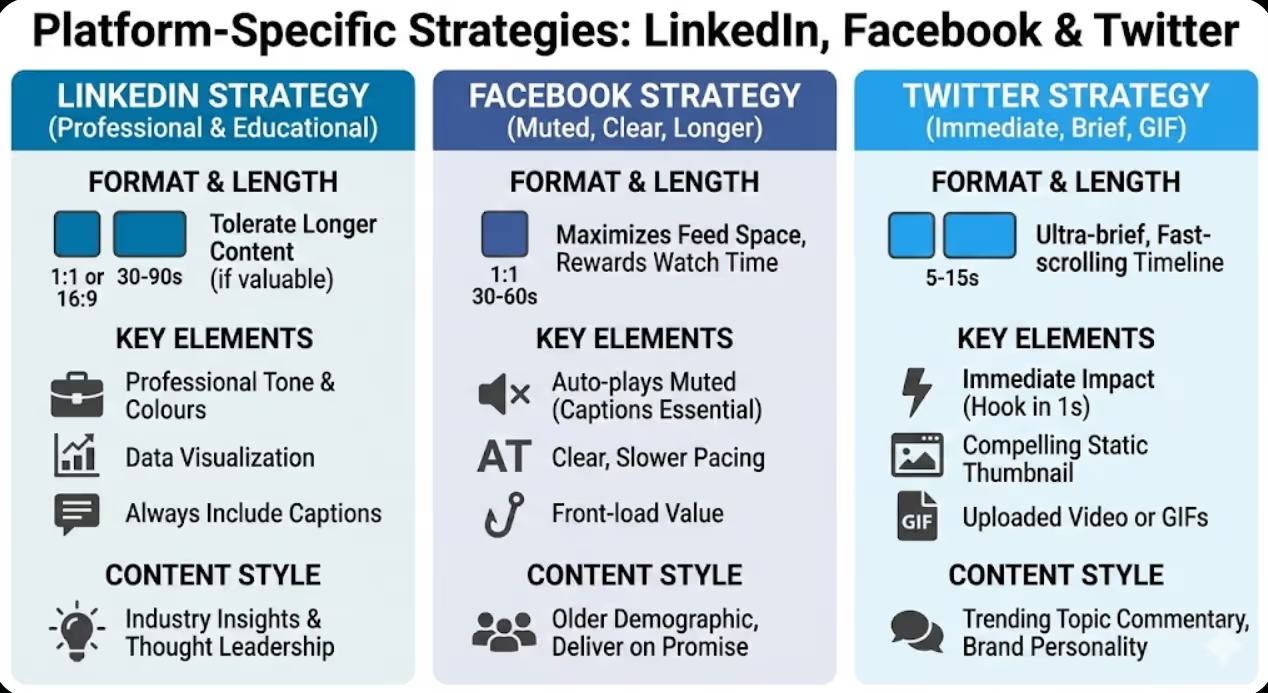
Each social platform has distinct technical requirements, audience expectations, and content consumption patterns requiring tailored approaches.
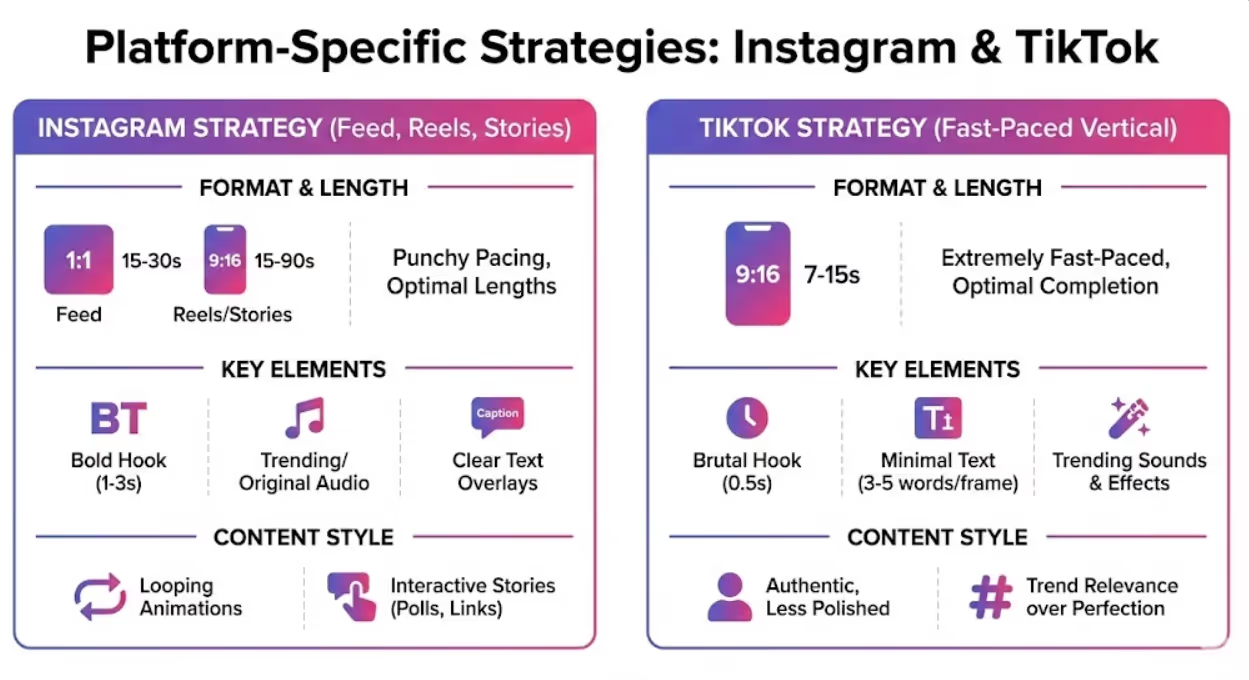
Instagram Feed and Reels demand vertical (9:16) or square (1:1) formats with punchy pacing. Instagram users scroll quickly, giving content 1-3 seconds to capture attention before moving on. Effective Instagram motion graphics use bold opening frames with immediate visual interest, clear text overlays readable on mobile devices, trending audio or original sound, and strong hooks in first second. Optimal length ranges 15-30 seconds for feed posts and 15-90 seconds for Reels, though shorter generally performs better. Looping animations work excellently on Instagram, creating hypnotic effect that increases watch time.
Instagram Stories require vertical 9:16 format optimized for full-screen mobile viewing. Stories disappear after 24 hours, allowing more experimental or timely content. Motion graphics for Stories can be simpler than feed content since audience is already engaged. Interactive elements (polls, questions, swipe-up links) combine well with motion graphics. Keep critical information in the center 80% of screen to avoid interface element overlap.
TikTok operates entirely on vertical video with extremely fast-paced consumption. TikTok motion graphics must capture attention within 0.5 seconds—brutal but achievable with bold visuals and immediate movement. Text overlays should be large, high-contrast, and minimal (3-5 words maximum per frame). Trending sounds, effects, and formats dramatically increase reach. Optimal length is 7-15 seconds for maximum completion rates. TikTok audiences expect authentic, less polished content, allowing simpler motion graphics that prioritize speed and trend relevance over production perfection.
LinkedIn requires professional tone and educational value. LinkedIn users engage with content during work hours, seeking industry insights, career development, and business knowledge. Motion graphics for LinkedIn should use professional colour palettes, clear value propositions, data visualization, and thought leadership positioning. Square (1:1) or horizontal (16:9) formats work best. Optimal length extends to 30-90 seconds since LinkedIn audiences tolerate longer content when value is clear. Always include captions since LinkedIn business environment often involves muted viewing.
Facebook auto-plays video muted in feeds, making caption inclusion essential. Facebook's older demographic average (compared to Instagram and TikTok) appreciates clearer, slower-paced animations with larger text. Square (1:1) format captures maximum feed space. Facebook's algorithm strongly rewards watch time, making completion rate critical metric. Front-load value to hook viewers quickly, then deliver on promise to maintain viewing through completion. Optimal length ranges 30-60 seconds.
Twitter has limited native video functionality but supports motion graphics through uploaded videos or GIFs. Twitter's fast-scrolling timeline demands immediate impact. Motion graphics work well for data visualization, trending topic commentary, and brand personality expression. Keep ultra-brief (5-15 seconds) and ensure first frame works as compelling static thumbnail. Square or horizontal formats accommodate Twitter's desktop-heavy usage.
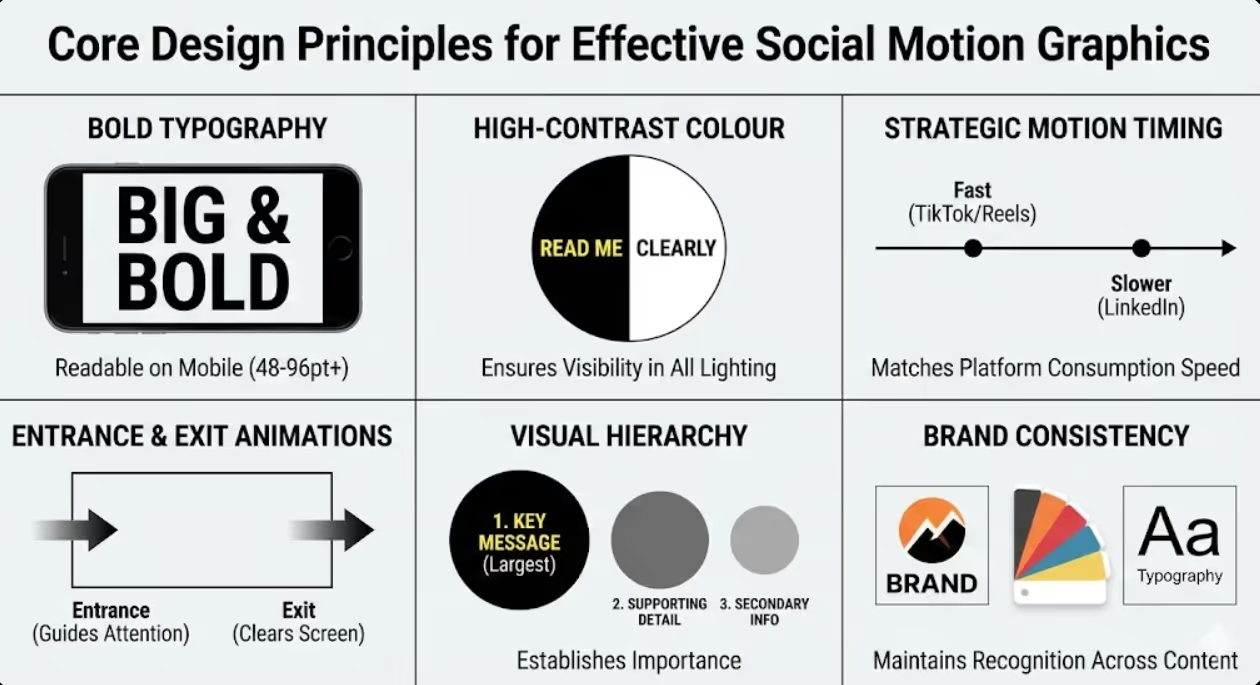
Core Design Principles for Effective Social Motion Graphics
Successful motion graphics follow strategic design principles that maximize attention capture and message comprehension.
Bold typography dominates effective social motion graphics. Text must be readable on smartphone screens in bright sunlight or dim environments, requiring large point sizes, high contrast, and simple sans-serif fonts. Minimum readable size is approximately 48-60pt for body text, 72-96pt+ for headlines. Avoid script fonts, thin weights, or low-contrast colour combinations that become illegible on small screens. Limit on-screen text to 3-5 words maximum per frame to ensure readability during brief viewing windows.
High-contrast colour schemes ensure visibility across varying screen brightnesses and viewing conditions. White or bright yellow text on dark backgrounds, or black text on white or bright backgrounds provides maximum readability. Subtle colour combinations that work beautifully in static design often fail in motion graphics viewed on mobile devices in uncontrolled lighting.
Strategic motion timing matches platform consumption speed. Fast-paced platforms (TikTok, Instagram Reels) require snappy transitions and quick information reveals. Professional platforms (LinkedIn) can sustain slower, more thoughtful pacing. Generally, elements should appear on screen for minimum 1.5-2 seconds to ensure readability, though attention-grabbing motion can happen faster.
Entrance and exit animations guide viewer attention intentionally. Elements sliding, fading, or bouncing into frame create visual interest while directing eyes to important information. Exit animations clear screen for next message element. Avoid random animation directions—consistent motion patterns (left to right, top to bottom) create visual flow that aids comprehension.
Visual hierarchy establishes information importance through size, colour, motion, and timing. Most important message elements should be largest, brightest, and enter screen first. Supporting details appear smaller, later, or in secondary colours. This hierarchy enables viewers to grasp key messages even if they don't watch complete animation.
Brand consistency maintains recognition across motion graphics through consistent colour palettes matching brand guidelines, typography using brand fonts or complementary alternatives, logo placement and sizing standards, and animation style that reflects brand personality (playful bounces for fun brands, smooth fades for luxury brands).
Looping capability increases watch time and engagement for certain content types. Perfectly looped animations that return seamlessly to starting frame create satisfying viewing experiences that encourage replays. However, not all content benefits from loops—narrative or educational content typically works better linear.
Sound design integration enhances impact when viewers watch with audio enabled. However, never rely solely on sound—all motion graphics must communicate effectively muted since majority of social viewing happens without audio. Captions, text overlays, and visual clarity ensure message delivery regardless of sound status.
Production Tools and Workflows for Different Skill Levels
Motion graphics creation ranges from beginner-friendly tools requiring no animation experience to professional software demanding significant expertise.
Beginner-friendly platforms enable simple motion graphics without steep learning curves. Canva's video editor provides templates with animated text, transitions, and elements that customize easily through drag-and-drop interface. Adobe Express (formerly Adobe Spark) offers similar functionality with professional templates and brand kit integration. These tools limit creative control but enable quick production of effective basic motion graphics. Typical learning time: 1-2 hours to produce first usable content.
Intermediate animation tools provide more creative control while remaining accessible to non-specialists. Apple Motion offers powerful motion graphics capabilities for Mac users at fraction of After Effects cost. DaVinci Resolve includes Fusion page for motion graphics creation alongside video editing, available free. These tools require more learning investment but unlock significantly more creative possibilities. Typical learning time: 2-4 weeks to produce professional-quality content.
Professional animation software delivers unlimited creative control for complex motion graphics. Adobe After Effects remains industry standard, offering comprehensive toolset for 2D motion graphics, compositing, and visual effects. Cinema 4D provides 3D modeling and animation capabilities that integrate with After Effects. These professional tools require substantial learning investment but enable any conceivable motion graphic vision. Typical learning time: 3-6 months to achieve professional proficiency.
Template marketplaces accelerate production by providing customizable motion graphics templates. Envato Elements, Motion Array, and VideoHive offer thousands of After Effects templates across styles and purposes. Templates drastically reduce production time while ensuring professional quality. However, over-reliance on templates risks creating generic-looking content if not customized sufficiently. Successful template usage involves purchasing templates that match brand aesthetic, then customizing colours, fonts, and content to align with brand identity.
Stock animation libraries provide pre-made animated elements, transitions, and effects that speed production. Storyblocks, Envato Elements, and Adobe Stock offer royalty-free animated assets. These elements combine into custom motion graphics faster than animating everything from scratch. Quality varies significantly—previewing and testing assets before purchasing prevents disappointment.
AI-assisted tools increasingly automate motion graphics creation. Runway ML, Pictory, and similar platforms use artificial intelligence to generate animations from text descriptions or convert static images into motion graphics. These emerging tools democratize motion graphics creation but currently offer limited control over specific outcomes. They work best for quick content generation when perfection isn't required.
Practical workflow for Australian small businesses often combines approaches: use templates for recurring content types (promotional posts, quote graphics, statistics), invest in custom professional animation for core brand assets (logo animation, intro sequences), and handle simple text animations using beginner platforms for timely social content. This hybrid approach balances efficiency, quality, and cost-effectiveness.
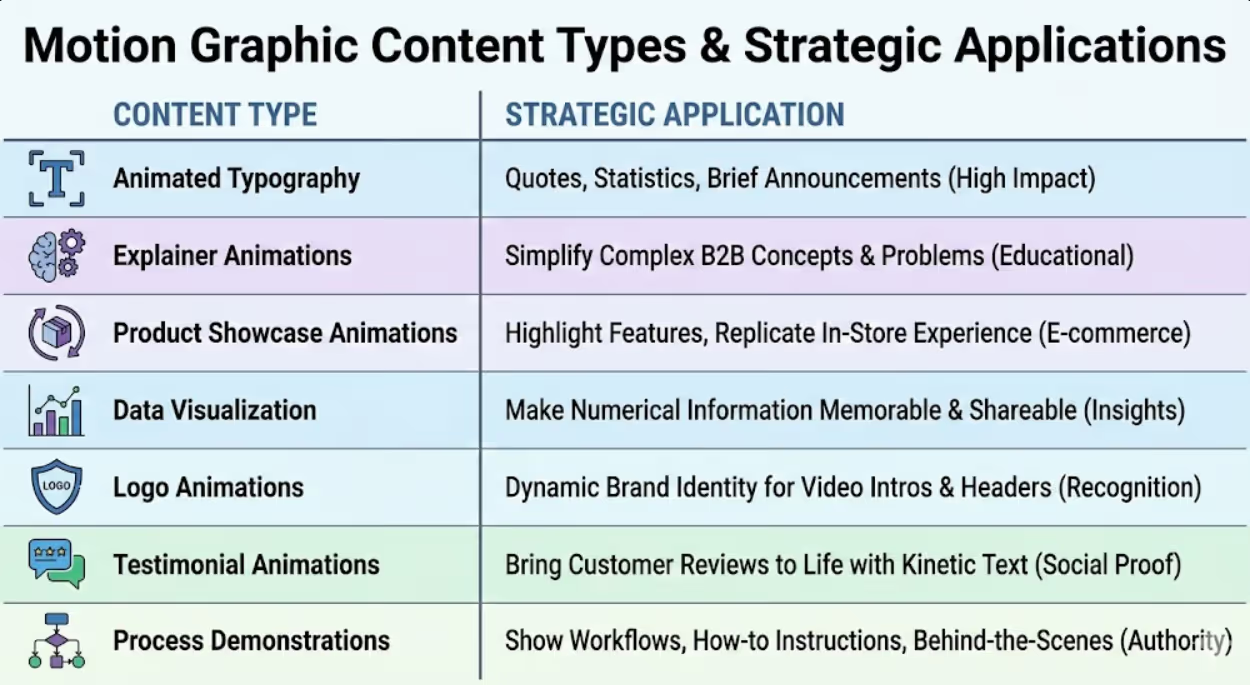
Content Types and Strategic Applications
Different motion graphic formats serve distinct business objectives and platform contexts.
Animated typography presents text with kinetic energy through entrance animations, word emphasis, colour changes, and dynamic layouts. Typography-focused motion graphics work excellently for quotes, statistics, announcements, and brief educational content. They're relatively simple to produce while delivering strong impact. Examples include motivational quotes with words appearing individually, statistics that count up dramatically, or key messages with emphasizing motion.
Explainer animations simplify complex concepts through visual metaphors, sequential reveals, and illustrated processes. These work particularly well for B2B businesses, educational content, and product demonstrations. Explainer animations typically run 30-90 seconds, walking viewers through problems and solutions step-by-step. Icon animations, diagram reveals, and character animations make abstract concepts tangible.
Product showcase animations highlight features through 360-degree rotations, zoom details, before-and-after transformations, and feature callouts. E-commerce brands use product animations to replicate in-store examination experience online. Effective product animations isolate products on clean backgrounds, use smooth camera movements, and emphasize unique selling points through motion and text.
Data visualization transforms statistics into engaging motion graphics through animated charts, counting numbers, growing bars, and dynamic infographics. Data animations make numerical information memorable and shareable. They work excellently for industry insights, company achievements, market trends, and research findings. Research from Wyzowl shows animated data posts generate 3x more engagement than static data presentations.
Logo animations create dynamic brand identities for video introductions, social media profile headers, and branded content markers. Logo animations should be brief (2-4 seconds), align with brand personality, and work effectively as short loops. They add polish to video content while reinforcing brand recognition.
Testimonial animations bring customer reviews to life through kinetic typography, review ratings, customer photos, and quote highlights. Animated testimonials feel more engaging than static review screenshots while building trust through social proof. They work well for service businesses, e-commerce brands, and any business leveraging customer satisfaction.
Process demonstrations show workflows, how-to instructions, or behind-the-scenes operations through screen recordings with animated callouts, illustrated step sequences, and timeline progressions. These educational animations build authority while providing genuine value to audiences.
Trending format adaptations leverage current social media trends through participation in challenges, meme formats, or viral templates. Australian brands can adapt trending animations to their products, services, or messages while riding trend visibility. However, brand alignment is critical—forced trend participation appears inauthentic and can backfire.
Optimizing Motion Graphics for Performance
Creating motion graphics is only half the equation—strategic optimization ensures maximum performance across platforms and audiences.
File size optimization prevents slow loading that causes viewers to scroll past before animation plays. Compress video files using H.264 codec for maximum compatibility and reasonable file sizes. Most platforms automatically compress uploads, but starting with optimized files ensures quality retention. Target file sizes under 50MB for social uploads, smaller when possible.
Thumbnail selection determines whether users engage with content when it appears in feeds before auto-play begins. Choose or create compelling first frame that works as static image, communicates content value, and triggers curiosity. Many platforms allow custom thumbnail upload—use this feature to optimize initial impression.
Caption strategy makes content accessible while improving engagement. Burned-in captions (embedded directly into video) guarantee all viewers see text regardless of platform caption support. Separate caption files (SRT) allow viewers to toggle captions on/off. Most effective approach combines burned-in key messages with separate caption files for detailed dialogue or narration.
Hook optimization front-loads most compelling content into first 3 seconds. Opening frames should immediately communicate value proposition, trigger curiosity, or create pattern interrupt that stops scrolling. Save brand logos and introductions for 2-3 seconds in—lead with viewer benefit, not brand identity.
Call-to-action placement strategically positions desired next steps. Mid-roll CTAs (appearing during animation) work when natural pauses occur. End-screen CTAs leverage completion engagement when viewers demonstrate interest through full viewing. CTAs should be specific, actionable, and time-limited when appropriate (limited offer, event registration deadline).
A/B testing compares variations to identify top performers. Test different hooks, colour schemes, pacing speeds, caption styles, and CTA presentations to discover what resonates with your specific audience. Most platforms offer native A/B testing tools, or create manual tests by posting variations at different times and comparing performance.
Engagement metrics tracking reveals what works. Monitor view counts (reach), completion rates (content quality), shares (resonance), comments (engagement), and click-through rates (CTA effectiveness). High views with low completion suggest weak hooks. High completion with low sharing indicates entertainment without shareability. Use metrics to continuously refine approach.
Repurposing strategy maximizes production investment by adapting motion graphics across platforms and formats. Create master version at highest quality, then export platform-specific versions (vertical for Stories/TikTok, square for Instagram feed, horizontal for YouTube). Extract key frames as static images for platforms where video performs less strongly. Combine multiple short animations into longer YouTube content.
Frequently Asked Questions
What budget should Australian small businesses expect for motion graphics production and what return on investment can realistically be achieved through animated social content compared to static posts?
Motion graphics production costs vary dramatically based on complexity, production method, and whether you're outsourcing or producing in-house. Simple animated text graphics using templates and beginner tools (Canva, Adobe Express) cost essentially nothing beyond subscription fees ($15-$30 monthly) and time investment (30 minutes to 2 hours per graphic). Template-based motion graphics using After Effects templates with customization range $50-$200 per video when outsourced to freelancers, or represent time investment of 2-4 hours when produced in-house after initial tool learning. Custom professional motion graphics created from scratch cost $500-$2,000+ per 30-second video through professional agencies or experienced freelancers, reflecting 8-20+ hours of specialized work including concept development, storyboarding, animation, revisions, and optimization. Most Australian small businesses find the middle approach most cost-effective—investing in quality templates ($20-$50 each) and either learning basic customization skills in-house or hiring freelancers for customization and brand adaptation. This approach produces professional-quality motion graphics for $100-$300 per video while maintaining brand consistency. Research from Animoto shows that businesses using video marketing grow revenue 49% faster than those using only static content, with social video generating 1200% more shares than text and images combined. For lead generation campaigns, motion graphics typically achieve 2-5x higher conversion rates than static alternatives, meaning investment of $200 in motion graphic producing 50 leads costs $4 per lead versus $500 in static content producing 20 leads at $25 per lead. ROI depends heavily on production efficiency and content strategy—creating one exceptional motion graphic and running it as paid ad often outperforms producing many mediocre animations organically. Start with modest investment—produce 2-3 quality motion graphics monthly for 3 months, track performance against static content baseline, calculate actual ROI for your business, then adjust investment based on proven returns. Most Australian businesses discover that strategic motion graphics (well-targeted, professionally executed, properly optimized) justify 2-3x higher production investment than static content through measurably superior engagement and conversion performance.
Can Australian businesses create effective motion graphics in-house without hiring specialized animators or do motion graphics require professional production to avoid appearing amateurish and damaging brand perception?
Australian businesses can absolutely create effective motion graphics in-house with appropriate tools, training, and strategic boundaries. The key is matching ambition to capability—simple text animations, template customizations, and straightforward product showcases are achievable for motivated non-specialists, while complex character animations, 3D motion graphics, or elaborate visual effects require professional expertise. Successful in-house motion graphics production follows this framework: Invest 20-30 hours learning chosen platform thoroughly through tutorials before attempting client-facing content (platforms like Skillshare, LinkedIn Learning, and YouTube offer comprehensive motion graphics courses). Start with template customization rather than building from scratch (quality templates provide professional structure you adapt with your colours, fonts, and content). Focus on formats where execution barriers are low—animated typography, logo reveals, and simple icon animations are more forgiving than character animation or complex compositing. Establish quality standards by studying motion graphics from brands you admire and honestly assessing whether your productions meet comparable quality bars. Recognize when to outsource—if in-house attempts consistently fall short of quality standards after reasonable practice, hiring professionals prevents brand damage. Many Australian businesses adopt hybrid approach where team members handle simple recurring content (announcement graphics, quote posts, basic product features) using templates and beginner tools, while outsourcing complex projects (explainer videos, brand films, campaign hero content) to professional animators. This division of labour maintains consistent content flow while ensuring flagship content meets professional standards. Quality indicators distinguishing professional from amateur motion graphics include smooth, purposeful motion (not jerky or random), readable typography at actual viewing size (test on smartphone), strategic pacing matching platform norms (not too slow or frantically fast), cohesive colour schemes and design consistency, and clear messaging that communicates even muted. If your motion graphics check these boxes, in-house production is viable. If they don't despite honest effort, professional production justifies investment. Consider opportunity cost honestly—if producing motion graphics in-house consumes 10+ hours weekly that could generate more revenue through your core business, outsourcing makes economic sense regardless of capability. Many successful Australian small businesses maintain in-house capability for timely, simple content while reserving budget for professional production of high-impact campaigns where quality dramatically influences results. Start in-house with low-stakes content, honestly assess results, then adjust strategy based on actual performance and reasonable capability development.
How should Australian brands balance trendy motion graphics styles that capture attention short-term versus timeless approaches that maintain brand consistency and won't look dated quickly as social media design trends evolve?
Strategic approach differentiates between evergreen brand content requiring timeless design and tactical social content where trend participation provides value. Core brand assets—logo animations, brand introduction videos, website headers, and signature content formats—should use timeless motion graphics approaches that remain effective for 2-3+ years. Timeless characteristics include classic animation principles (smooth easing, purposeful motion, clear communication), colours from established brand palette rather than trending hues, simple geometric shapes and clean layouts avoiding trendy effects, and professional typography using brand fonts or classics that transcend trends. These foundational motion graphics age well, justify higher production investment, and create consistent brand recognition. Tactical social content—trending format participation, meme adaptations, timely announcements, and experimental content—can embrace current trends providing they align with brand personality. Trendy motion graphics characteristics include fast-paced editing matching platform consumption speeds, popular transition effects and text treatments, trending colours or effects (chromatic aberration, VHS distortion, glitch effects), and format participation in viral templates or challenges. These trend-responsive graphics capture immediate attention and visibility but date quickly, requiring replacement or retirement as trends evolve. Acceptable because production investment is modest and content purpose is short-term engagement rather than lasting brand building. Balance ratio should favour timeless over trendy—approximately 70-80% evergreen content using consistent brand-aligned motion graphics, 20-30% trend-responsive content capturing current attention. This distribution maintains brand consistency and recognition while allowing flexibility for trend participation that drives discovery and reach. Practical implementation separates content types clearly. Create templates for recurring content (product features, testimonials, announcements) using timeless approaches that customize easily with current information. Produce these at measured pace with quality prioritized over quantity. Supplement with trend-responsive content created quickly when relevant trends emerge, accepting that these won't have long shelf life. Research from Simply Measured found that brands maintaining consistent visual identity while participating selectively in trends achieve 3.5x higher long-term follower growth than those constantly chasing trends without brand consistency. Australian audiences particularly appreciate authenticity—trend participation feels genuine when aligned with brand personality but forced when obviously jumping on bandwagons. Evaluate each trend against brand values and audience expectations before participation. When in doubt about timelessness, choose simplicity over flash, clarity over complexity, and brand consistency over novelty. Motion graphics trends cycle approximately every 18-24 months currently—what seems cutting-edge today often looks dated within 2 years. Plan accordingly by investing heavily in timeless approaches for content with long-term strategic importance while keeping trend-responsive content simple enough to produce and discard without significant resource waste.
Motion Graphics Transform Social Media Performance
Static social content disappears in endless scrolling feeds. Motion graphics interrupt patterns, capture attention, and drive engagement that transforms social media from passive brand presence into active business development channel.
Australian businesses investing in motion graphics capabilities—whether through in-house skill development, template utilization, or professional partnership—gain competitive advantages in increasingly video-dominated social landscape where attention is currency and movement is its price.
The difference between social media that generates measurable business results and content that disappears unnoticed often comes down to motion. Strategic animation transforms scrolling into stopping, passive viewing into active engagement, and social presence into business growth.
Ready to develop motion graphics that stop scrolls and drive engagement across your Australian brand's social media channels? Maven Marketing Co. creates strategic motion graphics optimized for platform performance, brand consistency, and business objectives. Let's animate your social media success.

Table of contents
read more blogs
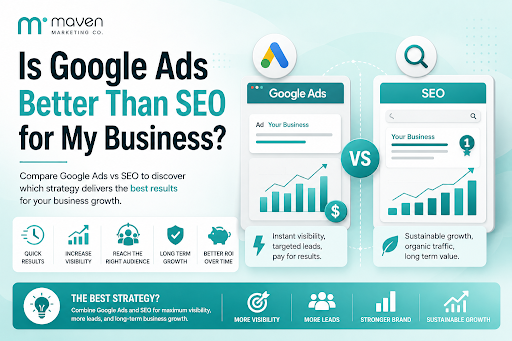
Is Google Ads Better Than SEO for My Business
One of the biggest questions business owners ask when they are planning online growth is whether they should invest in Google Ads or SEO. Both are strong marketing plays that help your company show up in Google search results, but they do things in separate lanes. Google Ads gives quicker visibility and can bring in leads fast, whereas SEO more or less focuses on slow, steady organic traffic that tends to grow the longer you keep building it. Picking the right direction depends on what you want to achieve, how much money you can spend, how crowded the market is, and how quickly you need results, like sooner rather than later. The good news is you don’t always have to choose one or the other; it’s not exactly a black-and-white situation. If you take time to understand the strongest points of both, you can put together a more sensible digital marketing plan that supports consistent expansion. In this guide, we’ll compare Google Ads vs SEO, explain the main differences, and help you figure out what option makes the most sense for your business.

When Should I Hire a Digital Marketing Agency
Growing a business today takes more than just having a website or throwing a post on social media; customers usually search around online, compare providers, skim reviews, and basically expect the brand to show up with a solid digital presence before they even think about buying. Many businesses try to run their marketing themselves, but there comes a point when “doing it all in-house” becomes clunky and hard to manage, all at once. Knowing when to hire a digital marketing agency can end up making a big, real difference for your growth. If you’re not getting enough leads, or your online visibility feels stuck, or sales are just not moving, the right agency can bring the know-how, plus a clear plan, to help you get noticeably better outcomes. In this guide, we’ll dig into what a digital marketing agency actually does, the usual signs it’s time to bring one on, and how picking the right marketing partner can help your business move forward at a faster pace.
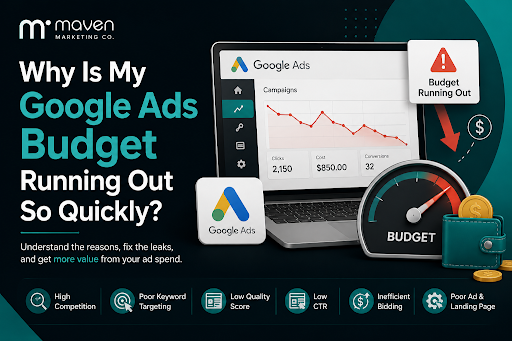
Why Is My Google Ads Budget Running Out So Quickly
Running a successful Google Ads budget isn’t only about throwing more money at it. It’s more like making every dollar, doing a bit extra. A lot of businesses start a Google Ads campaign with big hopes, then find out their daily budget is gone within a few hours, and that feels weird, right? After that, your ads stop showing effectively, new leads slip away, and your return on investment dips. So if your Google Ads budget is running out too fast, don’t stress. It’s a fairly common issue, and in most situations, it can be repaired with the right approach. There are multiple little things that can drain your advertising money quicker than you expected, from costly keywords to audience targeting that just doesn’t quite fit. In this guide, we’ll walk through why your budget disappears so quickly, how to cut wasteful spend, and the most reliable ways to boost your Google Ads ROI, even if your budget stays the same.