
.svg)


%201.svg)

Key Takeaways
- A single national campaign rarely serves every location well — hyperlocal content drives stronger engagement and conversions at the suburb level.
- Consistent NAP (Name, Address, Phone) data across every listing is foundational to multi-location SEO success.
- Google Business Profiles need to be individually managed per location, not treated as one entity.
- Localised landing pages for each location dramatically improve organic search visibility and paid ad quality scores.
- A centralised strategy with localised execution is the sweet spot for Australian business chains.
- Tracking performance per location — not just as a brand — reveals where to invest marketing spend most effectively.
The Challenge Nobody Warns You About
You've built something real. Multiple locations, a recognisable brand, and a team that knows what they're doing. But somewhere between opening your second and fifth location, marketing started to feel like a tug of war. Push too hard on brand consistency and local relevance suffers. Go fully local with each site and suddenly you've got no cohesion, no budget efficiency, and a marketing team running on fumes.
This is the core tension of managing local campaigns across Australian business chains — and it's one that most brands don't solve until they've already lost ground to more agile local competitors.
The good news? There's a framework that works. It's not flashy, but it's effective, and it's built specifically for the way Australian consumers search, engage, and buy.
Why "One Campaign Fits All" Fails in Australia
Australia is geographically vast and culturally diverse. A campaign that resonates in Fortitude Valley won't necessarily land in Fremantle. The tone, the references, the seasonal timing — even the way people talk about your industry — shifts meaningfully from one postcode to the next.
Beyond culture, there's intent. When someone in Parramatta searches for a service, they're not looking for a national brand story. They're looking for the closest, most credible option near them. That means your marketing has to meet them at the local level, not just the brand level.
Research from Think with Google confirms that "near me" searches have grown exponentially, with mobile users expecting immediate, location-relevant results. If your campaign isn't structured to capture those moments at the suburb level, you're handing business to whoever is.
This is the case for hyperlocal marketing — targeted campaigns built around specific locations, their communities, and the search behaviour of people who actually live and work nearby.
Building Your Foundation: Google Business Profiles Done Right
Before you run a single paid campaign or publish a single localised blog post, your Google Business Profile (GBP) setup needs to be airtight across every location.
Google's own documentation for multi-location businesses makes it clear that each physical location should have its own verified GBP listing. This isn't optional. A single listing for your whole brand — or worse, unverified listings — tanks your local search visibility at the individual location level.
Here's what a properly managed GBP setup looks like for Australian business chains:
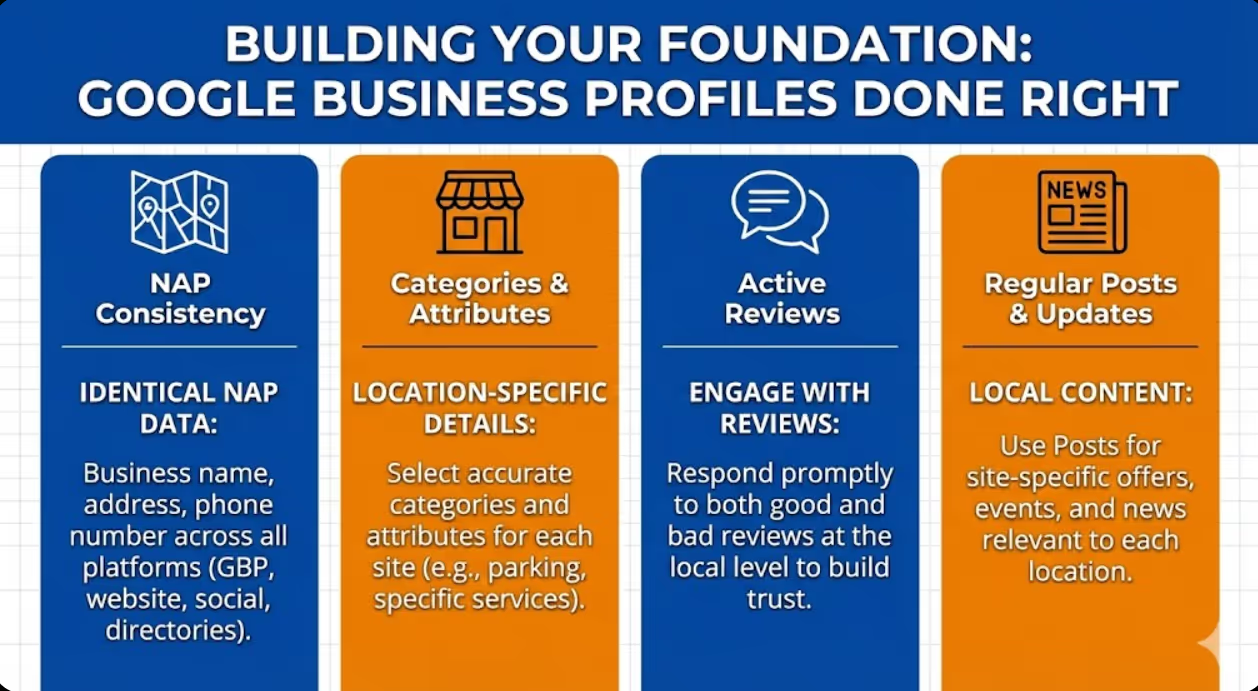
Consistency in NAP data. Your business name, address, and phone number must be identical across your GBP, your website, your social profiles, and any third-party directories. Even minor inconsistencies — like "St" versus "Street" — create trust signals that confuse search algorithms and erode local ranking.
Location-specific categories and attributes. Don't copy and paste the same category selections across all locations. If one site has a car park and another doesn't, that matters to searchers. If one location offers services not available at others, reflect that. Specificity builds relevance.
Actively managed reviews. Responding to Google reviews — good and bad — at the location level signals that a real team is paying attention. A national brand that never responds to local reviews feels distant. A local branch that engages promptly feels trustworthy.
Regular posts and updates per location. Use the Posts feature to share local offers, events, and news specific to each site. A promotion running at your Chatswood location isn't relevant to someone in Toowoomba, and treating it as if it is damages your local credibility.
Localised Landing Pages: Your Most Underused Asset
If your website has one generic "Contact Us" or "Find a Location" page that lists every branch, you're leaving a significant amount of organic traffic on the table.
Every location in your chain deserves its own dedicated landing page, and that page needs to do more than just display an address and phone number. It should:
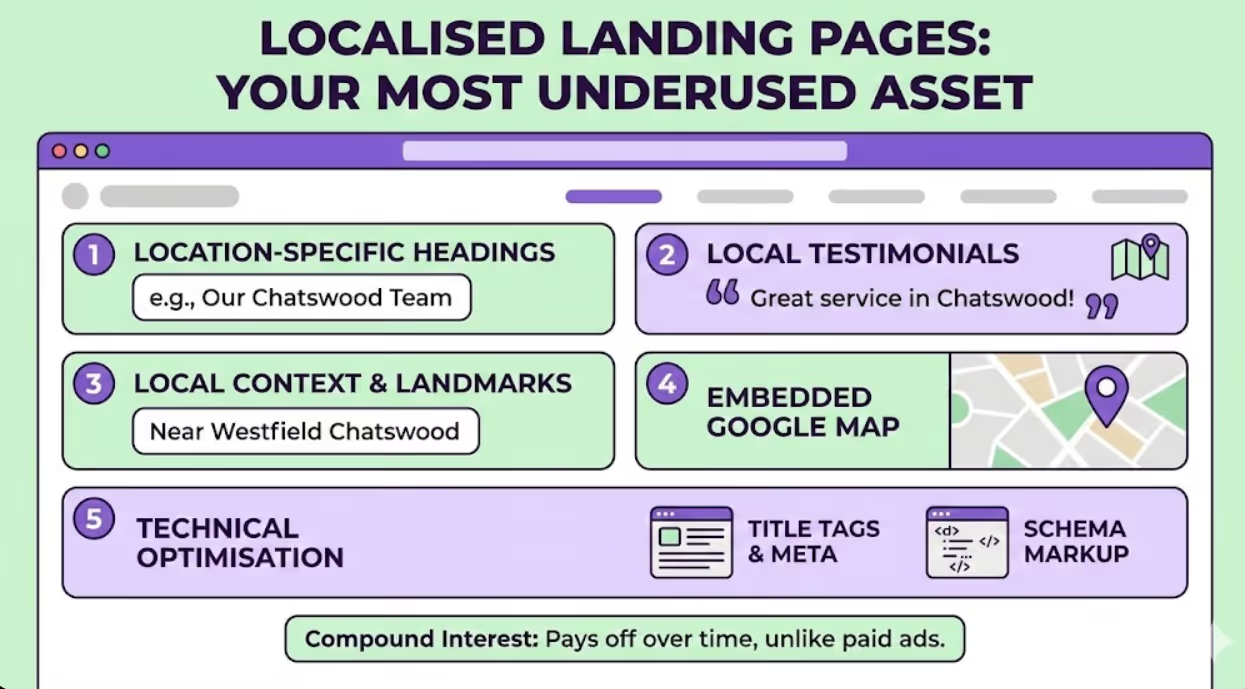
- Include location-specific headings that name the suburb and region naturally throughout the content
- Feature testimonials or case studies from customers in that area
- Reference local landmarks, streets, or community context that signals genuine local presence
- Include an embedded Google Map and clearly marked contact details
- Be technically optimised with localised title tags, meta descriptions, and schema markup
Schema markup — specifically LocalBusiness schema — is particularly powerful for multi-location brands. When implemented correctly, it tells search engines exactly what your business is, where it operates, what hours it keeps, and what services it offers at that specific address. This directly improves how your listings appear in local search results, including rich snippets and the local pack.
The investment in building these pages properly pays off compound interest over time. Unlike paid ads that stop the moment your budget does, well-optimised local landing pages continue to attract organic traffic for years.
Paid Local Campaigns: Targeting That Actually Converts
Organic search is a long game. Paid campaigns let you accelerate results while that foundation builds. But for multi-location businesses, the approach to paid advertising — particularly Google Ads — needs to be structured differently from a single-location business.
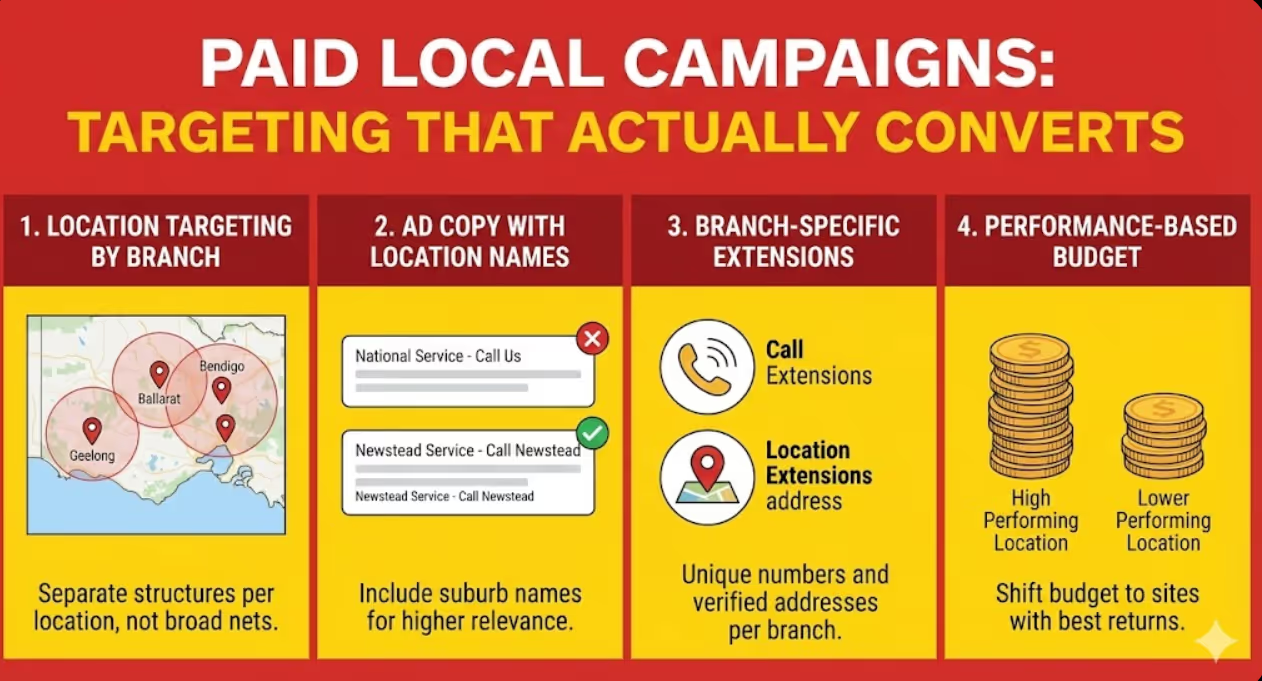
Location targeting by branch, not just by city. Google Ads allows you to target by postcode, suburb, or radius around a specific point. For a chain with locations in Geelong, Ballarat, and Bendigo, that means three separate campaign structures, not one Victorian campaign with a broad net.
Ad copy that names the location. Generic ad copy that doesn't mention a specific location performs consistently worse in local search than copy that includes the suburb name. Searchers in Newstead want to see "Newstead" in your ad, not just a national brand tagline.
Call extensions and location extensions per branch. Every location should have its own call tracking number and verified address attached to its ad group. This feeds accurate data back into your analytics and ensures people calling from ads reach the right branch.
Budget allocation based on location performance. Not all locations have the same competitive landscape or the same conversion rate. Review performance data by location regularly and shift budget toward the sites generating the best returns rather than spreading spend evenly across the chain.
Social Media: Local Voices, Brand Framework
Social media is where the tension between brand consistency and local personality plays out most visibly. The solution most effective for Australian chains is a hub and spoke model.
The brand (hub) sets the visual style, tone guidelines, content pillars, and approval processes. Each location (spoke) produces and publishes content within that framework, with the freedom to include local flavour — staff spotlights, community events, local customer stories, and location-specific promotions.
This approach works particularly well on Instagram and Facebook, where location-tagged content reaches local audiences far more effectively than brand-wide posts. A photo from your Fitzroy store tagged in Fitzroy will appear in local feeds and Explore results for users in that area. The same photo published without location context just disappears into the algorithm.
For businesses with the budget and team bandwidth, consider giving each location a local social media presence — separate Instagram or Facebook pages that sit under the brand umbrella. For chains with 10-plus locations, this is increasingly standard practice among Australia's most digitally mature operators.
Tracking and Reporting: Know What's Actually Working
Multi-location marketing without location-level reporting is guesswork. You need to know which branches are generating the most search impressions, which landing pages are converting, which ads are performing, and where customers are dropping off.
The minimum viable reporting setup for an Australian business chain includes:
- Google Analytics 4 with location-level filtering — separate views or custom dimensions for each branch
- Google Search Console configured for each localised URL
- GBP Insights tracked per location to monitor calls, direction requests, and website clicks originating from each listing
- A call tracking solution that assigns unique numbers per location and per campaign source
This data tells you where your marketing is working and where it isn't. Without it, you'll consistently over-invest in locations that look like they need help but actually need a different strategy, and under-invest in locations that are quietly performing well but could dominate their local market with more support.
Common Mistakes Australian Business Chains Make
Understanding what not to do is just as valuable as knowing what works. The most consistent mistakes in multi-location marketing across Australia include:
- Treating all locations as identical when their competitive environments, demographics, and customer needs differ significantly
- Neglecting GBP maintenance after the initial setup — these listings go stale without regular updates and engagement
- Running national campaigns without a localisation layer, then wondering why conversion rates vary so widely by region
- Publishing duplicate content across localised landing pages rather than genuinely unique, relevant content for each location
- Failing to respond to negative reviews at the location level, which signals to both Google and potential customers that nobody's watching
- Not training location managers on the brand's local marketing guidelines, leading to off-brand, inconsistent local content that undermines the overall strategy
Pulling It Together: The Framework That Works
The most successful Australian business chains marketing locally at scale use a model that separates strategic oversight from local execution:
Centralised: Brand strategy, campaign frameworks, creative assets, technology stack, reporting standards, budget oversight, compliance and approval processes.
Localised: GBP management, community engagement, location-specific social content, local partnerships, localised ad copy, review responses, and location-level promotions.
This isn't a set-and-forget system. It requires regular communication between central marketing and local operators, clear guidelines that are genuinely followed, and reporting that informs real decisions rather than sitting in a dashboard nobody checks.
When it works well, every location feels like a genuine local business with the credibility and resources of a national brand behind it. That combination — local trust, national capability — is genuinely difficult for single-location competitors to match.
FAQs
How many Google Business Profile listings do I need for a multi-location business in Australia?You need one verified GBP listing per physical location. Each should be individually managed with location-specific information, photos, posts, and review responses. Consolidating multiple locations into a single listing significantly reduces your local search visibility.
Should each location have its own website page or just appear on a store locator?Each location should have its own dedicated landing page with unique content, not just a pin on a store locator map. Location-specific landing pages rank individually in local search results and give you far greater visibility than a single aggregated page.
How do I maintain brand consistency while still marketing locally?Develop a clear brand framework that specifies visual standards, tone of voice, and approved content formats — then allow local operators to work within those boundaries with genuine local content. Think of it as creative guardrails, not a creative straitjacket.
Ready to Get Your Multi-Location Marketing Working Harder?
Managing local campaigns across multiple locations is complex — but it's also one of the highest-leverage activities a growing Australian business chain can invest in. When your local SEO, paid campaigns, and social presence all pull in the same direction, the compounding effect on enquiries, foot traffic, and revenue is significant.
Maven Marketing Co specialises in exactly this kind of work. We help Australian business chains build and manage local marketing strategies that are consistent enough to protect the brand and localised enough to actually win in each market.
Talk to the team at Maven Marketing Co today →

read more blogs

The Role of Digital PR in Long Term SEO Growth
Building a solid online presence is basically more than just posting content now and then or sprinkling keywords across your website. Search engines such as Google tend to point users toward businesses that feel trustworthy, useful, and backed up by others online, even if it’s not always obvious at first. When a company puts together a well-thought-out digital PR strategy, it can bring in solid media mentions, earning high-quality backlinks and stronger brand awareness, all of which feed long-term SEO progress. Rather than obsessing solely over rankings, digital PR helps you build credibility plus authority, so your site looks more appealing to search engines and also to real people who might become customers. In this guide, we’ll walk through how digital PR supports SEO, what makes it such a key part of modern marketing, and the most effective approaches for sustainable growth in search results.

Is Google Ads Better Than SEO for My Business
One of the biggest questions business owners ask when they are planning online growth is whether they should invest in Google Ads or SEO. Both are strong marketing plays that help your company show up in Google search results, but they do things in separate lanes. Google Ads gives quicker visibility and can bring in leads fast, whereas SEO more or less focuses on slow, steady organic traffic that tends to grow the longer you keep building it. Picking the right direction depends on what you want to achieve, how much money you can spend, how crowded the market is, and how quickly you need results, like sooner rather than later. The good news is you don’t always have to choose one or the other; it’s not exactly a black-and-white situation. If you take time to understand the strongest points of both, you can put together a more sensible digital marketing plan that supports consistent expansion. In this guide, we’ll compare Google Ads vs SEO, explain the main differences, and help you figure out what option makes the most sense for your business.

When Should I Hire a Digital Marketing Agency
Growing a business today takes more than just having a website or throwing a post on social media; customers usually search around online, compare providers, skim reviews, and basically expect the brand to show up with a solid digital presence before they even think about buying. Many businesses try to run their marketing themselves, but there comes a point when “doing it all in-house” becomes clunky and hard to manage, all at once. Knowing when to hire a digital marketing agency can end up making a big, real difference for your growth. If you’re not getting enough leads, or your online visibility feels stuck, or sales are just not moving, the right agency can bring the know-how, plus a clear plan, to help you get noticeably better outcomes. In this guide, we’ll dig into what a digital marketing agency actually does, the usual signs it’s time to bring one on, and how picking the right marketing partner can help your business move forward at a faster pace.


