.svg)


%201.svg)

Key Takeaways
- LinkedIn Document posts consistently generate higher reach and engagement than standard image or text posts from the same account, making them the highest leverage organic format available on the platform.
- The document format works because it requires sustained attention from the viewer, a behaviour the LinkedIn algorithm interprets as a strong engagement signal and rewards with broader distribution.
- B2B audiences on LinkedIn respond to document content that solves a specific, named problem or provides frameworks, data, or perspectives they cannot easily find elsewhere.
- Documents should be designed to be read inside LinkedIn without requiring a download, keeping the audience within the platform and maximising the engagement signals your content generates.
- A sustainable document content strategy for Australian B2B brands involves repurposing existing intellectual property, client work, and internal knowledge rather than generating entirely new content from scratch.
- The cover slide of a LinkedIn Document is the equivalent of a thumbnail. If it does not create immediate curiosity or signal clear value, the document will not be opened regardless of its quality.
- Following up on document engagement with direct outreach to people who saved or reshared the content is one of the most effective lead generation tactics available within organic LinkedIn.
Why Documents Outperform Every Other Organic Format
LinkedIn's feed is competitive. Content from hundreds of connections and followed pages competes for the same attention, and the algorithm decides what surfaces and what does not based on signals it uses to assess how much a piece of content is worth distributing.
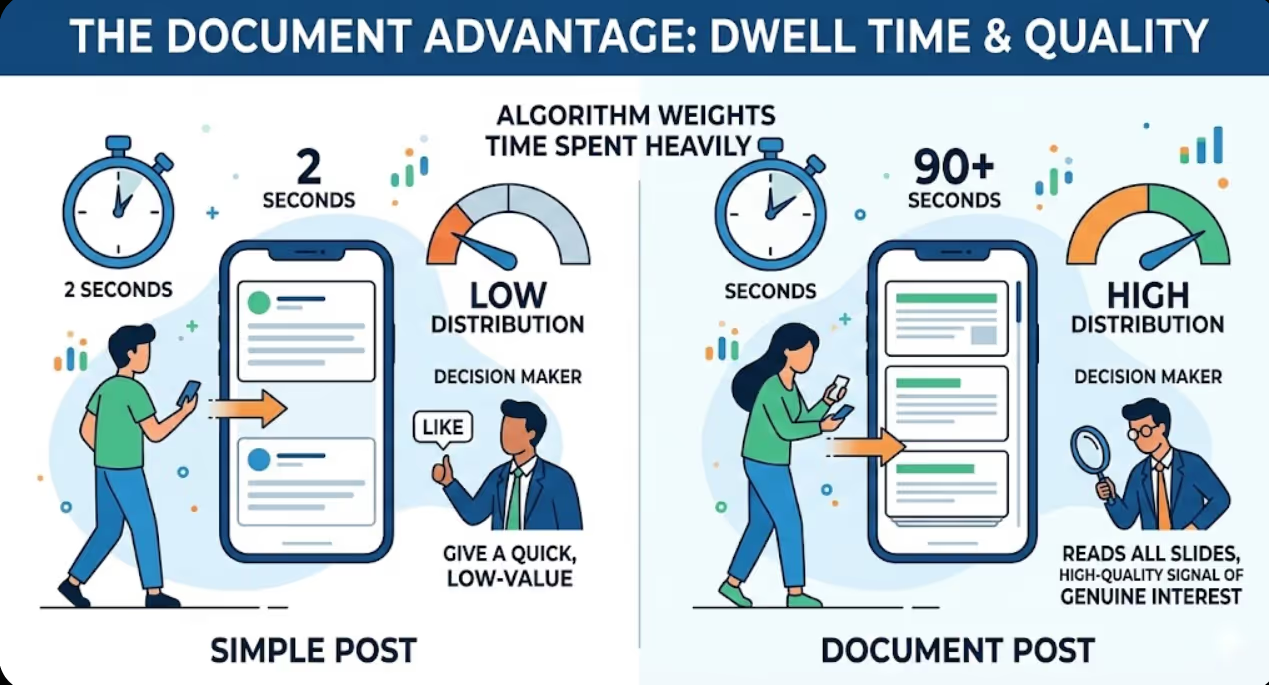
The signal LinkedIn appears to weight most heavily is time spent with the content. A post that a user scrolls past in two seconds generates a very different engagement signal than one they spend ninety seconds reading, scrolling, and pausing on. Document posts, by requiring the user to actively scroll through multiple slides, generate substantially more dwell time than almost any other format. The user who reads through a ten-slide LinkedIn Document has spent meaningfully more time with your content than the user who scanned a four-line text post. The algorithm records this difference and distributes accordingly.
For Australian B2B brands, this algorithmic advantage translates into a practical opportunity that most competitors are not yet exploiting fully. A thoroughly constructed document from a company with 2,000 followers can reach 10,000 or more views through organic distribution, while a standard text post from the same account might reach a fraction of that. The format is doing significant work that other formats are not, and the brands recognising this are gaining disproportionate visibility with minimal additional cost.
The secondary advantage of the document format is audience quality. The people who scroll through a LinkedIn Document on a specific professional topic are actively choosing to engage with that topic. A decision maker who reads all twelve slides of your framework for reducing procurement costs in professional services is demonstrating a quality and depth of interest that a like or a brief comment cannot match. The engagement is a more meaningful signal of genuine relevance than surface metrics from other post types.
What Makes a LinkedIn Document Worth Reading
The format advantage is real but it is not unconditional. A poorly conceived document will generate low engagement regardless of format, and low engagement documents are penalised algorithmically just as low engagement text posts are. The content itself has to earn the attention the format invites.
The document topics that consistently outperform for Australian B2B audiences share a set of characteristics.
They address a problem the audience recognises as real and immediately relevant to their work. A document titled "How We Reduced Client Onboarding Time by 40 Percent" speaks directly to a recognisable pain point in a language the audience uses. A document titled "Thoughts on the Future of Professional Services" does not, because it signals perspective without signalling utility.
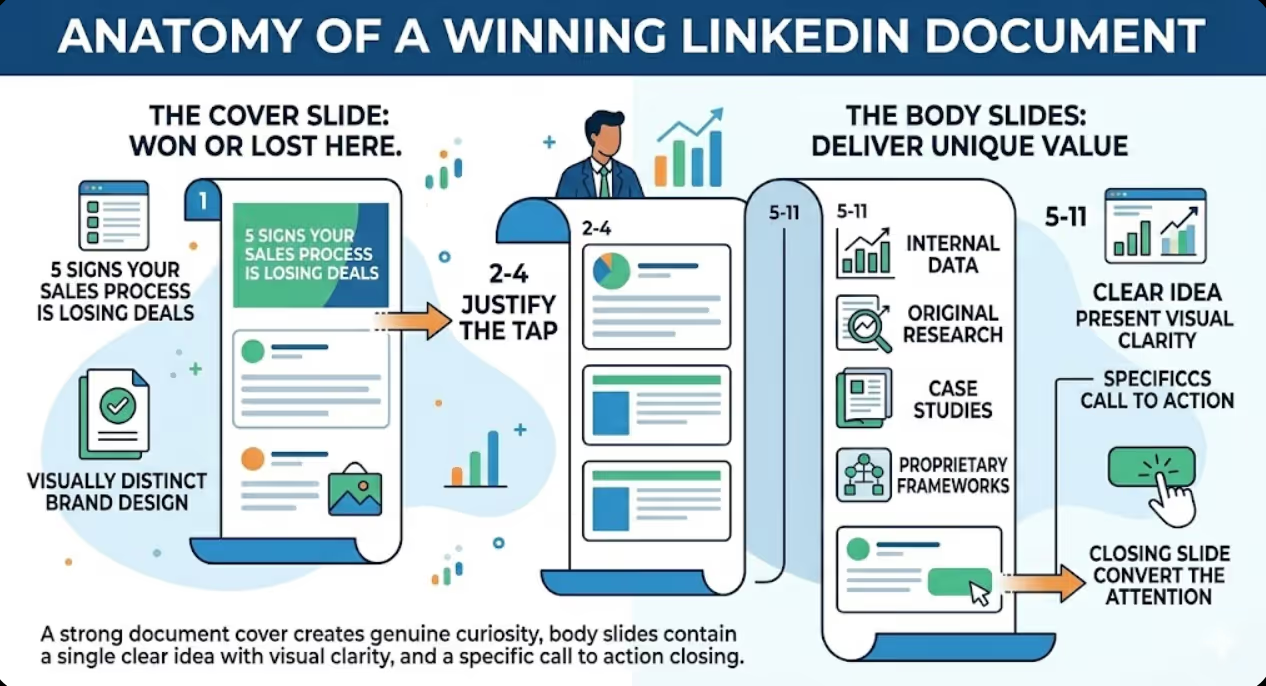
They deliver something the audience cannot easily find by searching Google. Proprietary frameworks, internal data, original research, case study findings from real client work, and perspective formed through genuine professional experience all meet this criterion. Content that rephrases what is freely available elsewhere does not.
They are structured for LinkedIn's reading environment. Unlike a white paper or a long blog post, a LinkedIn Document is consumed in a fast, mobile context where each slide needs to justify the tap to the next one. A strong document has a cover that creates genuine curiosity, an opening slide that delivers on the cover's promise and sets up the rest, body slides that each contain a single clear idea presented with visual clarity, and a closing slide with a specific and frictionless call to action.
They avoid the format traps that signal low effort. Documents that are simply slides copied from a PowerPoint presentation without redesigning for the LinkedIn feed, documents where every slide is a wall of text, and documents that end with a generic "Follow us for more content" call to action all underperform. These choices communicate that the document was not built for this audience in this context.
Building Your Document Content Engine
The most common objection Australian B2B brands raise about LinkedIn Document content is that it requires significant production effort. This is partly true in theory and largely false in practice, for one specific reason: the best LinkedIn Document content is almost always repurposed from intellectual property that already exists within the business.
Every B2B business accumulates knowledge assets in the course of doing its work. Client proposals contain frameworks and diagnostic approaches. Project retrospectives contain findings and lessons. Sales presentations contain positioning arguments and market perspectives. Internal training materials contain structured expertise. These assets are already written, already structured, and already represent genuine intellectual value. The task is not to create new knowledge from scratch but to translate existing knowledge into a format optimised for the LinkedIn feed.
Consider a management consulting firm that has developed a proprietary framework for evaluating technology readiness across the mid market. That framework probably lives inside a pitch deck or a client diagnostic tool. Adapting it into a ten to twelve slide LinkedIn Document requires design effort and some copywriting for the LinkedIn context, but it does not require generating new intellectual content. The knowledge creation has already happened. The distribution is what needs investment.
This repurposing approach also produces more authentic and higher quality content than documents created specifically for LinkedIn without a substantive knowledge base. The content reflects real experience, real frameworks developed through real work, and real perspectives earned through genuine professional practice. Audiences on LinkedIn are sophisticated enough to recognise this difference, and documents grounded in real expertise consistently generate stronger engagement and more meaningful responses than those that read like marketing content dressed as thought leadership.
The Cover Slide: Where Documents Are Won or Lost
In a competitive LinkedIn feed, a Document post is seen before it is read. The cover slide, the single image that appears in the feed before a user chooses to open and scroll through the document, is the entire basis of the audience's decision about whether the content is worth their attention.
This makes the cover slide the highest leverage single element in your entire document. A document with genuinely excellent content behind a weak cover will be overlooked by most of the audience it reaches. A document with a strong cover will be opened by a proportion of the audience that would never have engaged with a text post of equivalent depth.
Strong covers for LinkedIn Documents in the Australian B2B context share several characteristics. They carry a specific headline that signals clear value rather than a topic label. "5 Signs Your Sales Process Is Losing Deals in the Consideration Stage" is a cover headline that converts. "Sales Process Insights" is a topic label that does not. The specificity of the promise determines the quality of the audience that opens it.
They use a visual design that is consistent with the brand's professional identity but visually distinct from the sea of blue and grey that dominates the LinkedIn feed. A thoughtfully designed cover that uses strong contrast, a compelling visual element, or an unexpected layout choice earns attention in a way that generic corporate design does not.
They avoid cover designs that feel like advertising. The LinkedIn audience has finely tuned reflexes for dismissing promotional content. A cover that feels like a sales brochure will be scrolled past by the same decision maker who would happily spend three minutes reading a document that felt like a peer sharing something genuinely useful.
Distribution and Engagement: After the Post Goes Live
Publishing a LinkedIn Document is the beginning of its distribution cycle, not the end. The actions taken in the hours and days after posting have a direct impact on how broadly the platform distributes the content and how many meaningful conversations it generates.
Engagement velocity in the first two to three hours after posting is the primary signal LinkedIn uses to assess initial distribution. A post that receives comments, reactions, and shares quickly is interpreted as content worth showing to a broader audience. Engineering early engagement through a deliberate notification strategy, alerting colleagues, clients, or business partners to the post before it goes live so they can engage promptly, can meaningfully extend initial reach without violating LinkedIn's terms of service.
The comment response strategy matters more on Document posts than on most other formats, because the people commenting on a substantive document are typically more engaged and more relevant professionally than average commenters. Responding to every comment promptly, particularly in the first day of the post's life, extends the engagement window the algorithm uses for distribution decisions and signals that the account is actively managing its presence.
Saving behaviour is a particularly valuable signal for document content. When someone saves a LinkedIn post, they are telling the platform they want to return to it. This is one of the strongest engagement signals the algorithm receives. For B2B brands, people who save a document are also identifying themselves as having genuine interest in the topic area, which makes them worth engaging directly through connection requests or direct messages referencing the content.
According to LinkedIn's own research on content engagement, B2B buyers engage with an average of 3 to 5 pieces of content before initiating a conversation with a vendor. A LinkedIn Document that a prospect saves and returns to occupies a significant position in that consideration journey, and following up on that engagement with a personalised, relevant direct message is a natural and low friction next step.
Measuring Document Performance the Right Way
LinkedIn's native analytics for Document posts provide several metrics that are worth understanding in terms of what they actually measure and what they indicate about content effectiveness.
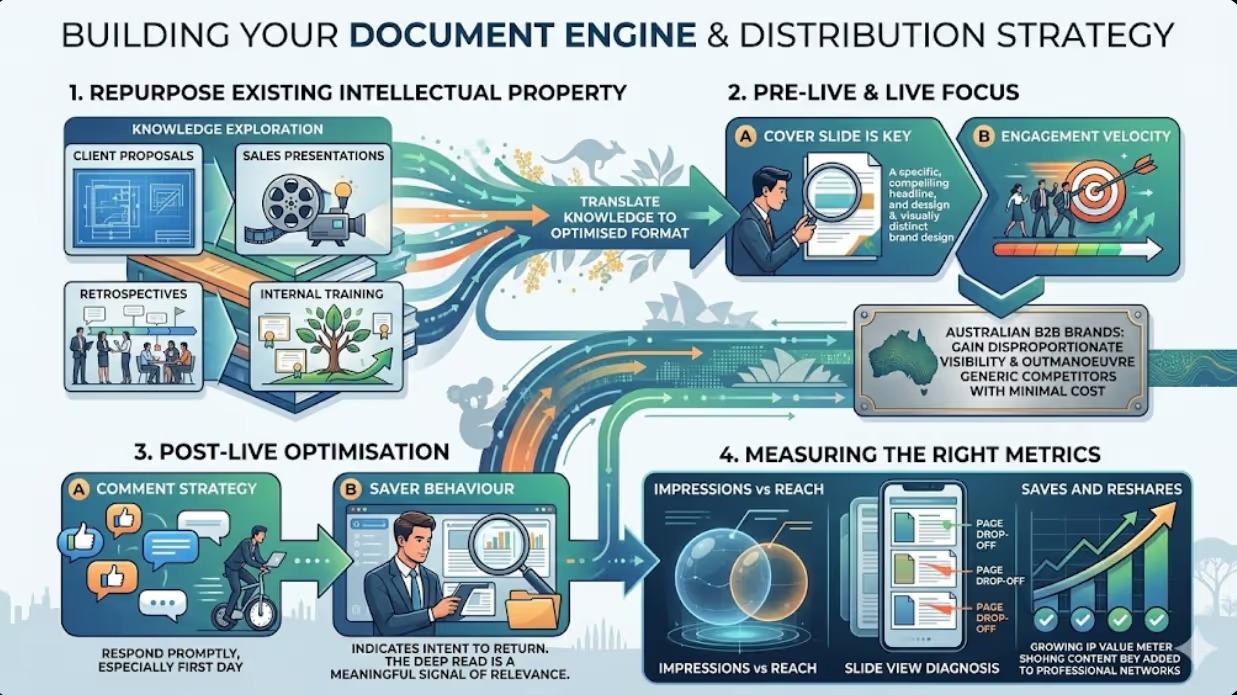
Impressions show how many times the post appeared in someone's feed. Reach shows the number of unique accounts who saw it. The gap between impressions and reach tells you something about how the algorithm is distributing the content to overlapping audiences.
Slide views or page views, depending on how LinkedIn presents this metric at the time you review it, indicate how far through the document the average viewer is progressing. This is particularly useful diagnostic information. If a document is generating strong impressions but most viewers are only reaching slide three of twelve, that tells you something important about where the document is losing its audience. Investigating whether the problem is the content of slide three, the pacing of the early slides, or the visual design of the document at that point is a worthwhile optimisation exercise.
Saves and reshares are the highest quality engagement metrics for Document posts. A save indicates genuine intent to return to the content. A reshare indicates that the viewer found it valuable enough to put their own professional reputation behind recommending it to their network. Both signals indicate content quality and audience relevance that a like or a comment view does not.
For B2B brands tracking the commercial contribution of LinkedIn Document content, the most useful tracking approach involves noting which document posts generated direct messages, connection requests, or profile visits from relevant prospects in the days after publication, and attributing pipeline conversations to specific content assets where the connection can be made. This is imprecise but directionally useful for understanding which topics and formats are generating commercial traction.
FAQs
How long should a LinkedIn Document post be?
The optimal length depends on the topic and the depth of the content, but most strongly performing LinkedIn Documents for B2B audiences sit between eight and fifteen slides. Fewer than six slides often feels incomplete for a substantive business topic. More than twenty slides risks losing the audience before the call to action. Each slide should contain a single, clear idea presented with enough visual and written clarity to be understood in under fifteen seconds. Documents that achieve this density across ten to twelve slides consistently outperform both shorter documents that feel thin and longer ones that feel like they were designed for print rather than a LinkedIn scroll.
Should the document be downloadable or designed to be read within LinkedIn?
Designing for reading within the feed almost always produces better engagement results than prompting a download. When a viewer has to download a document to read it, you introduce friction, lose the engagement signals within the feed that drive algorithmic distribution, and take the audience out of the LinkedIn environment where you can monitor their engagement. The most effective LinkedIn Document strategy keeps all the value accessible within the LinkedIn feed. If you want to capture contact details, create a separate lead magnet flow with a landing page outside LinkedIn rather than using the document itself as the gated asset.
How frequently should Australian B2B brands publish LinkedIn Documents?
Most B2B brands lack the content pipeline to publish quality Documents more than once or twice per week, and attempting to do so by sacrificing quality for frequency is counterproductive. A realistic and sustainable cadence for most Australian B2B organisations is one to two Documents per month, supplemented by more frequent standard posts. At this cadence, each document represents a meaningful content investment worth promoting actively after publication rather than simply posting and moving on. The quality of each document is more important to long-term channel performance than the frequency of publication.
Turn Your Expertise Into LinkedIn's Highest Performing Format
The knowledge your business has built through years of client work, professional experience, and genuine expertise is worth more on LinkedIn than most Australian B2B brands realise. LinkedIn Document posts are the format that packages that knowledge in the form the platform rewards most generously and the audience finds most useful.
Maven Marketing Co helps Australian B2B organisations build LinkedIn content strategies that translate genuine expertise into content that generates reach, authority, and commercial conversations worth having.
Talk to the team at Maven Marketing Co →

Table of contents
read more blogs

6 Ways Digital Marketing Can Boost B2B Lead Generation
B2B lead generation is not about filling a CRM with as many names as possible. The real objective is to attract businesses that fit your offer, give the right people a reason to engage and create enough confidence for a genuine sales conversation to start.That distinction matters because B2B buying is usually more targeted than consumer marketing and often involves several people influencing the decision. Current LinkedIn lead-generation guidance makes the same point: more leads do not automatically mean better results if only a small proportion are genuinely relevant or likely to progress.Digital marketing helps by creating multiple paths into the business. Search can capture active demand. Paid media can put an offer in front of a tightly defined audience. Content can build authority before a buyer is ready to talk. Social media can keep the brand visible across a long decision cycle. Your website turns interest into action, while email helps nurture that interest over time.The strongest B2B digital marketing strategies do not treat these as six separate activities. They use them as one connected system designed to generate quality B2B leads, support sales and build a more dependable pipeline
How to Build a Brand Positioning Strategy That Sets Your Business Apart
Most businesses can explain what they sell. Far fewer can explain, in a sentence or two, why the right customer should choose them instead of another credible option. That gap is where brand positioning matters.A strong brand positioning strategy gives your business a clear place in the market and a clear place in the customer's mind. It helps your team decide who you are speaking to, what you want to be known for, which benefits deserve the most attention and how your marketing should sound and look across every channel.It is not a slogan exercise and it is not something reserved for large consumer brands. For an Australian service business, e-commerce brand, professional firm, or growing B2B company, positioning can make everyday decisions easier, from website copy and campaign messaging to pricing, sales conversations, and brand identity. The goal is not to look different for the sake of it. The goal is to be meaningfully different in a way the right customers understand and value.

The Role of Digital PR in Long Term SEO Growth
Building a solid online presence is basically more than just posting content now and then or sprinkling keywords across your website. Search engines such as Google tend to point users toward businesses that feel trustworthy, useful, and backed up by others online, even if it’s not always obvious at first. When a company puts together a well-thought-out digital PR strategy, it can bring in solid media mentions, earning high-quality backlinks and stronger brand awareness, all of which feed long-term SEO progress. Rather than obsessing solely over rankings, digital PR helps you build credibility plus authority, so your site looks more appealing to search engines and also to real people who might become customers. In this guide, we’ll walk through how digital PR supports SEO, what makes it such a key part of modern marketing, and the most effective approaches for sustainable growth in search results.