.svg)


%201.svg)

Quick Answers
Q: How do Australian SMEs get a Google Knowledge Panel?
Australian SMEs acquire Knowledge Panels by establishing strong entity signals across the web that Google recognizes and trusts. Start by claiming your Google Business Profile and ensuring NAP consistency across all platforms. Create a comprehensive Wikipedia page if your business meets notability criteria, or leverage Wikidata as an alternative. Publish authoritative content on your website with proper schema markup, particularly Organization and LocalBusiness schemas. Secure media mentions in reputable Australian publications like The Australian Financial Review, Smart Company, or industry-specific outlets. Build a verified social media presence across LinkedIn, Facebook, and Instagram with consistent branding. The key is creating an interconnected web of authoritative references that validate your entity's existence and importance. Most Australian SMEs see Knowledge Panel appearance within 3-6 months of implementing comprehensive entity optimization strategies.
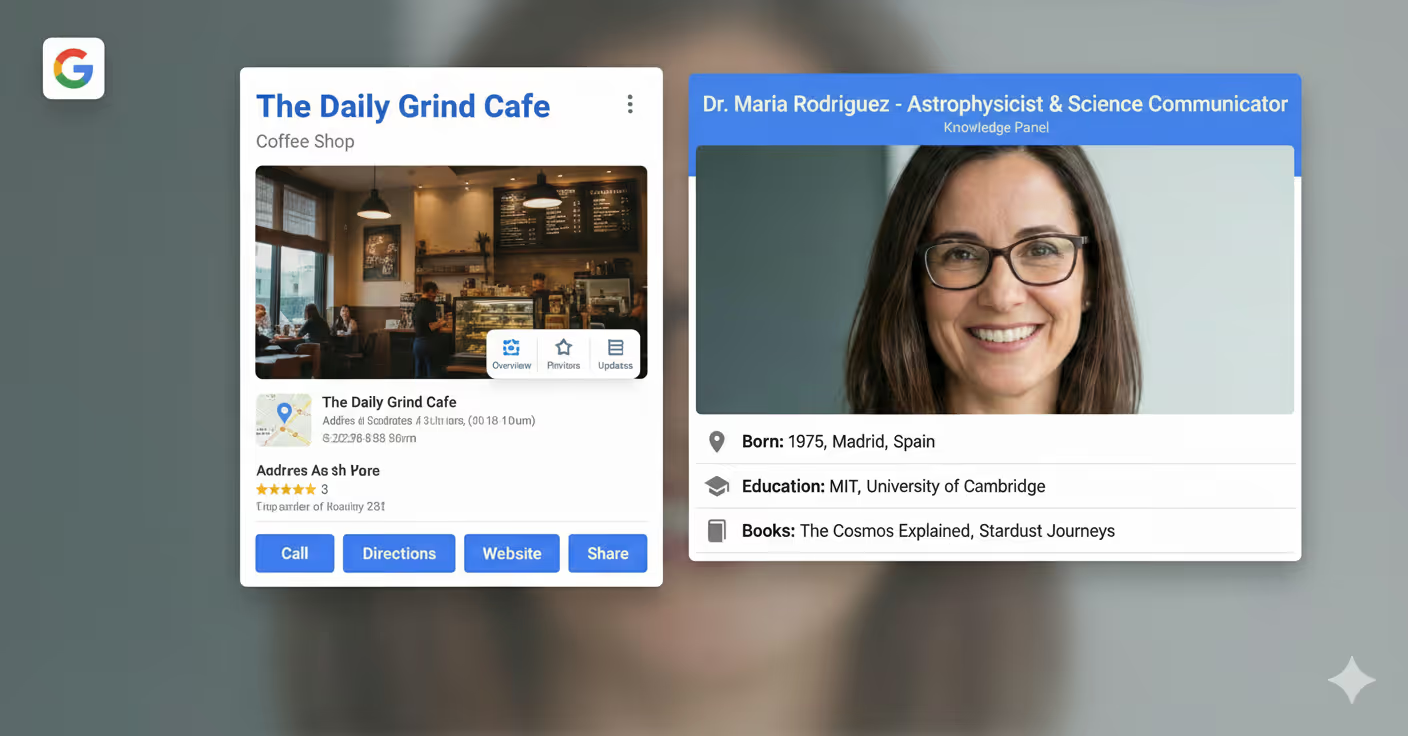
Q: What's the difference between Google Business Profile and Knowledge Panel?
Google Business Profile displays location-based information for local searches and map queries, showing operating hours, reviews, and contact details primarily when users search for businesses near them or specific locations. Knowledge Panels appear for branded searches of your business name, displaying broader entity information including company description, founding date, key people, news mentions, and social profiles regardless of location intent. A Sydney restaurant's Business Profile shows when someone searches "Italian restaurants near me," while its Knowledge Panel appears when someone searches the restaurant's specific name. Business Profiles are self-managed through Google's platform; Knowledge Panels are algorithmically generated from Google's knowledge graph and cannot be directly created. However, verified Business Profiles often contribute data to Knowledge Panels. Australian SMEs need both: Business Profiles for local discovery and Knowledge Panels for brand authority. The synergy between them strengthens overall search presence and credibility.
.avif)
Why Knowledge Panels Matter For Australian SMEs
When potential customers search your business name on Google, the Knowledge Panel is often their first impression of your digital authority. For Australian SMEs competing against established brands and international competitors, this real estate on the right side of search results represents instant credibility.
Research from BrightLocal reveals 87% of consumers research businesses online before making purchase decisions. A Knowledge Panel signals legitimacy, professionalism, and market presence in a way that organic listings alone cannot achieve. It's the digital equivalent of having a premium storefront location versus operating from an unmarked warehouse.
Australian SMEs with Knowledge Panels experience measurable advantages. They see higher click-through rates on brand searches, increased social media following through direct panel links, and improved trust metrics from customers who perceive Knowledge Panel presence as validation of business legitimacy. In competitive sectors like professional services, hospitality, and retail, a Knowledge Panel differentiates serious operators from fly-by-night operations.
The knowledge graph isn't reserved for massive corporations or celebrities. Google actively seeks to understand and represent entities at all scales, including local Australian businesses serving specific communities or niches. The playbook exists; most SMEs simply haven't discovered it yet.
Understanding The Knowledge Graph And Entity SEO
Google's knowledge graph is a massive database of interconnected entities—people, places, organizations, concepts—and the relationships between them. When you search "Atlassian," Google doesn't just match keywords; it understands Atlassian as an entity with specific attributes: Australian software company, founded 2002, co-founders Mike Cannon-Brookes and Scott Farquhar, acquired Trello, competitor to Microsoft.
Entity SEO moves beyond traditional keyword optimization to establish your business as a recognized, trustworthy entity within Google's knowledge graph. It's about creating clear, consistent, authoritative signals that help Google understand exactly what your business is, what it does, and why it matters.
For Australian SMEs, this means transitioning from "a business that does X in Y location" to "a recognized entity with verifiable attributes, relationships, and authority." The shift is fundamental to how Google increasingly evaluates and ranks businesses in search results.
The knowledge graph prioritizes entities with strong supporting evidence. A Melbourne accounting firm mentioned in The Age, listed on the Institute of Public Accountants directory, with schema markup identifying key partners and services, becomes a verifiable entity. A similar firm with only a website and social profiles remains ambiguous, lacking the confidence signals Google requires.
The Seven Pillars Of Knowledge Panel Qualification
1. Claimed And Optimized Google Business Profile
Your Google Business Profile forms the foundation of Knowledge Panel eligibility for local Australian businesses. Claim your profile, verify ownership, and complete every section comprehensively.
Upload high-quality photos showcasing your premises, team, and products. Encourage and respond to customer reviews consistently. Add services, attributes, and business descriptions with natural keyword inclusion. Post regular updates about offers, events, or company news.
Google Business Profile data frequently populates Knowledge Panel elements, particularly for location-based businesses. A complete, active profile signals entity legitimacy and provides structured data Google uses for knowledge graph integration.
2. Wikipedia Or Wikidata Presence
Wikipedia remains the gold standard for entity validation. If your Australian SME meets notability criteria—significant media coverage in independent sources—creating a Wikipedia page dramatically accelerates Knowledge Panel appearance.
Wikipedia's notability guidelines are strict. You need substantial coverage in reliable, independent sources like major newspapers, industry publications, or broadcast media. A single press release or directory listing won't suffice. For most SMEs, this represents a long-term goal rather than immediate strategy.
Wikidata offers an accessible alternative. This structured database accepts entities without Wikipedia's stringent notability requirements. Creating a comprehensive Wikidata entry with your business details, relationships, and external identifiers contributes to knowledge graph understanding, though it carries less weight than Wikipedia.
3. Authoritative Media Mentions And Citations
Google validates entities through external references from trusted sources. Australian SMEs need strategic PR and content marketing that generates mentions in authoritative publications.
Target industry-specific outlets first. An Adelaide winery benefits more from Wine Australia coverage than generic business news. A Sydney fintech startup gains entity strength from Australian Financial Review or InvestorDaily mentions rather than obscure blogs.
Contribute expert commentary to journalists. Use services like SourceBottle or HARO to respond to media queries. Publish thought leadership on platforms like LinkedIn or Medium that demonstrate expertise. Each authoritative mention strengthens your entity profile and knowledge graph presence.
4. Comprehensive Schema Markup Implementation
Schema markup provides explicit structured data telling Google exactly what your business is and what it offers. For Australian SMEs, proper schema implementation is non-negotiable for Knowledge Panel qualification.
Implement Organization schema on your homepage with complete business details: legal name, founding date, founders, address, contact information, logo, and social profiles. Add LocalBusiness schema for physical locations with specific business categories and attributes.
Use Person schema for key executives and founders. Implement Article schema for blog content and Service schema for offerings. The more structured, explicit data you provide, the easier Google understands your entity relationships and attributes.
Test your schema implementation with Google's Rich Results Test to ensure proper formatting and completeness. Schema errors or inconsistencies undermine entity confidence signals.
5. Consistent NAP Across All Platforms
Name, Address, Phone number consistency matters enormously for entity validation. Google cross-references your business information across hundreds of sources. Inconsistencies create confusion and reduce confidence in entity accuracy.
Audit every directory listing, social profile, and citation source. Ensure your business name appears identically everywhere. If you're "Maven Marketing Co." on your website, don't be "Maven Marketing Company" on Facebook and "Maven Marketing Co Pty Ltd" on LinkedIn.
Address formatting should match precisely. Use the same phone number format consistently. Small variations that seem insignificant to humans create significant ambiguity for algorithms trying to validate entity information.
6. Active, Verified Social Media Presence
Social profiles contribute substantially to entity recognition and Knowledge Panel population. Google often pulls social links, follower counts, and profile information directly into Knowledge Panels.
Claim and verify your business profiles on LinkedIn, Facebook, Instagram, Twitter, and relevant industry platforms. Complete every profile section thoroughly with consistent branding, descriptions, and contact information.
Verification badges on platforms like Instagram, Facebook, or LinkedIn strengthen entity legitimacy signals. While verification isn't mandatory for Knowledge Panels, it accelerates the process by providing additional confidence signals.
Maintain active social presence with regular posting and engagement. Dormant accounts with outdated information or no activity undermine entity credibility rather than supporting it.
7. A Comprehensive, Authoritative Website
Your website serves as the primary entity hub. It should clearly articulate what your business is, what it does, who runs it, and why it matters. Australian SMEs often underestimate how comprehensively they need to document their business story online.
Create detailed About pages covering company history, mission, team members, and achievements. Develop comprehensive service pages with detailed descriptions rather than brief summaries. Publish regular blog content demonstrating expertise and thought leadership.
Include clear contact information, physical address (if applicable), and multiple engagement pathways. Add media or press pages showcasing external coverage. The goal is creating a single, authoritative source Google can reference to understand your entity completely.
The Australian SME Knowledge Panel Strategy
Phase 1: Foundation Building (Months 1-2)
Start with foundational elements that establish basic entity presence. Claim and fully optimize your Google Business Profile. Conduct a comprehensive NAP audit across all existing citations and correct inconsistencies. Implement Organization and LocalBusiness schema markup on your website.
Create or claim social media profiles on major platforms with verified information. Develop a comprehensive About page documenting your business history, team, and mission. These foundational elements cost little beyond time investment but create essential entity recognition signals.
Phase 2: Authority Development (Months 3-4)
Focus on generating external validation through authoritative mentions. Develop a PR strategy targeting industry publications and local Australian media. Contribute expert commentary to journalists through SourceBottle or direct outreach.
Publish thought leadership content on your blog and syndicate to LinkedIn. Pursue speaking opportunities at industry events or webinars that generate mentions and backlinks. Apply for relevant industry awards or recognition programs that create external references.
Create a Wikidata entry if Wikipedia notability remains out of reach. Include all available structured information about your business, founders, products, and relationships to other entities.
Phase 3: Optimization And Monitoring (Months 5-6)
Expand schema implementation to cover all relevant content types—articles, services, people, events. Monitor your brand SERP regularly for Knowledge Panel emergence. Once a panel appears, suggest edits through the feedback mechanism to ensure accuracy.
Continue generating authoritative mentions and building external references. Refresh your website content with updated information, recent achievements, and comprehensive details that support entity understanding.
Track competitor Knowledge Panels to identify additional optimization opportunities. Analyze what information Google displays for similar businesses and ensure your entity profile includes comparable or superior details.
Common Knowledge Panel Challenges For Australian SMEs

Generic Or Common Business Names
Businesses with generic names face disambiguation challenges. "Sydney Plumbing Services" competes with dozens of similar entities for knowledge graph recognition. Build distinctive brand identity through consistent use of full legal names, unique taglines, and comprehensive entity attributes that differentiate you from competitors.
Limited Media Coverage
Many Australian SMEs struggle to generate mainstream media mentions. Focus on industry-specific publications, local newspapers, and trade journals where coverage standards are more accessible. Contribute expert insights consistently rather than seeking sporadic feature coverage.
Multiple Business Locations
Multi-location businesses require careful entity structure. Implement LocalBusiness schema for each location individually while maintaining clear parent Organization schema. Ensure Google understands the relationship between your main entity and location-specific sub-entities.
Merger, Acquisition, Or Name Changes
Business transitions create entity confusion. Clearly document name changes, mergers, or acquisitions on your website and in schema markup. Maintain 301 redirects from old domains to new ones. Update all citations and social profiles promptly to minimize inconsistency periods.
Advanced Knowledge Panel Optimization Tactics
Leverage Google Posts For Knowledge Panel Updates
Once your Knowledge Panel appears, use Google Posts through your Business Profile to add timely updates, offers, or announcements directly into the panel. This keeps your entity information current and engaging for users encountering your Knowledge Panel.
Monitor And Respond To Suggested Edits
Google allows users to suggest Knowledge Panel edits. Monitor your panel regularly and respond to suggested changes through the feedback mechanism. Incorrect information damages credibility, so active panel management becomes an ongoing responsibility.
Build Entity Relationships In Schema
Advanced schema implementation includes references to related entities—founders, parent companies, subsidiaries, industry associations. These relationships strengthen your position in the knowledge graph by connecting you to established entities Google already recognizes.
Pursue Industry Directory Inclusions
Authoritative industry directories contribute to entity validation. Join professional associations like the Australian Institute of Company Directors, industry-specific bodies, or local chambers of commerce. Ensure your listings on these directories are complete and consistent.
Measuring Knowledge Panel Impact
Knowledge Panel success extends beyond mere appearance. Track specific metrics demonstrating business impact:
Brand Search Volume: Monitor branded search traffic through Google Search Console. Knowledge Panels typically increase branded search engagement as users explore entity information more thoroughly.
Click-Through Rates: Analyze whether Knowledge Panel presence improves click-through rates on brand searches. Users may engage more with organic listings when Knowledge Panels validate legitimacy.
Social Following Growth: Track social media follower growth after Knowledge Panel links appear. Direct panel connections to social profiles drive follower acquisition from interested searchers.
Direct Traffic: Knowledge Panels displaying your website URL should generate measurable direct traffic increases as users click through from search results.
Competitor Displacement: A strong Knowledge Panel can push competitor results lower on brand SERPs, reducing ambiguity for users searching your business name.
Australian SME Knowledge Panel Case Studies

Melbourne Specialty Coffee Roaster
A boutique Melbourne coffee roaster achieved Knowledge Panel status within four months through targeted entity building. They implemented comprehensive LocalBusiness schema, secured features in Broadsheet Melbourne and Concrete Playground, created detailed service and product pages, and maintained active Instagram presence with verification.
Their Knowledge Panel now displays business description, location, operating hours, social links, and recent news mentions. Branded search traffic increased 43% post-panel appearance, with 67% of new social followers attributing discovery to Google search.
Sydney Digital Marketing Agency
A mid-sized Sydney agency pursued Wikipedia notability through strategic PR over 18 months. They contributed to marketing publications, spoke at industry conferences generating media coverage, won multiple industry awards documented in trade press, and provided expert commentary for mainstream business coverage.
Their Wikipedia page, created after accumulating sufficient independent references, generated a Knowledge Panel within three weeks. The panel displays comprehensive information including founding date, key personnel, services, and client portfolio references from their website schema.
Brisbane Professional Services Firm
A Brisbane accounting firm without Wikipedia eligibility leveraged Wikidata and comprehensive schema markup. They created detailed Wikidata entries for their firm and senior partners, implemented extensive Organization and Person schema across their website, secured regular mentions in accounting trade publications, and maintained verified LinkedIn presence with active thought leadership.
Their Knowledge Panel emerged after five months, pulling information from Wikidata, Google Business Profile, and website schema. While less comprehensive than Wikipedia-sourced panels, it effectively validates their entity presence and differentiates them from competitors lacking knowledge graph representation.
The Future Of Entity SEO For Australian Businesses
Google's evolution toward entity understanding accelerates continuously. The 2025 search landscape increasingly prioritizes entities over keywords, with Knowledge Panels expanding to cover more business types and sizes. Australian SMEs investing in entity optimization now position themselves advantageously for future search evolution.
Emerging trends include expanded Knowledge Panel features like direct product catalogs, service booking integration, and enhanced multimedia content. Google's Shopping Graph integration may bring product entities directly into business Knowledge Panels. Social media activity could receive greater Knowledge Panel prominence as Google refines real-time entity understanding.
For Australian SMEs, the message is clear: entity optimization is no longer optional. It's fundamental infrastructure for digital presence and competitive positioning in Google search.
Your Knowledge Panel Action Plan
Stop treating Knowledge Panels as unattainable luxuries reserved for major brands. They're achievable goals for Australian SMEs willing to invest strategic effort in entity building.
Start today by auditing your current entity signals. Check if your Google Business Profile is claimed and complete. Review NAP consistency across directories and citations. Examine your website for schema markup implementation. Assess your media mentions and external references.
Then systematically address gaps following the phases outlined above. Knowledge Panel qualification isn't a lottery or lucky break. It's a structured process of building authoritative, consistent, comprehensive entity signals that Google recognizes and trusts.
The Australian SMEs dominating brand SERPs in 2025 aren't necessarily the largest or most established. They're the entities Google understands best—clearly defined, consistently referenced, and comprehensively documented across the web.
Ready To Build Your Knowledge Panel Strategy?
Maven Marketing Co. specializes in entity optimization and Knowledge Panel qualification for Australian SMEs. Our team understands the knowledge graph, schema implementation, and PR strategies that generate the authoritative signals Google requires.
We've helped dozens of Australian businesses across professional services, retail, hospitality, and technology sectors achieve Knowledge Panel presence and dominate their brand SERPs.
Don't let competitors control the narrative when customers search your business name. Visit mavenmarketingco.com.au today for a complimentary Knowledge Panel audit. We'll analyze your current entity presence, identify specific gaps preventing Knowledge Panel qualification, and provide a clear roadmap to knowledge graph recognition.
Book your entity optimization consultation now and transform how Australian consumers discover and evaluate your business in search results.

Table of contents
read more blogs
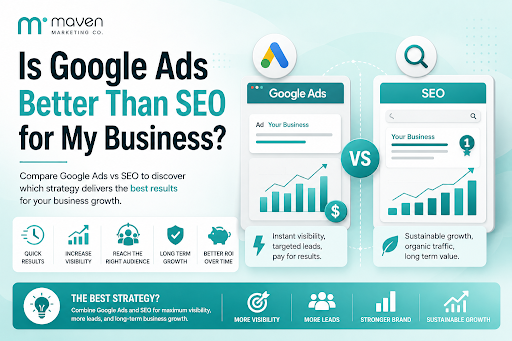
Is Google Ads Better Than SEO for My Business
One of the biggest questions business owners ask when they are planning online growth is whether they should invest in Google Ads or SEO. Both are strong marketing plays that help your company show up in Google search results, but they do things in separate lanes. Google Ads gives quicker visibility and can bring in leads fast, whereas SEO more or less focuses on slow, steady organic traffic that tends to grow the longer you keep building it. Picking the right direction depends on what you want to achieve, how much money you can spend, how crowded the market is, and how quickly you need results, like sooner rather than later. The good news is you don’t always have to choose one or the other; it’s not exactly a black-and-white situation. If you take time to understand the strongest points of both, you can put together a more sensible digital marketing plan that supports consistent expansion. In this guide, we’ll compare Google Ads vs SEO, explain the main differences, and help you figure out what option makes the most sense for your business.

When Should I Hire a Digital Marketing Agency
Growing a business today takes more than just having a website or throwing a post on social media; customers usually search around online, compare providers, skim reviews, and basically expect the brand to show up with a solid digital presence before they even think about buying. Many businesses try to run their marketing themselves, but there comes a point when “doing it all in-house” becomes clunky and hard to manage, all at once. Knowing when to hire a digital marketing agency can end up making a big, real difference for your growth. If you’re not getting enough leads, or your online visibility feels stuck, or sales are just not moving, the right agency can bring the know-how, plus a clear plan, to help you get noticeably better outcomes. In this guide, we’ll dig into what a digital marketing agency actually does, the usual signs it’s time to bring one on, and how picking the right marketing partner can help your business move forward at a faster pace.
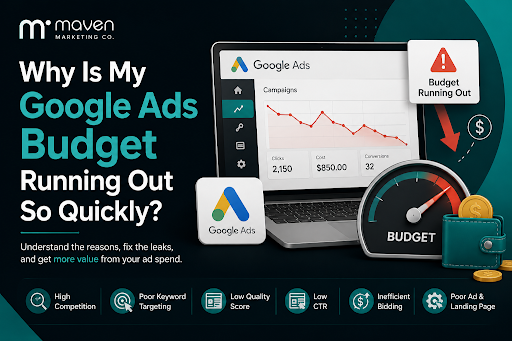
Why Is My Google Ads Budget Running Out So Quickly
Running a successful Google Ads budget isn’t only about throwing more money at it. It’s more like making every dollar, doing a bit extra. A lot of businesses start a Google Ads campaign with big hopes, then find out their daily budget is gone within a few hours, and that feels weird, right? After that, your ads stop showing effectively, new leads slip away, and your return on investment dips. So if your Google Ads budget is running out too fast, don’t stress. It’s a fairly common issue, and in most situations, it can be repaired with the right approach. There are multiple little things that can drain your advertising money quicker than you expected, from costly keywords to audience targeting that just doesn’t quite fit. In this guide, we’ll walk through why your budget disappears so quickly, how to cut wasteful spend, and the most reliable ways to boost your Google Ads ROI, even if your budget stays the same.