.svg)


%201.svg)
.avif)
Key Takeaways
- Strategic internal linking architecture strengthens SEO performance by distributing page authority throughout your website, helping search engines understand content relationships and site hierarchy whilst improving crawl efficiency.
- Effective cross-linking enhances user experience by creating logical navigation pathways that reduce bounce rates, increase time on site, and guide visitors toward high value conversion pages.
- Contextual anchor text optimization signals content relevance to search engines when using descriptive, keyword rich anchor text that naturally fits within your content rather than generic phrases.
- Hub and spoke content models establish topic authority by linking pillar pages to supporting content clusters, creating comprehensive resource centres that Google recognizes as authoritative.
- Regular link audits prevent SEO decay by identifying orphaned pages, broken links, and over optimization issues that dilute your site's authority and user experience.
Most Australian business owners obsess over backlinks, chasing guest posts, directory listings, and partnerships, whilst completely overlooking the goldmine sitting right under their noses. Your internal linking structure is arguably the most controllable aspect of your SEO strategy, yet it's where I see the most spectacular failures during site audits.
Here's what actually happens when you ignore internal linking architecture: Google's crawlers stumble through your site like tourists without a map, important pages languish in obscurity despite brilliant content, and your carefully crafted authority gets trapped on a handful of pages instead of flowing where it's needed most. Meanwhile, your visitors click around aimlessly, give up, and head straight to your competitors.
The businesses that win in search results? They've built internal linking systems that work like well designed cities. Every road has a purpose, important destinations are easily accessible, and the whole network functions as an interconnected ecosystem rather than isolated islands.
The Foundation: Understanding Link Equity Flow
Link equity, sometimes called "link juice" in less sophisticated circles, is the authority that passes from one page to another through hyperlinks. When an authoritative page links to another page on your site, it's essentially vouching for that content's value. Search engines interpret these connections as signals of importance and relevance.
According to research on internal linking's impact on SEO, strategic internal links help search engines discover new pages, understand your site's structure, and determine which pages are most important. But here's where most people get it wrong: they think more links equals better results. That's like saying more roads makes a better city. Without proper planning, you just create traffic chaos.
Your homepage typically holds the most authority on your site because it receives the majority of external backlinks. How you distribute that authority through internal links determines which pages rank and which fade into obscurity. Every link you add creates a pathway, but it also dilutes the equity passing through each individual connection. This is why strategic architecture matters more than link quantity.
Think of your site as a hydraulic system. Authority flows from high pressure sources (your homepage and other well linked pages) to lower pressure destinations. The pipes you build, your internal links, determine where that pressure goes. Build too many pipes from one source, and you reduce the flow through each. Build none, and valuable pages never receive the authority they need to rank.
.avif)
Architectural Models That Actually Work
The flat linking structure that most small business websites use, where every page links to every other page through navigation menus, is the architectural equivalent of suburban sprawl. It works at small scale but becomes completely unmanageable as your site grows, and it provides zero strategic advantage.
Professional SEO practitioners use hierarchical models that mirror how information naturally organizes. The hub and spoke approach creates pillar pages on broad topics, with supporting content (spokes) linking back to the hub and interconnecting with related spokes. This model tells search engines, "This hub page is our definitive resource on this topic, and these supporting pages provide depth and context."
Let's say you run a Melbourne based digital marketing agency. Your pillar page might be "Content Marketing Services," with supporting pages on blog writing, video production, social media content, and email campaigns. Each spoke links back to the pillar, and related spokes link to each other where contextually relevant. This creates a topic cluster that Google's algorithms recognize as comprehensive coverage of a subject area.
The sequential model works brilliantly for process driven content or customer journeys. Think of software companies that create learning pathways: introduction, basic features, advanced techniques, case studies, conversion. Each page links forward to the next logical step whilst providing pathways back for users who want to revisit earlier concepts. This model reduces bounce rates because every page offers a clear next action.
For larger sites, the pyramid structure combines both approaches. Your homepage sits at the top, linking to category pages (second tier), which link to subcategory pages (third tier), which finally link to individual content pages (fourth tier). Authority flows downward through deliberate pathways whilst contextual links allow horizontal movement between related topics at the same tier.
Anchor Text: The Language of Relevance
Generic anchor text like "click here," "read more," or "this article" wastes one of your most valuable SEO assets. Every internal link is an opportunity to tell search engines exactly what they'll find on the destination page. Descriptive, keyword rich anchor text does this job beautifully when implemented naturally.
If you're linking to a page about conversion rate optimization, anchor text like "strategies to increase your conversion rates" works far better than "learn more about CRO." The first option reinforces topic relevance whilst remaining readable and helpful to users. The second is vague and provides minimal SEO value.
But here's the nuance that separates amateurs from professionals: exact match anchor text used repeatedly looks manipulative. If every internal link to your "Sydney SEO services" page uses that exact phrase, you're waving a red flag at Google's spam detection systems. Variation is your friend. Mix in partial matches, branded terms, and natural language that still conveys relevance.
I've seen Australian businesses sabotage themselves by over optimizing internal anchor text, creating patterns so unnatural that their pages actually lose rankings. The solution is simple: write for humans first, then optimize. If your anchor text reads awkwardly when spoken aloud, you've probably gone too far.
Context matters enormously. An internal link embedded within relevant surrounding content carries more weight than the same link stuffed into a footer or sidebar. When you naturally mention related topics within your content and link to pages that expand on those ideas, you're building genuine semantic relationships that modern search algorithms reward.
.avif)
The Technical Side: Making Your Architecture Crawlable
Search engine crawlers have limited resources. They won't endlessly follow links through your site. This is why the concept of "crawl depth" matters. Pages that sit three or fewer clicks from your homepage get crawled more frequently and are generally considered more important than pages buried six or seven clicks deep.
Your most valuable conversion pages, service pages, product pages, key resources, should never be more than three clicks from your homepage. If they are, you're making it unnecessarily difficult for search engines to find them and for users to access them. This often requires restructuring your navigation and creating strategic internal links from well positioned pages.
The infamous "orphaned page" problem occurs when pages have no internal links pointing to them. Unless a page has external backlinks (unlikely for most interior pages), search engines may never discover it. During audits, I regularly find Australian business websites with dozens of orphaned blog posts that were published and forgotten. Wasted content that could be driving traffic if properly integrated into the site's linking structure.
JavaScript based navigation creates complications for crawlers. While Google has improved its JavaScript rendering capabilities, traditional HTML links remain more reliably crawlable. If your site relies heavily on JavaScript for internal navigation, you're potentially limiting which pages get indexed and how authority flows through your architecture.
Pagination and faceted navigation on e-commerce sites require special attention. When you create filtering options that generate unique URLs for every possible combination, you risk creating massive crawl bloat. Strategic use of nofollow tags, canonical tags, and robots.txt directives helps focus crawler attention on your most important pages whilst maintaining usability for visitors.
Building Your Strategic Linking Plan
Start with a content audit. Spreadsheet every page on your site with columns for URL, primary topic, current internal links pointing to it, and current authority metrics (domain authority, page authority, or whatever metrics you track). This gives you a baseline understanding of your current architecture.
Identify your authority pages, those with the most external backlinks, highest traffic, or best engagement metrics. These are your distribution hubs. Authority from these pages should flow strategically to pages that need ranking boosts, not randomly to every page on your site.
Map your topic clusters. Which pages cover related subjects? These should interconnect. If you've written five articles about email marketing but they don't link to each other, you're missing opportunities to establish topical authority. Create a spreadsheet showing your pillar topics and the supporting content for each cluster.
Establish priority pages, the ones that drive conversions or address high intent search queries. These need more internal link support than informational blog posts. A strategic architecture ensures your commercial pages receive consistent link equity from relevant supporting content.
Create a linking policy for your content team. When should writers add internal links? What anchor text guidelines should they follow? How many links per thousand words is appropriate? Without clear policies, internal linking becomes arbitrary and ineffective. Most content teams perform better with specific guidelines like "include 3 to 5 contextually relevant internal links per blog post, using descriptive anchor text that varies in phrasing."
.avif)
Common Architecture Mistakes That Tank Rankings
The footer link dump remains one of the most common mistakes I see on Australian business websites. Stuffing your footer with dozens of internal links to every conceivable page dilutes the value of each link and creates a poor user experience. Footers should include necessary links (contact, privacy policy, key categories) but not function as a dumping ground for every page you want to rank.
Sidebar link spam follows similar logic. Yes, sidebars offer consistent linking opportunities across multiple pages, but cramming them with dozens of links reduces their effectiveness and distracts users from your main content. Reserve sidebar links for truly important resources or contextually relevant suggestions based on the current page's topic.
The opposite extreme, hoarding link equity, is equally problematic. Some site owners fear "leaking" authority through internal links, so they link sparingly. This creates isolated pockets of authority that never reach pages that need it. Authority doesn't diminish when shared strategically; it multiplies through smart distribution.
Linking to irrelevant pages damages user experience and sends confusing signals to search engines. A blog post about social media marketing shouldn't link to your "About Us" page unless there's genuine contextual relevance. Every internal link should serve a purpose, either helping users find related information or reinforcing topical relationships for search engines.
Case Study: E-Commerce Site Architecture Overhaul
An Australian outdoor equipment retailer approached us with stagnant organic traffic despite adding hundreds of product pages over 18 months. Their site had grown organically without architectural planning, resulting in deep crawl paths and poor internal linking.
We implemented a three tier pyramid structure: category pages (camping, hiking, water sports) at tier two, subcategory pages (tents, sleeping bags, backpacks) at tier three, and individual product pages at tier four. Each product page linked up to its subcategory, which linked to its parent category. We added contextual internal links from product descriptions to related products and relevant blog content.
Within four months, their organic traffic increased 67%, and more importantly, previously invisible product pages began ranking for long tail search terms. The key wasn't creating new content. It was making existing content discoverable and establishing clear topical relationships through strategic internal linking.
Case Study: Professional Services Site Restructure
A Sydney based accounting firm had excellent content, comprehensive guides on tax planning, business structures, and financial management, but minimal organic visibility. Analysis revealed that while their blog had over 80 published articles, most contained zero internal links to service pages or other related content.
We created five topic clusters around their core services: tax planning, business advisory, bookkeeping, SMSF, and financial planning. Each cluster had a pillar page (typically a service page) supported by 8 to 12 blog posts. We added strategic internal links from blog posts to pillar pages using varied, contextually relevant anchor text, and interconnected related blog posts within each cluster.
The pillar pages saw ranking improvements within six weeks, with three moving from page 3 or 4 to page 1 positions for competitive commercial terms. The internal linking didn't just boost rankings. It changed user behavior. Average session duration increased 43%, and conversion rates from organic traffic improved 28% as visitors found clearer pathways from informational content to service pages.
Maintaining Your Architecture Over Time
Internal linking isn't a one time project; it's an ongoing optimization practice. Every new piece of content you publish should integrate into your existing architecture. This means identifying which topic cluster it belongs to, linking from the new page to relevant existing content, and updating older pages to link to the new resource where contextually appropriate.
Quarterly link audits catch problems before they compound. Use tools like Screaming Frog or SEMrush to identify orphaned pages, broken internal links, and pages with unusually low internal link counts. These audits reveal architectural weaknesses that develop as your site evolves.
Monitor your most important pages for link count stability. If a key conversion page historically had 47 internal links pointing to it and suddenly drops to 12, something changed in your site structure, probably not intentionally. Regular monitoring prevents accidental de optimization.
Update your linking strategy as your business priorities shift. If you launch new services or products, your internal linking should elevate these new offerings appropriately. If certain pages consistently fail to convert despite traffic, consider whether poor internal linking is trapping visitors rather than guiding them toward next steps.
.avif)
Measuring Internal Linking Performance
The most obvious metric is organic traffic growth to pages receiving enhanced internal linking. Track traffic changes at the individual page level, not just site wide, to understand which architectural changes deliver results.
Rankings for target keywords provide validation of your approach. If strategic internal linking to a specific page correlates with improved rankings for its target terms, you're on the right track. If not, consider whether you're targeting the right pages or using sufficiently relevant anchor text.
Engagement metrics reveal user experience improvements. Pages with stronger internal linking should see increased average time on page and reduced bounce rates as visitors find clearer pathways to related content. If bounce rates remain high despite more internal links, you might be linking to irrelevant content or failing to meet user intent.
Conversion rate changes matter most for commercial pages. The ultimate goal of internal linking architecture isn't just rankings. It's guiding visitors toward valuable actions. Track whether strategic internal linking to conversion pages correlates with improved conversion rates from organic traffic.
The Future of Internal Linking in AI Search
As Google's AI overviews and other AI powered search features evolve, internal linking architecture becomes even more critical. These systems attempt to understand entity relationships and topic comprehensiveness, exactly what strategic internal linking demonstrates. Sites with clear topical clusters connected through deliberate internal linking signal expertise and authority that AI systems can recognize and reward.
Voice search and conversational AI queries favor sites with strong internal architecture because these searches often require multipage answers. When someone asks a complex question, AI systems may pull information from multiple pages on your site, if those pages are properly connected and Google understands their relationships.
The shift toward topic authority over individual keyword optimization reinforces the hub and spoke model's importance. Search engines increasingly want to see comprehensive coverage of topics, not just isolated keyword optimized pages. Your internal linking architecture demonstrates whether you've truly covered a subject in depth or just published scattered content.
.avif)
Your Next Steps Toward SEO Dominance
Internal linking architecture isn't glamorous. It won't give you the dopamine hit of landing a high authority backlink or seeing a sudden traffic spike. But it's the foundation that makes everything else in your SEO strategy more effective.
Your content performs better when it's properly connected. Your technical SEO improvements deliver bigger results when crawlers can efficiently navigate your site. Your conversion optimization efforts succeed more readily when internal linking guides visitors through strategic pathways.
The businesses that dominate Australian search results haven't just created great content. They've built architectures that maximize every piece of content's potential through strategic cross-linking. They understand that a hundred well connected pages outperform a thousand isolated ones every single time.
You've got two choices: keep treating internal linking as an afterthought and watch your competitors leverage this advantage, or commit to building an architecture that transforms your existing content into an SEO powerhouse.
Ready to build an internal linking architecture that actually drives results? The team at Maven Marketing Co specializes in SEO strategies that deliver measurable business growth for Australian companies. We don't just add random links. We architect systems that boost rankings, enhance user experience, and drive conversions. Let's audit your current structure and build a strategic linking plan that puts your content to work. Visit mavenmarketingco.com.au today to discover how strategic SEO can transform your digital presence.
Frequently Asked Questions
How many internal links should each page have?
There's no magic number, but aim for 3 to 7 contextually relevant internal links per standard blog post or content page. Focus on quality and relevance rather than hitting arbitrary targets. Your most important pages (pillar content, high converting service pages) can support more internal links pointing to them from relevant supporting content. The key is ensuring every link serves a purpose, either helping users find related information or reinforcing topical relationships for search engines.
Should I use nofollow tags on internal links?
Generally, no. Nofollow tags on internal links prevent link equity from flowing to the linked page, which defeats the purpose of strategic internal linking. Reserve nofollow for genuine cases where you don't want to pass authority, such as links to login pages, tag archives that create thin content, or user generated content you can't fully verify. Overuse of internal nofollow tags hobbles your ability to distribute authority where it's needed most.
How do I fix orphaned pages on my website?
Start by running a crawl audit using tools like Screaming Frog to identify pages with zero internal links. Then determine whether each orphaned page should be (1) integrated into your site architecture with strategic internal links from relevant existing content, (2) redirected to a more current page if the content is outdated, or (3) deleted if it no longer serves a purpose. For pages worth keeping, add them to relevant topic clusters and ensure at least 2 to 3 contextually appropriate internal links point to them from related content.

Table of contents
read more blogs
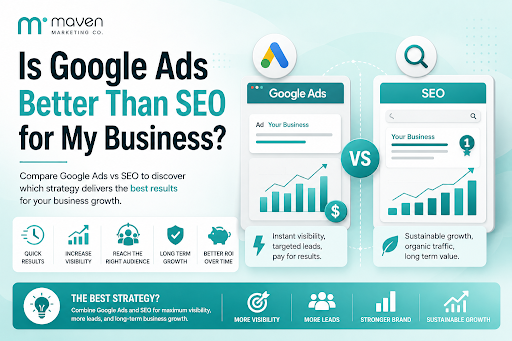
Is Google Ads Better Than SEO for My Business
One of the biggest questions business owners ask when they are planning online growth is whether they should invest in Google Ads or SEO. Both are strong marketing plays that help your company show up in Google search results, but they do things in separate lanes. Google Ads gives quicker visibility and can bring in leads fast, whereas SEO more or less focuses on slow, steady organic traffic that tends to grow the longer you keep building it. Picking the right direction depends on what you want to achieve, how much money you can spend, how crowded the market is, and how quickly you need results, like sooner rather than later. The good news is you don’t always have to choose one or the other; it’s not exactly a black-and-white situation. If you take time to understand the strongest points of both, you can put together a more sensible digital marketing plan that supports consistent expansion. In this guide, we’ll compare Google Ads vs SEO, explain the main differences, and help you figure out what option makes the most sense for your business.

When Should I Hire a Digital Marketing Agency
Growing a business today takes more than just having a website or throwing a post on social media; customers usually search around online, compare providers, skim reviews, and basically expect the brand to show up with a solid digital presence before they even think about buying. Many businesses try to run their marketing themselves, but there comes a point when “doing it all in-house” becomes clunky and hard to manage, all at once. Knowing when to hire a digital marketing agency can end up making a big, real difference for your growth. If you’re not getting enough leads, or your online visibility feels stuck, or sales are just not moving, the right agency can bring the know-how, plus a clear plan, to help you get noticeably better outcomes. In this guide, we’ll dig into what a digital marketing agency actually does, the usual signs it’s time to bring one on, and how picking the right marketing partner can help your business move forward at a faster pace.
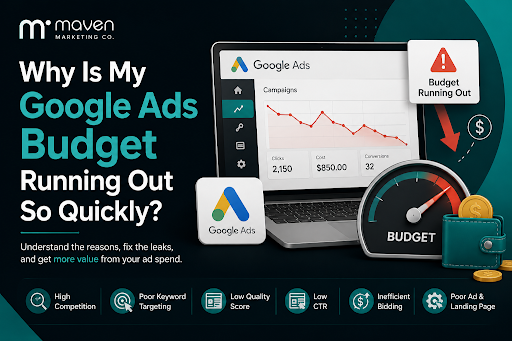
Why Is My Google Ads Budget Running Out So Quickly
Running a successful Google Ads budget isn’t only about throwing more money at it. It’s more like making every dollar, doing a bit extra. A lot of businesses start a Google Ads campaign with big hopes, then find out their daily budget is gone within a few hours, and that feels weird, right? After that, your ads stop showing effectively, new leads slip away, and your return on investment dips. So if your Google Ads budget is running out too fast, don’t stress. It’s a fairly common issue, and in most situations, it can be repaired with the right approach. There are multiple little things that can drain your advertising money quicker than you expected, from costly keywords to audience targeting that just doesn’t quite fit. In this guide, we’ll walk through why your budget disappears so quickly, how to cut wasteful spend, and the most reliable ways to boost your Google Ads ROI, even if your budget stays the same.