.svg)


%201.svg)

Key Takeaways
- Instagram and TikTok are fundamentally different platforms with different discovery mechanics, different audience compositions, and different content requirements. A strategy that works on one does not translate directly to the other.
- The primary variable in the platform prioritisation decision is audience alignment: which platform carries the highest concentration of the specific people the business needs to reach, and at what stage of their decision journey those people are using each platform.
- TikTok's discovery algorithm is significantly more aggressive than Instagram's at surfacing content to users who do not already follow the brand. This makes TikTok the stronger platform for audience acquisition, while Instagram is typically stronger for audience retention, community development, and conversion.
- Content production requirements differ substantially between the two platforms. TikTok rewards a higher volume of native, relatively unpolished video content produced in the platform's own idiom. Instagram rewards a broader content format mix but with a generally higher expectation of visual polish.
- Australian businesses with audiences skewing toward the 18 to 34 age range, particularly those in fashion, food, entertainment, lifestyle, and consumer products, will typically find TikTok the primary platform with greater leverage. Businesses targeting older demographics, professional audiences, or B2B buyers will typically find Instagram the more effective primary platform.
- Resource allocation is not a permanent decision. The platform prioritisation should be reviewed quarterly alongside performance data that tracks follower growth, reach, engagement, and conversion attribution across both platforms, with resource adjusted to follow actual results rather than initial assumptions.
- A business that cannot produce the minimum viable content volume required for meaningful traction on two platforms simultaneously is better served by focusing fully on one platform and executing it well than by maintaining a token presence on both.
Why Platform Choice Matters More Than It Used To
Five years ago, the dominant advice for Australian businesses evaluating their social media investment was to be present on every major platform and let the audience find them. That advice has aged poorly. The content production demands of maintaining a genuinely active, genuinely strong presence on multiple social platforms simultaneously have increased substantially, while the organic reach on each platform has declined for brands that do not post with sufficient frequency and format alignment.
In 2026, the realistic options for most Australian businesses are to invest meaningfully in one or two platforms and accept a limited presence on others, or to spread resource thinly across multiple platforms and achieve meaningful traction on none of them. The businesses generating genuine commercial results from social media are almost universally those that have made a deliberate primary platform choice and built their content programme, community management, and paid amplification strategy around that choice.
The Instagram versus TikTok decision is the most consequential platform choice for most Australian businesses targeting consumers because the two platforms now overlap significantly in audience demographics while remaining substantially different in how they distribute content, what content performs well on each, and what commercial outcomes they support most effectively.
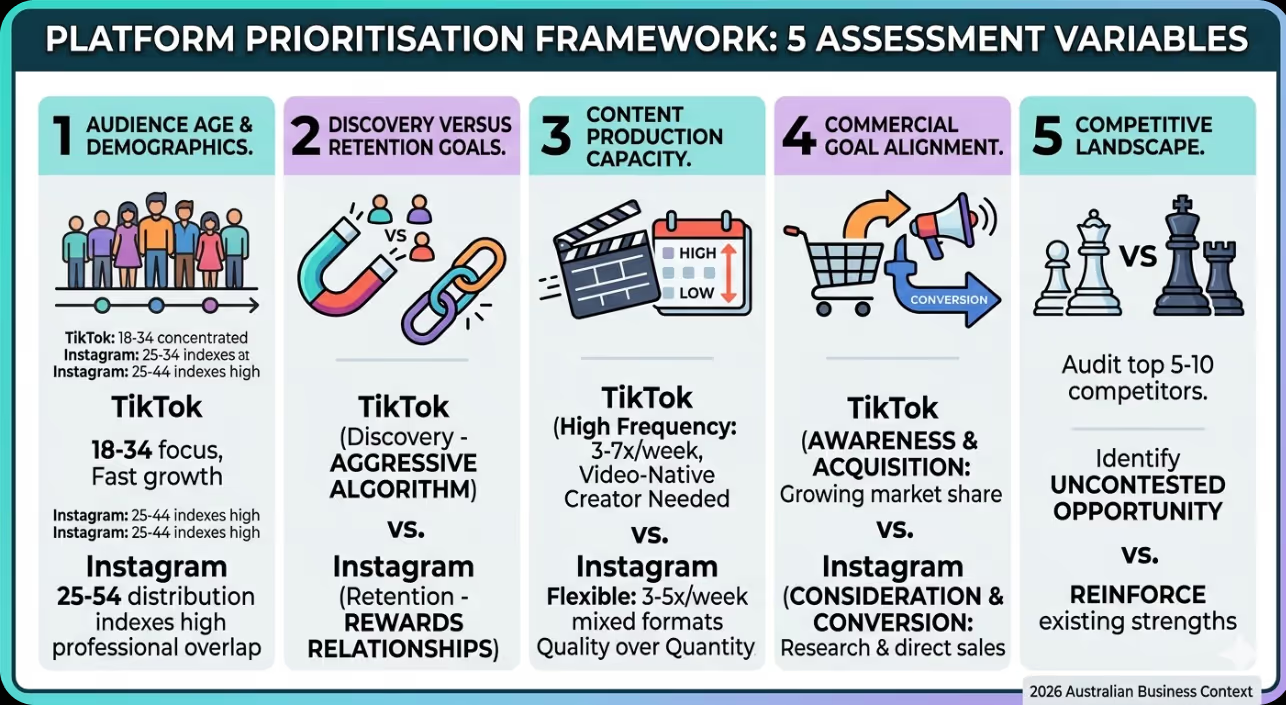
The Framework: Five Assessment Variables
The platform prioritisation framework is built around five variables that, assessed together, produce a clear indication of where the primary resource investment should go.
Variable 1: Audience Age and Demographics
The single most reliable predictor of which platform will deliver better results is the age composition of the target audience.
TikTok's Australian user base in 2026 remains predominantly concentrated in the 18 to 34 age range, with meaningful penetration into the 35 to 44 range but significantly lower engagement from users over 45. If the primary target audience for the business is in the 18 to 34 bracket, TikTok is where that audience is spending the greatest volume of social media time. For brands in fashion, food and beverage, entertainment, gaming, consumer electronics, fitness, and lifestyle categories targeting this demographic, TikTok's audience composition is a compelling primary platform argument on its own.
Instagram's Australian user base is more evenly distributed across the 18 to 54 range. It indexes significantly above average for users in the 25 to 44 range relative to TikTok and retains meaningfully higher usage among users over 45. For Australian businesses targeting the 30 to 50 demographic, professional audiences and those in semi professional roles, or any audience segment where disposable income and purchasing authority are significant factors, Instagram's demographic profile is generally more favourable.
For businesses with broad demographic targets that span both platforms' core audiences, the demographic variable alone does not resolve the prioritisation question and the remaining variables carry greater weight.
Variable 2: Discovery Versus Retention Goals
Instagram and TikTok differ fundamentally in how their algorithms distribute content to users who do not already follow the account producing it, and this difference has direct implications for what each platform is best suited to deliver.
TikTok's For You Page algorithm is among the most aggressive content discovery systems in social media. It routinely surfaces content from accounts with no followers to audiences of thousands or tens of thousands when the content signals generate sufficient early engagement. For Australian businesses that are trying to grow their audience rapidly, enter new demographic segments, or achieve viral reach for a specific product or campaign, TikTok's discovery mechanics are substantially more powerful than Instagram's.
Instagram's discovery mechanisms, including the Explore page, suggested accounts, and hashtag discovery, are less aggressive at distributing unfamiliar content to new audiences. Instagram rewards existing relationships more heavily: content from accounts a user already follows and engages with consistently will be distributed more reliably than content from unknown accounts. For Australian businesses with an established audience that they are trying to deepen relationships with, move through a purchase consideration cycle, or convert to customers or subscribers, Instagram's mechanics are better suited to that objective.
The practical implication is that a brand in the early stages of audience building will typically extract more value from TikTok's discovery mechanics, while a brand with an established following looking to drive specific commercial outcomes will often find Instagram the more reliable performance channel.
Variable 3: Content Production Capacity
Meaningful traction on TikTok requires a content production capacity that most Australian businesses underestimate before they begin. The platform rewards video content posted at high frequency (typically three to seven times per week for accounts building meaningful organic reach), with content that fits the platform's native formats, reference points, and pacing. That volume of video content, produced to a standard that performs in the TikTok environment, requires either a dedicated content creator working in house who is genuinely fluent in TikTok's creative language, or a production workflow that can turn around video content at the frequency the platform demands.
Instagram's content requirements are more varied in format and more forgiving in frequency. A brand publishing three to five times per week across a mix of feed posts, Stories, and Reels can maintain meaningful visibility without the production intensity that TikTok's algorithm demands. The bar for visual quality on Instagram's feed is generally higher than on TikTok, but the frequency pressure is lower, and the format diversity means a brand that does not excel at video can still build a strong presence through photography and graphics.
Australian businesses should assess their actual production capacity honestly before making a platform commitment. A marketing team that can realistically produce two or three quality Instagram posts per week alongside a Stories programme will achieve better results from that focused Instagram investment than from attempting to add a TikTok presence at insufficient volume.
Variable 4: Commercial Goal Alignment
The commercial outcomes each platform supports most effectively should match the business's primary revenue objective.
TikTok's primary commercial strength is awareness and acquisition. Its discovery algorithm creates genuine opportunities to reach new audiences at scale, and its integration with TikTok Shop in markets where that feature is active makes it a viable direct commerce channel for Australian consumer brands selling products suited to impulse discovery. For businesses whose primary revenue goal is reaching new customers and growing their market share, TikTok's acquisition mechanics make it the more commercially aligned platform.
Instagram's primary commercial strength is consideration and conversion. Users on Instagram tend to use the platform to research brands and products they are already aware of, follow accounts whose content they have chosen to engage with, and make purchase decisions within a context of existing brand familiarity. Instagram's shopping features, link stickers in Stories, and the ability to drive traffic directly from posts to specific landing pages make it a more reliable conversion channel for most Australian businesses with considered purchase cycles.
For businesses where both awareness and conversion are significant goals, the allocation question becomes one of which objective the current marketing strategy prioritises. Businesses in growth mode prioritising market awareness and new customer acquisition should weight TikTok more heavily. Businesses with established awareness looking to convert existing interest into revenue should weight Instagram more heavily.
Variable 5: Competitive Landscape on Each Platform
The competitive intensity on each platform within the specific industry or category is a meaningful factor in determining where the resource investment will have the greatest impact.
If the brand's primary competitors have established, strong, established presences on Instagram but minimal or poor or negligible presences on TikTok, TikTok represents a less contested opportunity where early investment is more likely to result in distinctive category presence. The inverse logic applies: if competitors are already dominant on TikTok and the brand has a strong existing position on Instagram, reinforcing the Instagram advantage may be a more efficient use of resource than competing against established TikTok presences from a standing start.
A competitive audit of both platforms, assessing the follower counts, posting frequency, engagement rates, and content quality of the five to ten most relevant competitors on each, provides the data needed to assess where the competitive landscape represents an opportunity and where it represents a structural barrier.
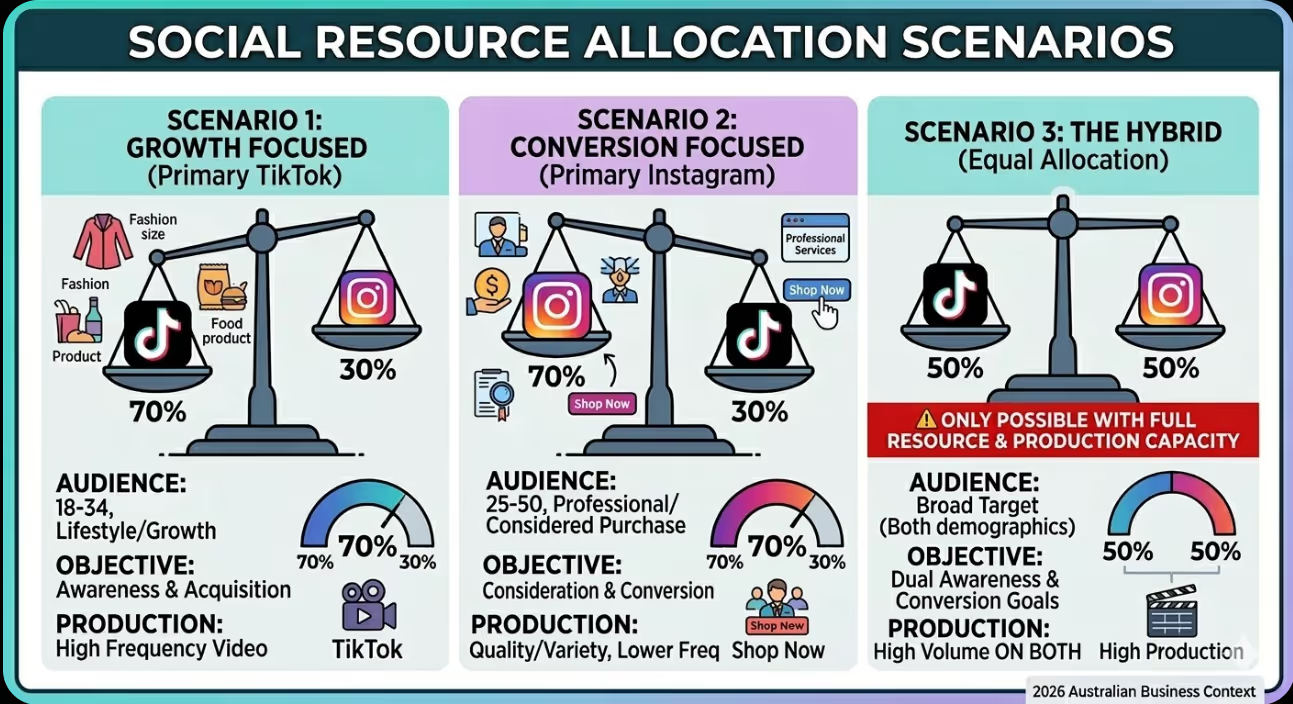
Recommended Allocation Scenarios
The framework's five variables combine to suggest different allocation approaches for different business situations.
Primary TikTok, secondary Instagram: Australian consumer brands targeting the 18 to 34 demographic, in categories where discovery drives growth such as fashion, food, lifestyle, and entertainment, with a dedicated video content creator and an audience growth objective. TikTok receives seventy percent of social resource including content production time, community management, and paid amplification budget. Instagram is maintained as a brand credibility asset with a publishing frequency of three to four times per week.
Primary Instagram, secondary TikTok: Australian businesses targeting the 25 to 50 demographic, in considered purchase categories, with a commercial objective centred on conversion and a marketing team whose production capacity does not support video content at high frequency. Instagram receives seventy percent of social resource. TikTok is either maintained as an experimental secondary channel with minimal resource commitment or deprioritised entirely until production capacity can support it meaningfully.
Equal allocation: Australian businesses with broad demographic targets, dual objectives across awareness and conversion, and sufficient production capacity and budget to maintain a genuinely active presence on both platforms simultaneously. Equal allocation is only appropriate when the production commitment for each platform is genuinely met, not when equal allocation means each platform receives half of an insufficient total resource.
FAQs
How should an Australian business measure whether its current platform allocation is delivering the right returns?
The performance indicators that matter most for platform allocation decisions are reach among the target demographic, follower growth rate, content engagement rate relative to account size, and conversion attribution from each platform's traffic to the website or purchase funnel. Each of these should be tracked per platform over a minimum of three months before drawing allocation conclusions, as results from a single month are too volatile to indicate structural performance. If one platform is consistently outperforming the other across three or more of these indicators over a full quarter, that is the signal to review the allocation in favour of the stronger performer. The performance review should happen at least quarterly and the allocation adjusted by meaningful increments rather than small tweaks that do not produce a genuine change in how resource is distributed.
Is it worth maintaining a presence on a secondary platform if the resource available for it is very limited?
A token presence on a secondary platform, defined as publishing once or twice per week with minimal community engagement and no paid amplification, delivers very limited commercial value and risks presenting the brand poorly to any visitor who assesses the account as part of their evaluation of the brand's credibility and activity level. If the resource available for the secondary platform is insufficient to maintain a genuinely active presence, the honest and commercially sounder choice is to either not maintain the secondary presence at all or to post a clear message on the account indicating that the brand is active on its primary platform and directing visitors there. Australian businesses that maintain a thin presence across four or five platforms typically generate better results by consolidating that resource into two platforms and executing both properly.
How does paid advertising factor into the platform prioritisation decision?
Paid advertising on each platform changes the resource allocation question because it decouples organic reach from follower base and enables targeted audience acquisition independent of the brand's existing presence quality. A business with a very limited TikTok following can still reach its target audience effectively through TikTok paid campaigns without the organic content volume that building a following organically requires. For Australian businesses with a paid social budget, the platform prioritisation decision for paid investment should be based primarily on audience targeting capability, cost per result, and conversion attribution rather than on the organic content considerations that dominate the prioritisation framework for businesses relying primarily on organic reach. In practice, this often means running paid campaigns on both platforms simultaneously while focusing organic content resource on the primary platform, treating paid TikTok as an acquisition channel and paid Instagram as a conversion channel.
The Framework Is the Starting Point, Not the Final Word
Platform performance for Australian businesses is not static, and a prioritisation decision made on good data in March 2026 may need to be revisited by June 2026 if the performance data tells a different story than the framework predicted. The value of the framework is not that it produces a permanent answer. It is that it replaces intuition and imitation with a structured assessment of the specific variables that determine platform fit for a specific business. Revisiting the framework quarterly with fresh performance data and updated competitive context is what turns a single decision into an ongoing discipline.
Maven Marketing Co helps Australian businesses develop social media strategies tailored to each platform, including resource allocation frameworks, content production systems, and performance tracking structures that keep the investment directed toward results.
Talk to the team at Maven Marketing Co →

Table of contents
read more blogs
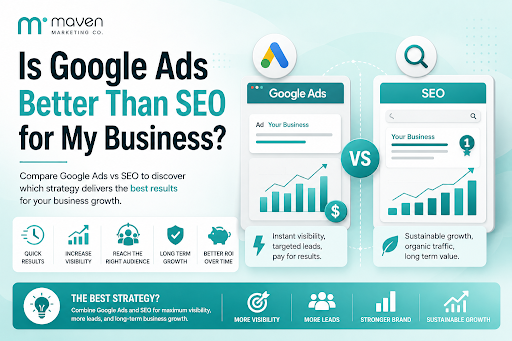
Is Google Ads Better Than SEO for My Business
One of the biggest questions business owners ask when they are planning online growth is whether they should invest in Google Ads or SEO. Both are strong marketing plays that help your company show up in Google search results, but they do things in separate lanes. Google Ads gives quicker visibility and can bring in leads fast, whereas SEO more or less focuses on slow, steady organic traffic that tends to grow the longer you keep building it. Picking the right direction depends on what you want to achieve, how much money you can spend, how crowded the market is, and how quickly you need results, like sooner rather than later. The good news is you don’t always have to choose one or the other; it’s not exactly a black-and-white situation. If you take time to understand the strongest points of both, you can put together a more sensible digital marketing plan that supports consistent expansion. In this guide, we’ll compare Google Ads vs SEO, explain the main differences, and help you figure out what option makes the most sense for your business.

When Should I Hire a Digital Marketing Agency
Growing a business today takes more than just having a website or throwing a post on social media; customers usually search around online, compare providers, skim reviews, and basically expect the brand to show up with a solid digital presence before they even think about buying. Many businesses try to run their marketing themselves, but there comes a point when “doing it all in-house” becomes clunky and hard to manage, all at once. Knowing when to hire a digital marketing agency can end up making a big, real difference for your growth. If you’re not getting enough leads, or your online visibility feels stuck, or sales are just not moving, the right agency can bring the know-how, plus a clear plan, to help you get noticeably better outcomes. In this guide, we’ll dig into what a digital marketing agency actually does, the usual signs it’s time to bring one on, and how picking the right marketing partner can help your business move forward at a faster pace.
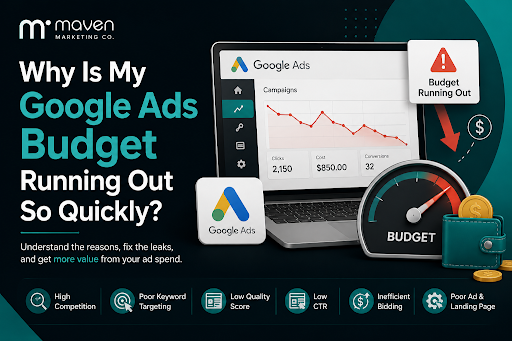
Why Is My Google Ads Budget Running Out So Quickly
Running a successful Google Ads budget isn’t only about throwing more money at it. It’s more like making every dollar, doing a bit extra. A lot of businesses start a Google Ads campaign with big hopes, then find out their daily budget is gone within a few hours, and that feels weird, right? After that, your ads stop showing effectively, new leads slip away, and your return on investment dips. So if your Google Ads budget is running out too fast, don’t stress. It’s a fairly common issue, and in most situations, it can be repaired with the right approach. There are multiple little things that can drain your advertising money quicker than you expected, from costly keywords to audience targeting that just doesn’t quite fit. In this guide, we’ll walk through why your budget disappears so quickly, how to cut wasteful spend, and the most reliable ways to boost your Google Ads ROI, even if your budget stays the same.