
.svg)


%201.svg)
Key Takeaways
- An Instagram Stories template system is a set of a set of ready to use, brand consistent design frames that cover every recurring content category in the brand's publishing plan, allowing content to be produced quickly and consistently without requiring design work from scratch each time.
- The most effective template systems are designed around content categories rather than visual aesthetics, ensuring there is a dedicated frame built for each type of content the brand regularly publishes rather than a set of attractive designs that only fit some content types.
- Brand consistency across Instagram Stories is achieved through a design system built on a defined set of visual parameters: colour palette, typography, logo placement, image treatment style, and composition principles that apply consistently across every frame in the system.
- A template system that is well designed includes between three and five variations within each content category, providing enough variety to prevent visual repetition over time while maintaining the consistency that makes each frame immediately recognisable as belonging to the same brand.
- Instagram Stories templates must be designed specifically for the 9:16 vertical format and with the safe zones for interactive elements, text, and calls to action firmly observed. Designs that ignore safe zones produce stories where critical content is obscured by the platform's interface elements.
- The file format and software platform used to build the template system should match the production workflow of the team responsible for creating content. Templates built in design software the team does not have access to or cannot operate will not be used.
- A template system requires documentation alongside the design files: usage guidelines that specify which template to use for which content type, how to apply variations, and what elements must remain fixed versus what can be customised for each execution.
The Design Problem Instagram Stories Creates
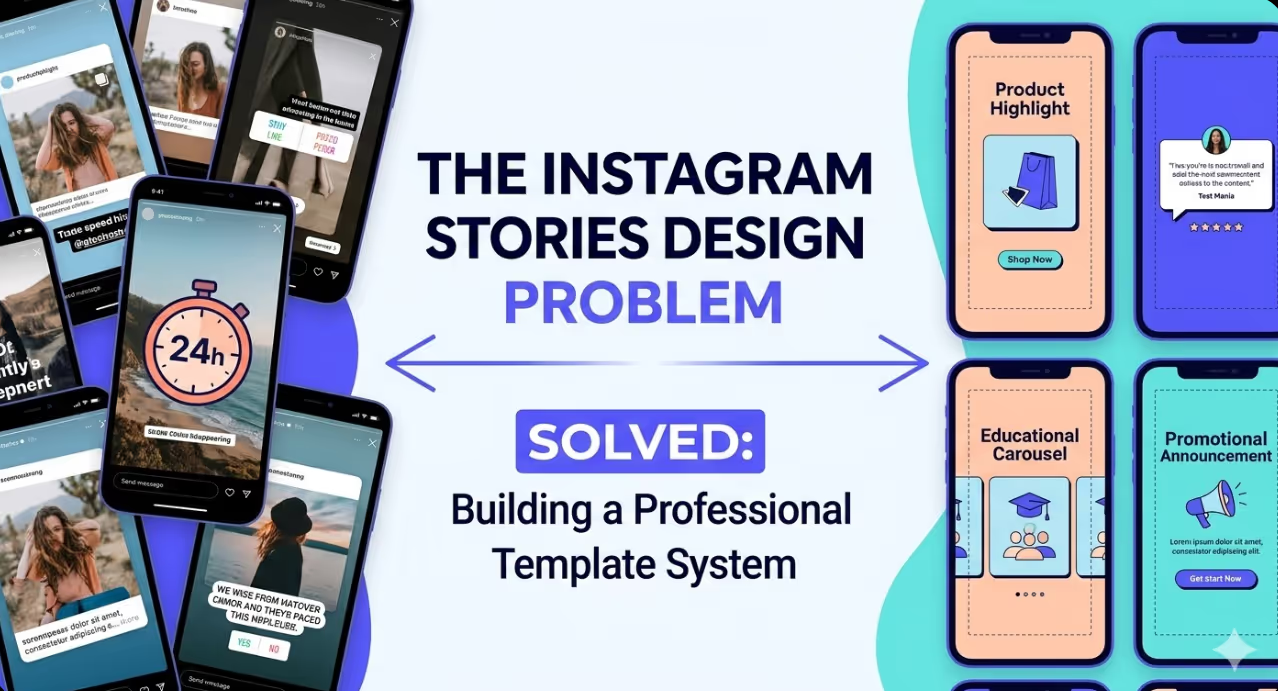
Instagram Stories presents a design challenge that is distinct from other social media formats. The format is ephemeral: Stories disappear after 24 hours and are consumed in rapid succession, with viewers tapping through multiple stories from different accounts in a single session. In that context, a brand's Stories either establish immediate visual recognition or they do not, and the window in which a viewer decides whether to continue watching or tap through is measured in fractions of a second.
The vertical 9:16 format is not simply a rotated version of the horizontal formats that most branded content was historically produced for. It has its own compositional logic, its own relationship between image and text, and its own constraints around the areas of the screen occupied by the platform's own interface elements. A design system that does not account for these characteristics from the beginning will produce templates that either look clumsy in the format or that regularly put important content in positions where it is obscured.
The volume challenge is significant. A brand publishing Stories five to seven days per week across multiple content categories will produce hundreds of individual story frames over the course of a year. Without a template system, each of those frames either requires design work from scratch, which is expensive and slow, or it is produced inconsistently by whoever happens to be creating it that day, which erodes the visual coherence that makes the brand recognisable in the format.
A professionally designed template system resolves all of these challenges. It makes production fast, makes consistency automatic, and makes the format's constraints a feature rather than an obstacle.
Phase One: Content Category Mapping
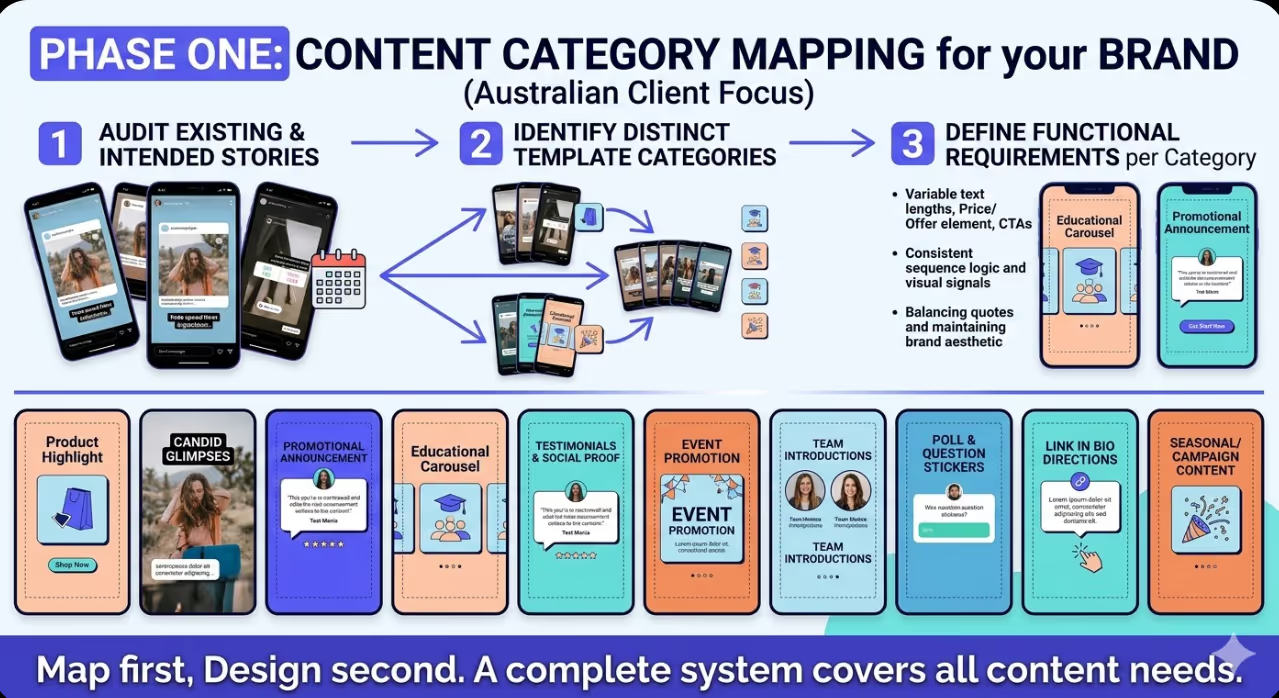
The first phase of building an Instagram Stories template system for an Australian client is mapping the content categories the brand publishes in Stories, or intends to publish, across a typical month. This mapping exercise determines how many distinct template categories the system needs to cover and, within each category, what the range of content variations looks like in practice.
Common content categories for Australian business Instagram Stories include product or service highlights, candid glimpses of the brand, promotional announcements, educational carousels, testimonials and social proof, event promotion and coverage, team introductions, poll and question stickers for audience engagement, directions to the link in the bio, and seasonal or content tied to specific campaigns.
Each category has different functional requirements. A promotional announcement template needs to accommodate variable text lengths, a clear price or offer element, and a strong visual hierarchy that leads the viewer to the call to action. An educational carousel template needs a consistent frame structure that works across multiple sequential slides with a clear visual signal that more content follows. A testimonial template needs to accommodate quotes of different lengths and must balance the quote text with a visual treatment that maintains the brand's aesthetic even when the testimonial content is not inherently visual.
Mapping these categories before a single template is designed prevents the common mistake of building a template system based on what looks visually appealing rather than what the content programme actually requires. A system of ten beautifully designed templates that do not include a testimonial format is not a complete system for a brand whose content plan includes weekly testimonial stories.
Phase Two: Visual Parameter Definition
With the content categories mapped, the visual parameters that will govern the entire template system are defined. These parameters are the design equivalent of a brand voice guide: the set of specific, documented choices that ensure every template in the system looks like it belongs to the same brand, regardless of which designer builds it or which team member uses it.
Colour palette. The primary and secondary brand colours, and the rules for how they are used in Stories specifically. Not every brand colour performs equally well in the Stories format. Colours that work well on a website or a printed piece may be too dark, too saturated, or too similar to each other to create the contrast and legibility needed in a mobile, rapidly consumed format. The Stories colour palette may be a subset or a refinement of the broader brand palette rather than an exact replication of it.
Typography. The typefaces used in Stories, the sizing hierarchy for headlines, body text, and caption elements, and the rules for weight, spacing, and alignment. Instagram Stories are consumed on small screens at varying distances and lighting conditions. The typography rules for the Stories system should prioritise legibility at mobile scale, which sometimes means choosing bolder weights or larger minimum sizes than the brand uses in other contexts.
Logo placement and sizing. The standard position and size of the logo across all template categories, and the rules for when and how it can be repositioned if a specific template layout requires it. Consistent logo placement is one of the simplest and most effective mechanisms for training the audience to associate a visual style with the brand.
Image treatment. The approach to photography and illustration used within templates: whether images are backgrounds that fill the frame edge to edge, contained within graphic frames, treated with consistent filters or colour overlays, or combined with illustration elements in a consistent style. The image treatment is often the most distinctive visual element of a Stories design system and the one that most directly communicates the brand's personality and level of production investment.
Composition principles. The rules for visual hierarchy, whitespace use, element alignment, and the positioning of text relative to imagery. These principles should be specific enough to produce consistent composition across different designers and different executions, not broad enough to allow significant variation in how the frame is structured.
Phase Three: Template Construction
With the visual parameters defined, the individual templates are constructed for each content category, typically in three to five variations per category to provide the variety needed to avoid visual repetition across a month of publishing.
The construction phase addresses the technical requirements specific to the platform that distinguish a professionally built template from one produced by someone unfamiliar with the format's constraints.
Safe zones. The top 14 percent and bottom 20 percent of a 9:16 Stories frame are occupied by the platform's interface elements: the account name and close button at the top, and the reply bar and other interactive elements at the bottom. Text, logos, calls to action, and any other elements that are critical to the content must be positioned within the safe zone between these areas. Templates built with safe zone guides embedded prevent this error at the production stage rather than discovering it after a story has been published.
Interactive element placement. Stories that incorporate stickers, poll elements, countdown timers, or link overlays need composition space designed into the template to accommodate these elements without obscuring the design or the primary message. Templates that do not account for interactive element placement force content creators to add stickers on top of design elements in ways that look unintentional.
Text accommodation. Templates must be designed with realistic text lengths in mind. A template where the headline field accommodates a maximum of two words before overrunning the design is not functional for production use. The text areas in each template should be sized and positioned to accommodate the realistic range of content that will fill them across multiple executions.
Transition consistency. For carousel or sequential story formats, the templates in each sequence should share a consistent visual logic that makes the sequence feel coherent: a consistent background treatment, a visual element that carries across slides, or a clear sequential indicator that tells the viewer how many slides remain.
Phase Four: File Format and Handover
The completed template system is delivered in the file format that best suits the client's production workflow. For teams with access to Adobe Creative Cloud, templates are typically delivered as Adobe Illustrator or Adobe Photoshop files with clearly labelled layers and editable text elements. For teams using Canva, templates are built directly in the client's Canva workspace, using the brand kit to lock the colour palette and typography choices and protect the fixed design elements from accidental modification.
The handover package includes the design files, a set of exported example executions that demonstrate how each template looks with real content, and a usage guide that documents which template to use for which content type, what elements are fixed and what is editable, and how to apply the variations within each category.
A brief orientation session, conducted via video call or screen recording, walks the content team through the template system before they begin using it, ensuring they understand the design logic and can use the files confidently without needing design support for standard production tasks.
FAQs
How many templates does a complete Instagram Stories design system typically include for an Australian business?The number of templates in a complete system depends on the breadth of the brand's content categories and the number of variations built for each. For a typical Australian business publishing Instagram Stories across five to eight content categories with three to five variations per category, a complete system includes between 20 and 40 individual template frames. Brands with a narrower content programme may have a complete system at 15 to 20 frames. Brands with a more complex content mix, including multiple categories tied to specific campaigns or a high volume of sequential carousel content, may need 50 or more frames to cover the full range of their publishing plan. The right number is determined by the content category mapping exercise rather than by a fixed target, and it is better to have a complete system covering all actual content categories than an extensive system with redundant variations in some categories and gaps in others.
What design software should Australian businesses use to manage their Instagram Stories templates within the business?The best design software for managing Instagram Stories templates is the one the content team will actually use reliably. For teams with no design background, Canva is almost always the practical choice: it is accessible, the templates can be locked to prevent accidental modification of the fixed design elements, and its mobile app allows stories to be finalised and exported from a phone when needed. For teams with a designated design resource or a professional social media manager working in house, Adobe Illustrator or Adobe Photoshop provides greater design flexibility and more precise control over typography and image treatment. For teams that use Figma for other design work, Stories templates built in Figma integrate naturally into an existing design workflow and allow collaborative editing across a team. Maven Marketing Co builds templates in whichever platform the client's team will use, and advises on platform selection during the briefing phase based on the team's existing tools and capabilities.
How often should an Australian business update or refresh its Instagram Stories template system?A template system that is well designed does not need frequent replacement, but it does benefit from periodic review and targeted updates. A review every six to twelve months is a reasonable baseline for most Australian businesses, assessing whether the templates still reflect the current brand identity accurately, whether any content categories have been added or retired that require template additions or removals, and whether the visual treatment remains contemporary relative to the platform's evolving design norms. Full template refreshes are typically triggered by a brand identity update, a significant change in the brand's social media strategy, or a shift in the platform's visual culture significant enough that the existing templates feel dated. Individual template additions, such as creating a new template for a new content category or a series tied to a specific campaign, can be made incrementally without requiring a full system rebuild.
Design Scales When the System Is Built First
The constraint that prevents most Australian businesses from achieving visual consistency in their Instagram Stories is not a lack of design skill in the team. It is the absence of a system that makes consistency the path of least resistance. When the templates are built properly, the design decisions are made once, the brand's visual identity is locked into the file, and every subsequent story produced by any team member at any level of design experience outputs at the same quality standard. The investment in building the system correctly is repaid every time a story is produced without needing a design decision from scratch.
Maven Marketing Co designs brand specific Instagram Stories template systems for Australian businesses, from content category mapping through to files that are ready for production and handover documentation.
Talk to the team at Maven Marketing Co →

Table of contents
read more blogs
Is Google Ads Better Than SEO for My Business
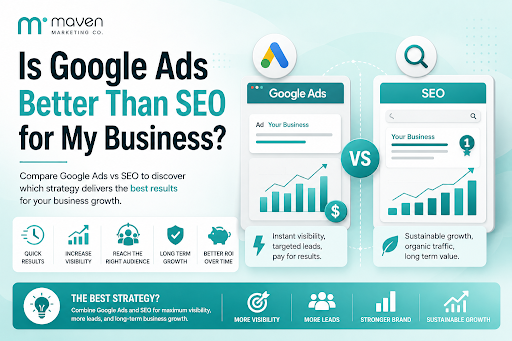
One of the biggest questions business owners ask when they are planning online growth is whether they should invest in Google Ads or SEO. Both are strong marketing plays that help your company show up in Google search results, but they do things in separate lanes. Google Ads gives quicker visibility and can bring in leads fast, whereas SEO more or less focuses on slow, steady organic traffic that tends to grow the longer you keep building it. Picking the right direction depends on what you want to achieve, how much money you can spend, how crowded the market is, and how quickly you need results, like sooner rather than later. The good news is you don’t always have to choose one or the other; it’s not exactly a black-and-white situation. If you take time to understand the strongest points of both, you can put together a more sensible digital marketing plan that supports consistent expansion. In this guide, we’ll compare Google Ads vs SEO, explain the main differences, and help you figure out what option makes the most sense for your business.

When Should I Hire a Digital Marketing Agency
Growing a business today takes more than just having a website or throwing a post on social media; customers usually search around online, compare providers, skim reviews, and basically expect the brand to show up with a solid digital presence before they even think about buying. Many businesses try to run their marketing themselves, but there comes a point when “doing it all in-house” becomes clunky and hard to manage, all at once. Knowing when to hire a digital marketing agency can end up making a big, real difference for your growth. If you’re not getting enough leads, or your online visibility feels stuck, or sales are just not moving, the right agency can bring the know-how, plus a clear plan, to help you get noticeably better outcomes. In this guide, we’ll dig into what a digital marketing agency actually does, the usual signs it’s time to bring one on, and how picking the right marketing partner can help your business move forward at a faster pace.
Why Is My Google Ads Budget Running Out So Quickly
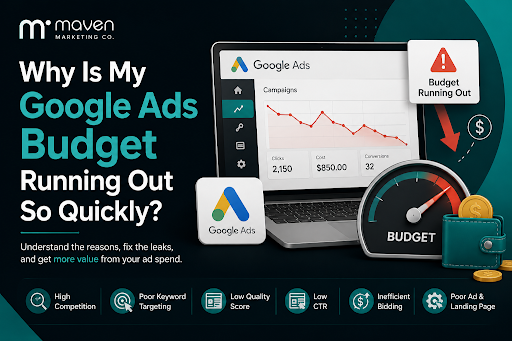
Running a successful Google Ads budget isn’t only about throwing more money at it. It’s more like making every dollar, doing a bit extra. A lot of businesses start a Google Ads campaign with big hopes, then find out their daily budget is gone within a few hours, and that feels weird, right? After that, your ads stop showing effectively, new leads slip away, and your return on investment dips. So if your Google Ads budget is running out too fast, don’t stress. It’s a fairly common issue, and in most situations, it can be repaired with the right approach. There are multiple little things that can drain your advertising money quicker than you expected, from costly keywords to audience targeting that just doesn’t quite fit. In this guide, we’ll walk through why your budget disappears so quickly, how to cut wasteful spend, and the most reliable ways to boost your Google Ads ROI, even if your budget stays the same.


