.svg)


%201.svg)

Key Takeaways
- Instagram Shopping is powered by a product catalog managed in Meta Commerce Manager. The quality of that catalog directly determines the quality of the shopping experience your audience sees.
- Product feed attributes including title, description, price, availability, and image quality are all ranking signals within Instagram Shopping search and discovery.
- Australian retailers must ensure their catalog includes accurate pricing in AUD and complies with Meta's commerce policies before their shop can be approved.
- Product images in the catalog should meet Meta's technical specifications and visual quality standards. Lifestyle images alongside clean product shots significantly improve conversion rates.
- Catalog segmentation using product sets allows retailers to control which products appear in different shopping contexts and advertising campaigns.
- Feed errors and disapproved products are among the most common and most overlooked reasons for underperformance in Instagram Shopping. Regular catalog health audits are essential.
- Retailers using Shopify, WooCommerce, or BigCommerce can connect their existing product catalog directly to Meta Commerce Manager, avoiding the need to build and maintain a separate feed.
Why the Catalog Is the Foundation of Everything
Before getting into the mechanics of catalog setup, it helps to understand why product feed quality has such a direct impact on Instagram Shopping performance.
Instagram Shopping is a an environment driven by discovery environment. Unlike Google Shopping where users arrive with explicit search intent, Instagram Shopping reaches people at a moment of browsing and inspiration. The algorithm decides which products to surface to which users based on a combination of relevance signals drawn from the product feed, the user's behaviour on the platform, and the engagement history of the product itself.
This means the product data in your catalog is not just metadata. It is the raw material the algorithm uses to decide who sees your products. A product with a title rich in search terms, complete attribute data, accurate categorisation, and strong image quality will be surfaced to relevant audiences more consistently than a product with a sparse title, missing attributes, and a low resolution image. The catalog is, in a very practical sense, your SEO layer for Instagram Shopping.
For Australian retailers, this has a specific implication. The investment in building and maintaining a high quality product feed pays compound dividends. Every improvement to product data quality improves discovery, and better discovery produces more engagement signals, which further improves the algorithm's confidence in surfacing those products. A well maintained catalog accelerates its own performance over time in a way that a poorly maintained one simply cannot.
Setting Up Instagram Shopping: The Technical Sequence
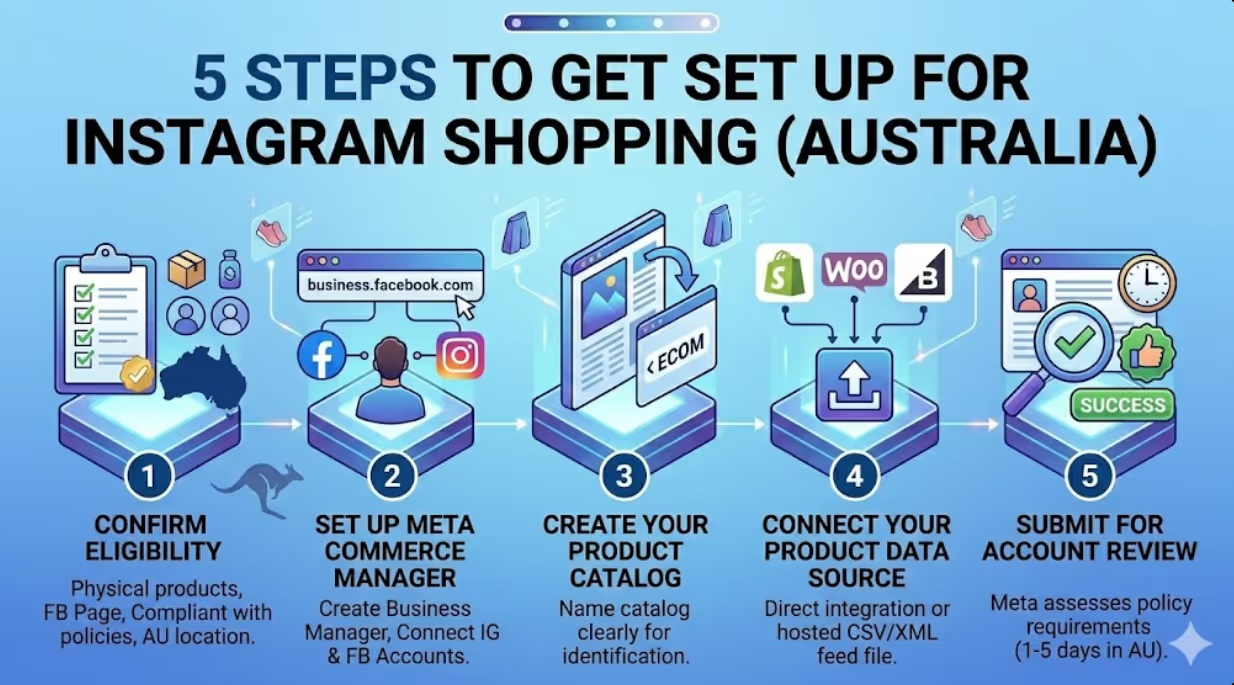
Before any product can be tagged in Instagram content or displayed in an Instagram Shop, the underlying account and catalog infrastructure needs to be in place. The setup sequence for Australian retailers follows a defined path.
Step one: Confirm eligibility. Instagram Shopping is available to business and creator accounts in Australia that sell physical products compliant with Meta's commerce policies. Digital products, services, and certain regulated product categories are not eligible. Your account must have an associated Facebook Page and your business must be located in an eligible country, which Australia is. Reviewing Meta's current commerce eligibility requirements before beginning setup prevents unnecessary delays.
Step two: Set up Meta Commerce Manager. Commerce Manager at business.facebook.com is the central hub for all Instagram and Facebook shopping activity. If you are new to the Meta business tools ecosystem, you will need to create a Business Manager account and connect your Instagram and Facebook accounts to it before accessing Commerce Manager.
Step three: Create your product catalog. Within Commerce Manager, create a new catalog and select the appropriate catalog type for your business. For most Australian product retailers, this will be the standard ecommerce catalog type. Give the catalog a clear name that identifies the business and the purpose, particularly if you are managing multiple catalogs for different brands or regions.
Step four: Connect your product data source. Meta offers several methods for populating your catalog with product data. Direct integration with platforms like Shopify, WooCommerce, and BigCommerce is the most efficient approach for retailers already using these systems. These integrations sync product data automatically, keeping your Instagram catalog current whenever inventory, pricing, or product details change in your primary ecommerce platform. For retailers not on a supported platform, a data feed file in CSV or XML format can be uploaded manually or scheduled for automatic refresh from a hosted URL.
Step five: Submit for account review. Once your catalog is populated and connected to your Instagram account, you submit for Instagram Shopping review. Meta's review team assesses whether your account and catalog meet commerce policy requirements. Review typically takes one to five business days for Australian accounts, though this can vary.
Product Feed Attributes That Drive Performance
The product feed attributes you provide, and the quality of the data within them, are the primary levers you have over how your products perform within Instagram Shopping. Understanding which attributes matter most allows you to prioritise your optimisation effort effectively.
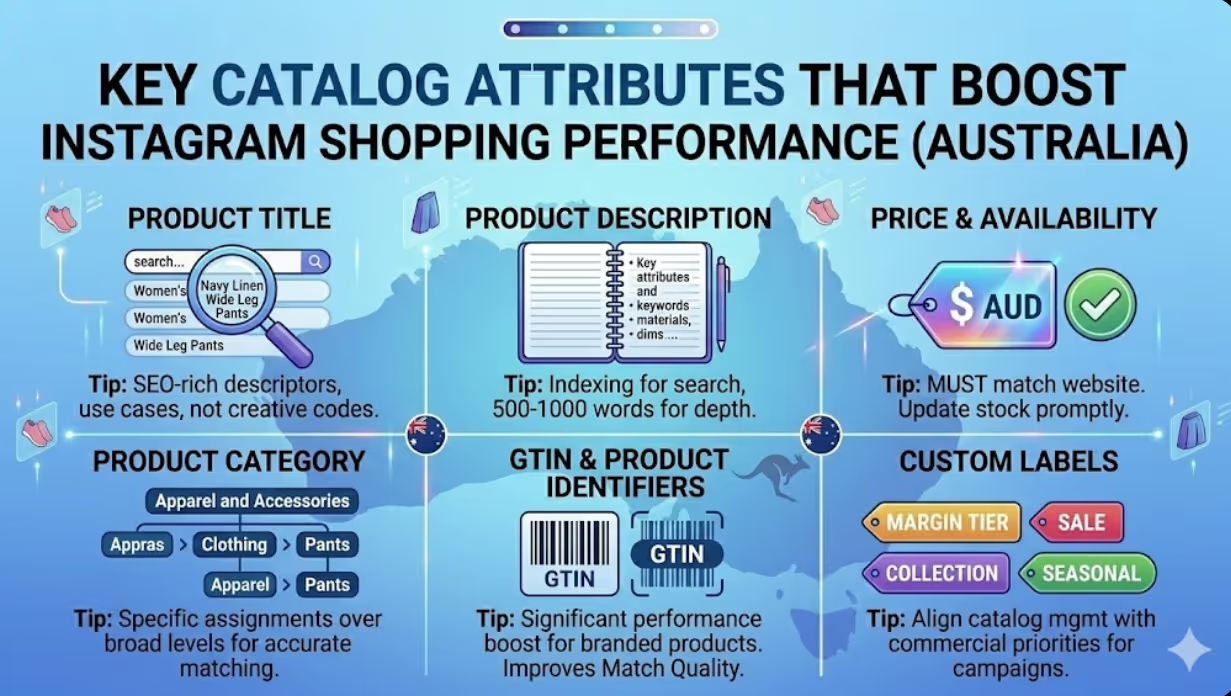
Product title. The title is the most important single attribute in your product feed. It should describe the product clearly and include the terms a customer might use to search for it. For Instagram Shopping, this means leading with the product type and key descriptors rather than internal product codes or creative naming conventions. A title like "Women's Navy Linen Wide Leg Pants" will outperform "The Coastal Relaxed Pant" for discovery purposes, even if the latter is more evocative as a brand name.
Product description. Descriptions are indexed for search within Instagram Shopping and should be treated as search engine optimisation copy in addition to product marketing copy. Include key attributes such as materials, dimensions, care instructions, and use cases. Descriptions of 500 to 1,000 words provide sufficient depth for the algorithm to understand the product while giving the customer the information they need to complete a purchase confidently.
Price and availability. Prices in your catalog must match the prices displayed on your website at the time of purchase. Discrepancies between catalog prices and website prices are among the most common reasons for catalog disapprovals and consumer complaints in Australian Instagram Shopping. AUD pricing must be specified for Australian catalogs. Availability status should be updated promptly when products go out of stock, as continuing to show and drive traffic to unavailable products creates a poor customer experience and can affect your account's commerce standing.
Product category. Assigning the correct Google product category to each item in your catalog helps Meta's algorithm understand what you are selling and match it to relevant audiences. This is an attribute many retailers skip or assign at too broad a level. Specific category assignments, for example choosing "Apparel and Accessories > Clothing > Pants" rather than just "Apparel," produce better algorithmic matching and more relevant audience delivery.
GTIN and product identifiers. For branded products, including a GTIN (Global Trade Item Number, such as a barcode) significantly improves your catalog's performance. GTINs allow Meta to connect your product listing to data it holds across the platform at the product level, improving match quality for advertising targeting and shopping discovery. Australian retailers reselling branded products should include GTINs wherever they are available.
Custom labels. Custom label fields allow you to tag products with your own classifications for use in campaign targeting and product set segmentation. Labelling products by margin tier, collection, sale status, or seasonal relevance gives you granular control over which products are promoted in which advertising contexts and allows you to align catalog management with broader commercial priorities.
Product Images: The Visual Layer That Determines Conversion
Feed data quality gets products in front of the right audiences. Product image quality determines what happens next.
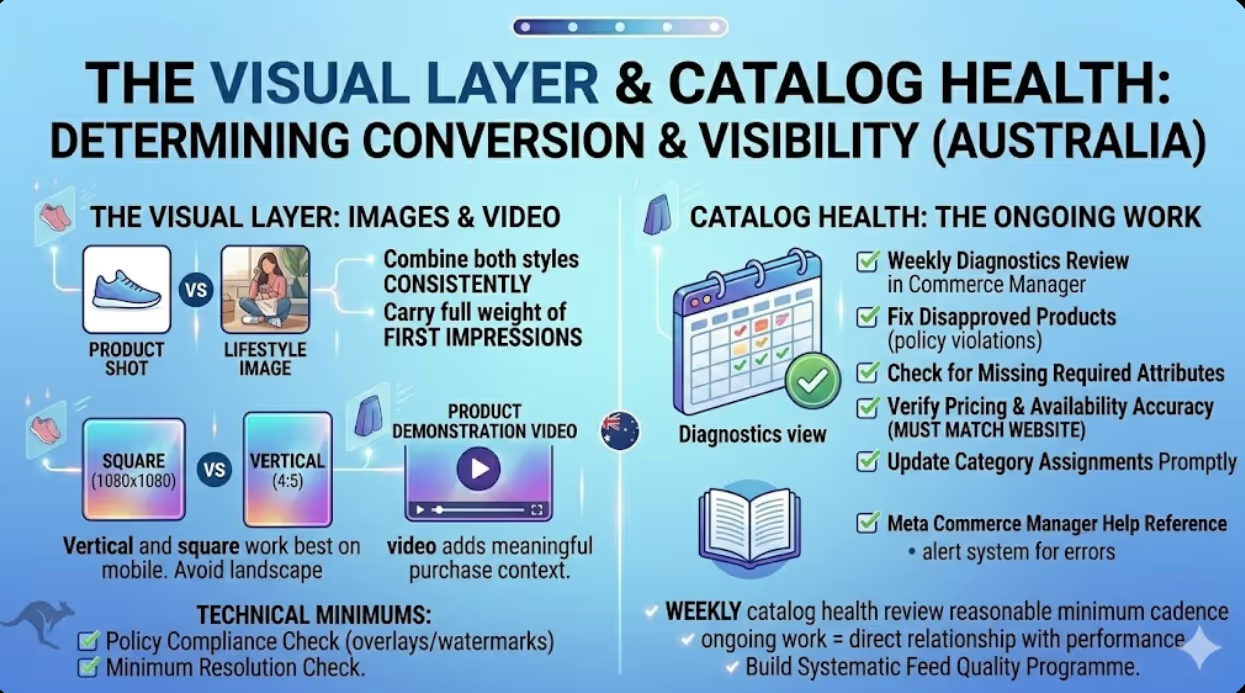
Instagram is a visual platform by design, and the images in your product catalog are carrying the full weight of first impressions for every product you sell through the channel. Meta has technical specifications that must be met for images to be approved, including minimum resolution requirements and restrictions on promotional overlays and watermarks. Beyond the technical minimums, the visual quality of product images has a direct and measurable impact on conversion rates from Instagram Shopping.
The most effective catalog image strategies for Australian retailers typically combine two image types. A clean product shot on a white or neutral background provides clarity and meets Meta's requirements for the primary product image. Lifestyle images showing the product in use or in context provide the emotional resonance and aspiration that drives purchase intent on a platform built around inspiration. Catalogs that include both image types consistently outperform those relying on a single image format.
Square images at 1080 by 1080 pixels are the standard for Instagram Shopping product images. Vertical images at a 4:5 ratio also perform well given how much Instagram content is consumed on mobile devices in portrait orientation. Horizontal or landscape images tend to be cropped in ways that can obscure key product details, so they are generally worth avoiding as primary product images.
Video is also supported in Instagram product catalogs and is worth investing in for hero products or categories where movement or context adds meaningful purchase information. A short product demonstration video within the catalog can significantly increase time spent viewing a product and reduce purchase uncertainty for considered purchases.
Catalog Health: The Ongoing Work Most Retailers Neglect
Setting up a product catalog is a beginning, not a completion. The ongoing health of your catalog has a direct relationship with your Instagram Shopping performance, and most Australian retailers are not reviewing catalog health with anything close to the frequency that would be commercially optimal.
Meta Commerce Manager provides a diagnostics view that shows errors, warnings, and disapprovals at the individual product level across your catalog. Common issues that reduce catalog performance include products disapproved for policy violations, products with missing required attributes, images that have been flagged for quality issues, prices that have fallen out of sync with the website, and products marked as available that have since sold out.
A weekly catalog health review is a reasonable minimum cadence for active Instagram retailers. This review should check the diagnostics dashboard for new errors, verify that recently added products have been correctly categorised and attributed, confirm that pricing and availability is accurate across the catalog, and identify any products that have been performing poorly in shopping contexts and may benefit from content or image improvements.
For Australian retailers managing large catalogs across multiple product categories, building a systematic feed quality programme is worthwhile. This might involve a quarterly full audit of product titles and descriptions against current SEO best practices, a monthly review of image quality for top performing products, and a live alert system for catalog errors that could affect product eligibility.
Meta's Commerce Manager Help documentation provides a comprehensive reference for catalog management, feed specifications, and error resolution, and should be a standard reference tool for any Australian retailer managing an active Instagram Shopping presence.
Platform Integrations: Working Smarter With Your Existing Systems
For the majority of Australian retailers, the most efficient path to a properly maintained Instagram catalog is a direct integration between their ecommerce platform and Meta Commerce Manager rather than managing a standalone product feed.
Shopify's Meta sales channel integration is among the most mature and widely used in the Australian market. Once connected, product data syncs automatically between your Shopify store and your Meta catalog. Inventory updates, price changes, new product additions, and product deletions all propagate to the catalog without manual intervention. The integration also supports the Facebook and Instagram Shopping checkout experience for eligible merchants.
WooCommerce retailers have access to Meta's official WooCommerce plugin as well as several highly regarded third party feed management tools that handle the sync between their WordPress store and Meta Commerce Manager. BigCommerce, Magento, and several other platforms have similar native or partner integration options.
Shopify's official documentation on the Meta sales channel covers the integration setup in detail and is the recommended starting point for Shopify retailers setting up or auditing their Instagram Shopping connection.
For retailers on platforms built on custom technology or those managing particularly large or complex catalogs, dedicated feed management tools such as DataFeedWatch or Feedonomics provide more granular control over feed transformations, attribute management using rules, and error monitoring than native platform integrations typically offer.
FAQs
How long does Instagram Shopping approval take for Australian retailers?
Meta's review process for Instagram Shopping eligibility typically takes between one and five business days for Australian accounts, though periods of high application volume can extend this timeline. The most common reasons for rejection are commerce policy violations in the product catalog, a website that does not meet Meta's requirements for completeness and functionality, and discrepancies between the business information on the account and the business operating the website. Addressing these issues before submitting for review reduces the likelihood of rejection and the need for resubmission.
How many products should be in an Instagram Shopping catalog?
There is no hard minimum or maximum. Instagram Shopping is effective for catalogs ranging from a handful of hero products to tens of thousands of SKUs. The more important factor is the quality and completeness of the data for each product rather than the total volume. For smaller retailers, maintaining excellent data quality across a focused catalog typically produces better results than populating a large catalog with incomplete product data. As catalog size grows, investing in feed management tools or dedicated resources for catalog maintenance becomes increasingly important.
What is the difference between a product catalog and a product set in Meta Commerce Manager?
A product catalog is the full collection of all your products as managed in Commerce Manager. A product set is a subset of products within the catalog that you define based on rules or manual selection. Product sets allow you to control which products are promoted in specific advertising campaigns, displayed in particular shopping contexts, or featured in your Instagram Shop's collections. For example, a retailer might create a product set for their current season's new arrivals to use in prospecting campaigns, a separate product set for sale items, and a third for their highest margin products to prioritise in retargeting. Product sets are a powerful but underused tool for aligning catalog management with commercial strategy.
Build a Catalog That Earns Its Place in the Feed
Instagram Shopping is not a channel you set up and leave to run. The retailers generating consistent revenue from it are those treating their catalog as a live commercial asset, investing in image quality, maintaining accurate product data, and reviewing feed health as a regular part of their marketing operations.
Maven Marketing Co helps Australian retailers build and optimise Instagram Shopping setups that convert discovery into revenue, from initial catalog configuration through to ongoing feed management and social commerce strategy.
Talk to the team at Maven Marketing Co →

Table of contents
read more blogs

6 Ways Digital Marketing Can Boost B2B Lead Generation
B2B lead generation is not about filling a CRM with as many names as possible. The real objective is to attract businesses that fit your offer, give the right people a reason to engage and create enough confidence for a genuine sales conversation to start.That distinction matters because B2B buying is usually more targeted than consumer marketing and often involves several people influencing the decision. Current LinkedIn lead-generation guidance makes the same point: more leads do not automatically mean better results if only a small proportion are genuinely relevant or likely to progress.Digital marketing helps by creating multiple paths into the business. Search can capture active demand. Paid media can put an offer in front of a tightly defined audience. Content can build authority before a buyer is ready to talk. Social media can keep the brand visible across a long decision cycle. Your website turns interest into action, while email helps nurture that interest over time.The strongest B2B digital marketing strategies do not treat these as six separate activities. They use them as one connected system designed to generate quality B2B leads, support sales and build a more dependable pipeline

How to Build a Brand Positioning Strategy That Sets Your Business Apart
Most businesses can explain what they sell. Far fewer can explain, in a sentence or two, why the right customer should choose them instead of another credible option. That gap is where brand positioning matters.A strong brand positioning strategy gives your business a clear place in the market and a clear place in the customer's mind. It helps your team decide who you are speaking to, what you want to be known for, which benefits deserve the most attention and how your marketing should sound and look across every channel.It is not a slogan exercise and it is not something reserved for large consumer brands. For an Australian service business, e-commerce brand, professional firm, or growing B2B company, positioning can make everyday decisions easier, from website copy and campaign messaging to pricing, sales conversations, and brand identity. The goal is not to look different for the sake of it. The goal is to be meaningfully different in a way the right customers understand and value.

The Role of Digital PR in Long Term SEO Growth
Building a solid online presence is basically more than just posting content now and then or sprinkling keywords across your website. Search engines such as Google tend to point users toward businesses that feel trustworthy, useful, and backed up by others online, even if it’s not always obvious at first. When a company puts together a well-thought-out digital PR strategy, it can bring in solid media mentions, earning high-quality backlinks and stronger brand awareness, all of which feed long-term SEO progress. Rather than obsessing solely over rankings, digital PR helps you build credibility plus authority, so your site looks more appealing to search engines and also to real people who might become customers. In this guide, we’ll walk through how digital PR supports SEO, what makes it such a key part of modern marketing, and the most effective approaches for sustainable growth in search results.