.svg)


%201.svg)
Key Takeaways
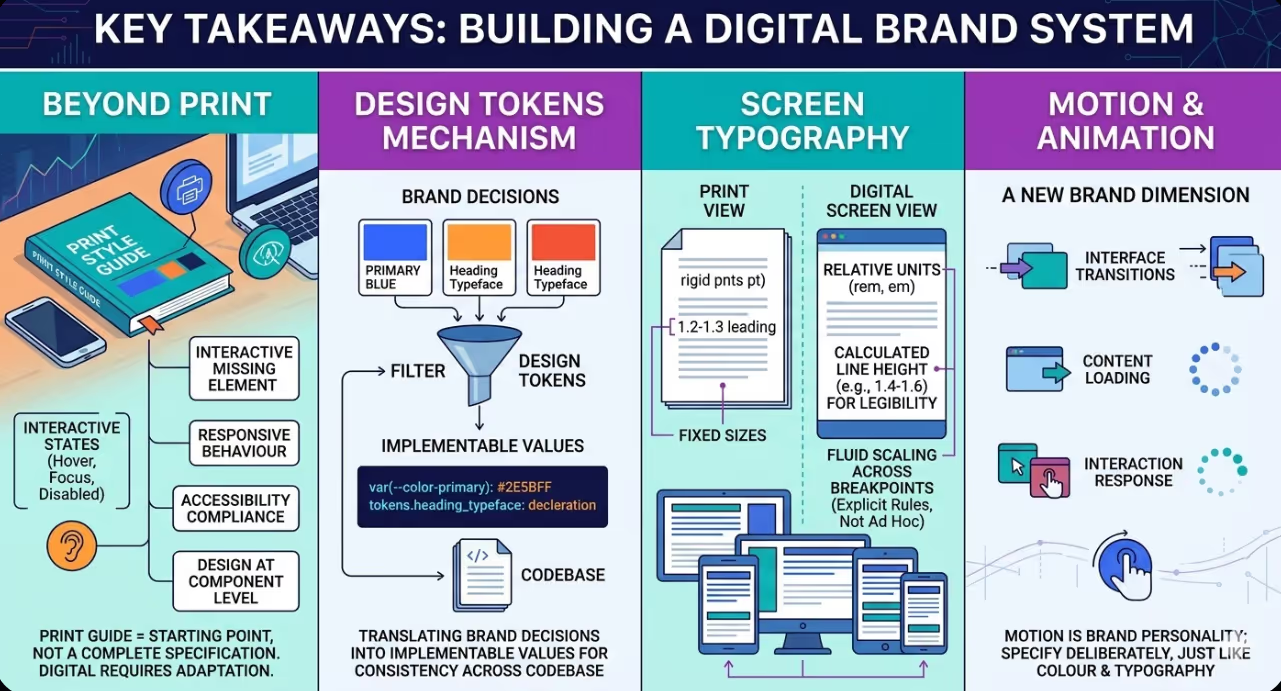
- Stock icon libraries and illustration sets have genuinely improved in quality and breadth in recent years. For many website and marketing contexts, a consistently applied stock set produces a professional result that adequately serves the brand's visual needs.
- The primary commercial argument for custom iconography and illustration is brand distinctiveness. Custom graphics that express concepts and attributes specific to the brand produce a visual identity that competitors cannot replicate by purchasing the same library subscription.
- Illustration style is one of the most immediately identifiable visual brand signals. A distinctive illustration system, characterised by a unique rendering style, colour palette, and subject matter approach, communicates brand personality as directly as the logo and colour palette do.
- Stock assets work best when the selection is disciplined and consistent. A website that uses three different icon styles from three different libraries, or that mixes corporate stock illustration with icons in a flat illustration style, will look visually incoherent regardless of how individually appropriate each asset choice was.
- Custom graphic systems require ongoing management to remain consistent as the content grows. A custom icon set used across a large website needs a clear extension process for adding new icons, and a custom illustration system needs a style guide that allows new illustrations to be produced consistently by different illustrators or at different times.
- Hybrid approaches are viable and often the most commercially sensible choice: a custom icon system for the primary interface and elements that are critical to the brand, supplemented by a consistent stock set for secondary and utility elements where custom production does not justify the investment.
- AI-generated illustration and icon tools have matured enough in 2026 to be a viable intermediate option for some contexts: more distinctive than standard stock, faster and cheaper than fully custom, but requiring careful quality review and brand consistency management.
When Stock Assets Are the Right Choice
Stock graphic assets are the right choice in more situations than many design practitioners will acknowledge, and using them well requires understanding the conditions under which they perform adequately and the discipline needed to apply them consistently.
Simple utility iconography. Icons that serve a purely functional role, communicating standard interface concepts such as navigation, search, home, settings, close, and menu, do not need to be custom. These icons represent universal conventions that users recognise across products and platforms. Designing custom versions of universally recognised symbols adds production cost without adding brand value, and can actually reduce usability if the custom version deviates from the established convention enough to be momentarily confusing.
Internal tools and B2B software. Internal business tools, B2B software products, and professional services platforms where the audience is motivated by utility rather than brand affinity can make effective use of established icon systems such as Material Symbols, Feather, Heroicons, or Phosphor Icons. These systems have been designed with internal visual coherence, are available in multiple weights and styles, and are actively maintained. For a business application where the primary user experience goal is efficient task completion, a icon system that is well implemented from these libraries is an entirely appropriate choice.
Early stage products. Products that are being developed and validated before significant investment is committed benefit from the speed and cost advantage of stock assets. Building a minimum viable product or landing page using a consistent stock icon library and illustration set allows the product to be presented professionally while the design investment is deferred until the product's direction and audience are confirmed.
Supplementary elements. Even websites and products that have a custom icon or illustration system will have contexts where supplementary stock assets are appropriate: email template decorative elements, presentation slide backgrounds, supplementary data visualisation icons, and other secondary contexts where the visual coherence requirement is lower and the production overhead of extending the custom system does not justify the investment.
The conditions under which stock assets produce good results are:
Choosing a single source or a small number of visually compatible sources rather than mixing incompatible styles. Applying the selected set consistently across the entire relevant scope, not mixing the chosen set with assets from other sources. Reviewing the selected assets for cultural relevance and avoiding images that carry unintended cultural associations in the Australian market. And updating or auditing the stock set periodically, because the visual language of stock asset libraries evolves and assets that felt contemporary when first selected can begin to look dated.
When Custom Graphics Are Justified
The brand competes on visual distinctiveness. In categories targeted at consumers where brand aesthetic is a meaningful purchase driver, the visual language of the brand's illustration and iconography system is a genuine competitive differentiator. Fashion, lifestyle, beauty, food and beverage, entertainment, and consumer technology brands in the Australian market that are building audience affinity around a distinctive brand personality cannot achieve this distinctiveness with stock assets, because stock assets are available to every competitor with the same subscription.
The brand's concepts are genuinely specific. Many businesses operate in contexts where the concepts they need to illustrate are specific enough that stock libraries do not offer adequate representations. A financial services firm that needs to illustrate complex product structures, a healthcare company that needs to represent specific anatomical or procedural concepts, a technology platform that needs to visualise proprietary processes, and an insurance provider that needs to represent specific risk scenarios all face a conceptual specificity gap that stock assets cannot fill. Custom illustration that was designed to represent the specific concepts the brand needs to communicate is both more accurate and more coherent than the closest available stock approximation.
Visual coherence across a complex product. Digital products at scale, with many screens, many states, and many content types, accumulate visual incoherence over time when they rely on stock assets, because the stock library's internal variety, and the drift that occurs as different team members select from the library at different times, produces an inconsistent visual experience. A custom icon system designed for the specific interface, using consistent design primitives (stroke weight, corner radius, grid size, visual metaphors), produces a coherent visual language that stock assets can approximate but cannot fully replicate.
The brand is building lasting visual equity. Custom illustration and iconography systems are assets that appreciate in recognition value over time. A distinctive visual system that appears consistently across a brand's web presence, marketing materials, product packaging, and communications builds a cumulative recognition signal that becomes increasingly valuable as the audience grows. This argument about lasting visual equity is not relevant for every business, but for Australian brands making a significant, sustained investment in building audience and brand value, the compound return on custom visual assets is a genuine commercial consideration.
The Quality and Consistency Requirements for Each Approach
Whether the graphic system is custom or stock, the quality and consistency of its application are the primary determinants of whether it produces the intended visual outcome.
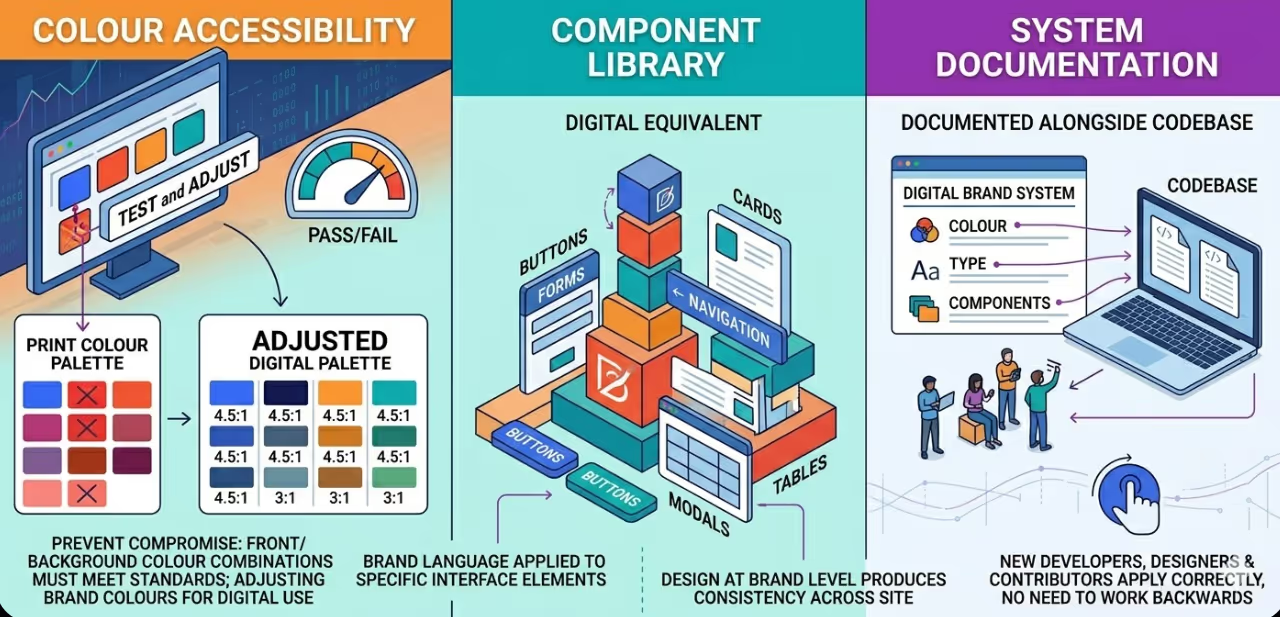
For stock assets: quality and consistency require selecting from a restricted, compatible set. A project that uses five different icon styles from five different sources produces visual chaos regardless of each individual source's quality. The selection process should be treated as a design decision with clear criteria: a single primary source for icons, with a defined secondary source for any specific icon types not available in the primary library, and a clear rule for which source takes precedence when there is overlap. The same discipline applies to illustration: choose one illustration style, one colour palette treatment, and one level of visual complexity and apply it consistently.
For custom assets: quality and consistency require a style guide and an extension process. A custom icon set or illustration system that is documented only in the original files becomes inconsistent as soon as a new contributor adds to it, because the undocumented decisions about stroke weight, corner radius, perspective, and visual metaphor are reproduced from memory or preference rather than from a defined specification. A custom graphic system should include a written or visual style guide that captures the specific decisions that define the style, so that new assets can be produced consistently whether the original creator or a different illustrator produces them.
The Hybrid Approach in Practice
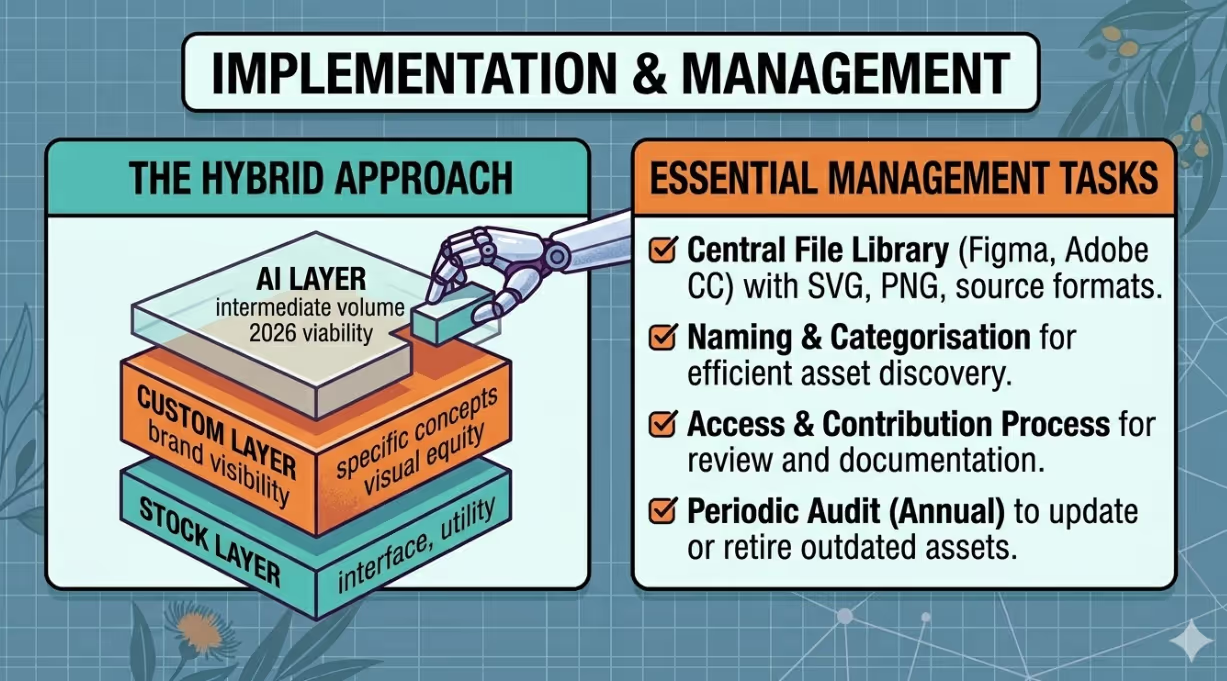
A hybrid approach, combining custom graphics for elements that are critical to the brand, combined with stock assets for the utility and supplementary elements, is often the most commercially sensible framework for Australian businesses.
The practical structure for a hybrid approach is:
Custom layer. The brand icon or illustration marks that appear in contexts with the highest brand visibility and the most specific conceptual requirements. These are the illustrations that appear on the homepage, in marketing materials, on the primary services or product pages, and in the brand's advertising. They are produced to a custom specification and are designed to be distinctive to the brand.
Stock layer. A consistent stock icon system for the interface elements, utility icons, and secondary content decorations where custom production does not justify the investment. This layer uses a single, internally consistent icon library applied with discipline across the relevant scope.
AI-assisted layer. For brands that need a larger volume of illustrations than a fully custom programme can produce within budget, AI-assisted illustration tools can produce assets that are more distinctive than standard stock while being faster and cheaper to produce than fully custom work. The AI layer requires careful quality review, brand consistency oversight, and a clear brief to produce consistent results, but in 2026 it is a viable option for the middle layer of a hybrid graphic system.
The boundaries between these layers should be defined explicitly before production begins, so that each asset produced for the brand is clearly allocated to the appropriate layer rather than the allocation being decided ad hoc.
Practical Asset Management for Australian Businesses
Regardless of the approach taken, the value of a graphic system is contingent on its being managed consistently over time. An icon set or illustration system that drifts in consistency as the site grows, or that becomes fragmented as different team members add assets from different sources, loses its coherence without the investment of active management.
The minimum asset management requirements for a graphic system are:
A central file library (in Figma, Adobe Creative Cloud, or equivalent) that contains every approved graphic asset in the correct file formats and at the correct specifications for every output context (SVG for web, PNG at multiple resolutions for print and social, specific formats for each platform's requirements).
A naming and categorisation system that allows team members to find the correct asset for a given context without searching through an unorganised file repository.
An access and contribution process that defines who can add new assets to the approved library, what the review process is, and how new assets are documented and communicated to the team.
A periodic audit, recommended at least annually, that identifies assets that have become outdated, inconsistent, or unused, and that updates the library to reflect any changes in the brand's visual direction.
FAQs
How should an Australian business approach briefing a designer for a custom icon set?The most important information in a custom icon brief is the list of concepts to be represented, the contexts in which the icons will appear (interface icons, marketing icons, or both), the technical specifications for the output files (SVG, the intended display sizes), the visual style reference (stroke weight preference, whether the icons should be filled or outlined, the corner radius aesthetic, the level of detail appropriate for the size they will be displayed at), and two or three reference sets from other brands whose visual style is in the right direction. An icon brief that specifies the number of icons, the usage context, and the visual style reference comprehensively will produce a substantially better result than one that provides only a concept list and leaves all style decisions to the designer's interpretation. For businesses without a defined visual brand direction, investing in a brief design exploration phase before committing to a full icon set allows the style to be validated before the full set is produced.
What file formats should Australian businesses request for custom illustrations and icons?For web use, SVG (scalable vector graphics) is the correct format for icons and illustrations in vector format, because it scales without quality loss at any display size and has a small file size relative to raster formats. PNG is appropriate for raster illustrations and for contexts where SVG cannot be used (certain email clients, some content management system image fields, print production). PDF is appropriate for versions of vector illustrations ready for print. When commissioning custom graphic work, Australian businesses should request source files (AI or EPS for Adobe Illustrator files, Sketch or Figma files for interface design tools) alongside the final exported formats, so that the assets can be updated or extended by any designer in the future without depending on the original creator. Intellectual property and file ownership should be confirmed in the commissioning agreement before work begins, as some designers retain rights to source files by default.
How much should an Australian business expect to budget for a custom icon set or illustration system?The cost varies significantly based on the number of icons or illustrations, the complexity of the visual style, and the experience level of the illustrator or designer. For a custom icon set of 40 to 60 icons, in a defined style for web use, an experienced Australian graphic designer or illustrator typically charges between $3,000 and $8,000, depending on the complexity of the style and the number of revision rounds included. For a custom illustration system for a marketing website, including eight to twelve hero and feature illustrations in a consistent style, the budget typically ranges from $5,000 to $15,000 from an illustrator with mid to senior experience, with specialist brand illustration agencies charging more. AI-assisted illustration programmes can reduce these costs by 40 to 60 percent while producing reasonably consistent results, but require design direction and quality review investment that should be factored into the budget comparison. Stock library subscriptions, by contrast, typically range from $30 to $200 per month for individual or team access to the major icon and illustration platforms.
The Right Graphic Approach Is the One That Gets Used Consistently
The most expensive graphic system is the one that is not applied consistently, whether it is a custom system that drifts as the team grows or a stock set that is supplemented by incompatible assets whenever a convenient alternative appears. The commercial return on iconography and illustration investment is produced by consistent application over time, not by the quality of any individual asset in isolation. Whether custom or stock is the right choice for a given Australian business depends on the brand's competitive context, its conceptual specificity requirements, its team's management capacity, and its investment horizon over the long term. The framework in this article identifies where on that spectrum the decision falls for each specific situation.
Maven Marketing Co designs custom iconography and illustration systems for Australian businesses, advises on stock asset selection and curation, and develops graphic system documentation that keeps brand visual language consistent as the team and content grow.
Talk to the team at Maven Marketing Co →

Table of contents
read more blogs
Is Google Ads Better Than SEO for My Business
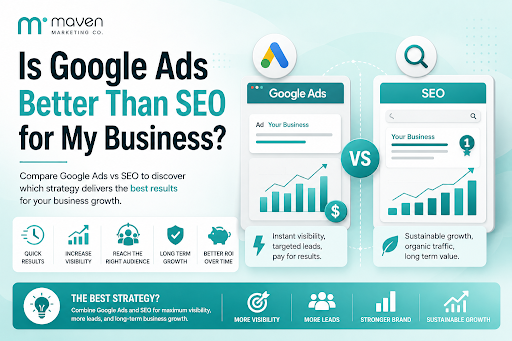
One of the biggest questions business owners ask when they are planning online growth is whether they should invest in Google Ads or SEO. Both are strong marketing plays that help your company show up in Google search results, but they do things in separate lanes. Google Ads gives quicker visibility and can bring in leads fast, whereas SEO more or less focuses on slow, steady organic traffic that tends to grow the longer you keep building it. Picking the right direction depends on what you want to achieve, how much money you can spend, how crowded the market is, and how quickly you need results, like sooner rather than later. The good news is you don’t always have to choose one or the other; it’s not exactly a black-and-white situation. If you take time to understand the strongest points of both, you can put together a more sensible digital marketing plan that supports consistent expansion. In this guide, we’ll compare Google Ads vs SEO, explain the main differences, and help you figure out what option makes the most sense for your business.

When Should I Hire a Digital Marketing Agency
Growing a business today takes more than just having a website or throwing a post on social media; customers usually search around online, compare providers, skim reviews, and basically expect the brand to show up with a solid digital presence before they even think about buying. Many businesses try to run their marketing themselves, but there comes a point when “doing it all in-house” becomes clunky and hard to manage, all at once. Knowing when to hire a digital marketing agency can end up making a big, real difference for your growth. If you’re not getting enough leads, or your online visibility feels stuck, or sales are just not moving, the right agency can bring the know-how, plus a clear plan, to help you get noticeably better outcomes. In this guide, we’ll dig into what a digital marketing agency actually does, the usual signs it’s time to bring one on, and how picking the right marketing partner can help your business move forward at a faster pace.
Why Is My Google Ads Budget Running Out So Quickly
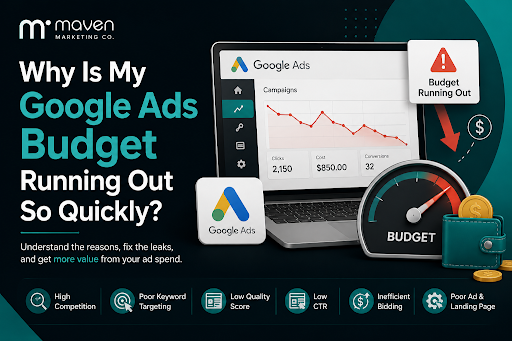
Running a successful Google Ads budget isn’t only about throwing more money at it. It’s more like making every dollar, doing a bit extra. A lot of businesses start a Google Ads campaign with big hopes, then find out their daily budget is gone within a few hours, and that feels weird, right? After that, your ads stop showing effectively, new leads slip away, and your return on investment dips. So if your Google Ads budget is running out too fast, don’t stress. It’s a fairly common issue, and in most situations, it can be repaired with the right approach. There are multiple little things that can drain your advertising money quicker than you expected, from costly keywords to audience targeting that just doesn’t quite fit. In this guide, we’ll walk through why your budget disappears so quickly, how to cut wasteful spend, and the most reliable ways to boost your Google Ads ROI, even if your budget stays the same.