.svg)


%201.svg)

What makes a guest post pitch get accepted instead of ignored?
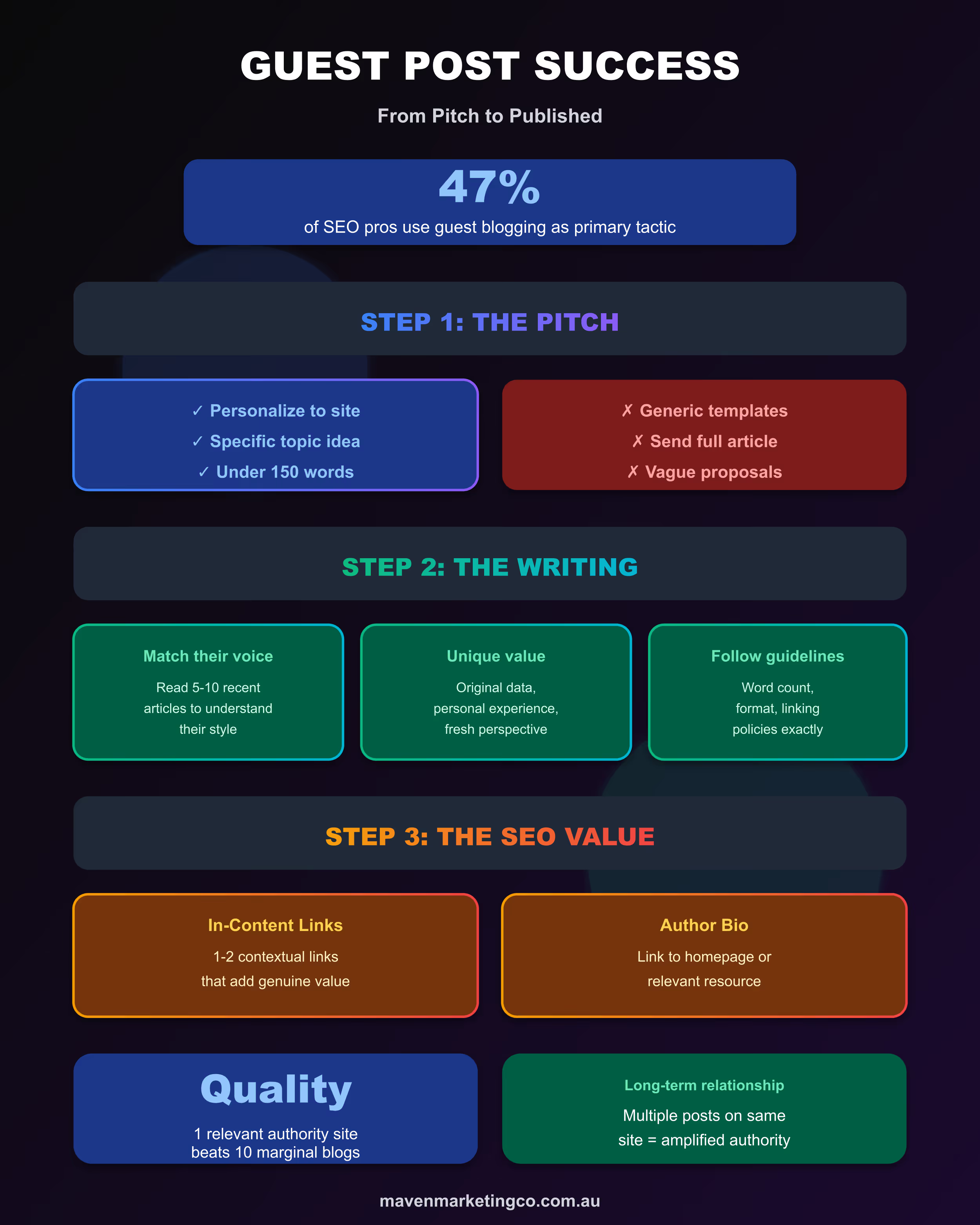
Successful guest post pitches include specific elements that signal value:
Personalization demonstrating familiarity with the target publication, referencing recent articles they published and explaining why those pieces resonated. Generic template pitches that could be sent anywhere get deleted immediately as editors receive hundreds weekly.
Specific article ideas addressing content gaps in their current coverage, ideally topics their competitors rank for but they don't. Vague proposals like "I'd love to write something about marketing" show you haven't researched what their audience needs.
Clear value proposition explaining exactly what readers will learn and how the article benefits the blog. For example, mentioning the topic could help them rank for valuable keywords their competitors currently dominate.
Credibility indicators including links to recently published work, relevant credentials, and data or unique perspectives you'll bring. Editors want proof you can deliver quality rather than taking risks on unknown writers.
Promotional commitment briefly mentioning how you'll share the guest post with your audience through email lists, social media, or industry connections. Sites value contributors who drive additional traffic rather than just collecting backlinks.
Concise professional tone keeping the entire pitch under 150 words unless submission guidelines request more detail. Editors lack time for lengthy emails, so respect that by being direct and benefit-focused in your outreach.
How do you write guest post content that gets published and builds SEO value?
High-quality guest posts that get accepted follow these practices:
Match the publication's voice and standards by reading 5 to 10 recent articles to understand their tone, depth, formatting preferences, and audience expectations. Writing advanced technical content for a beginner-focused blog guarantees rejection.
Provide genuine unique value through original data, personal experience, or fresh perspectives unavailable elsewhere. Generic rehashes of information already covered extensively offer no reason for publication.
Follow submission guidelines exactly regarding word count, formatting, image requirements, and linking policies. Ignoring stated requirements signals you won't be easy to work with, reducing acceptance likelihood regardless of content quality.
Optimize for SEO without being promotional by including relevant keywords naturally, adding internal links to the host site's related content, and using proper heading structure. Backlinks to your site should be limited to one or two contextually relevant placements.
Support claims with data and examples rather than making unsupported assertions. Editors value well-researched content that strengthens their site's authority rather than opinion pieces lacking substance.
Expect and incorporate feedback professionally as most guest posts require at least one revision round. Accepting edits graciously and implementing changes quickly marks you as someone the editor will want to work with again for future opportunities.

The Full Guide
Here's the frustrating reality: you've spent hours crafting what you believe is a brilliant guest post pitch. You've researched the publication, identified their audience, and proposed a compelling topic. You hit send, feeling confident.
Then nothing. No response. Not even a rejection.
Or worse, you get the standard "Thanks but not quite right for us at this time" reply that offers zero insight into what went wrong.
Guest blogging works brilliantly for building authority and earning quality backlinks, with research showing 47 percent of SEO professionals using it as their primary link building strategy. But the gap between knowing it works and actually getting published on quality sites feels impossibly wide when you're starting out.
The difference isn't mysterious. It's understanding what editors actually want, how to pitch effectively, and how to write content that serves their audience while supporting your SEO goals. Let's break down exactly how to do this.
Understanding What Editors Really Want
Before you write a single pitch, you need to understand the editor's perspective. They're not rejecting your work personally. They're protecting their publication's reputation and serving their readers.
Editors receive dozens of guest post pitches weekly, many of them terrible. Generic templates clearly blasted to hundreds of sites. Pitches from people who obviously haven't read a single article on the site. Proposals for topics they literally published last month. Content written at a fifth-grade level when their audience expects expert analysis.
This deluge of low-quality submissions makes editors skeptical of all pitches. Your challenge isn't just being good. It's being obviously, immediately, undeniably different from the spam.
Quality publications care about maintaining their editorial standards because their reputation directly affects traffic, engagement, and revenue. Publishing mediocre guest content damages trust with their audience. So editors apply harsh filters, rejecting most submissions not because they're bad but because they're not clearly excellent.
What editors actually want: content that makes them look good. Articles their audience will love, share, and reference. Pieces that fill gaps in their current coverage or provide fresh angles on important topics. Contributors who understand their brand, respect their guidelines, and don't create extra work through sloppy submissions.
This means your pitch and content must signal you're the rare exception worth their time.
Finding the Right Target Sites
Not all guest posting opportunities offer equal value. A backlink from a spammy site accepting anything actually hurts your SEO. A placement on a high-authority site in your industry builds credibility and genuinely improves rankings.
Start with sites your target audience already reads. If you're a Melbourne accounting firm, guest posting on a general marketing blog in the US offers minimal value. But contributing to Australian small business publications or finance-focused sites reaches people who might need your services.
Domain authority matters, but relevance matters more. A backlink from a highly relevant site with moderate authority often provides more SEO value than a link from a high-authority site in a completely unrelated niche. Google's algorithms have become sophisticated at evaluating link context and relevance.
Check whether sites actually publish guest content by looking for author bylines from outside contributors. Some sites have "Write for Us" pages that haven't accepted submissions in years. Others publish guest content regularly but don't advertise it. Reading recent articles reveals which contributors are staff versus guests.
Evaluate the site's traffic and engagement. A blog that publishes frequently but has zero social shares or comments on articles likely has minimal audience. Your guest post there won't drive traffic back to your site or significantly boost your authority. Tools like SimilarWeb or Semrush can estimate traffic, though these aren't perfectly accurate.
Look for sites that actively promote guest content through their social channels and newsletters. When a publication amplifies contributor content, your article gains substantially more visibility than if it just sits on their blog with no promotion.
Build a target list of 20 to 30 sites where you'd genuinely want to contribute. This gives you options when some don't respond or aren't currently accepting submissions. Prioritize them by relevance, audience alignment, and promotional reach rather than purely by domain authority numbers.
Crafting Pitches That Get Responses
Your pitch email determines whether editors even look at your article idea. Most pitches fail here, never getting to the content evaluation stage because the initial outreach was weak.
Subject lines matter enormously. "Guest Post Submission" screams template spam. "Article idea: How small businesses can navigate Australia's 2026 tax changes" is specific and immediately relevant if they cover tax topics. The subject should make your pitch obviously different from the hundred others that week.
Personalization isn't optional. Reference a specific recent article they published, explaining genuinely why it resonated or how your proposed piece would complement their coverage. If you can't think of anything authentic to say about their content, you probably shouldn't be pitching them.
Lead with your article idea, not your credentials. Editors care what value you'll provide their readers, not your impressive background. State your proposed topic clearly and concisely: "I'd like to write a 1,500-word guide helping Australian retailers transition to sustainable packaging, including cost breakdowns and supplier recommendations."
Explain the specific value this article provides their audience. Why should they care about this topic now? What unique information or perspective will you bring that isn't already widely covered? If your pitch could describe any generic article on the topic, it's not specific enough.
Include one or two links to relevant previously published work. This proves you can write at the level their publication expects. If you don't have published work yet, consider getting a few pieces published on more accessible platforms first to build credibility.
Keep the entire pitch under 150 words unless their submission guidelines request more detail. Editors lack time to read lengthy emails. Respect that by being direct.
End with a simple call to action: "Would you be interested in this piece? I could have a draft to you within two weeks." Don't be pushy, but make it clear you're ready to deliver quickly if they're interested.
One mistake to avoid: never send the full article unsolicited. Editors want to evaluate ideas first, providing guidance before you invest time writing. Sending complete articles suggests you're batch-submitting the same piece everywhere rather than creating custom content for their site.

Writing Content That Gets Accepted
Once you've secured interest from an editor, the writing phase determines whether your submission gets published or sits in revision limbo forever.
Start by thoroughly reading their submission guidelines. Word count requirements, formatting preferences, image specifications, linking policies. Follow these exactly. Ignoring stated requirements signals you'll be difficult to work with, reducing acceptance likelihood regardless of content quality.
Study recent articles on their site to understand their style and tone. A publication targeting C-suite executives expects different writing than one serving DIY enthusiasts. Your content should feel like it naturally belongs on their site rather than obviously coming from an outsider.
The opening matters disproportionately. Editors evaluate submissions quickly, often deciding within the first few paragraphs whether to continue reading. Start strong with a hook that immediately engages their audience. Don't waste the opening with generic background information available anywhere.
Provide genuine unique value through original research, personal experience, proprietary data, or fresh perspectives. Generic rehashes of information already covered extensively offer no reason for publication. If your article could've been written by anyone with access to Google, it lacks the distinctiveness publications want.
Structure for readability. Use clear subheadings that guide readers through your content. Keep paragraphs varied in length, mixing short punchy statements with longer explanations. Break up text with bullet points or numbered lists when appropriate. Dense walls of text get rejected.
Support your claims with data and examples. Link to credible sources for statistics and research. Include specific case studies or concrete examples that illustrate your points. Vague assertions without backing reduce credibility.
Optimize for SEO without being obviously promotional. Include relevant keywords naturally in your content and headings. Add internal links to related articles on the host site, which editors appreciate as it keeps readers engaged longer. Limit links back to your own site to one or two contextually relevant placements in the body content and your author bio.
The conclusion should provide clear takeaways or next steps. Don't just summarize what you've said. Give readers actionable guidance they can implement immediately. This increases the article's value and likelihood of shares.
The Backlink Strategy
Your author bio and in-content links serve your SEO goals, but heavy-handed link building gets submissions rejected. Balance is essential.
Most publications allow one or two contextual links within the article body. These should genuinely add value for readers, linking to relevant resources on your site that provide additional depth on topics you've mentioned. Don't force links where they feel unnatural or promotional.
The author bio offers more flexibility. You can typically include a link to your website, specific service pages, or lead magnets. Frame this as providing value: "Download our free guide to sustainable packaging suppliers at [link]" works better than "Visit our website for more information."
Some publications have strict linking policies, allowing only homepage links or no links at all beyond social profiles. In these cases, the value comes from brand visibility, credibility by association, and potential direct traffic from interested readers rather than SEO link juice.
Quality beats quantity in guest blogging. One guest post on a highly relevant, authoritative site in your industry provides more SEO value than ten posts on marginal blogs. Focus your effort on securing placements that genuinely move the needle rather than collecting links from anywhere that will accept submissions.
Diversify your anchor text across guest posts. If every backlink uses the exact same keyword phrase, it looks manipulative to search engines. Vary between branded anchors, generic phrases, and keyword variations to maintain a natural link profile.
Track the results of your guest posts beyond just the backlink. Monitor referral traffic from the publication to your site. Watch for increases in branded searches or direct traffic as people discover you through guest content. These secondary benefits often provide more value than the SEO impact alone.
Avoiding Common Rejection Triggers

Certain mistakes guarantee your submission gets rejected regardless of topic quality. Knowing what editors hate helps you avoid these pitfalls.
Duplicate content tops the list. Never submit content you've published elsewhere, even on your own blog. Search engines penalize duplicate content, and no publication wants to rank poorly because they published your recycled work. Every guest post should be completely original.
Overly promotional content gets rejected instantly. If your article reads like a sales pitch for your services, editors won't touch it. The content should provide genuine value with your company appearing only in contextual references and the author bio.
Poor grammar and spelling mistakes signal carelessness. While editors expect to do some editing, submissions riddled with basic errors suggest you won't be worth the effort. Proofread thoroughly or have someone else review your work before submission.
Ignoring the target audience misses the fundamental purpose. Writing advanced technical content for a beginner-focused blog, or vice versa, shows you haven't understood who the publication serves. Tailor your content to their readers' knowledge level and interests.
Missing deadlines destroys your reputation with editors. If you commit to submitting by a certain date, meet that deadline. If something prevents it, communicate proactively rather than going silent. Editors work with reliable contributors repeatedly while ghosting those who disappear.
Arguing with editorial feedback rarely ends well. When editors request changes, they're trying to make your content work for their audience. Accept feedback graciously and implement changes professionally. Even if you disagree with some edits, remember it's their publication and their judgment matters more than your preferences.
Building Long-Term Relationships
The real value in guest blogging comes from developing ongoing relationships with publications rather than treating each submission as a one-off transaction.
After your first guest post publishes, promote it actively. Share it on your social media channels, include it in your email newsletter, and reference it in relevant conversations. Publications value contributors who drive additional traffic rather than just collecting backlinks.
Engage with comments on your guest article. Respond to reader questions thoughtfully and professionally. This shows the publication's community you're not just dropping content and disappearing but genuinely participating in their ecosystem.
Pitch follow-up ideas after your first piece performs well. If you've proven you can deliver quality content that resonates with their audience, editors will be far more receptive to additional submissions. Building a portfolio of multiple articles on the same site amplifies your authority more than scattered one-off placements.
Offer to help promote other contributors' content when relevant to your audience. Generosity in sharing others' work builds goodwill that often gets reciprocated. The content marketing community values collaboration more than competition.
Ask for introductions to other publications once you've established credibility. Editors often know peers at similar sites and can provide warm introductions that dramatically improve pitch acceptance rates compared to cold outreach.
Thank editors genuinely for the opportunity and the work they put into improving your piece. Recognition for their effort builds positive relationships that lead to easier approvals for future submissions.

The Australian Market Context
Australian businesses face specific considerations when pursuing guest blogging strategies that differ from global approaches.
Australian publications prioritize local relevance. When pitching to Australian sites, frame your content around Australian examples, regulations, market conditions, and case studies. Generic international advice without local context offers less value to their readers.
The smaller Australian market means fewer total guest blogging opportunities compared to the US or UK. This makes each placement more valuable and requires more strategic targeting. Focus on quality publications your actual target audience reads rather than chasing any opportunity just for backlinks.
Australian English spelling and terminology matter for credibility. Using American spelling and phrases in content targeting Australian audiences signals you haven't tailored content specifically for them. Editors notice these details and question whether you truly understand their market.
Time zone considerations affect outreach timing. Sending pitches when Australian editors are likely checking email (Australian business hours) increases response likelihood compared to messages that arrive overnight when inboxes are flooded.
Industry publication landscape in Australia differs from larger markets. Some industries have strong national publications while others lack dedicated industry media. Understanding the landscape in your specific sector helps identify viable target opportunities versus wasting effort on non-existent options.
Making Guest Blogging Work Long-Term
Guest blogging isn't a quick win but a sustained strategy requiring consistent effort over months and years to build meaningful results.
Start with realistic expectations. Your first few pitches will likely get rejected or ignored as you learn what works. Your early guest posts won't drive massive traffic or immediately boost rankings. This is normal. View it as learning rather than failure.
Allocate regular time to guest blogging rather than doing it sporadically. One well-crafted pitch monthly produces better results than five rushed pitches once then nothing for six months. Consistency matters more than volume.
Track your results systematically. Note which pitches got responses, which topics got accepted, which publications drove traffic, and which backlinks seemed to impact rankings. These insights refine your approach over time, helping you focus effort where it produces results.
Balance guest blogging with other link building tactics. It's one effective strategy among many, not a silver bullet. Combine it with creating linkable content on your own site, building relationships for natural link acquisition, and earning media mentions through PR efforts.
The businesses that succeed with guest blogging are those that view it as relationship building and authority development rather than purely link collection. Focus on providing genuine value to publications and their audiences, and the SEO benefits follow naturally.
Ready to Build Authority Through Guest Blogging?
At Maven Marketing Co, we help Australian businesses develop and execute guest blogging strategies that earn quality backlinks while building genuine authority in their industries. Our team understands which publications matter for your market, how to craft pitches that get responses, and how to create content that both editors and their audiences value.
Whether you need help identifying target publications, crafting compelling pitches, writing content that gets accepted, or building a sustainable guest blogging programme, we're here to turn your content into competitive advantage.
Let's build your guest blogging strategy

Table of contents
read more blogs
Is Google Ads Better Than SEO for My Business
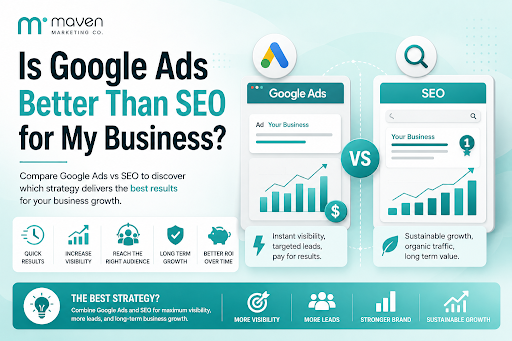
One of the biggest questions business owners ask when they are planning online growth is whether they should invest in Google Ads or SEO. Both are strong marketing plays that help your company show up in Google search results, but they do things in separate lanes. Google Ads gives quicker visibility and can bring in leads fast, whereas SEO more or less focuses on slow, steady organic traffic that tends to grow the longer you keep building it. Picking the right direction depends on what you want to achieve, how much money you can spend, how crowded the market is, and how quickly you need results, like sooner rather than later. The good news is you don’t always have to choose one or the other; it’s not exactly a black-and-white situation. If you take time to understand the strongest points of both, you can put together a more sensible digital marketing plan that supports consistent expansion. In this guide, we’ll compare Google Ads vs SEO, explain the main differences, and help you figure out what option makes the most sense for your business.

When Should I Hire a Digital Marketing Agency
Growing a business today takes more than just having a website or throwing a post on social media; customers usually search around online, compare providers, skim reviews, and basically expect the brand to show up with a solid digital presence before they even think about buying. Many businesses try to run their marketing themselves, but there comes a point when “doing it all in-house” becomes clunky and hard to manage, all at once. Knowing when to hire a digital marketing agency can end up making a big, real difference for your growth. If you’re not getting enough leads, or your online visibility feels stuck, or sales are just not moving, the right agency can bring the know-how, plus a clear plan, to help you get noticeably better outcomes. In this guide, we’ll dig into what a digital marketing agency actually does, the usual signs it’s time to bring one on, and how picking the right marketing partner can help your business move forward at a faster pace.
Why Is My Google Ads Budget Running Out So Quickly
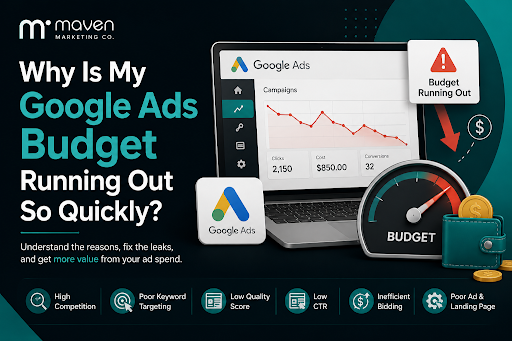
Running a successful Google Ads budget isn’t only about throwing more money at it. It’s more like making every dollar, doing a bit extra. A lot of businesses start a Google Ads campaign with big hopes, then find out their daily budget is gone within a few hours, and that feels weird, right? After that, your ads stop showing effectively, new leads slip away, and your return on investment dips. So if your Google Ads budget is running out too fast, don’t stress. It’s a fairly common issue, and in most situations, it can be repaired with the right approach. There are multiple little things that can drain your advertising money quicker than you expected, from costly keywords to audience targeting that just doesn’t quite fit. In this guide, we’ll walk through why your budget disappears so quickly, how to cut wasteful spend, and the most reliable ways to boost your Google Ads ROI, even if your budget stays the same.