.svg)


%201.svg)
Key Takeaways
- Geographic hashtags are the most reliable mechanism for Brisbane businesses to reach local audiences organically on Instagram and TikTok, but only when the geographic terms selected reflect how Brisbane users actually tag their content rather than how a national brand might describe the city from the outside.
- Hashtag volume is a poor standalone criterion for selection. The most effective hashtags for a Brisbane business are those with enough active use to represent genuine discovery opportunity, but not so much volume that new posts are immediately buried beneath content from much larger accounts.
- A balanced hashtag set for an Instagram post typically includes a mix of geographic tags, industry tags specific to the niche, tags describing the content type, and community tags, with the volume range of each selected to match the account's current size and engagement level.
- TikTok's hashtag mechanics differ meaningfully from Instagram's. On TikTok, hashtags contribute to the algorithm's content classification rather than functioning primarily as a discovery browsing mechanism, and the research and selection logic should reflect this difference.
- Hashtag research is not a task done once and then left. Hashtags specific to Brisbane grow, decline, and shift in meaning as community usage patterns evolve, and the strategy should be reviewed and updated at least every quarter to remain aligned with current platform behaviour.
- Banned and restricted hashtags, those flagged by Instagram for misuse or spam association, suppress the distribution of any post that includes them regardless of the quality of the content. Auditing the hashtag set for banned tags is a necessary maintenance step that most Brisbane businesses skip.
- Saving hashtags in organised sets organised by category, rather than copying the same list onto every post, makes rotation easier to maintain and prevents the algorithmic signal that repeated identical sets can produce.
Why Generic Hashtag Advice Fails Brisbane Businesses
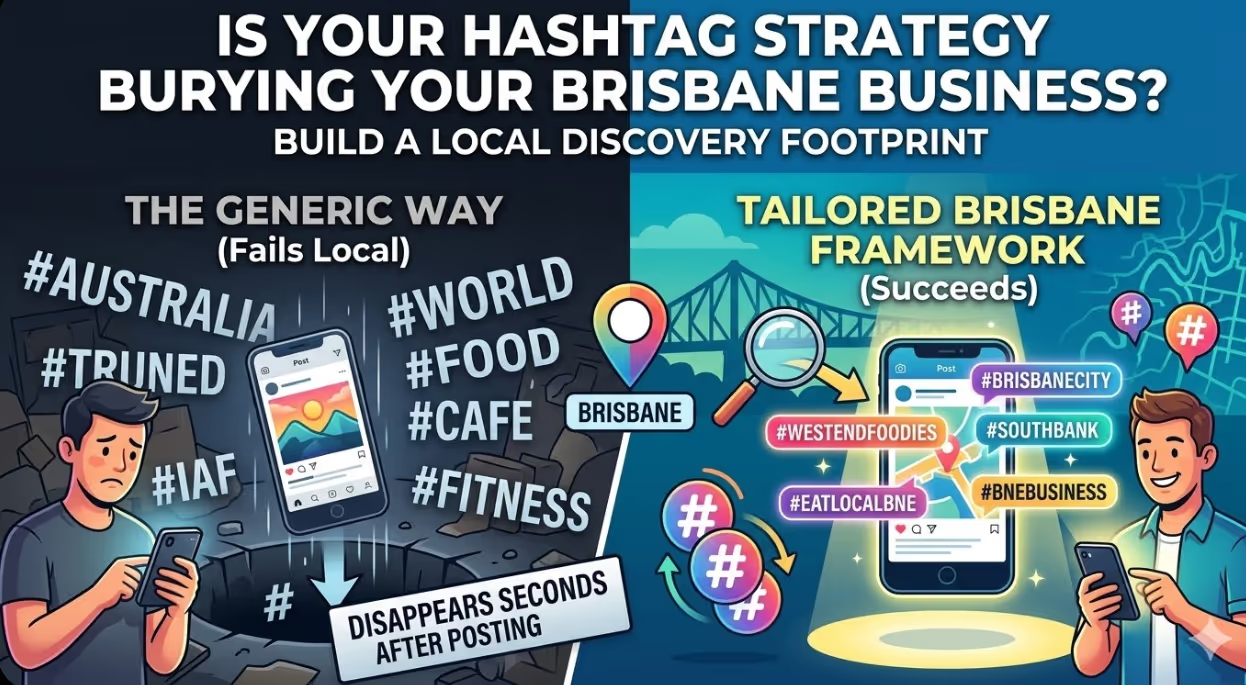
The standard advice on social media hashtags, choosing a mix of small, medium, and large volume tags in the content's category, is not wrong in principle. It is wrong in application when it ignores the geographic specificity that makes hashtag strategy genuinely useful for a business with a local audience.
A Brisbane café that includes #coffee, #coffeetime, and #coffeelover in every post is competing for discovery against hundreds of thousands of posts published globally and nationally each day. The probability of a Brisbane coffee drinker browsing those hashtags, seeing the café's post before it is buried, and converting to a follower or customer is negligible. The same café that includes #brisbanecoffee, #brisbanecafé, and #westendbrisbane in a set with appropriate niche and national tags matched to the appropriate volume range is competing in a substantially smaller pool with a much higher concentration of the specific audience it needs to reach.
The geographic specificity principle applies across every category. A Brisbane personal trainer, a South Bank restaurant, a Fortitude Valley boutique, a Teneriffe property developer, and a B2B consulting firm based in Brisbane all have different primary geographic tags, different secondary community tags, and different tag vocabularies specific to each category, but all share the structural requirement of grounding the hashtag strategy in the geographic discovery patterns of the Brisbane and Southeast Queensland audience rather than in global or national tag volumes.
Phase One: Geographic Research
The geographic layer of a Brisbane hashtag strategy requires research rather than assumption, because the hashtags Brisbane users actually deploy are often different from the ones a brand would intuitively choose to represent the city or its neighbourhoods.
City and Region Level Tags
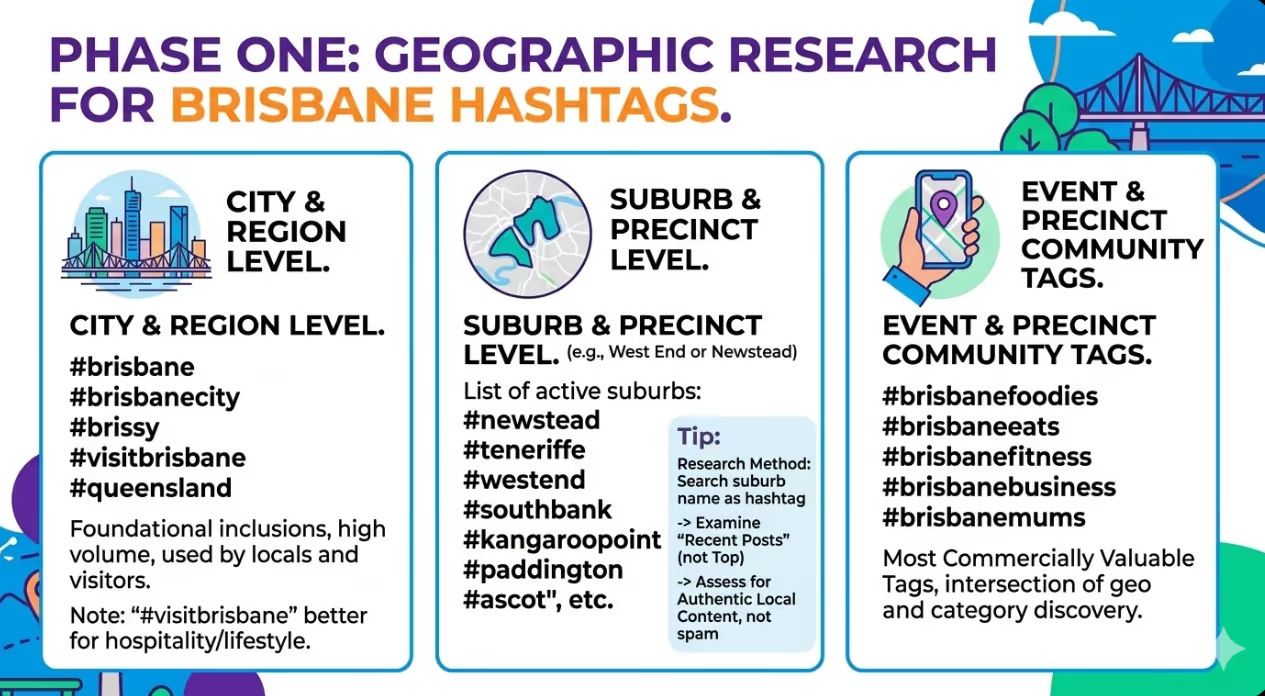
The primary geographic tags for Brisbane businesses include variations on the city name, the broader Southeast Queensland region, and the Queensland state identifier. The most active of these for community discovery include #brisbane, #brisbanecity, #brissy, and #visitbrisbane, alongside #queensland and #southeastqueensland for broader regional coverage. Each of these has a different active use pattern: #brisbane has very high volume and is used by a mix of locals and visitors; #brissy tends to be used by genuine locals and carries a more community feel; #visitbrisbane has a tourism orientation and performs better for hospitality and lifestyle content than for professional services.
For Brisbane businesses, the tags at the city level should be treated as foundational inclusions in most posts rather than as strategic differentiators on their own. Their volume is high enough that they contribute to geographic signal without functioning as the primary discovery mechanism.
Suburb and Precinct Level Tags
The genuine geographic discovery opportunity for most Brisbane businesses lies at the suburb and precinct level, where tag volume is lower, competition is significantly reduced, and the audience browsing the tag is demonstrably local and interested in the specific area.
Brisbane suburbs and precincts with active hashtag communities include #newstead, #teneriffe, #fortitudevalley, #westend, #southbank, #kangaroopoint, #paddington, #ascot, #newmarket, #samford, #thebardon, and many others depending on the specific part of the city. Businesses physically located in or primarily serving a specific suburb should research the active tags for that suburb and its immediate neighbours and include them in the geographic layer of their set.
Research method: searching the suburb name as a hashtag on Instagram, examining the recent posts tab rather than the top posts tab, and assessing whether the content in recent posts is genuinely genuinely local, content produced by the local community rather than spam or repurposed national content. Hashtags where recent posts are authentic, local, and from accounts with genuine community engagement are the ones worth including. Hashtags where recent posts are dominated by spam or unrelated content are not functional discovery mechanisms regardless of their total post count.
Event and Precinct Community Tags
Brisbane has a set of geographic community hashtags that extend beyond suburb names to include precinct identifiers, event associations, and community interest groups with a geographic anchor. Tags such as #brisbanefoodies, #brisbaneeats, #brisbanefitness, #brisbanebusiness, #brisbanemums, and similar community interest tags with a Brisbane prefix represent the intersection of geographic and category discovery and are among the most commercially valuable tags for businesses in those categories.
Phase Two: Category and Niche Research
With the geographic layer established, the category and niche layer identifies the tags specific to the industry, topic, or content type that connect the post to audiences interested in the relevant subject matter beyond the geographic anchor.
Industry and Category Tags
Category tags describe the broad industry or content domain the post belongs to. For a Brisbane fitness business, category tags might include #fitness, #personaltraining, #strengthtraining, and #weightloss. These tags have high global volume, which means they are not effective as standalone discovery mechanisms for a small account, but they contribute to the algorithm's classification of the content and support the geographic tags in defining the full audience profile.
The research step for category tags is to identify not just the obvious primary tags but the second and third tier of tags specific to each niche where the competition is lower and the audience interest is more focused. A Brisbane fitness business that also targets niche audiences within the fitness category, such as trail runners, Olympic weightlifters, or menopausal women seeking strength training guidance, should include the tags specific to each niche that are relevant to those audiences alongside the broader category tags.
Content Type Tags
Content type tags describe the format or purpose of the specific post rather than the broader category it belongs to. Tags such as #tutorial, #recipeideas, #behindthescenes, #transformation, #clientresults, and similar format descriptors attract audiences specifically interested in that type of content and can supplement the geographic and category discovery layers effectively.
Community and Culture Tags
Community tags are those associated with specific social media communities or cultural movements that the post is genuinely connected to. For Brisbane businesses, relevant community tags might include tags associated with the sustainable living community, the small business community, the local arts scene, the outdoor lifestyle community, or specific professional communities relevant to the brand's industry. These tags are best used selectively and only when the post is genuinely part of the conversation the tag represents, as community audiences are sensitive to brands inserting themselves into community tags for promotional purposes without contributing meaningful content.
Phase Three: Volume Matching
The volume of a hashtag, measured by total posts using that tag, should be matched to the size and engagement level of the account using it. This is one of the most practically important rules in hashtag strategy and one of the most frequently ignored.
An account with 2,000 followers and an engagement rate of three to five percent should not be posting with the same hashtag set as an account with 200,000 followers. Including hashtags with hundreds of millions of posts on a small account guarantees that the content is immediately buried and receives no discovery benefit. The appropriate volume range for the category and niche tags in a set should be calibrated to the account's current engagement level.
A practical guideline for Brisbane accounts of different sizes:
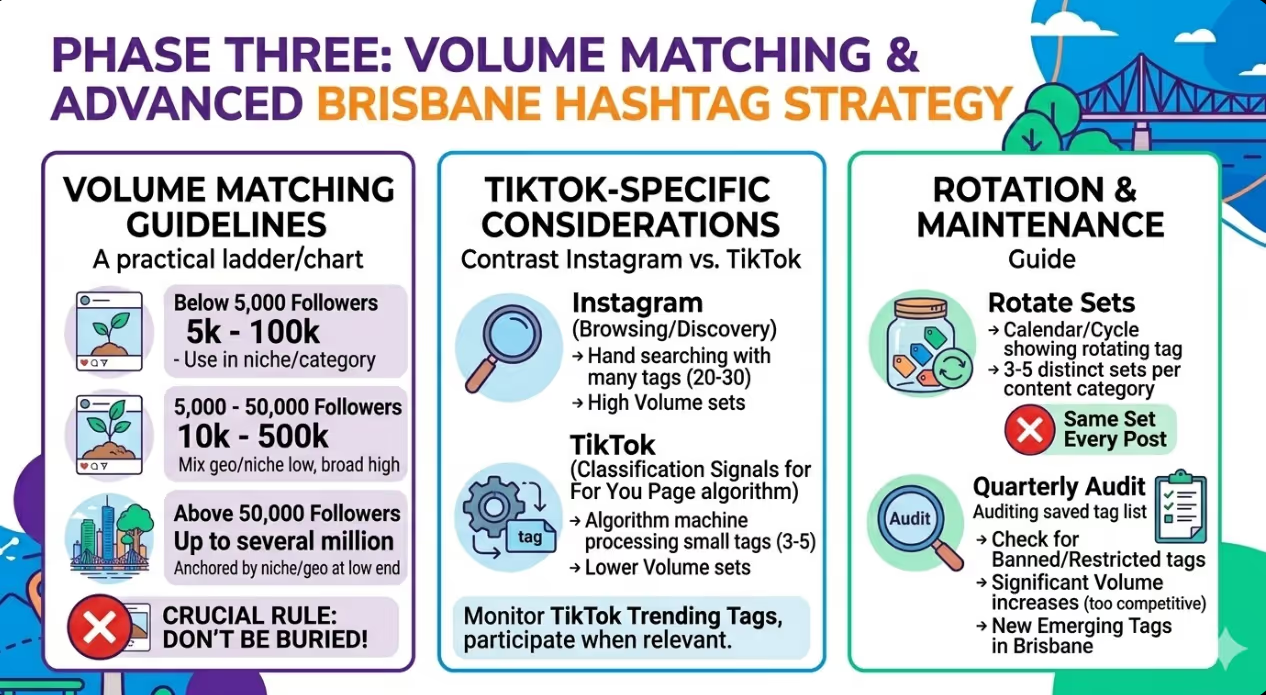
For accounts with fewer than 5,000 followers, the most effective range for category and niche tags is between 5,000 and 100,000 total posts. These tags have enough active use to represent a real discovery pool without being so competitive that small accounts cannot rank in the recent posts tab.
For accounts with between 5,000 and 50,000 followers, the effective range extends from 10,000 to 500,000 posts, with the geographic and niche tags at the lower end of that range and the broader category tags at the higher end.
For accounts with over 50,000 followers, the volume range can extend up to several million posts for the broadest category tags, with the niche and geographic tags still anchoring the lower end.
Phase Four: TikTok-Specific Considerations
TikTok's hashtag mechanics differ from Instagram's in ways that require a different research and selection approach. On Instagram, hashtags function primarily as a browsing and discovery mechanism: users can follow hashtags, browse hashtag feeds, and discover content through tag searches. On TikTok, hashtags function primarily as classification signals for the For You Page algorithm: they tell the algorithm what the content is about and who is likely to find it relevant, but most TikTok users discover content through the For You Page rather than through hashtag browsing.
For Brisbane businesses on TikTok, the practical implications are:
Geographic tags on TikTok are still worth including, but their primary function is classification rather than discovery through browsing. Including #brisbane and relevant suburb tags helps the algorithm understand the geographic context of the content and serve it to users in that location, but the discovery mechanism is algorithmic rather than user initiated.
The volume of hashtags on TikTok should be lower than on Instagram. Three to five hashtags that accurately classify the content tend to outperform sets of twenty to thirty tags, because a large number of hashtags signals unclear content classification to the algorithm.
Trending hashtags on TikTok carry a different weight than they do on Instagram. Participating in a genuine trending hashtag conversation on TikTok can provide significant discovery uplift for accounts of any size, as the algorithm actively distributes content that participates authentically in platform trends to relevant audiences. Brisbane businesses should monitor TikTok trending tags regularly and participate when a trend is genuinely relevant to the brand's content.
Phase Five: Rotation and Maintenance
Using the same hashtag set on every post is one of the most common strategic errors in Instagram hashtag management for Brisbane businesses. Instagram's algorithm has historically been sensitive to repetitive hashtag patterns that suggest automated or posting of low effort, and varying the set across posts produces more consistent distribution than cycling through a single fixed list.
Maintaining between three and five distinct hashtag sets within each content category, each covering slightly different geographic, niche, and community tag combinations, allows Brisbane businesses to rotate through combinations across posts while maintaining the strategic logic that connects each set to the target audience.
Each set should be saved in a note or social media management tool and reviewed quarterly to audit for:
Banned or restricted tags that may have been flagged since the set was created. Checking the current status of each tag in Instagram's app, where restricted or banned tags will show no recent posts in the recent tab or display a restriction notice, should be a routine part of quarterly maintenance.
Tags that have experienced significant volume increases that push them above the effective range for the account's current size.
New community and niche tags that have emerged in Brisbane's social media ecosystem and represent discovery opportunities that did not exist when the set was last created.
FAQs
How many hashtags should Brisbane businesses use on Instagram posts in 2026?Instagram's guidance has shifted on this point, and the platform has at various times recommended three to five hashtags over the larger sets of twenty to thirty that were common advice in earlier years. The current practical consensus among Australian social media practitioners is that sets of between eight and fifteen hashtags produce consistent results for most account sizes and categories, provided the tags are thoroughly researched and matched to the appropriate volume rather than applied generically. The specific number matters less than the quality of the selection: fifteen thoroughly researched, matched to the appropriate volume, and geographically relevant hashtags will consistently outperform thirty generic tags with very high volume regardless of which end of the recommended range produces the best absolute result. Brisbane businesses should test different set sizes for their specific account and category over a minimum period of four weeks before drawing firm conclusions about their optimal set size.
Should Brisbane businesses include their own branded hashtag in every post?A branded hashtag, one specific to the business such as #mavenmarketingco or a tag tied to a specific campaign, serves a different purpose from discovery hashtags and should be evaluated on different criteria. It is not a discovery mechanism for new audiences, since nobody will search for a tag they have not encountered before. Its value lies in community aggregation: it creates a browsable collection of all content associated with the brand, including content produced by customers and community members if the brand actively encourages its use. For Brisbane businesses building an active community or running campaigns encouraging content from their audience, maintaining and promoting a branded hashtag is worthwhile. For businesses at an early stage of audience development, the branded hashtag is a addition with low priority that adds no immediate discovery value and can be deprioritised until there is sufficient community activity to make the aggregation function meaningful.
How should Brisbane businesses track whether their hashtag strategy is working?Instagram's professional account analytics provide impressions broken down by source, including a specific figure for impressions that came from hashtags. This metric, reviewed per post and tracked over time, is the most direct available signal of whether the current hashtag set is generating discovery beyond the account's existing follower base. A post where hashtag impressions represent a significant portion of total reach, say twenty percent or more, indicates that the hashtag set is functioning as a discovery mechanism. A post where hashtag impressions are negligible, below five percent of total reach, indicates that the tags are not generating meaningful discovery and the set should be reviewed. Tracking this metric per post, noting which hashtag sets were used on each post, and comparing performance across sets over a minimum of eight to twelve posts per set is the minimum analytical discipline needed to distinguish which combinations are working for the Brisbane audience and which are not.
Hashtags Are a Research Problem Before They Are a Strategy Problem
The Brisbane businesses that build genuinely effective hashtag strategies do so because they treat the research phase as real work rather than a quick search for popular tags. The geographic specificity of the Brisbane and Southeast Queensland market, the variation in active community tags across suburbs and precincts, and the difference between how local audiences browse tags and how national audiences use them all require investigation rather than assumption. The strategy that follows from rigorous research produces consistent discovery returns. The strategy that follows from generic advice produces consistent disappointment.
Maven Marketing Co develops research backed hashtag strategies for Brisbane businesses across Instagram and TikTok, including full geographic and category research, development of sets matched to the appropriate volume range, and quarterly performance reviews.
Talk to the team at Maven Marketing Co →

Table of contents
read more blogs
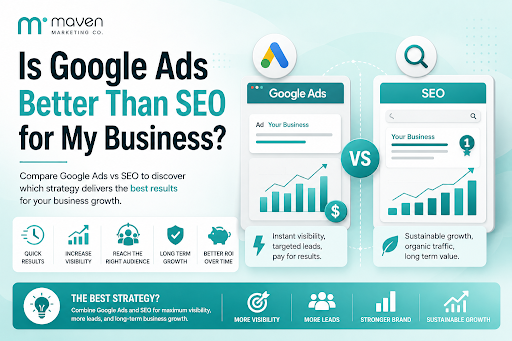
Is Google Ads Better Than SEO for My Business
One of the biggest questions business owners ask when they are planning online growth is whether they should invest in Google Ads or SEO. Both are strong marketing plays that help your company show up in Google search results, but they do things in separate lanes. Google Ads gives quicker visibility and can bring in leads fast, whereas SEO more or less focuses on slow, steady organic traffic that tends to grow the longer you keep building it. Picking the right direction depends on what you want to achieve, how much money you can spend, how crowded the market is, and how quickly you need results, like sooner rather than later. The good news is you don’t always have to choose one or the other; it’s not exactly a black-and-white situation. If you take time to understand the strongest points of both, you can put together a more sensible digital marketing plan that supports consistent expansion. In this guide, we’ll compare Google Ads vs SEO, explain the main differences, and help you figure out what option makes the most sense for your business.

When Should I Hire a Digital Marketing Agency
Growing a business today takes more than just having a website or throwing a post on social media; customers usually search around online, compare providers, skim reviews, and basically expect the brand to show up with a solid digital presence before they even think about buying. Many businesses try to run their marketing themselves, but there comes a point when “doing it all in-house” becomes clunky and hard to manage, all at once. Knowing when to hire a digital marketing agency can end up making a big, real difference for your growth. If you’re not getting enough leads, or your online visibility feels stuck, or sales are just not moving, the right agency can bring the know-how, plus a clear plan, to help you get noticeably better outcomes. In this guide, we’ll dig into what a digital marketing agency actually does, the usual signs it’s time to bring one on, and how picking the right marketing partner can help your business move forward at a faster pace.
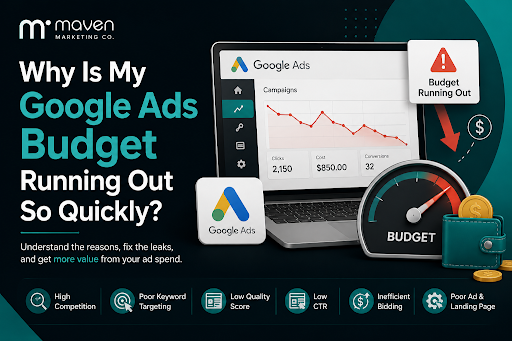
Why Is My Google Ads Budget Running Out So Quickly
Running a successful Google Ads budget isn’t only about throwing more money at it. It’s more like making every dollar, doing a bit extra. A lot of businesses start a Google Ads campaign with big hopes, then find out their daily budget is gone within a few hours, and that feels weird, right? After that, your ads stop showing effectively, new leads slip away, and your return on investment dips. So if your Google Ads budget is running out too fast, don’t stress. It’s a fairly common issue, and in most situations, it can be repaired with the right approach. There are multiple little things that can drain your advertising money quicker than you expected, from costly keywords to audience targeting that just doesn’t quite fit. In this guide, we’ll walk through why your budget disappears so quickly, how to cut wasteful spend, and the most reliable ways to boost your Google Ads ROI, even if your budget stays the same.