
.svg)
.svg)
.svg)


%201.svg)
Quick Answers
When should Australian businesses use Smart Bidding versus manual bidding strategies in Google Ads?
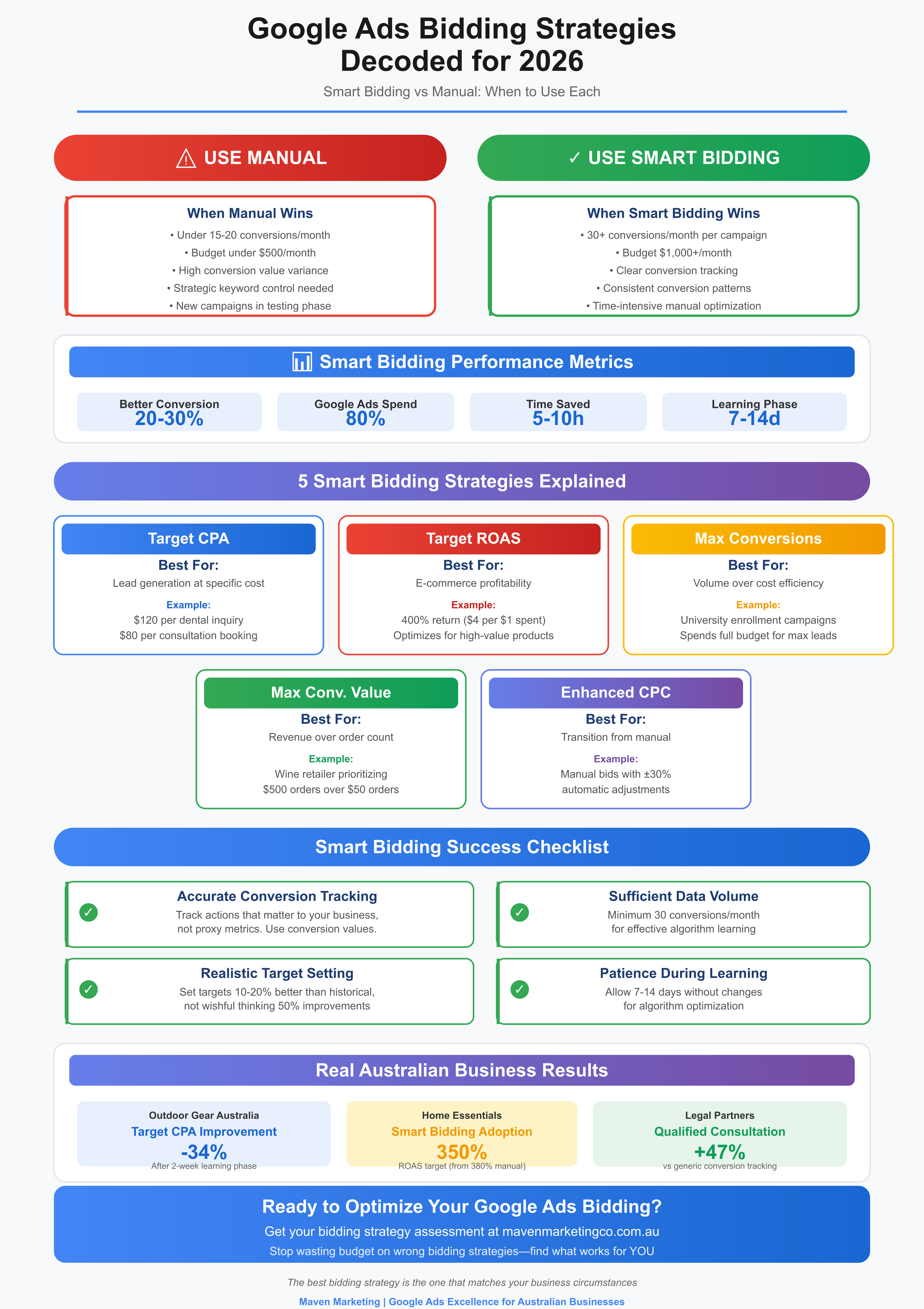
Australian businesses should use Smart Bidding when they have sufficient conversion data (typically 30+ conversions per month per campaign), clear conversion tracking implementation, consistent conversion values or patterns, budgets large enough to allow algorithm learning ($1,000+ monthly per campaign), and willingness to accept short-term performance fluctuations during learning phases. Smart Bidding excels for e-commerce businesses with diverse product catalogs where manual bid management is impractical, lead generation campaigns with clear cost-per-acquisition targets, businesses operating across multiple time zones or audience segments where manual optimization is time-intensive, and campaigns prioritizing efficiency over absolute control. Conversely, manual bidding remains superior when conversion volumes are too low for machine learning (under 15-20 conversions monthly), campaigns have highly seasonal or irregular conversion patterns that confuse algorithms, budgets are extremely limited requiring precise daily spend control ($500 or less monthly), businesses need to bid strategically on specific high-value keywords differently than automated systems would, or campaigns are in test phases requiring granular control and analysis. Australian businesses in competitive markets like Sydney or Melbourne real estate often find hybrid approaches most effective—using Smart Bidding for established campaigns with robust data while maintaining manual control for new campaigns, niche offerings, or strategic keywords where their human insight about local market conditions exceeds what algorithms can discern from historical data alone.
What are the most effective Google Ads Smart Bidding strategies for different business objectives in 2026?
The optimal Smart Bidding strategy depends entirely on your specific business objective and data availability. Target CPA (Cost Per Acquisition) works best for businesses focused on generating leads or sales at a specific cost threshold, ideal when you know your target acquisition cost and have consistent conversion values—Sydney service businesses like accountants or lawyers achieving $150 cost per consultation inquiry use Target CPA to maintain profitable lead generation. Target ROAS (Return on Ad Spend) suits e-commerce businesses with varying product values needing to maintain profitability across diverse inventory—Melbourne online retailers targeting 400% ROAS ensure ad spend generates sufficient revenue regardless of which products sell. Maximize Conversions drives the highest volume of conversions within your budget, effective for businesses prioritizing volume over cost efficiency—Brisbane educational institutions running enrollment campaigns use this during peak periods to capture maximum applications. Maximize Conversion Value optimizes for highest total conversion value rather than volume, perfect for businesses where transaction values vary significantly—Perth luxury goods retailers use this to prioritize high-value purchases over numerous small sales. Enhanced CPC (a lighter automation option) adjusts manual bids up or down based on conversion likelihood while maintaining manual control, serving as a bridge strategy for businesses transitioning from manual to full automation. In 2026, the most sophisticated Australian businesses use portfolio bid strategies that apply Smart Bidding across multiple related campaigns, enabling algorithms to optimize holistically rather than campaign-by-campaign. The critical success factor is matching strategy to objective: Target CPA for lead generation at specific costs, Target ROAS for e-commerce profitability, Maximize Conversions for volume during key periods, and Maximize Conversion Value for high-variation transaction businesses. Businesses often start with Enhanced CPC to test automation, graduate to Target CPA or Target ROAS as data accumulates, then implement portfolio strategies as account sophistication increases.
The Bidding Revolution Reshaping Google Ads
Google Ads bidding has undergone a fundamental transformation from the manual, keyword-by-keyword optimization that dominated through the early 2020s to sophisticated machine learning automation that now powers the majority of successful campaigns. For Australian businesses, this shift represents both enormous opportunity and significant risk depending on how they adapt their strategies.
The statistics reveal Smart Bidding's dominance: over 80% of Google Ads spend now flows through automated bidding strategies, up from 45% just three years ago. Google's internal data shows Smart Bidding campaigns achieving 20-30% better conversion rates on average compared to equivalent manual campaigns. Australian advertisers using Smart Bidding report time savings of 5-10 hours weekly on bid management while often achieving better results than their previous manual efforts.
Yet this automation isn't universally superior. Adelaide-based boutique law firm Heritage Legal discovered this when they switched their manual campaigns to Smart Bidding and immediately saw cost per lead spike by 73% before stabilizing at still-unprofitable levels. Their problem: insufficient conversion volume for the algorithm to learn effectively, combined with highly variable lead quality that their manual bidding had accounted for but automation couldn't. After returning to strategic manual bidding with Enhanced CPC on key campaigns, their performance recovered and eventually exceeded previous benchmarks.
The fundamental insight is that Smart Bidding and manual bidding serve different scenarios optimally. Success in 2026 requires understanding the capabilities and limitations of each approach, then strategically deploying them based on your specific business context, data availability, and objectives.
Understanding Smart Bidding: How Machine Learning Works
Smart Bidding represents Google's application of machine learning to the bid optimization challenge. Understanding how these algorithms function helps Australian businesses make informed decisions about when and how to implement automation.
The algorithmic foundation of Smart Bidding analyzes billions of signals in real-time to predict conversion likelihood for each auction. These signals include user device type, location, time of day, language, operating system, browser, ad characteristics, interface language, past interaction history with your business, and hundreds of additional contextual factors. The algorithm uses this signal analysis to calculate the probability of conversion for each potential impression, then bids accordingly to achieve your specified goal—whether that's a target CPA, target ROAS, or maximum conversions within budget.
The learning phase is critical to Smart Bidding success but often misunderstood. When you launch a new Smart Bidding campaign or make significant changes to an existing one, Google enters a learning phase typically lasting 7-14 days. During this period, the algorithm experiments with different bidding approaches to understand how various strategies perform with your specific campaigns, audiences, and conversion patterns. Performance often appears volatile or suboptimal during learning—this is expected and necessary. Brisbane e-commerce retailer Outdoor Gear Australia experienced 28% higher CPA during their first two weeks on Target CPA bidding, but after the learning phase completed, CPA dropped 34% below their previous manual campaign performance. Patience during learning phases is essential; many businesses abandon Smart Bidding during this period and miss the ultimate performance improvements.
Data requirements determine Smart Bidding effectiveness. Google's official guidance recommends at least 15 conversions in the past 30 days for Search campaigns and 30 conversions for Display campaigns before implementing Smart Bidding. However, these are minimums—campaigns with 50+ monthly conversions typically see much better algorithm performance. Low conversion volume means the algorithm has insufficient data to identify meaningful patterns and optimize effectively. This data requirement explains why Smart Bidding works brilliantly for high-volume e-commerce but struggles for B2B businesses with long sales cycles generating only 3-5 conversions monthly.
Signal optimization means Smart Bidding continuously improves as it accumulates performance data. Unlike manual bidding where your optimization is limited by your time and analytical capability, Smart Bidding algorithms process every auction result, every conversion, and every signal combination to refine predictions continuously. This creates a compounding advantage over time—the longer a Smart Bidding campaign runs (assuming sufficient conversion data), the better it becomes at predicting conversion likelihood and optimizing bids.
Auction-time bidding enables Smart Bidding to consider factors manual bidding cannot. Manual bidders set bids hours or days in advance based on average historical performance. Smart Bidding evaluates each individual auction in real-time, adjusting bids based on that specific user's characteristics and context. When a Sydney user on an iPhone at 7pm on Tuesday searches for "emergency plumber," Smart Bidding can recognize this as a higher-intent scenario than the same search from a Melbourne user on desktop at 11am Wednesday, bidding accordingly. This granular, context-specific optimization is impossible with manual bidding.
Manual Bidding: When Human Control Outperforms Algorithms
Despite Smart Bidding's advantages, manual bidding remains superior in specific scenarios common among Australian businesses. Understanding these situations prevents wasted budget on automation that isn't yet appropriate for your circumstances.

Low conversion volume scenarios fundamentally limit Smart Bidding effectiveness. Perth consulting firm Strategy Partners generates only 8-12 qualified leads monthly from their Google Ads campaigns—insufficient data for Smart Bidding to identify optimization patterns. Their manual bidding approach allows them to apply industry knowledge about which keywords and audience segments typically convert best, even without statistical significance in campaign data. When conversion volume is low, human pattern recognition and industry expertise often outperform algorithms starved for data.
High conversion value variance confuses Smart Bidding optimization. Melbourne B2B software company TechSolutions sells products ranging from $500 annual subscriptions to $50,000 enterprise contracts. Their Smart Bidding campaigns initially optimized for conversion volume, generating numerous low-value leads while missing high-value enterprise opportunities. Manual bidding with strategic bid adjustments based on keyword intent and company size signals enabled them to prioritize enterprise-level traffic more effectively than the algorithm could discern from limited conversion data.
Budget constraints make manual control essential when daily spend limits are critical. With budgets under $30-50 daily, even small algorithmic misjudgments during learning phases can exhaust your entire monthly budget in days without generating returns. Adelaide restaurant Coastal Kitchen operates on a $500 monthly Google Ads budget—they maintain strict manual bidding control to ensure spend distributes evenly across the month and prioritizes their highest-converting time periods (Thursday-Saturday evenings) rather than allowing an algorithm to experiment with their limited budget during learning phases.
Strategic keyword bidding for competitive terms requires human judgment. In competitive Australian markets like Sydney real estate or Melbourne legal services, certain high-value keywords justify dramatically different bidding strategies than broader campaign averages. Real estate agency Harbour Properties manually bids significantly higher on "sell my house [Sydney suburb]" searches where competition is intense but conversion rates are exceptional, while maintaining lower bids on research-oriented queries. This strategic differentiation based on keyword intent and competitive dynamics exceeds what Smart Bidding typically accomplishes without extensive historical data.
New campaign testing benefits from manual control during initial phases. When launching campaigns for new products, services, or markets, insufficient historical data limits Smart Bidding effectiveness. Brisbane skincare brand Pure Organics manually manages all new product campaign launches for the first 2-3 months, gathering data about keyword performance, audience response, and conversion patterns. Once they accumulate 40-50 conversions and understand performance patterns, they transition successful campaigns to Smart Bidding while maintaining manual control for underperforming campaigns requiring strategic adjustment.
Seasonal businesses with dramatic demand fluctuations sometimes struggle with Smart Bidding's reliance on historical patterns. Tax preparation businesses experiencing 80% of annual conversions in a 10-week period find Smart Bidding algorithms optimized for off-season performance patterns don't adapt quickly enough during peak season. Manual bidding allows immediate, aggressive adjustments based on real-time demand that algorithms may take days to recognize and optimize for.
The Smart Bidding Strategy Landscape
Google offers multiple Smart Bidding strategies, each optimized for different business objectives. Australian businesses must match strategy to objective for optimal results. Understanding each option's strengths and ideal use cases guides strategic selection.
Target CPA (Cost Per Acquisition) automatically sets bids to achieve your specified target cost per conversion. You define what you're willing to pay per conversion ($50 per lead, $80 per sale, $25 per signup), and the algorithm optimizes to achieve that target across your campaign. This strategy works exceptionally well for lead generation businesses with consistent lead values—Brisbane dental practice Smile Clinic targets $120 per new patient inquiry, achieving consistent lead flow at predictable costs. Target CPA requires conversion tracking accuracy and works best when your conversion values are relatively consistent. The algorithm will sacrifice conversion volume if necessary to maintain your target cost, so ensure your target CPA is realistic based on historical performance or competitor benchmarks.
Target ROAS (Return on Ad Spend) optimizes for conversion value rather than conversion volume, targeting a specific return on ad spend percentage. If you set a 400% target ROAS, the algorithm aims to generate $4 in conversion value for every $1 in ad spend. This strategy is ideal for e-commerce businesses where product values vary significantly—Sydney online fashion retailer Style Collective uses Target ROAS to maintain profitability across their diverse inventory from $30 accessories to $500 dresses. Target ROAS requires conversion value tracking, not just conversion counting. The algorithm will prioritize high-value conversions over low-value ones, making it perfect for businesses where transaction profitability varies considerably.

Maximize Conversions drives the highest possible number of conversions within your specified budget, without targeting a specific cost per conversion. This strategy works well during high-priority periods where volume matters more than cost efficiency—Melbourne university Open Day campaigns use Maximize Conversions to capture as many registrations as possible during their short enrollment windows. The algorithm will spend your entire daily budget chasing conversions, so only use this when conversion volume is your primary objective and you have flexibility on cost per conversion. Perth recruitment agency Talent Connect uses Maximize Conversions during skill shortage periods when filling roles quickly justifies higher acquisition costs.
Maximize Conversion Value optimizes for the highest total conversion value rather than the highest number of conversions. Unlike Maximize Conversions which counts each conversion equally, Maximize Conversion Value prioritizes higher-value conversions. Adelaide wine retailer Premium Vintages uses this strategy to drive revenue rather than order volume—the algorithm bids aggressively for users showing signals of higher purchase intent or basket values. This strategy requires conversion value tracking and works best for businesses where total revenue matters more than transaction count.
Enhanced CPC (ECPC) represents a hybrid approach—you set manual bids, but Google automatically adjusts them up to 30% higher or lower based on conversion likelihood. This provides automation benefits while maintaining substantial manual control. ECPC serves as an excellent transition strategy for businesses moving from pure manual to full Smart Bidding. Brisbane B2B services firm Growth Advisory used ECPC for six months while accumulating conversion data, then graduated to Target CPA once their data met Smart Bidding requirements. ECPC works well for businesses wanting automation benefits but needing to maintain control over maximum bids for budget management.
Portfolio Bid Strategies apply a single Smart Bidding strategy across multiple campaigns, enabling cross-campaign optimization. Rather than each campaign optimizing independently, Portfolio strategies allow the algorithm to shift budget and bids across campaigns to achieve overall targets. Perth multi-location retailer Coastal Stores uses a Portfolio Target ROAS strategy across their 12 location-specific campaigns, enabling the algorithm to optimize holistically rather than treating each location as an isolated campaign. Portfolio strategies require substantial total conversion volume (50+ conversions monthly across the portfolio) but deliver superior optimization when data supports it.
Implementation Best Practices for Smart Bidding Success
Successfully implementing Smart Bidding requires more than simply selecting a strategy and launching. Australian businesses achieving exceptional results follow systematic approaches that set campaigns up for algorithmic success.

Conversion tracking accuracy is absolutely foundational—Smart Bidding is only as good as the conversion data it optimizes toward. Ensure your conversion tracking captures the actions that actually matter to your business, not proxy metrics. Melbourne law firm Legal Partners initially tracked "contact form submissions" as conversions but discovered many were spam or low-quality inquiries. After refining tracking to only count qualified consultations scheduled, their Smart Bidding performance improved dramatically because the algorithm optimized toward valuable conversions rather than junk traffic. Use conversion values whenever possible—even lead generation businesses can assign estimated values based on lead-to-customer conversion rates and average customer value.
Historical performance analysis before implementing Smart Bidding provides crucial benchmarks. Document your current CPA, ROAS, conversion rate, and total conversions for at least 30 days before switching to Smart Bidding. This baseline enables you to accurately assess whether Smart Bidding improves performance and helps you set realistic targets. Brisbane e-commerce store Home Essentials analyzed three months of manual campaign performance before implementing Target ROAS, setting their initial target at 350% (slightly below their 380% historical average) to allow the algorithm learning room. This data-driven target setting contributed to their smooth Smart Bidding transition.
Gradual implementation reduces risk and enables learning. Rather than converting your entire account to Smart Bidding simultaneously, implement it campaign by campaign or through campaign experiments comparing automated and manual approaches. Sydney digital marketing agency Amplify Digital maintains 40% of client campaigns on manual bidding as control groups, measuring Smart Bidding performance against manual benchmarks before full rollout. This phased approach prevents account-wide performance drops if Smart Bidding doesn't suit particular campaign characteristics.
Patience during learning phases is critical yet challenging. Expect 1-2 weeks of suboptimal or volatile performance as algorithms learn. Avoid making changes during this period—each significant modification resets the learning phase. Adelaide automotive dealership Prestige Motors committed to a 21-day "hands-off" period when implementing Smart Bidding, resisting the urge to intervene when CPA spiked 40% in week one. By week three, their CPA had stabilized 25% below pre-automation levels, but they would have missed this improvement had they abandoned the strategy during the learning phase.
Appropriate target setting balances ambition with reality. Setting Target CPA 50% below your historical average because you "want better results" will cause the algorithm to restrict impression volume severely, often delivering worse overall performance despite theoretically achieving your target. Set initial targets 10-20% more efficient than historical performance, then gradually tighten targets as the algorithm optimizes. Perth insurance broker Cover Plus started Target CPA at $95 (versus $105 historical), achieved it within three weeks, then reduced to $88 over the following month as performance stabilized.
Campaign structure optimization for Smart Bidding differs from manual bidding best practices. Smart Bidding performs best with simplified campaign structures—fewer campaigns with larger keyword sets enable better algorithmic learning. While manual bidding often benefits from highly segmented campaigns for granular control, Smart Bidding campaigns can consolidate related keywords into broader campaigns because the algorithm handles granular optimization at the auction level. Melbourne retailer Urban Living consolidated eight highly segmented manual campaigns into three Smart Bidding campaigns, achieving better performance through increased data volume per campaign.
Advanced Optimization Techniques
Beyond basic implementation, sophisticated Australian businesses employ advanced techniques to maximize Smart Bidding performance and maintain strategic control while leveraging automation.
Seasonality adjustments inform Smart Bidding algorithms about expected conversion rate changes during specific periods, preventing algorithmic misinterpretation of seasonal patterns. When Brisbane gift retailer Presents & More runs their Mother's Day sale, conversion rates typically triple for two weeks. Without seasonality adjustments, Smart Bidding would interpret this as a permanent shift and aggressively increase bids, wasting budget. By informing the algorithm of the temporary 200% conversion rate increase, bids remain appropriate and performance stays efficient throughout the promotion.

Conversion value rules enable dynamic conversion value assignment based on transaction characteristics, significantly improving Target ROAS optimization. Sydney travel agency Aussie Adventures implemented conversion value rules that assign 2x value to international bookings versus domestic (reflecting higher margins and lifetime value), enabling their Target ROAS strategy to prioritize the most profitable conversions rather than treating all bookings equally. This dynamic valuation dramatically improved profitability despite similar conversion counts.
Audience layering adds strategic control to Smart Bidding campaigns without conflicting with algorithmic optimization. While Smart Bidding handles base bidding, you can add audience-based bid adjustments to prioritize or deprioritize specific segments. Perth financial services firm Wealth Architects adds +30% bid adjustments for users who previously visited their retirement planning pages but haven't converted, enabling Smart Bidding to bid more aggressively for this high-intent audience without manually managing individual keyword bids.
Data-driven attribution enhances Smart Bidding performance by providing more accurate conversion credit across the customer journey. Rather than last-click attribution that credits only the final ad interaction, data-driven attribution uses machine learning to assign proportional credit to all touchpoints leading to conversion. Melbourne furniture retailer Home Comfort switched from last-click to data-driven attribution and discovered their brand awareness campaigns were contributing substantially to conversions ultimately attributed to bottom-funnel campaigns. This insight enabled their Smart Bidding campaigns to optimize more effectively across the entire funnel rather than overvaluing last-touch interactions.
Cross-account insights for agencies managing multiple clients enable pattern recognition that informs Smart Bidding implementation. Adelaide digital marketing agency Southern Digital recognized that Target CPA consistently outperformed Maximize Conversions for their professional services clients, while e-commerce clients achieved better results with Target ROAS. These insights, derived from managing 40+ accounts, accelerate Smart Bidding success for new clients by applying proven strategies rather than experimenting with each account independently.
Regular performance reviews maintain Smart Bidding effectiveness over time. While automation reduces daily management requirements, monthly strategic reviews ensure campaigns remain aligned with business objectives. Check whether your target CPA or ROAS remains appropriate as market conditions evolve, verify conversion tracking continues functioning correctly (technical issues can corrupt algorithm learning), analyze search term reports to identify irrelevant traffic the algorithm hasn't recognized, and adjust budgets based on campaign performance and business capacity. Brisbane solar installation company Bright Energy conducts monthly Smart Bidding reviews, adjusting Target CPA based on installation scheduling capacity—tightening targets when they're booked months ahead, loosening targets when they have immediate installation availability.
Common Smart Bidding Mistakes Australian Businesses Make
Understanding frequent Smart Bidding pitfalls helps Australian businesses avoid wasted budget and disappointing results. Many implementation failures stem from predictable mistakes rather than inherent strategy limitations.
Insufficient conversion volume is the most common Smart Bidding failure. Businesses with 5-10 monthly conversions implement Target CPA or Target ROAS expecting algorithmic magic, then experience terrible performance because the algorithm lacks sufficient data to optimize effectively. If you're not meeting minimum data requirements, either build conversion volume through manual bidding first or use Enhanced CPC as a lighter automation option until data accumulates. Adelaide consulting firm Strategy Advisors wasted $8,000 over three months on underperforming Smart Bidding before accepting their 6-8 monthly conversions were insufficient—they returned to manual bidding with Enhanced CPC and achieved better results.
Unrealistic target setting dooms campaigns before algorithms can optimize. Setting Target CPA at $30 when your historical performance is $95 will either deliver virtually zero conversions (as the algorithm restricts bids to achieve your impossible target) or fail to achieve your target while still performing worse than manual bidding. Perth real estate agency Coastal Properties set Target CPA at $150 despite $280 historical CPA, then watched impressions drop 85% as Smart Bidding bid too conservatively to win auctions in their competitive market. After resetting Target CPA to $260 (more realistic given market conditions), their campaign performance recovered.
Impatience during learning causes premature strategy abandonment. When Melbourne e-commerce store Fashion Forward experienced 45% higher CPA during week one of Smart Bidding implementation, they panicked and reverted to manual bidding—missing the performance improvement that would have materialized in week three. Learning phase volatility is expected; judge performance 3-4 weeks post-implementation, not daily during learning.
Tracking problems corrupt Smart Bidding optimization. When Sydney SaaS company CloudTools updated their website, their conversion tracking broke for five days before they discovered the issue. During this period, Smart Bidding received no conversion data and optimized based on faulty signals, taking another two weeks to recover once tracking was restored. Regularly verify conversion tracking functions correctly—Smart Bidding is only as good as the data it receives.
Over-optimization and interference prevents algorithmic learning. Brisbane retailer Home Goods implemented Smart Bidding then made significant changes (budget adjustments, keyword additions, targeting changes) every 2-3 days. Each change reset the learning phase, preventing the algorithm from ever stabilizing and optimizing effectively. Once they committed to a 21-day stability period, performance improved dramatically.
Ignoring auction insights means missing opportunities to improve Smart Bidding performance. Google Ads auction insights reveal how your performance compares to competitors sharing similar auctions. Adelaide dental practice Family Dental discovered they were losing impression share to competitors despite Smart Bidding optimization—their issue was insufficient budget rather than poor bidding strategy. Increasing budget enabled Smart Bidding to capture available opportunities the algorithm had identified but couldn't pursue due to budget constraints.
Mixing incompatible strategies creates optimization conflicts. Running Target CPA campaigns while also using maximize clicks bid strategy or manual CPC in the same account for similar keywords creates bidding conflicts and competitive inefficiencies. Maintain consistent strategic approaches across related campaigns to enable portfolio optimization benefits.
Measuring Success: The Metrics That Actually Matter

Evaluating Smart Bidding performance requires looking beyond surface metrics to understand true business impact. Australian businesses often focus on wrong indicators, missing actual performance insights.
Cost per conversion remains important but must be contextualized. A Target CPA campaign achieving your target CPA doesn't necessarily succeed if conversion volume drops 60%—you're hitting your cost target but losing business. Similarly, slightly missing your Target CPA while increasing conversion volume 40% may represent superior business outcomes despite "failing" to achieve your target. Perth gym Fitness First tracks both CPA and total conversion volume, recognizing that 10% higher CPA generating 35% more memberships delivers better business results than hitting CPA targets with lower volume.
Conversion value and ROAS matter more than conversion count for businesses with varying transaction values. Melbourne online retailer Tech Gadgets discovered their Smart Bidding campaigns generated 20% fewer conversions than previous manual campaigns but 35% higher revenue because the algorithm prioritized higher-value purchases. Focusing only on conversion count would have suggested Smart Bidding underperformed, but revenue data revealed superior business outcomes.
Impression share metrics indicate whether you're capturing available opportunities. Search impression share shows what percentage of possible impressions you're winning, while lost impression share (budget) and lost impression share (rank) reveal why you're missing impressions. Adelaide law firm Justice Partners achieved their Target CPA goals but only captured 35% impression share with 60% lost to budget—Smart Bidding was working efficiently, but insufficient budget prevented full opportunity capture. Increasing budget enabled proportional conversion growth while maintaining target CPA.
Incremental conversions compared to previous strategies or control groups reveal true Smart Bidding impact. Brisbane education provider Online Learning ran A/B tests comparing Smart Bidding to manual campaigns for identical audiences and found Smart Bidding generated 28% more conversions at 12% lower CPA—clear evidence of automation's value for their specific campaigns.
Quality metrics beyond just conversions ensure you're attracting valuable traffic. Tracking bounce rate, time on site, and conversion quality prevents optimizing toward low-quality conversions. Sydney legal services firm Corporate Law noticed their Smart Bidding campaigns achieved Target CPA successfully but many leads were unqualified inquiries outside their practice areas. Refining conversion tracking to only count qualified consultations (rather than all form submissions) dramatically improved campaign quality and business outcomes.
Learning phase completion and stability indicate Smart Bidding maturity. Campaigns constantly in learning phases due to frequent changes never achieve optimal performance. Track how long campaigns remain stable in "Eligible" status (learning phase complete) versus "Learning" status—mature Smart Bidding accounts should have 80%+ of campaigns eligible rather than perpetually learning.
The Future of Google Ads Bidding: 2026 and Beyond
Understanding emerging trends in Google Ads bidding helps Australian businesses prepare for continued evolution rather than reacting after changes impact performance.
Increased automation requirements will continue—Google consistently pushes advertisers toward automated bidding, with manual strategies receiving fewer feature updates and optimization capabilities. Businesses resisting automation will find themselves increasingly disadvantaged as Google's platform development prioritizes Smart Bidding features. Perth retailer Coastal Outdoors recognized this trend early and systematically transitioned campaigns to Smart Bidding through 2025, positioning themselves for continued success as Google deprecates manual bidding capabilities.

AI-powered insights are becoming more sophisticated, with Google's Gemini AI integration providing campaign optimization recommendations, performance predictions, and strategic suggestions previously requiring human analysis. Adelaide marketing agency Digital Growth leverages these AI insights to identify Smart Bidding opportunities their manual analysis might miss, achieving superior results by combining algorithmic automation with AI-powered strategic guidance.
Value-based bidding evolution will emphasize long-term customer value rather than just first conversion. Google is developing capabilities to optimize toward customer lifetime value, repeat purchase probability, and long-term profitability rather than simply initial conversion events. Melbourne subscription business Meal Kits Australia prepared for this evolution by implementing comprehensive conversion value tracking that captures subscription duration and customer retention, positioning their Smart Bidding campaigns to optimize for total customer value as these capabilities mature.
Privacy-focused attribution will increasingly rely on machine learning to fill gaps created by privacy restrictions, cookie deprecation, and tracking limitations. Smart Bidding's algorithmic approach becomes more valuable as direct tracking becomes less precise—algorithms can identify conversion patterns even with incomplete individual-level data. Sydney e-commerce retailer Style Junction recognizes Smart Bidding's growing advantage in the privacy-focused advertising environment and accelerated their automation adoption accordingly.
Cross-channel optimization will extend Smart Bidding beyond Google Ads to coordinate bidding across multiple advertising platforms, optimizing holistically rather than channel-by-channel. Brisbane multi-channel retailer Home Living anticipates this evolution and maintains consistent conversion tracking and valuation across all advertising platforms, preparing for eventual cross-platform bidding optimization.
Take Action: Optimize Your Bidding Strategy Today
The Google Ads bidding landscape demands strategic decisions aligned with your business circumstances, data availability, and objectives. Success requires understanding both Smart Bidding's capabilities and its limitations, then implementing automation where it delivers advantages while maintaining manual control where human judgment still outperforms algorithms.
The path forward isn't choosing between Smart Bidding and manual bidding universally—it's strategically deploying each approach based on campaign-specific circumstances. High-conversion campaigns with clear objectives benefit from Smart Bidding automation. Low-conversion campaigns requiring strategic control perform better with manual bidding. Most sophisticated Australian businesses employ hybrid approaches that leverage automation's efficiency for established campaigns while maintaining manual control for testing, strategic keywords, or data-limited scenarios.
Ready to optimize your Google Ads bidding strategy for maximum profitability? Contact Maven Marketing for a comprehensive Google Ads audit and bidding strategy assessment. We'll analyze your current campaign performance, evaluate whether your account meets Smart Bidding data requirements, recommend optimal bidding strategies aligned with your business objectives and budget, implement Smart Bidding following best practices that prevent common pitfalls, and establish measurement frameworks that track true business impact beyond surface metrics. Don't waste thousands on bidding strategies that don't match your circumstances or leave money on the table by avoiding automation that could improve performance. Get in touch today and transform your Google Ads campaigns from guesswork to data-driven profitability.

Table of contents
read more blogs

Sonic Branding: Why Your Business Needs an Audio Identity in 2026
Close your eyes and hear three notes. You know it's McDonald's. Four simple tones tell you it's Intel. Netflix's "ta dum" triggers anticipation before content even loads. Meanwhile, your Australian business remains sonically invisible in a world where 77% of consumers recall brands more easily when they associate them with specific sounds. While you obsess over visual branding, competitors are creating audio identities that embed themselves in customer memory through voice assistants, podcasts, social media, and every digital touchpoint where sound matters more than images ever could.

International SEO for Australian Exporters: Expanding Your Digital Footprint Globally
Australian exporters face unique challenges expanding digital presence into international markets—from technical hreflang implementation to cultural content adaptation and regional search behavior differences. This comprehensive guide reveals how successful Australian brands leverage international SEO to capture overseas demand, with proven strategies for USA, UK, Asian, and European markets. Discover hreflang tag configuration, country-specific domain strategies, multilingual content optimization, international link building, and technical implementations that drive 200-400% traffic increases from target export markets while avoiding duplicate content penalties and regional ranking issues.
Google Ads Bidding Strategies Decoded: Smart Bidding vs Manual in 2026
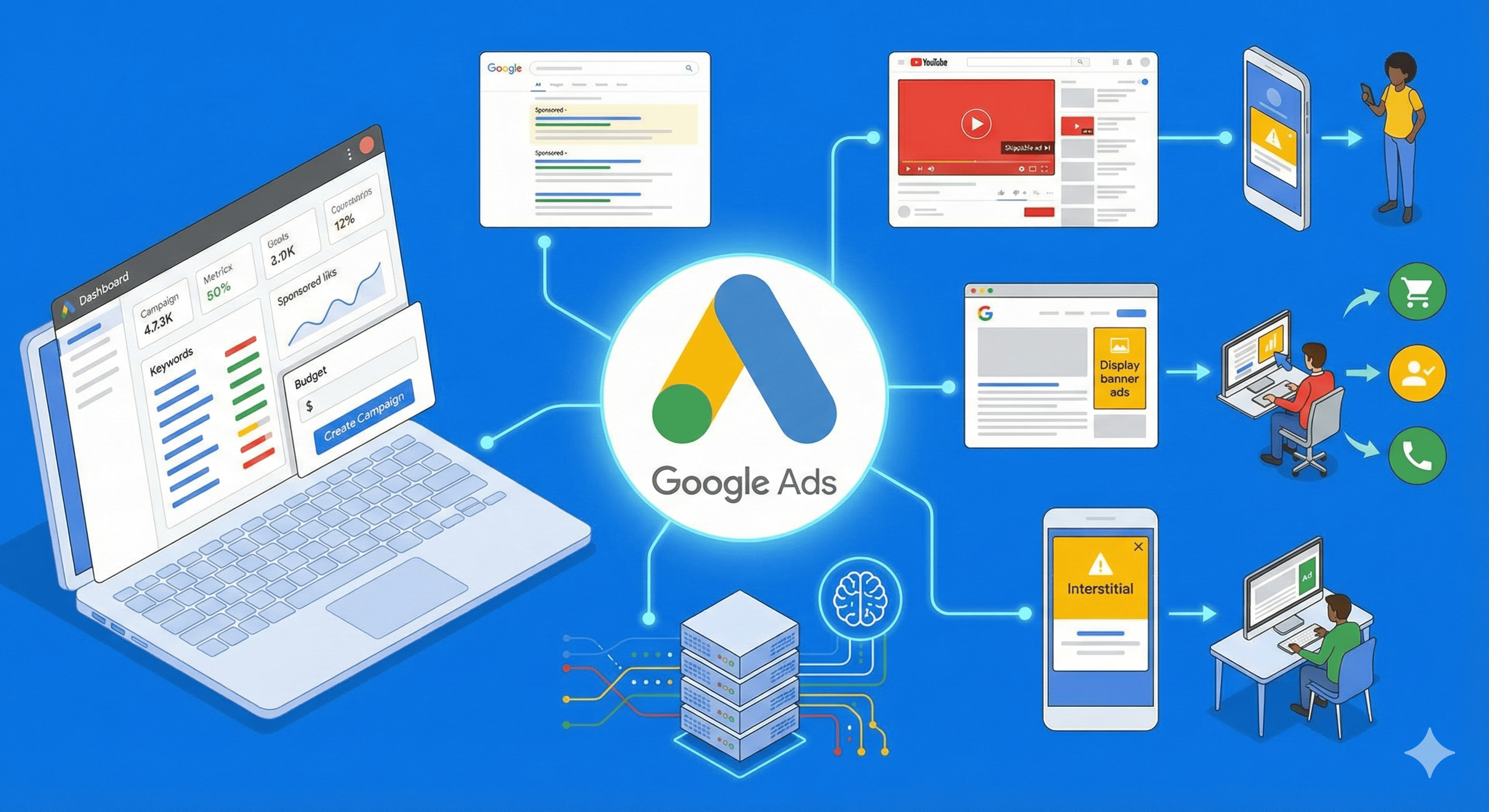
Google Ads bidding strategies have evolved dramatically as machine learning algorithms gain unprecedented sophistication. Australian businesses face a critical choice: embrace Smart Bidding automation or maintain manual control over bid management. In 2026, the answer isn't binary—it's strategic. This comprehensive guide decodes every bidding strategy available, revealing when Smart Bidding outperforms manual approaches by 30-40%, when manual bidding delivers superior control, and how to implement hybrid strategies capturing advantages of both. Discover data-driven frameworks for selecting optimal bidding strategies based on your business goals, conversion volume, and competitive landscape.


