.svg)


%201.svg)

Key Takeaways
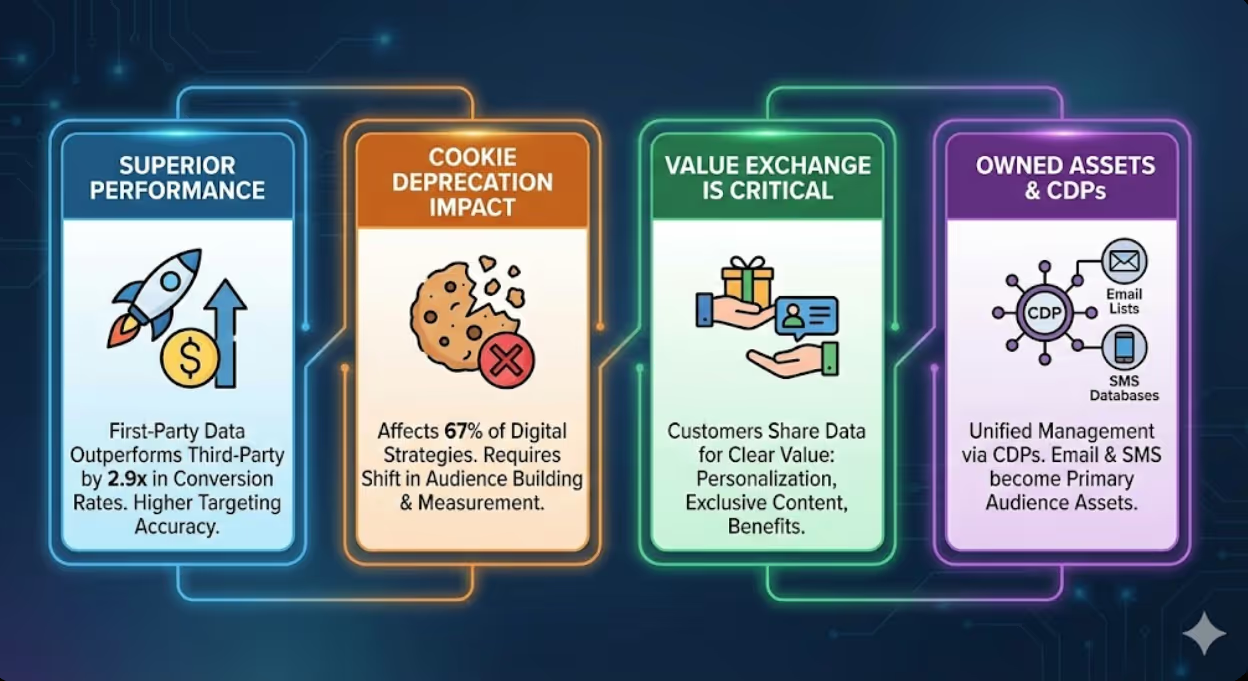
- First-party data collected directly from customers outperforms third-party data by 2.9x in conversion rates, with owned customer data providing superior targeting accuracy and personalization without privacy violations
- Cookie deprecation affects 67% of current digital advertising strategies, requiring fundamental shifts in audience building, retargeting, attribution, and performance measurement for businesses dependent on third-party tracking
- Value exchange is critical for first-party data collection, with customers willingly sharing data when receiving clear, immediate value—personalized experiences, exclusive content, or tangible benefits in return
- Customer Data Platforms (CDPs) enable unified first-party data management, consolidating customer interactions across touchpoints into actionable profiles that power personalized marketing without third-party cookies
- Email and owned channels become primary audience assets, with direct customer relationships through email lists, SMS databases, and community platforms replacing rented audience access through third-party platforms
For years, digital marketers operated in a fantasy world where tracking customers across the internet seemed normal and sustainable. Install a pixel, track users everywhere, retarget endlessly, measure everything.
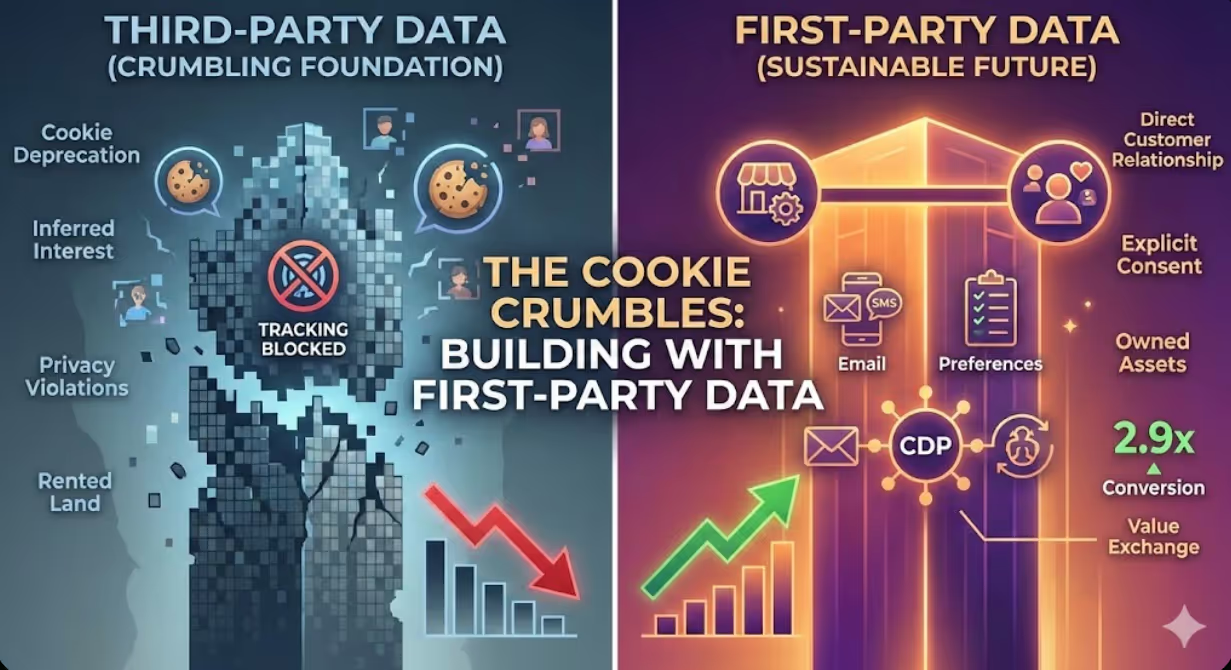
That foundation is collapsing. Privacy regulations, browser restrictions, and consumer awareness have converged to end third-party cookie tracking. Google's Chrome cookie deprecation will eliminate the last major holdout.
The businesses panicking are those who built everything on rented land—Facebook pixels, Google remarketing tags, third-party data providers. Meanwhile, forward-thinking businesses recognized this shift years ago and built first-party data strategies—direct customer relationships generating proprietary data that powers marketing more effectively than invasive tracking ever did.
Understanding First-Party vs Third-Party Data
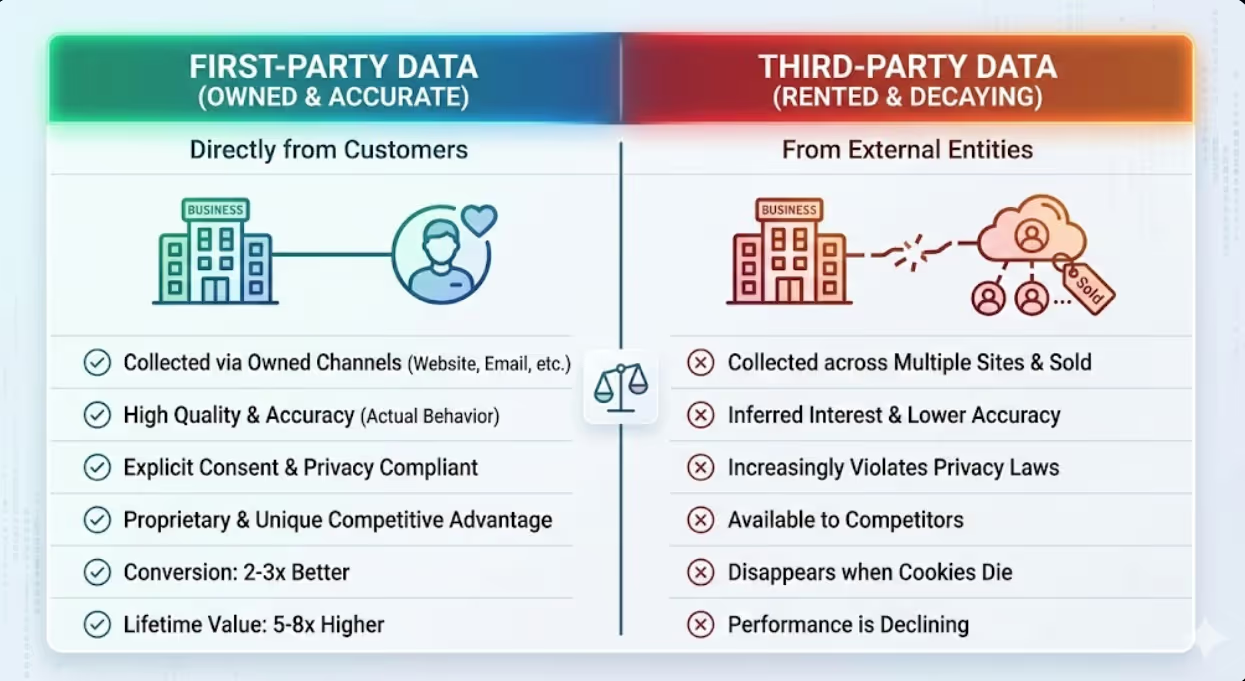
First-party data is information you collect directly from customers through owned channels: website behavior, purchase history, email engagement, survey responses, account preferences, and loyalty program activity.
This data belongs to you, collected with explicit consent, stored in your systems. Quality is high because it comes directly from customer actions.
Third-party data is information collected by external entities about consumers across multiple sites and sold to advertisers. This data was never truly yours and disappears when cookies die.
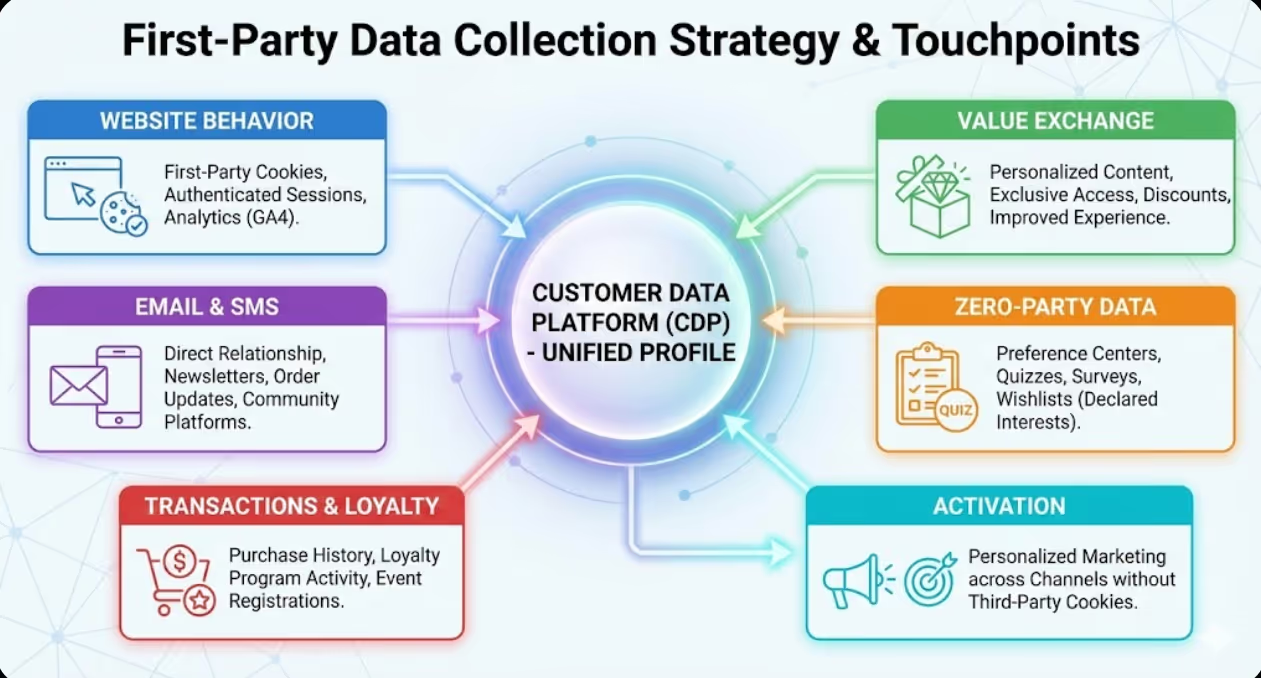
Zero-party data represents evolution beyond first-party—information customers intentionally share: preference centers, quiz responses, wishlists, profile customizations. Customers tell you exactly what they want, permitting personalization accordingly.
Why First-Party Data Outperforms Third-Party Tracking
Accuracy advantage: First-party data reflects actual customer behavior on your properties, not inferred interest from tangential browsing.
Compliance and consent: First-party data collected with transparent consent complies with privacy regulations. Third-party tracking increasingly violates laws and consumer expectations.
Competitive differentiation: Third-party data is available to competitors. Your first-party data is proprietary and unique.
Performance metrics validate superiority: Studies show first-party data campaigns convert 2-3x better than third-party targeting, with customer lifetime values 5-8x higher.
Building Your Collection Foundation
Website behavior tracking remains possible post-cookies through first-party cookies and authenticated sessions.
Implement robust analytics (GA4 configured for first-party, privacy-compliant tracking). Use first-party cookies set by your domain. Encourage account creation enabling authenticated tracking.
Progressive profiling collects information gradually. Don't overwhelm new subscribers with 20-field forms. Collect email initially, then gather additional details through preference centers, periodic prompts, implied data from behavior, and occasional surveys.
Value exchange clarity makes data sharing worthwhile. Offer concrete, immediate value: personalized recommendations, exclusive content, early access or discounts, improved experience, and community access.
Transparency and control build trust. Clearly explain what data you collect and how you use it. Provide easy preference management and opt-out mechanisms.
Multiple collection touchpoints: Website forms, purchase transactions, email engagement, survey responses, customer service interactions, event registrations, content downloads, and loyalty programs.
Customer Data Platform Implementation
CDPs unify fragmented customer data from multiple sources into single customer views.
Traditional stacks fragment data: website analytics here, email platform there, CRM elsewhere. CDPs integrate data from all touchpoints, resolve customer identities across channels, create unified profiles, segment audiences, and activate data across marketing channels.
CDP selection considerations: Integration capabilities with existing stack, identity resolution effectiveness, segmentation power, privacy compliance, and scalability.
Popular options include Segment, Klaviyo (e-commerce focused), Salesforce CDP, Adobe Real-Time CDP, and Australian providers like Lexer.
Email and SMS: Your Owned Assets
Email lists represent your most valuable first-party audience—direct access independent of platform algorithms or ad costs.
Strategic email collection:
- Website opt-ins with prominent, valuable, frictionless offers
- Purchase-triggered collection at high-engagement moments
- Content gating exchanging valuable resources for emails
- Progressive profiling through email allowing gradual enrichment
SMS database building creates direct mobile access. Offer SMS-only deals, use for order updates, promote for urgent offers. Ensure value justifies intrusion.
Zero-Party Data Collection Strategies
Preference centers empower customers to declare interests: product interests, communication frequency, content topics, purchase timing, and demographics.
Make centers easy to access and update. Demonstrate how preferences affect experience immediately.
Interactive quizzes collect valuable data while providing entertainment: product recommendation quizzes, style assessments, needs analysis, and knowledge assessments.
Surveys and feedback gather explicit insights: post-purchase satisfaction, product usage, market research, feature votes, and content preferences.
Wishlist functionality reveals purchase intent. Track additions indicating interest, monitor saves showing category preferences.
Attribution in Cookieless World
First-party conversion tracking through server-side implementations remains viable.
Implement server-side tracking bypassing browser restrictions. Use authenticated users for deterministic tracking. Implement enhanced conversions using hashed first-party data.
Multi-touch attribution becomes more challenging but not impossible. Track journey through owned channels. Use UTM parameters consistently. Implement custom data layer tracking.
Incrementality testing measures actual impact. Run hold-out tests, compare conversion rates between exposed and unexposed audiences.
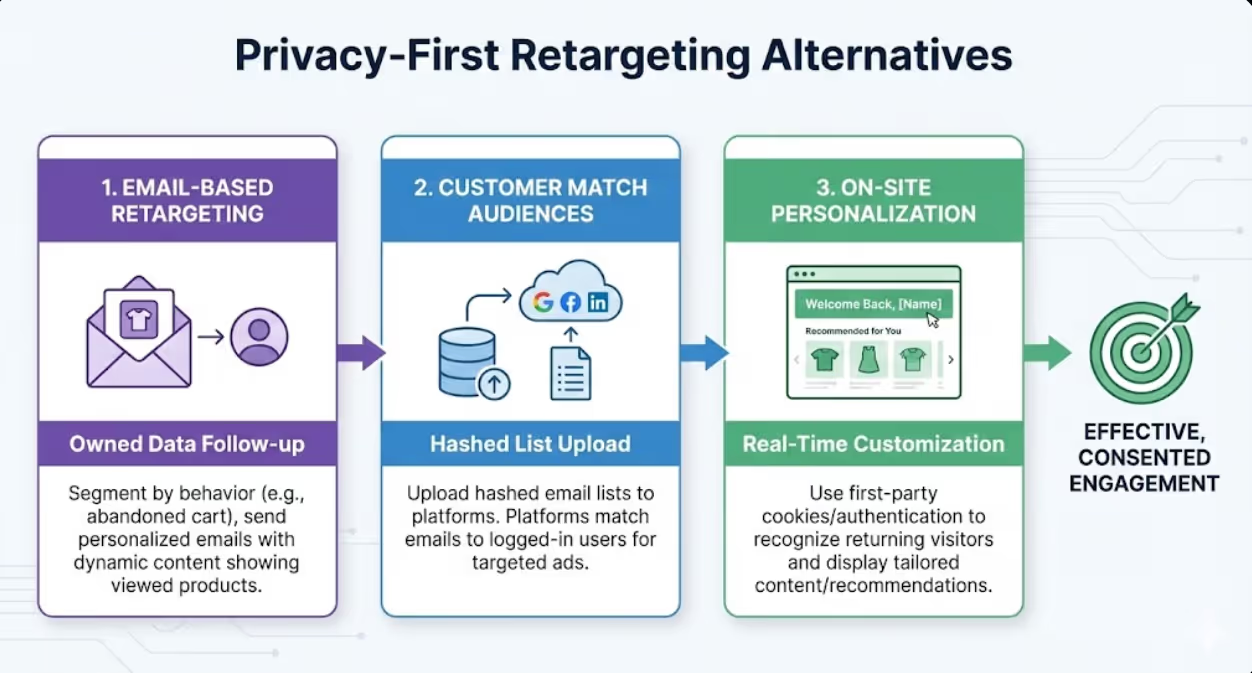
Privacy-First Retargeting Alternatives
Email-based retargeting uses owned data for personalized follow-up. Segment by site behavior, send targeted campaigns, use dynamic content showing products viewed.
Customer match audiences leverage hashed email lists. Upload to Google, Facebook, LinkedIn. Platforms match emails to logged-in users. Target matched audiences with tailored messaging.
On-site personalization customizes experiences for returning visitors. Use first-party cookies to recognize visitors, display content based on history, recommend products.
Case Study: Melbourne E-commerce Brand
A Melbourne fashion brand relied heavily on Facebook pixel retargeting. Safari ITP and iOS 14 privacy changes decimated performance.
In Q1 2024, they pivoted to first-party strategy: Style Quiz collecting preferences, 15% discount for email signup, comprehensive preference center, Klaviyo CDP unifying data, email-first retargeting, and customer match audiences.
Results after 9 months:
Email list grew from 12,000 to 47,000 (292% growth). Email revenue increased from 18% to 41% of total. Customer match campaigns achieved 3.1x ROAS vs 1.8x previously. Total revenue increased 34% while paid advertising spend decreased 22%.
Case Study: Brisbane B2B SaaS
A Brisbane SaaS company sold project management software. Their demand generation relied on LinkedIn advertising with third-party retargeting.
Their first-party strategy: comprehensive resource library gating content, freemium version requiring signup, progressive profiling, sophisticated segmentation by usage and company characteristics, and account-based marketing.
Results after 7 months:
Free trial signups increased 156%. Product-qualified leads converted 67% vs 23% from traditional MQLs. Email engagement rates doubled. Sales cycle shortened 28%. Revenue impact: $340,000 additional ARR. Customer acquisition cost decreased 31%.
Frequently Asked Questions
How do small businesses build first-party data without enterprise budgets?
Start with fundamental owned assets: Build email list using free/affordable platforms (Mailchimp, Sender, MailerLite). Use native analytics (GA4) configured properly. Implement basic website forms. Create simple preference centers. Leverage free CDP alternatives or Zapier integration. Focus on collection over sophisticated activation initially. Many successful strategies start with spreadsheets, email platforms, and manual segmentation before evolving to automation.
Is first-party data collection privacy law compliant for Australian businesses?
Yes, when executed properly: Obtain explicit consent before collecting. Provide transparent privacy policies. Offer easy preference management and opt-out. Honor deletion requests. Secure data appropriately. Use data only for declared purposes. The advantage is transparency—customers understand what you collect because they're providing it directly with clear value exchange, not being tracked without awareness.
Can you still use remarketing without third-party cookies?
Yes, through first-party alternatives: Email-based remarketing, customer match audiences, first-party cookies, authenticated user tracking, and contextual targeting. These approaches maintain effectiveness using owned data and consented communication. Performance often improves because targeting precision increases with direct first-party data versus inferred third-party signals.
Build Sustainable Audience Relationships
The cookie apocalypse isn't ending digital marketing—it's forcing evolution toward more sustainable, privacy-respecting approaches. Businesses clinging to dying third-party tracking will find performance degrading until cookies disappear.
Meanwhile, businesses building first-party data strategies create competitive advantages that strengthen over time. Direct customer relationships, proprietary data, and consented communication provide capabilities third-party tracking never could.
At Maven Marketing Co, we help Australian businesses navigate the cookieless transition through strategic first-party data implementation. We build the collection mechanisms, data infrastructure, and activation strategies that turn first-party data into competitive advantage.
Contact Maven Marketing Co today to discuss your first-party data strategy. We'll audit your current data collection, identify high-value opportunities, and develop the comprehensive approach that transforms cookie dependence into customer relationship strength.

Table of contents
read more blogs
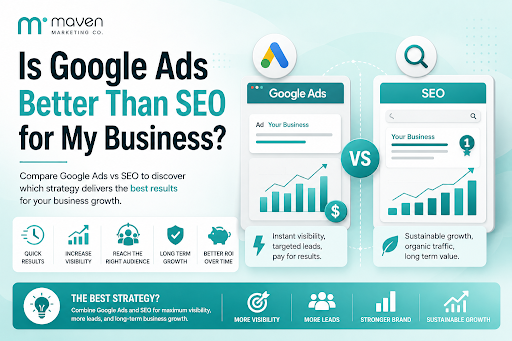
Is Google Ads Better Than SEO for My Business
One of the biggest questions business owners ask when they are planning online growth is whether they should invest in Google Ads or SEO. Both are strong marketing plays that help your company show up in Google search results, but they do things in separate lanes. Google Ads gives quicker visibility and can bring in leads fast, whereas SEO more or less focuses on slow, steady organic traffic that tends to grow the longer you keep building it. Picking the right direction depends on what you want to achieve, how much money you can spend, how crowded the market is, and how quickly you need results, like sooner rather than later. The good news is you don’t always have to choose one or the other; it’s not exactly a black-and-white situation. If you take time to understand the strongest points of both, you can put together a more sensible digital marketing plan that supports consistent expansion. In this guide, we’ll compare Google Ads vs SEO, explain the main differences, and help you figure out what option makes the most sense for your business.

When Should I Hire a Digital Marketing Agency
Growing a business today takes more than just having a website or throwing a post on social media; customers usually search around online, compare providers, skim reviews, and basically expect the brand to show up with a solid digital presence before they even think about buying. Many businesses try to run their marketing themselves, but there comes a point when “doing it all in-house” becomes clunky and hard to manage, all at once. Knowing when to hire a digital marketing agency can end up making a big, real difference for your growth. If you’re not getting enough leads, or your online visibility feels stuck, or sales are just not moving, the right agency can bring the know-how, plus a clear plan, to help you get noticeably better outcomes. In this guide, we’ll dig into what a digital marketing agency actually does, the usual signs it’s time to bring one on, and how picking the right marketing partner can help your business move forward at a faster pace.
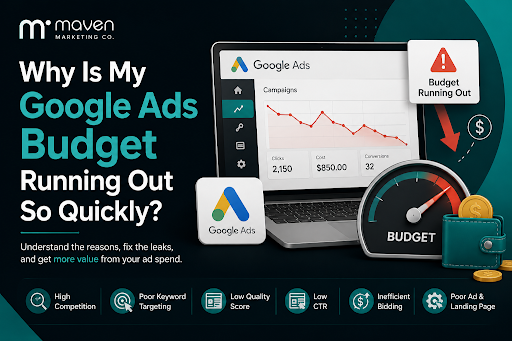
Why Is My Google Ads Budget Running Out So Quickly
Running a successful Google Ads budget isn’t only about throwing more money at it. It’s more like making every dollar, doing a bit extra. A lot of businesses start a Google Ads campaign with big hopes, then find out their daily budget is gone within a few hours, and that feels weird, right? After that, your ads stop showing effectively, new leads slip away, and your return on investment dips. So if your Google Ads budget is running out too fast, don’t stress. It’s a fairly common issue, and in most situations, it can be repaired with the right approach. There are multiple little things that can drain your advertising money quicker than you expected, from costly keywords to audience targeting that just doesn’t quite fit. In this guide, we’ll walk through why your budget disappears so quickly, how to cut wasteful spend, and the most reliable ways to boost your Google Ads ROI, even if your budget stays the same.