.svg)


%201.svg)

Key Takeaways
- Facebook Dynamic Ads for Travel serve personalised ad creative to users based on their specific browsing behaviour, matching the property, destination, or date they viewed to the ad they see.
- A structured travel catalog in Meta Commerce Manager is the technical foundation required before any Dynamic Ads for Travel campaign can launch.
- Retargeting audiences segmented by browsing depth produce significantly better results than broad retargeting of all website visitors. Someone who viewed a specific property page and began a booking is far more valuable than someone who visited the homepage.
- Prospecting campaigns using Dynamic Ads for Travel can reach new audiences who have shown travel intent on Facebook but have not yet visited your website, extending reach beyond pure retargeting.
- The travel catalog must include accurate pricing, availability, and property or product images that meet Meta's technical specifications. Outdated data is one of the most common causes of campaign underperformance.
- Australian tourism businesses should segment their retargeting by destination type, price tier, and travel window to ensure ad relevance matches the specific intent signals each audience segment has demonstrated.
- Combining Dynamic Ads for Travel with the Meta Pixel and the Conversions API provides the most complete picture of the booking funnel and gives the algorithm the strongest optimisation signals.
Why Travel Needs a Different Advertising Approach
Most product categories involve a research process measured in minutes or days. Travel is different. The average Australian holidaymaker begins researching a trip weeks or months before committing to a booking, visiting multiple websites, reading dozens of reviews, and comparing options across multiple sessions on multiple devices before any money changes hands.
This extended consideration window means that a travel brand which shows up once and then disappears is easily forgotten, regardless of how good the initial impression was. The economics of travel advertising reflect this reality. The cost of acquiring a first visit from a genuinely interested traveller is meaningful. Converting that visit into a booking on the same session is rare. The window between first engagement and final conversion is where most of the commercial opportunity sits, and it is the window that Dynamic Ads for Travel are designed to fill.
For Australian tourism businesses, the competitive dynamics make this even more acute. Domestic tourism operators compete not just with each other but with international destinations, global online travel agencies, and accommodation aggregators with enormous advertising budgets and sophisticated retargeting infrastructure. A boutique resort in the Whitsundays, a regional tour operator in the Kimberley, or a adventure travel company in Tasmania is not going to outspend Booking.com. But it can outmanoeuvre generic competitors by serving its own audience segments with personalised, relevant, and timely advertising that a major aggregator cannot replicate at the individual property level.
What Dynamic Ads for Travel Actually Do
Facebook Dynamic Ads for Travel are a specific format within Meta's broader dynamic advertising framework, built for the particular data structure and purchase behaviour of the travel industry.
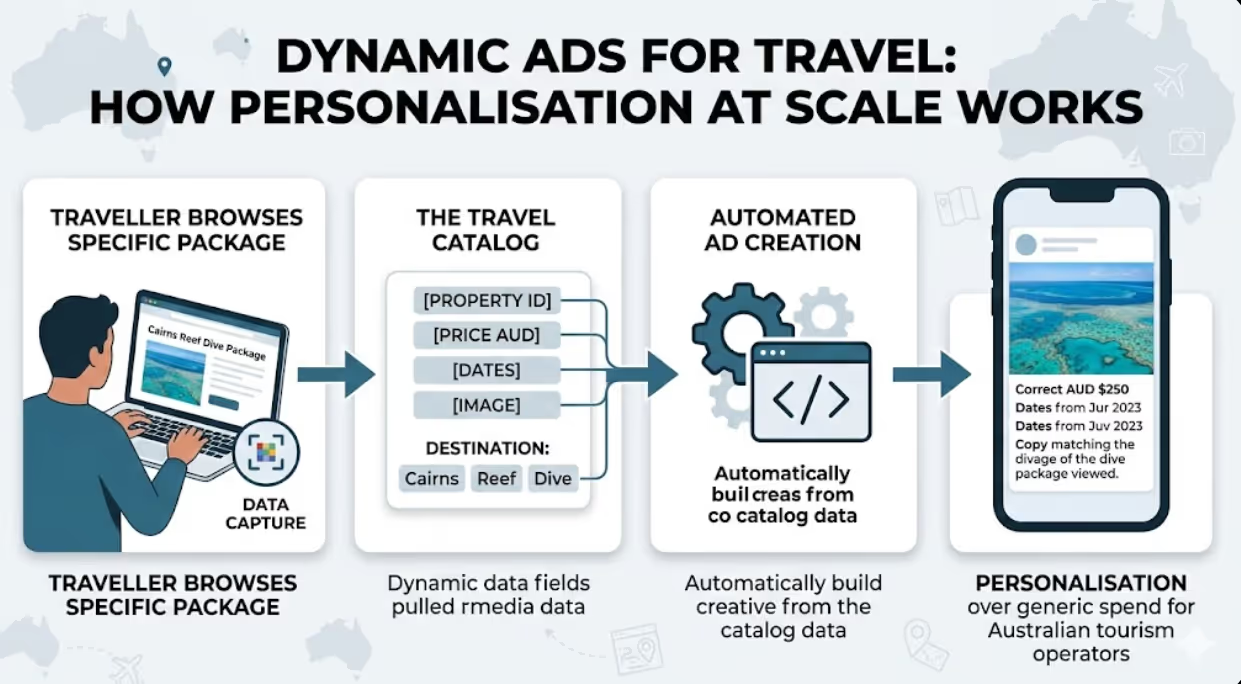
At the core of the product is the travel catalog, a structured data feed that Meta uses to power the dynamic creative in the ads. Rather than building individual ads for each property, destination, or package in your inventory, you build one campaign structure and connect it to the catalog. Meta then automatically generates ad creative for each individual product in the catalog, personalising the image, price, dates, and copy shown in each ad to match what that specific user was browsing on your website.
The result is an ad experience that feels individually relevant rather than generic. A traveller who spent time on your Cairns Great Barrier Reef dive package page does not see a general ad for your company. They see an ad featuring the specific package they viewed, including the price they saw, the dates relevant to their search, and imagery aligned with that destination. That level of personalisation is not achievable through standard ad formats without an enormous creative and campaign management overhead. Dynamic Ads for Travel deliver it at scale with a single campaign structure.
Meta's documentation on Dynamic Ads for Travel outlines the full product specification, including the catalog fields required, the audience options available, and the intent signals the platform uses to determine which ad to serve to which user at which point in their travel planning journey.
Building Your Travel Catalog
The travel catalog is the technical prerequisite for everything that follows. Without a properly structured and populated catalog, there are no Dynamic Ads for Travel to run.
Meta supports three catalog types specifically for the travel industry: hotels, flights, and destinations. Each has a distinct set of required and recommended attributes that reflect the specific data a traveller needs to evaluate that product type. Most Australian tourism businesses will primarily use the hotel catalog type for accommodation, though tour operators and experience providers can adapt the destination catalog structure for their product type.
The required attributes for a hotel catalog include a unique property identifier, the property name, the destination city and country, the base room price, currency, availability, and at minimum one property image. Recommended attributes that significantly improve campaign performance include star rating, property description, amenity information, and multiple property images showing different room types, common areas, and location context.
Accuracy of pricing and availability data is particularly important in travel catalogs and particularly difficult to maintain. Room rates vary by date, occupancy, and rate plan. A catalog that shows an incorrect price creates a gap between what the ad promises and what the booking engine delivers, which destroys trust and drives abandonment at exactly the moment of conversion. Australian tourism businesses running Dynamic Ads for Travel should implement automatic catalog refresh at a frequency that reflects how quickly their inventory data changes. For properties with dynamic pricing, this may mean multiple updates per day.
Image quality requirements are consistent with Meta's broader specifications: minimum resolution of 1080 by 1080 pixels for square formats, with landscape imagery at 1200 by 628 pixels also supported. Property photography that conveys the experience of staying at the property converts better than generic exterior shots. For Australian tourism operators competing on the unique natural environment and experiences they offer, investing in imagery that captures that distinctiveness is a direct commercial priority.
Audience Architecture: Segmenting for Relevance
The audience structure of a Dynamic Ads for Travel campaign determines how relevant each ad is to each viewer, and relevance is the primary driver of conversion efficiency.
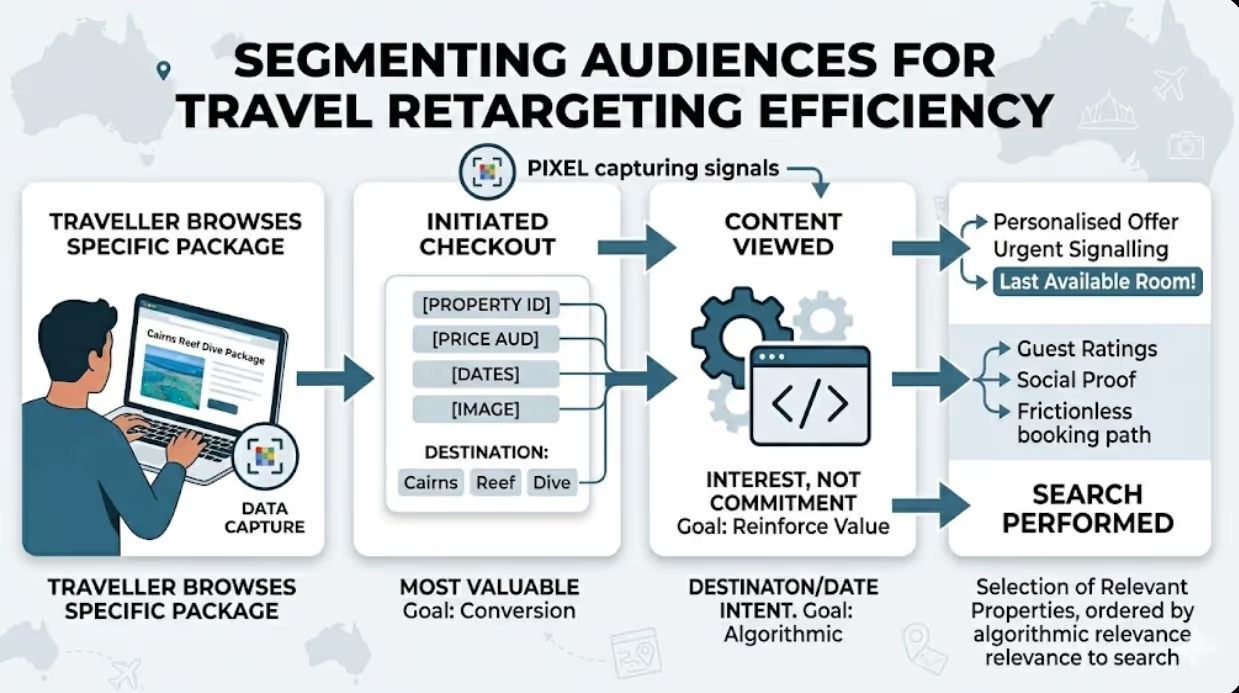
Meta allows advertisers to define retargeting audiences based on specific travel intent signals captured through the Facebook Pixel on your website. The most important intent events for travel retargeting are: search performed (a user searched for available dates and destinations), content viewed (a user viewed a specific property or package page), added to wishlist (a user saved a property), initiated checkout (a user began the booking process), and purchased (a user completed a booking).
The practical application of this framework for Australian tourism businesses is to build separate retargeting audiences at each intent level and assign different campaign objectives, budget allocations, and creative strategies to each.
Users who initiated checkout and did not complete are your most valuable retargeting audience. They have demonstrated the strongest possible purchase intent short of actually booking. They should receive the most personalised, most urgent, and most incentivised messaging. A limited availability signal, a specific offer tied to the property they viewed, or simply a direct prompt to complete the booking they started will consistently outperform generic retargeting creative for this audience.
Users who viewed a specific property page have demonstrated interest but not yet commitment. They need messaging that reinforces the value proposition of the specific property or destination, surfaces social proof such as guest ratings and reviews, and provides a clear and frictionless path to beginning the booking process.
Users who performed a search but did not view a specific property have demonstrated destination or date intent without product preference. For this audience, showcasing a selection of relevant properties from the catalog, ordered by relevance to their search parameters, gives the algorithm the flexibility to serve the most compelling option for each individual.
Prospecting With Dynamic Ads for Travel
Retargeting is where Dynamic Ads for Travel tend to be deployed first, but the format also supports prospecting campaigns that reach new audiences who have not visited your website.
Broad audience prospecting using Dynamic Ads for Travel works by connecting your travel catalog to a prospecting objective and allowing Meta to identify users who have demonstrated travel intent on the platform through their engagement with travel content, groups, pages, and other intent signals, without having previously visited your website. The algorithm serves your catalog products to these users based on its assessment of which properties or destinations are most likely to be relevant to their interests.
For Australian tourism businesses, prospecting with Dynamic Ads for Travel is particularly effective for reaching travellers in international markets. Australians living overseas, international visitors planning Australian trips, and travellers in markets where Australia is an aspirational destination can all be reached through prospecting campaigns that surface your specific properties or experiences to audiences the algorithm identifies as likely to be interested.
The combination of retargeting audiences for conversion focus and prospecting audiences for top of funnel reach gives Australian tourism businesses a complete funnel approach within a single campaign format, rather than requiring entirely separate campaign types and creative strategies for different funnel stages.
Measuring Performance: The Metrics That Matter in Travel
Travel advertising performance reporting requires some care because the metrics that look best on a dashboard are not always the ones most connected to commercial outcomes.
Click through rate and cost per click are easy to optimise for but can be misleading in a high consideration category. A travel ad with a strong click through rate that is driving traffic from audiences unlikely to book in the short term is generating a cost with no immediate return. The metrics that should be driving optimisation decisions for Australian tourism businesses running Dynamic Ads for Travel are cost per booking initiation, cost per completed booking, return on ad spend at the booking level, and the revenue attributed to retargeting campaigns versus the revenue attributed to prospecting campaigns.
Attribution for conversions driven by ad views is worth configuring carefully for travel campaigns given the extended consideration window. A user who sees your Dynamic Ad for Travel on a Tuesday, continues their research on other channels, and returns to book directly on Thursday without clicking your ad again has been meaningfully influenced by the ad impression. Attribution based on last click misses this entirely. A view attribution window of seven to 14 days for retargeting audiences captures a more accurate picture of how Dynamic Ads for Travel are contributing to bookings for Australian tourism operators.
According to research from Phocuswire on digital advertising effectiveness in travel, personalised retargeting consistently outperforms standard display and social advertising for travel brands in cost per booking terms, with the personalisation element of dynamic formats accounting for a significant proportion of the performance advantage. This is consistent with what Meta's own platform data shows for Dynamic Ads for Travel campaigns that are properly configured with rich catalog data and well-segmented audiences.
Common Implementation Errors for Australian Tourism Operators
The most frequent reasons Dynamic Ads for Travel campaigns underperform for Australian tourism businesses can be grouped into three areas.
Catalog quality problems are the most foundational. Prices that do not match the booking engine, images that fail Meta's quality specifications, missing required attributes, and availability data that is not refreshed frequently enough all produce a degraded ad experience that reduces both conversion rates and the algorithm's ability to optimise effectively. A catalog health review before launch and a regular audit cadence after launch are both essential.
Audience segmentation that is too broad is the second most common issue. Lumping all website visitors into a single retargeting audience and serving them the same generic message wastes budget on low intent users and misses the opportunity to serve highly personalised and urgent messaging to the small percentage of the audience that is genuinely close to booking. Building the segmented intent audiences described earlier, and managing each with its own budget and creative strategy, is the fix.
Attribution window misalignment is the third. Travel businesses that evaluate Dynamic Ads for Travel performance on a one to three day click window will consistently undervalue the channel's contribution and make budget decisions that reduce investment in a campaign type that is quietly driving a meaningful share of their bookings. Aligning attribution windows with the actual consideration cycle of your customers produces a more accurate and usually more favourable picture of the channel's commercial impact.
FAQs
Do I need a significant website traffic volume to make Dynamic Ads for Travel retargeting work?
Retargeting campaigns need sufficient audience size to operate effectively. Meta typically requires a minimum of 1,000 users in a retargeting audience before a campaign can meaningfully optimise. For smaller Australian tourism businesses with limited website traffic, building a sufficient retargeting audience can take time. In the interim, prospecting campaigns using Dynamic Ads for Travel with broader audience targeting are a viable approach for generating catalog visibility while the retargeting audience grows. Investing in any activity that drives traffic such as organic social content, search advertising, or email marketing that returns previous visitors to the website also accelerates the retargeting audience build.
How often should the travel catalog be updated to maintain ad accuracy?
The frequency of catalog updates should match the frequency at which your pricing and availability data changes. Properties with dynamic pricing models, particularly those using revenue management software that adjusts rates based on demand, may need catalog updates multiple times per day to maintain ad accuracy. For properties with more stable pricing, a daily update is typically sufficient. The most common technical approach for Australian tourism businesses using property management systems or channel managers is to generate a catalog feed automatically from the same data source that powers the booking engine, ensuring the two systems stay in sync without manual intervention.
Can Dynamic Ads for Travel work for tour operators and experience providers, not just accommodation?
Yes. While the format was originally built around hotel inventory, the destination catalog type and the broader dynamic ads framework support tour operators, activity providers, and tourism businesses built around experiences effectively. The key requirement is a structured catalog that accurately represents your products with relevant attributes including pricing, availability, destination, and quality imagery. Australian tour operators who have invested in building a thoroughly structured product catalog and connected it to the Meta Pixel with relevant intent events have seen strong retargeting performance from Dynamic Ads for Travel campaigns, particularly for experiences at higher price points where the consideration cycle is long enough for retargeting to have meaningful impact.
Convert More Browsers Into Bookers
The extended consideration cycle of travel planning is not an obstacle for Australian tourism businesses willing to invest in staying relevant throughout it. Dynamic Ads for Travel give you the infrastructure to serve personalised, timely, and compelling advertising to travellers at exactly the moment their interest is highest, with creative that reflects the specific properties and experiences they were actually considering.
Maven Marketing Co builds and manages travel advertising strategies for Australian tourism businesses that are designed to convert intent into bookings, not just clicks into visits.
Talk to the team at Maven Marketing Co →

Table of contents
read more blogs

6 Ways Digital Marketing Can Boost B2B Lead Generation
B2B lead generation is not about filling a CRM with as many names as possible. The real objective is to attract businesses that fit your offer, give the right people a reason to engage and create enough confidence for a genuine sales conversation to start.That distinction matters because B2B buying is usually more targeted than consumer marketing and often involves several people influencing the decision. Current LinkedIn lead-generation guidance makes the same point: more leads do not automatically mean better results if only a small proportion are genuinely relevant or likely to progress.Digital marketing helps by creating multiple paths into the business. Search can capture active demand. Paid media can put an offer in front of a tightly defined audience. Content can build authority before a buyer is ready to talk. Social media can keep the brand visible across a long decision cycle. Your website turns interest into action, while email helps nurture that interest over time.The strongest B2B digital marketing strategies do not treat these as six separate activities. They use them as one connected system designed to generate quality B2B leads, support sales and build a more dependable pipeline

How to Build a Brand Positioning Strategy That Sets Your Business Apart
Most businesses can explain what they sell. Far fewer can explain, in a sentence or two, why the right customer should choose them instead of another credible option. That gap is where brand positioning matters.A strong brand positioning strategy gives your business a clear place in the market and a clear place in the customer's mind. It helps your team decide who you are speaking to, what you want to be known for, which benefits deserve the most attention and how your marketing should sound and look across every channel.It is not a slogan exercise and it is not something reserved for large consumer brands. For an Australian service business, e-commerce brand, professional firm, or growing B2B company, positioning can make everyday decisions easier, from website copy and campaign messaging to pricing, sales conversations, and brand identity. The goal is not to look different for the sake of it. The goal is to be meaningfully different in a way the right customers understand and value.

The Role of Digital PR in Long Term SEO Growth
Building a solid online presence is basically more than just posting content now and then or sprinkling keywords across your website. Search engines such as Google tend to point users toward businesses that feel trustworthy, useful, and backed up by others online, even if it’s not always obvious at first. When a company puts together a well-thought-out digital PR strategy, it can bring in solid media mentions, earning high-quality backlinks and stronger brand awareness, all of which feed long-term SEO progress. Rather than obsessing solely over rankings, digital PR helps you build credibility plus authority, so your site looks more appealing to search engines and also to real people who might become customers. In this guide, we’ll walk through how digital PR supports SEO, what makes it such a key part of modern marketing, and the most effective approaches for sustainable growth in search results.