.svg)


%201.svg)
Key Takeaways
- Editorial calendars transform reactive content creation into strategic publishing programmes aligned with business objectives, audience needs, seasonal patterns, and Australian market cycles
- Consistent publishing cadences build search engine trust, audience expectations, and compounding organic visibility that sporadic publishing cannot achieve regardless of individual content quality
- Strategic editorial planning integrates keyword research, buyer journey mapping, seasonal Australian events, and business priorities into cohesive content programmes serving multiple objectives simultaneously
- Effective editorial calendars include content type variety, platform-specific scheduling, repurposing planning, and performance review cycles that maintain strategic alignment as business priorities evolve
- Team workflows, approval processes, and content production systems documented within editorial calendar frameworks enable consistent execution without last-minute scrambling that degrades content quality
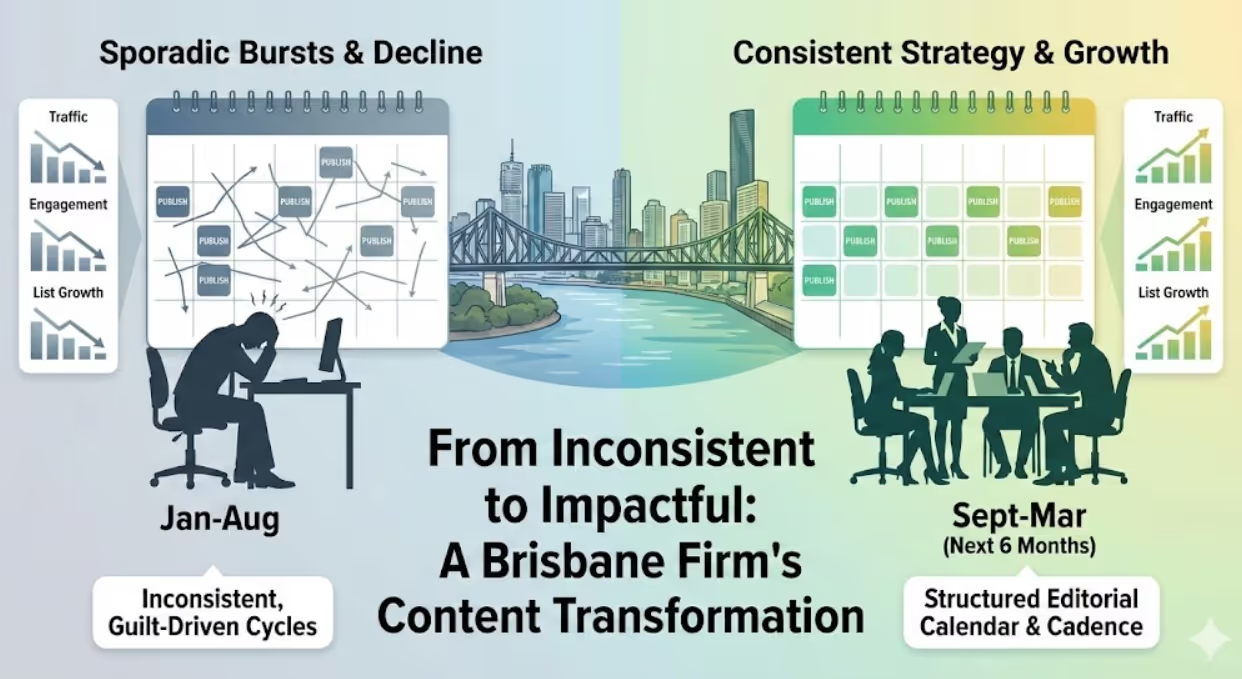
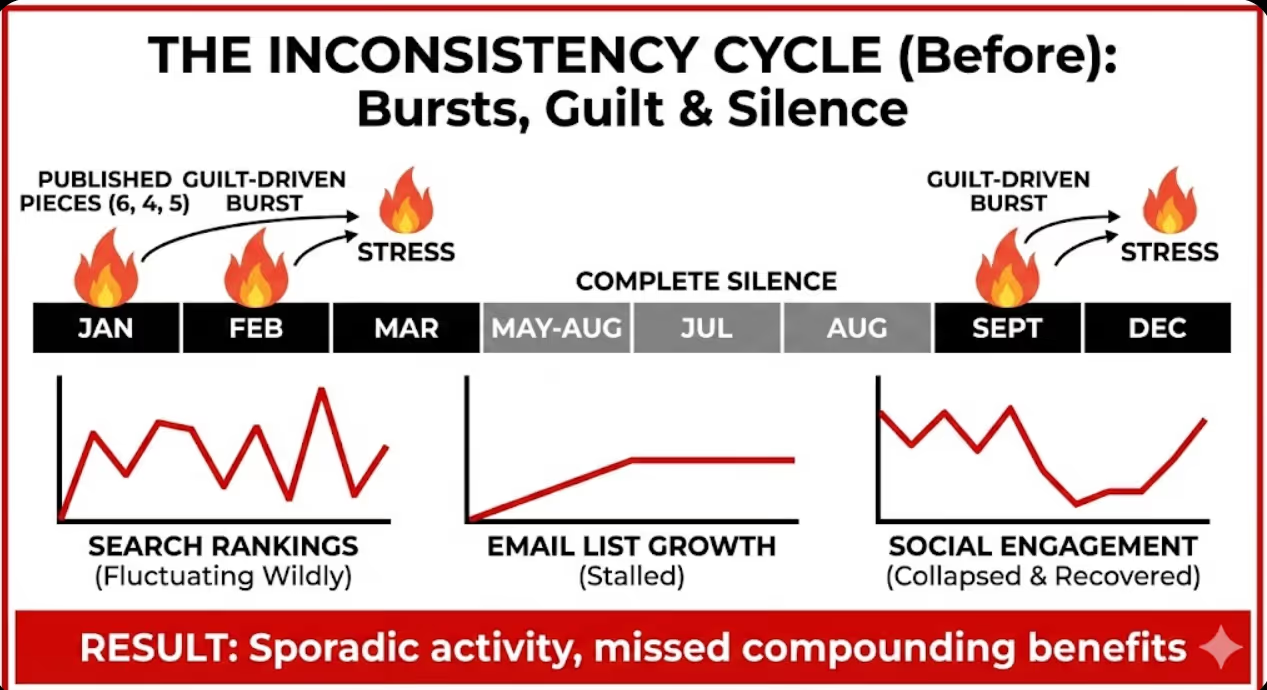
A Brisbane professional services firm committed to content marketing with genuine enthusiasm. January brought six published pieces. February produced four more. March managed two. April yielded one apologetic post. May through August saw complete silence. September's guilt-driven burst produced five articles before the cycle repeated.
Analytics reflected the inconsistency precisely. Search rankings fluctuated wildly as Google registered the sporadic activity. Email list growth stalled as subscribers forgot the brand between publishing gaps. Social media engagement collapsed from abandonment before recovering briefly during publishing bursts. Despite creating some genuinely insightful content, the firm couldn't sustain the compounding benefits consistent publishing delivers.
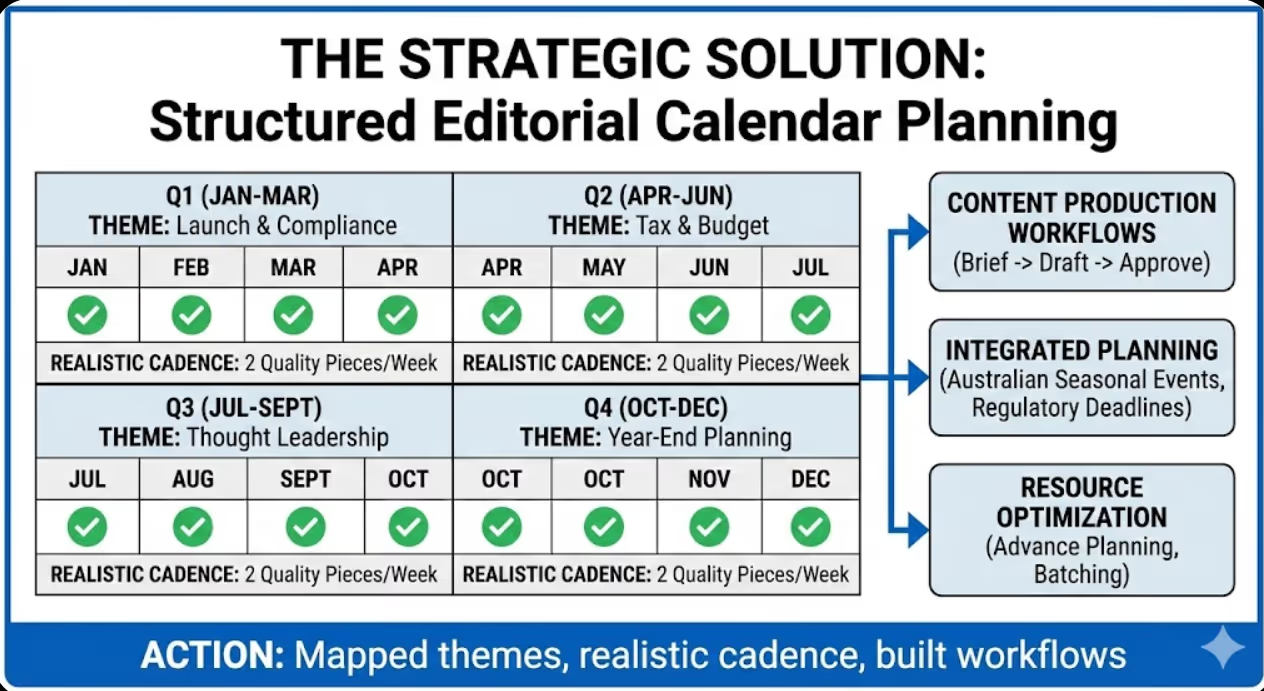
They implemented structured editorial calendar planning. Mapped content themes to quarterly business objectives. Scheduled realistic publishing cadences—two quality pieces weekly rather than unsustainable bursts. Built content production workflows preventing last-minute creation scrambles. Integrated Australian seasonal events, regulatory deadlines, and industry cycles into forward planning.
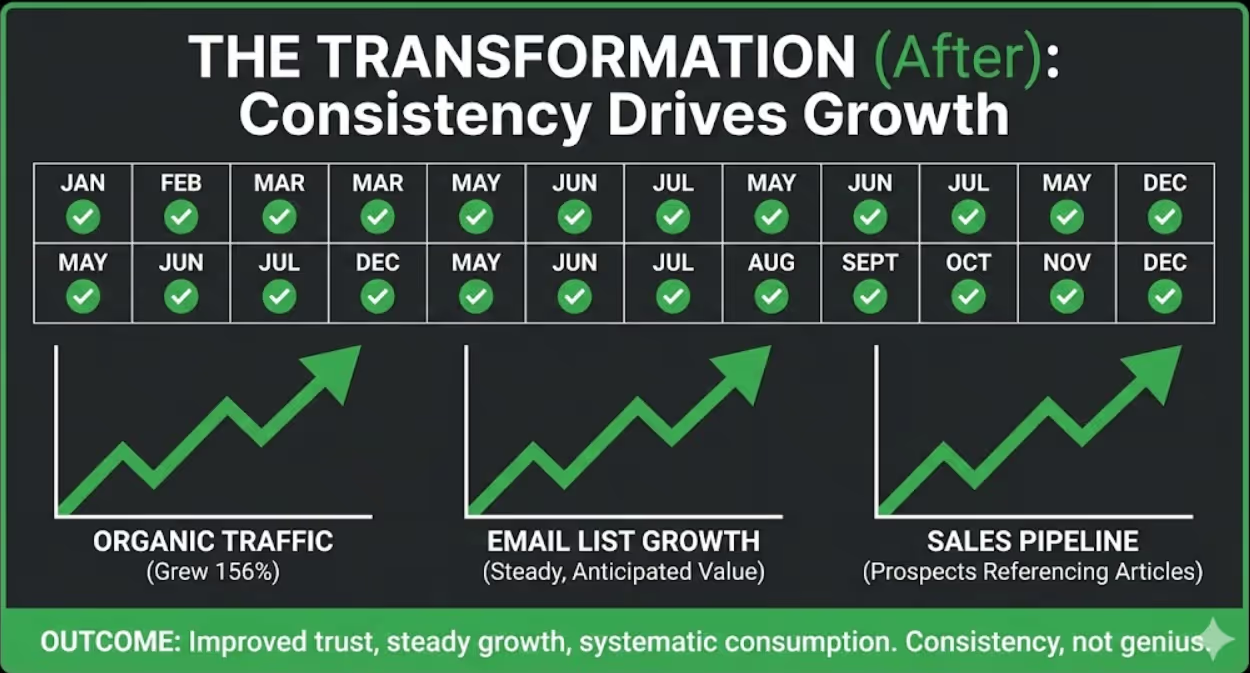
Within six months, organic traffic grew 156% through improved search engine trust from consistent publishing. Email list grew steadily as subscribers anticipated regular value delivery. Sales team reported prospects referencing specific articles during conversations, indicating systematic content consumption rather than sporadic discovery. Consistency, not genius, drove transformation.
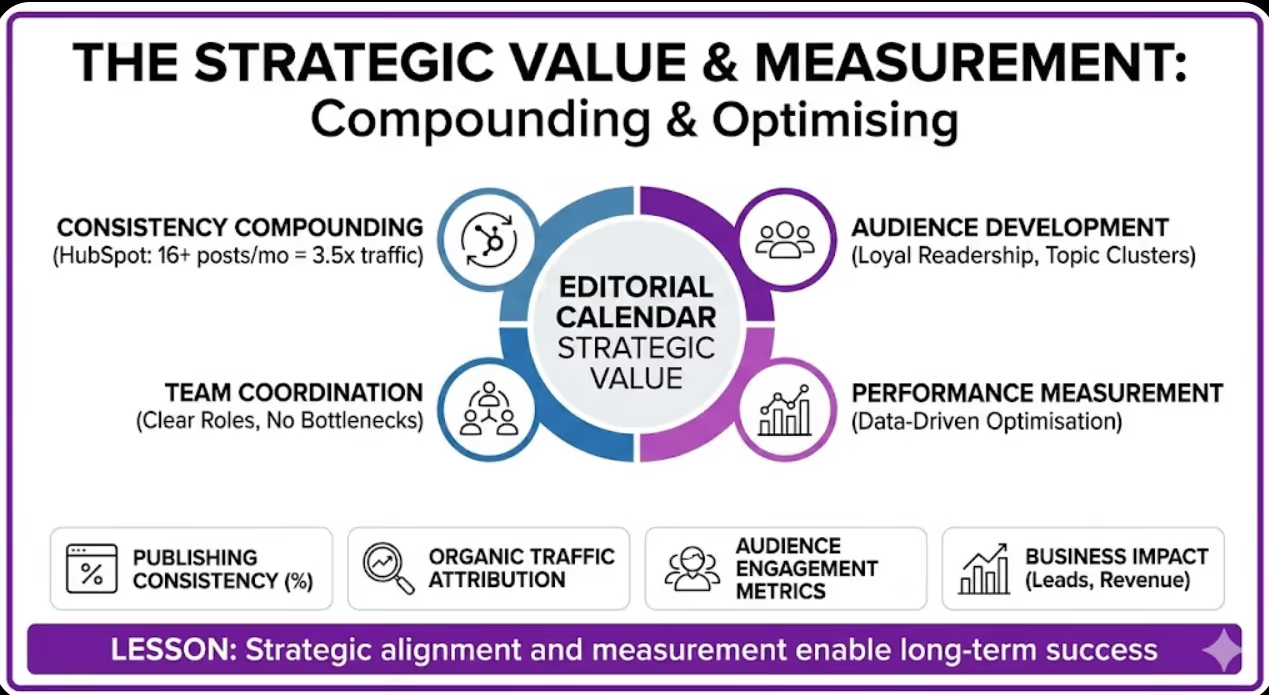
According to research from HubSpot, businesses publishing 16 or more blog posts monthly generate 3.5x more traffic than those publishing fewer than four posts, demonstrating that publishing consistency compounds into substantial traffic advantages over time.
Understanding Editorial Calendar Strategic Value
Editorial calendars deliver value beyond simple scheduling, fundamentally transforming how organisations approach content creation and distribution.
Consistency compounding effects distinguish successful content programmes from struggling ones. Search engines reward consistent publishing through improved crawl frequency, stronger domain authority signals, and faster ranking of new content. Audiences develop consumption habits around reliable publishing schedules—expecting and seeking content from trusted sources rather than discovering it accidentally. Email subscribers anticipate value delivery, maintaining engagement that inconsistent publishers lose through extended gaps. These compounding effects accumulate over months and years, creating content assets that sporadic publishers can never replicate regardless of individual piece brilliance.
Strategic alignment ensures content serves business objectives rather than reflecting whatever seemed interesting when creation time arrived. Editorial calendars connect publishing activities to sales cycles, product launches, seasonal opportunities, and business development priorities. Content published randomly might occasionally align with business needs by chance—planned content serves them systematically. Strategic alignment transforms content marketing from marketing expense into business development investment with measurable returns.
Resource optimisation reduces content production costs through advance planning. Last-minute content creation requires premium rates for rushed freelancers, produces lower quality from inadequate research time, misses strategic opportunities through reactive rather than proactive planning, and creates team stress degrading overall execution quality. Advance planning enables batching (creating multiple pieces during single focused sessions), strategic brief development ensuring quality output, and resource allocation matching production demands with available capacity.
Audience development builds loyal readership through predictable value delivery. Audiences following content programmes with clear publishing schedules and consistent themes develop topic associations, returning regularly rather than requiring re-discovery. Topic clusters developed systematically within editorial frameworks build comprehensive coverage attracting diverse entry points into audience development funnels. Predictable programmes convert casual readers into subscribers, subscribers into engaged community members, and engaged community members into customers.
Team coordination prevents content bottlenecks from unclear responsibilities, missed deadlines, and approval delays that paralyse reactive programmes. Editorial calendars assign responsibilities, establish deadlines, document approval workflows, and create visibility enabling team members to plan their contributions rather than responding to urgent requests. Clear workflows transform content production from crisis management into professional programme delivery.
Performance measurement improves when publishing programmes provide consistent data for analysis. Sporadic publishing produces inconsistent performance data making attribution difficult and optimisation nearly impossible. Consistent programmes enable meaningful comparison across similar publishing periods, identification of content themes and formats performing consistently, and data-driven optimisation improving programme effectiveness systematically.
Mapping Australian Audience Behaviours and Seasonal Patterns
Australian audiences have distinct seasonal patterns, cultural rhythms, and consumption behaviours that effective editorial calendars integrate strategically.
Financial year alignment distinguishes Australian content planning from international approaches. Australia's financial year (1 July – 30 June) drives distinct planning and purchasing cycles across most industries. B2B audiences face budget planning in April-June, new financial year implementation from July-August, mid-year reviews in December-January, and end-of-year planning acceleration in May-June. Editorial calendars aligned with financial year cycles deliver content when audiences are most receptive to relevant topics—budget planning content published in April resonates; published in November it misses the moment.
Australian seasonal calendar differs fundamentally from Northern Hemisphere content templates. Summer falls December-February, creating distinct patterns including holiday slowdowns (Christmas-New Year business pauses), back-to-school purchasing (January-February), and summer lifestyle themes relevant for consumer brands. Autumn (March-May) brings financial year-end focus, Easter disruption, and ANZAC Day commemorations. Winter (June-August) drives planning cycles, mid-year reviews, and budget preparations. Spring (September-November) accelerates before Christmas, with Melbourne Cup marking retail season commencement. International content templates applying Northern Hemisphere seasonality to Australian audiences consistently miss these patterns.
Public holiday planning prevents publishing during reduced-engagement periods whilst creating opportunities for strategic holiday-adjacent content. Australian public holidays include federal observances (Australia Day, ANZAC Day, Christmas, Easter) and state-specific holidays (Melbourne Cup Day in Victoria, Queensland Royal Queensland Show, various state show days) requiring state-level planning consideration. Business publishing immediately before or after public holiday clusters typically underperforms—adjust scheduling to maximise audience availability.
Industry-specific Australian cycles vary significantly across sectors. Retail peaks pre-Christmas (October-December) and around major sales events (End of Financial Year sales in June). Professional services face end-of-financial-year pressures (May-June) and new financial year onboarding (July-August). Education follows academic calendar rhythms with distinct semester patterns. Agricultural industries follow planting and harvest cycles varying by region and commodity. Construction peaks in spring and autumn avoiding extreme weather. Mining operates on project cycles tied to commodity prices and capital programmes. Understanding sector-specific timing enables content delivery when audiences face relevant challenges.
Event and conference calendar integration places content around peak industry engagement moments. Australian industry conferences, trade shows, and professional association events create natural content hooks through preview content (what to expect), live coverage (insights and observations), and post-event synthesis (key takeaways and implications). Major Australian business events including various state-based business awards, industry association conferences, and government budget announcements create predictable content opportunities for forward-planning editorial calendars.
Audience research integration grounds editorial planning in actual data rather than assumptions. Analytics review identifies highest-traffic periods, most-engaged content themes, and audience behaviour patterns. Search trends reveal seasonal query patterns for your topics. Social media analytics show when target audiences are most active and receptive. Customer and prospect interviews reveal when they seek information and what questions arise at different business cycle stages. Data-driven editorial planning outperforms intuition-based approaches through alignment with actual rather than assumed audience behaviour.
Building Strategic Content Themes and Pillars
Effective editorial calendars organise content around strategic themes providing direction without rigidity, enabling cohesive coverage building topical authority.
Quarterly theme planning provides structural framework balancing strategic focus with tactical flexibility. Identify three to five primary themes for each quarter aligned with business objectives, audience needs, and seasonal relevance. Quarterly themes might address product launch support (January-March), regulatory compliance guidance (April-June tax season), thought leadership establishment (July-September conference season), or year-end planning assistance (October-December). Themes provide editorial direction whilst remaining broad enough to accommodate varied content types and formats serving different audience segments.
Pillar content anchoring establishes comprehensive reference points supporting cluster content. Each quarterly theme typically warrants one substantial pillar piece (comprehensive guide, original research report, or definitive resource) anchoring multiple supporting pieces exploring specific aspects. Pillar-cluster structure builds topical authority signals valuable for search visibility whilst creating coherent content programmes rather than disconnected individual pieces. Plan pillar development at quarterly level with supporting cluster content filling weekly publishing slots.
Buyer journey stage balance ensures editorial calendars serve audiences across awareness, consideration, and decision stages rather than concentrating on single funnel stage. Audit existing content identifying journey stage distribution, identify gaps where insufficient content supports important stages, and plan new content filling strategic gaps. Many Australian content programmes over-index on awareness content (attracting new audiences) whilst neglecting consideration and decision content (converting aware audiences into clients). Balanced editorial calendars serve the full buyer journey systematically.
Evergreen versus topical balance optimises content longevity and timeliness simultaneously. Evergreen content addressing enduring questions and challenges provides sustained organic traffic regardless of publication date. Topical content addressing current events, regulatory changes, and industry developments drives immediate engagement whilst demonstrating currency. Effective editorial calendars typically allocate 70-80% to evergreen content with 20-30% addressing timely topics, ensuring sustained traffic foundations whilst maintaining audience relevance through current commentary.
Format variety planning prevents audience fatigue through diverse content experiences. Editorial calendars specifying format alongside topic ensure programmes include long-form guides, concise practical tips, data-driven research, opinion pieces, interview features, case studies, video scripts, and infographics rather than defaulting to identical blog post formats regardless of topic suitability. Format variety serves different audience segments, consumption contexts, and learning preferences whilst creating distribution variety across channels favouring specific formats.
Australian voice and perspective distinguishes local editorial approaches from international content. Plan content explicitly addressing Australian regulatory environment, local market conditions, Australian examples and case studies, and Australian audience contexts rather than adapting international content. Australian audiences respond more strongly to locally contextualised content—editorial calendars built around genuinely Australian perspectives create differentiation that international content programmes serving Australian audiences cannot match.
Content Production Workflows and Team Management
Editorial calendar effectiveness depends on production workflows enabling consistent execution without quality compromise or team burnout.
Content brief development establishes quality foundations before writing begins. Effective briefs include target audience and buyer journey stage, primary and secondary keywords for SEO optimisation, key messages and strategic objectives, content format and approximate length, relevant sources and research requirements, competitor content analysis and differentiation angle, call-to-action objectives, and distribution plan. Briefs eliminate misaligned content requiring extensive revision, reducing production time whilst improving strategic alignment. Teams with clear briefs consistently outperform teams operating from vague topic assignments.
Production timeline planning works backwards from publication dates establishing realistic intermediate deadlines. Standard content production timeline includes brief development (week one), research and outline (week two), first draft (week three), internal review and revision (week four), client or stakeholder approval if required (week five), final editing and SEO optimisation (week six), and design and formatting (week seven) before scheduled publication. Complex content (original research, expert interview features, comprehensive guides) requires extended timelines. Publishing schedules must accommodate realistic production timelines rather than aspirational deadlines that produce rushed, low-quality content.
Responsibility assignment clarity prevents editorial calendar bottlenecks from unclear ownership. Document specific responsibilities for each content piece including primary writer or creator, subject matter expert contributor, editor and proofreader, SEO optimiser, designer or visual content creator, publisher and distributor, and performance analyst. Clear responsibility assignment transforms editorial calendars from theoretical plans into execution commitments with named accountability.
Approval workflow documentation prevents last-minute delays disrupting publication schedules. Map approval requirements for different content types—some pieces require only editorial review, others need compliance review, executive approval, or client sign-off. Document approval stages, responsible parties, and expected turnaround times. Build approval time into production timelines rather than treating it as addition to writing time. Streamline approval processes identifying where multiple reviewers create bottlenecks—sequential approval often extends timelines unnecessarily where parallel review would maintain quality with greater efficiency.
Content banking strategy builds publication buffer preventing scheduling gaps from inevitable production delays. Maintain two to four weeks of completed, approved content ready for publication at all times. Content bank provides insurance against unexpected production delays, illness, or team capacity constraints that would otherwise force publication gaps. Building content bank requires initial investment in production acceleration but pays dividends through consistent publication regardless of week-to-week capacity variations.
Freelancer and agency management integrates external contributors into editorial workflows effectively. Brief freelancers with same detail provided to internal team members—vague briefs produce misaligned content requiring extensive revision regardless of freelancer quality. Establish style guides and brand voice documentation enabling consistent quality across internal and external contributors. Build freelancer deadline requirements into production timelines, accounting for revision rounds rather than assuming first drafts meet publication standards. Maintain approved freelancer panels for different content types rather than recruiting new contributors under deadline pressure.
Editorial Calendar Tools and Technology
Appropriate tool selection enables editorial calendar execution without excessive administrative overhead consuming production resources.
Spreadsheet-based calendars provide accessible starting point for organisations new to editorial planning. Google Sheets or Microsoft Excel enable custom calendar development without tool costs, flexible structure adapting to specific organisational needs, easy sharing and collaborative access, and straightforward modification as planning approaches evolve. Spreadsheets suit smaller teams or organisations at early stages of editorial planning maturity. Limitations include lack of automation, limited workflow management capabilities, and difficulty managing complex multi-platform programmes at scale.
Project management platforms add workflow functionality to editorial calendar foundations. Asana, Trello, and Monday.com enable task assignment and deadline management, workflow stage tracking (briefing, drafting, review, approved, published), team collaboration and communication within content projects, and calendar views providing editorial overview. These platforms suit growing teams requiring workflow coordination beyond simple scheduling. Integration with other business tools extends functionality—connecting editorial calendars with approval workflows, asset management, and performance reporting.
Dedicated content marketing platforms provide comprehensive editorial management for mature content programmes. CoSchedule, Contentful, Divvy HQ, and Percolate offer integrated content calendaring, workflow management, asset organisation, social media scheduling, and performance analytics within single platforms. These tools suit organisations with substantial content operations requiring sophisticated coordination across multiple teams, formats, and distribution channels. Investment in dedicated platforms is justified when administrative overhead from simpler tools creates meaningful production inefficiency.
Social media scheduling integration connects editorial calendar to platform-specific distribution. Buffer, Hootsuite, Sprout Social, and Later enable advance scheduling of social content derived from editorial calendar pieces, providing distribution automation reducing daily publishing burden. Integration between editorial calendars and social schedulers ensures content distribution follows publication automatically rather than requiring separate manual social media management separate from content planning.
Analytics integration closes performance loop connecting editorial planning with outcome measurement. Google Analytics goal tracking, Google Search Console performance data, and social media analytics provide performance feedback informing editorial calendar refinement. Regular performance review cycles built into editorial calendar processes ensure planning improves continuously based on actual performance data rather than maintaining original planning assumptions regardless of measured outcomes.
Measuring Editorial Calendar Effectiveness
Performance measurement validates editorial calendar investments and enables systematic improvement through data-informed planning refinement.
Publishing consistency tracking measures fundamental editorial calendar objective. Track actual versus planned publication dates, calculate publishing consistency percentage (pieces published on schedule divided by planned publications), identify recurring delay patterns indicating workflow or resource issues, and measure trend improvement over time. Consistency measurement should precede all other metrics—editorial calendar delivering 60% publishing consistency requires process improvement before content quality optimisation.
Organic traffic attribution connects publishing programmes to search visibility outcomes. Monitor organic traffic trends correlating with publishing consistency and theme focus, track keyword ranking improvements for targeted topics, measure new versus returning visitor ratios reflecting audience development, and identify top-performing content themes driving sustainable traffic. Organic traffic improvement validates editorial calendar's search engine trust building function.
Audience development metrics assess content programme's community building effectiveness. Track email subscriber growth rates and open rate trends, social media follower growth and engagement rates, return visitor percentages indicating audience loyalty, and content consumption depth (pages per session, time on site). Audience development metrics reveal whether editorial programmes build loyal readerships or merely attract one-time visitors.
Business impact measurement connects content programmes to commercial outcomes. Track leads generated through content, sales cycle influence from content consumption, pipeline influenced by content touchpoints, and revenue attributed to content-driven relationships. Business impact measurement justifies editorial calendar investment to commercially-focused leadership whilst identifying highest-ROI content themes deserving priority in future planning cycles.
Content performance benchmarking identifies highest and lowest performing pieces within editorial programme. Compare traffic, engagement, conversion, and sharing metrics across content pieces identifying patterns in high-performing content themes, formats, and topics. Performance benchmarking informs future editorial planning—themes and formats consistently outperforming benchmarks deserve increased planning priority whilst consistently underperforming content types warrant replacement or significant evolution.
Frequently Asked Questions
How often should Australian businesses publish content, and what publishing cadence is sustainable without sacrificing quality for quantity?
Publishing frequency should reflect available resources to maintain quality consistently rather than chasing volume benchmarks that produce mediocre content unsustainably. Realistic quality-focused cadences include one high-quality long-form piece weekly for small teams or solo content creators, two to three pieces weekly for businesses with dedicated content resources, and daily publishing only for organisations with substantial content teams and robust production workflows. Start with frequency you can maintain for twelve months without quality compromise—consistent lower-frequency publishing outperforms burst-and-disappear approaches regardless of individual piece quality. Increase frequency only after establishing consistent execution at lower cadences, building production capacity that supports higher frequency sustainably.
How far in advance should Australian businesses plan their editorial calendars, and how do they balance forward planning with responding to unexpected opportunities?
Plan at three distinct horizons simultaneously to balance strategic alignment with tactical flexibility. Annual planning establishes major themes, pillar content priorities, campaign integration points, and key Australian seasonal and business cycle opportunities. Quarterly planning develops specific topics, format mix, keyword priorities, and resource requirements within annual framework. Monthly planning finalises specific briefs, confirms assignments, and integrates timely opportunities that have emerged since quarterly planning. This tiered approach provides strategic direction through annual planning, tactical clarity through quarterly planning, and responsive flexibility through monthly adjustment. Reserve 20-30% of monthly publishing slots for responsive content addressing emerging opportunities, regulatory developments, or industry events not predictable during annual planning.
What should Australian businesses include in editorial calendars beyond just topic and publication date to maximise planning value?
Comprehensive editorial calendars include significantly more than topic and date combinations to deliver strategic value. Essential additional elements include target audience persona and buyer journey stage (ensuring content serves specific audiences at appropriate funnel stages), primary and secondary keywords (maintaining SEO alignment), content format and approximate length (enabling resource planning), distribution channels and social adaptation requirements (planning complete content lifecycle), responsible team members and approval requirements (enabling workflow management), repurposing plan (maximising content ROI through format transformation), strategic objective served (maintaining business alignment), and performance targets (enabling meaningful measurement). This comprehensive documentation transforms editorial calendars from simple scheduling tools into strategic content management systems serving multiple business functions simultaneously.
How should Australian businesses handle editorial calendar disruption when major unexpected events require immediate content responses without derailing planned publishing programmes?
Unexpected events requiring responsive content—regulatory changes, industry crises, major market developments, or significant news events—can be accommodated without abandoning planned editorial programmes through several approaches. Maintain reserved publishing slots (20-30% of capacity) specifically for responsive content without disrupting planned pieces. Shift planned content forward rather than cancelling it when responsive pieces take priority. Distinguish between events genuinely requiring immediate response (regulatory changes directly affecting your audience) and events providing marginal opportunity not justifying programme disruption. Develop rapid content production protocols enabling quality responsive pieces within 24-48 hours without the full production timeline regular content requires. Post-event evaluation determines whether responsive content should replace planned content or supplement it—most disruptions warrant supplementing rather than replacing planned programmes.
How do Australian businesses maintain editorial calendar consistency during holiday periods, team absences, and business peak periods when content production competes with other priorities?
Consistency during challenging periods requires advance preparation rather than reactive scrambling. Build content banking (completed pieces awaiting publication) covering at least two to four weeks ahead of holiday periods and predicted peak times. Develop reduced-complexity content types requiring less production effort for high-workload periods—curated roundups, brief insights, Q&A formats, and repurposed content variations demand less creation time than original long-form pieces whilst maintaining publishing consistency. Brief freelancers or agencies in advance for periods when internal capacity will be constrained. Schedule some content production during naturally lower-intensity periods building bank for upcoming high-demand periods. Communicate reduced publishing frequency openly to audiences if temporary reduction is unavoidable—audiences understand seasonal variations better than unexplained publishing gaps followed by guilt-driven activity bursts.
What are the most common editorial calendar mistakes Australian businesses make, and how can they be avoided?
Most common failures include over-ambitious publishing schedules set from aspiration rather than honest resource assessment—start conservatively and increase frequency only after proving consistent execution. Topic lists without strategic intent (selecting topics based on what seems interesting rather than what serves audience needs and business objectives) produces content activity without business impact. Neglecting distribution planning treats publication as the end point rather than the beginning of content lifecycle—editorial calendars without distribution planning guarantee underperformance regardless of content quality. Failing to review and update calendars based on performance data maintains planning assumptions that analytics have invalidated. Treating editorial calendars as individual responsibility rather than team coordination tool creates bottlenecks, missed deadlines, and quality inconsistencies. Finally, confusing editorial calendar with content strategy—calendars schedule and coordinate content delivery whilst strategy determines what content should achieve, for whom, and why—causes organisations to execute systematically toward wrong objectives.
How should Australian businesses adapt editorial calendar planning for content marketing across multiple platforms with different audience expectations and format requirements?
Multi-platform editorial planning requires master calendar capturing all content activities combined with platform-specific scheduling reflecting distinct audience expectations and format requirements. Master calendar tracks primary content creation (blog posts, videos, podcasts, research reports), with platform adaptation planning documenting how primary content will be repurposed or adapted for each distribution channel. Platform-specific considerations include LinkedIn's professional tone and native content preference, Instagram's visual-first format requirements and shorter copy norms, YouTube's search optimisation needs and longer acceptable video lengths, email's direct address and value-density expectations, and podcast's conversational delivery and audio-appropriate script adaptation. Assign platform management responsibilities clearly—attempting to manage all platforms without clear ownership produces inconsistent quality across channels. Consider platform prioritisation for resource-constrained organisations: identify one or two platforms where target audiences are most concentrated and execute those excellently before expanding to additional platforms requiring quality dilution across too many channels.
Editorial Calendars Enable Content Marketing Excellence
Editorial calendar planning transforms content marketing from reactive activity producing inconsistent results into strategic programming that compounds into sustainable competitive advantages through consistent audience development, search visibility, and business impact.
Australian businesses implementing disciplined editorial planning consistently outperform competitors relying on reactive content creation—not through superior individual content pieces but through the compounding effects of consistent, strategically aligned publishing that builds audience trust, search engine authority, and sales pipeline influence systematically over time.
The frameworks outlined in this guide—audience behaviour mapping, strategic theme development, production workflow design, and performance measurement—provide comprehensive foundation for editorial calendar programmes delivering consistent content that genuinely serves Australian audiences and business objectives simultaneously.
Ready to develop editorial calendar planning that transforms your Australian content marketing consistency? Maven Marketing Co. provides comprehensive content strategy and editorial planning services including calendar development, workflow design, team training, and performance measurement ensuring your content programme delivers consistent results. Let's build content programmes that compound into sustainable Australian business growth.

Table of contents
read more blogs

Is Google Ads Better Than SEO for My Business
One of the biggest questions business owners ask when they are planning online growth is whether they should invest in Google Ads or SEO. Both are strong marketing plays that help your company show up in Google search results, but they do things in separate lanes. Google Ads gives quicker visibility and can bring in leads fast, whereas SEO more or less focuses on slow, steady organic traffic that tends to grow the longer you keep building it. Picking the right direction depends on what you want to achieve, how much money you can spend, how crowded the market is, and how quickly you need results, like sooner rather than later. The good news is you don’t always have to choose one or the other; it’s not exactly a black-and-white situation. If you take time to understand the strongest points of both, you can put together a more sensible digital marketing plan that supports consistent expansion. In this guide, we’ll compare Google Ads vs SEO, explain the main differences, and help you figure out what option makes the most sense for your business.

When Should I Hire a Digital Marketing Agency
Growing a business today takes more than just having a website or throwing a post on social media; customers usually search around online, compare providers, skim reviews, and basically expect the brand to show up with a solid digital presence before they even think about buying. Many businesses try to run their marketing themselves, but there comes a point when “doing it all in-house” becomes clunky and hard to manage, all at once. Knowing when to hire a digital marketing agency can end up making a big, real difference for your growth. If you’re not getting enough leads, or your online visibility feels stuck, or sales are just not moving, the right agency can bring the know-how, plus a clear plan, to help you get noticeably better outcomes. In this guide, we’ll dig into what a digital marketing agency actually does, the usual signs it’s time to bring one on, and how picking the right marketing partner can help your business move forward at a faster pace.
Why Is My Google Ads Budget Running Out So Quickly
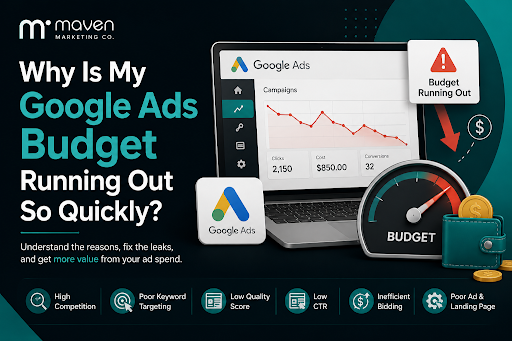
Running a successful Google Ads budget isn’t only about throwing more money at it. It’s more like making every dollar, doing a bit extra. A lot of businesses start a Google Ads campaign with big hopes, then find out their daily budget is gone within a few hours, and that feels weird, right? After that, your ads stop showing effectively, new leads slip away, and your return on investment dips. So if your Google Ads budget is running out too fast, don’t stress. It’s a fairly common issue, and in most situations, it can be repaired with the right approach. There are multiple little things that can drain your advertising money quicker than you expected, from costly keywords to audience targeting that just doesn’t quite fit. In this guide, we’ll walk through why your budget disappears so quickly, how to cut wasteful spend, and the most reliable ways to boost your Google Ads ROI, even if your budget stays the same.