.svg)


%201.svg)
Key Takeaways
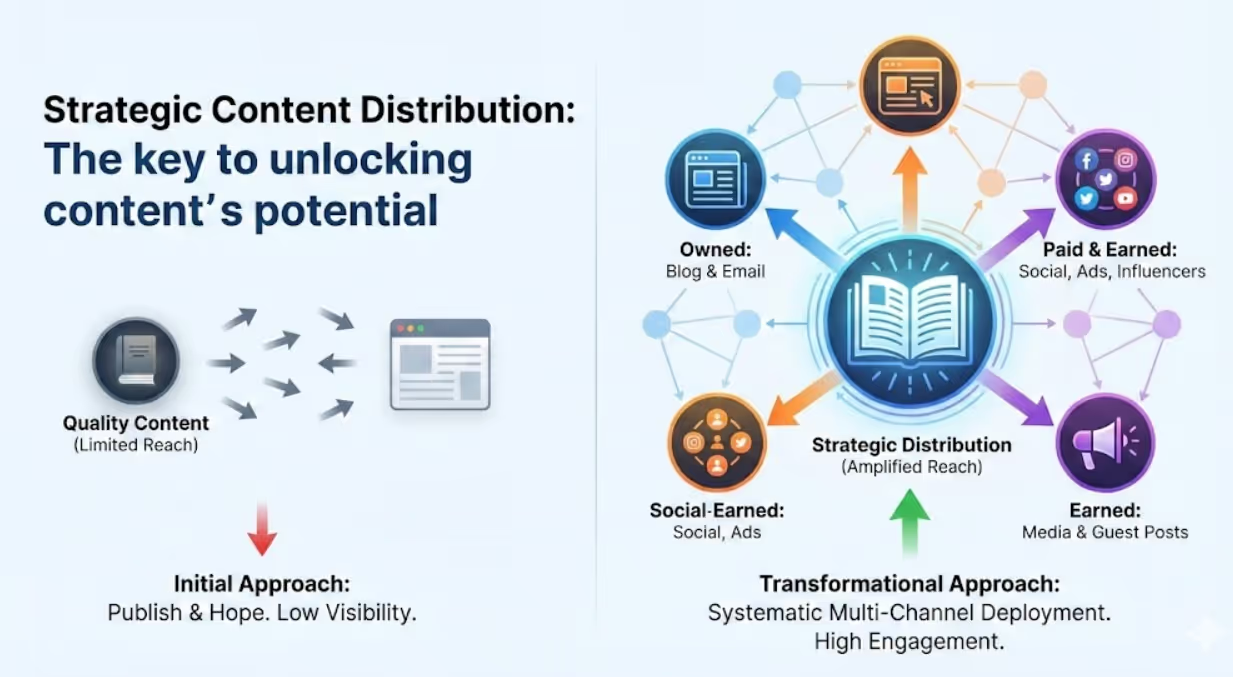
- Distribution matters as much as creation: The best content produces zero results if audiences never discover it, making strategic distribution planning essential rather than an afterthought following content publication
- Multi-channel presence multiplies reach: Publishing exclusively on your website limits discovery to search and direct traffic, whilst strategic distribution across social platforms, email newsletters, syndication partners, and paid channels reaches audiences wherever they consume content
- Repurposing maximises content investment: One comprehensive blog post becomes social media content, email newsletters, video scripts, podcast episodes, infographics, and slide decks, multiplying reach without proportional creation effort increases
- Platform selection requires audience alignment: Effective distribution prioritises channels where target audiences actively engage rather than attempting presence on every available platform, focusing resources on highest-return opportunities
- Owned channels provide foundation: Email lists, blogs, and podcasts represent owned distribution infrastructure providing algorithmic independence and direct audience access that paid and earned channels can't guarantee
- Earned media amplifies credibility: Guest posts, media mentions, and influencer shares provide third-party validation whilst accessing established audiences, building authority more effectively than self-promotion
- Paid amplification accelerates reach: Strategic paid promotion of high-performing content reaches targeted audiences cost-effectively, particularly during content launch periods when organic reach develops slowly
- Measurement informs optimisation: Tracking reach, engagement, and conversion metrics across channels identifies highest-performing platforms warranting increased investment whilst revealing underperforming channels requiring strategic adjustment
A Brisbane-based HR software company published comprehensive guides addressing common workplace compliance challenges. Each guide required 40 hours of research, writing, and design—substantial investment for their small marketing team. Initially, they simply published guides on their website, promoted them once on LinkedIn, and hoped search traffic would follow.
Results disappointed. Each guide generated 200 to 400 website visits monthly—decent but insufficient return on 40-hour investments. Their content was exceptional, but distribution was minimal.
They implemented systematic distribution: publishing guides on their blog, creating LinkedIn article versions, recording video summaries for YouTube, developing 10-post social media series from each guide, pitching guest posts to HR publications incorporating guide insights, promoting to their email list with segmented messaging, running targeted LinkedIn ads to HR managers, and syndicating content to industry platforms. Same guides, same quality, dramatically expanded distribution.
Results transformed. Guides now generated 3,000 to 5,000 monthly engagements across channels, with 15% to 20% of new customers citing guides as discovery sources. The difference wasn't content quality—it was strategic distribution multiplying reach through systematic channel deployment.
Understanding Content Distribution Strategy
Content distribution represents systematic planning and execution of tactics placing content in front of target audiences through various channels, platforms, and methods beyond original publication locations.
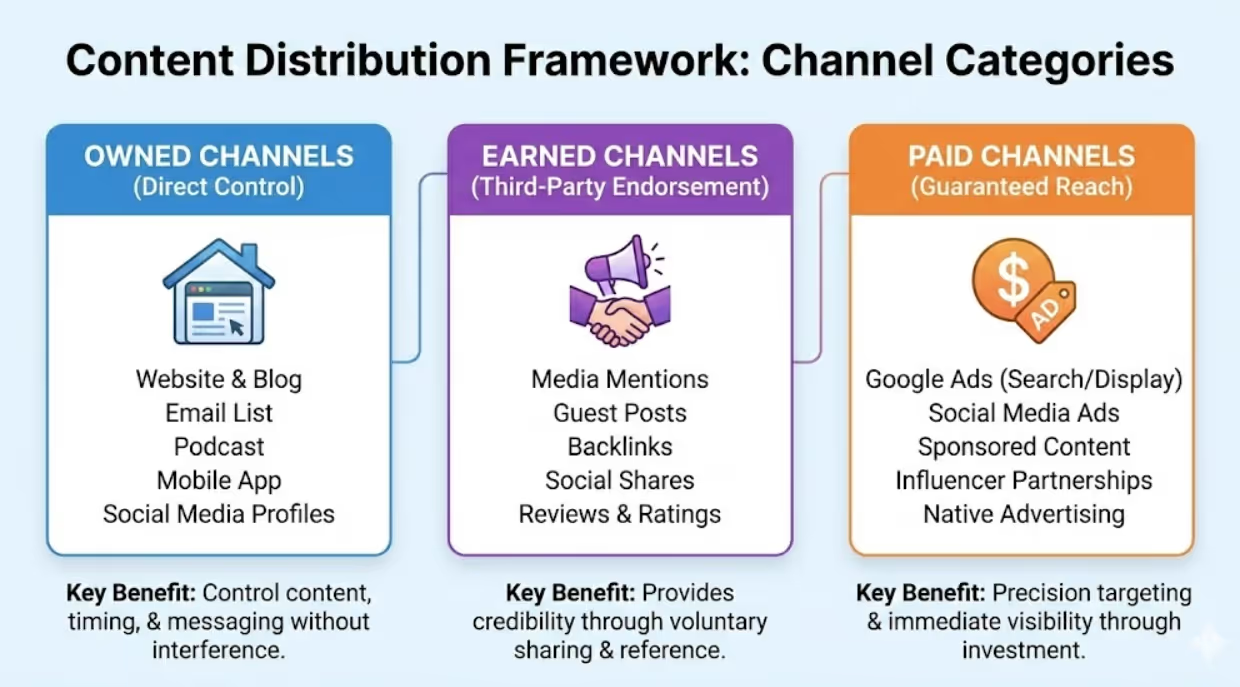
The distribution framework organises channels into three categories providing strategic structure for planning and resource allocation. Owned channels include platforms and properties under your direct control like websites, blogs, email lists, and podcasts where you control content, timing, and messaging without platform dependencies or algorithmic interference. Earned channels encompass third-party coverage and shares including media mentions, guest posts, backlinks, and social shares where others voluntarily distribute or reference your content, providing credibility through implicit endorsement. Paid channels involve monetary investment for content promotion through advertising platforms like Google Ads, social media advertising, sponsored content, and influencer partnerships where direct financial investment guarantees reach and targeting precision.
Distribution timing considerations recognise that content requires different approaches during launch, growth, and maintenance phases. Initial launch periods demand concentrated distribution effort establishing baseline awareness and search indexing. Growth phases focus on sustained distribution building cumulative reach and backlinks improving search rankings. Maintenance distribution provides ongoing visibility for evergreen content continuing to deliver value long after publication. Planning distribution across these phases prevents the common mistake of intensive initial promotion followed by complete neglect as attention shifts to new content.
Audience consumption patterns vary dramatically by platform and content type, making distribution strategy inseparable from understanding where and how target audiences consume information. Professional audiences might favour LinkedIn articles and email newsletters. Consumer audiences might prefer Instagram visual content and YouTube videos. Technical audiences engage deeply with detailed blog posts and GitHub repositories. Distribution effectiveness depends on platform-audience alignment rather than arbitrary channel selection based on popularity or personal preferences.
Content format considerations influence distribution channel selection because different platforms favour particular content types and formats. Long-form articles perform well on blogs and LinkedIn. Short-form visual content thrives on Instagram and TikTok. Video content dominates YouTube whilst audio content serves podcast listeners. Strategic distribution often requires format adaptation where single content pieces get transformed into multiple formats suitable for various platforms rather than attempting to force incompatible formats onto unsuitable channels.
The compounding effect of distribution creates cumulative reach benefits where initial distribution generates engagement, shares, and backlinks that improve search visibility, leading to organic discovery that continues delivering value with diminishing ongoing effort. Content distributed only through owned channels rarely achieves this compounding effect, whilst strategic multi-channel distribution creates positive cycles where paid promotion jumpstarts reach, earned media amplifies credibility, and improved search rankings drive ongoing organic discovery.
Owned Channel Distribution Mastery
Owned distribution channels provide foundation for content strategy because they represent assets under your direct control, immune to algorithm changes or platform policy shifts that can eliminate reach overnight on rented platforms.
Website and blog optimisation ensures content published on owned properties achieves maximum visibility through search engines and direct traffic. Technical SEO fundamentals including fast loading speeds, mobile responsiveness, clear site architecture, and proper schema markup improve search performance. Content SEO through keyword research, strategic headline creation, meta description optimisation, and internal linking structures help content rank for relevant searches. According to research from BrightEdge, organic search drives 53% of all website traffic on average, making search optimisation fundamental to owned channel distribution effectiveness.
Email newsletter distribution reaches subscribers who explicitly requested your content, typically generating engagement rates far exceeding social media organic reach. Strategic email distribution segments content by subscriber interests and behaviors rather than sending identical messages to entire lists. Dedicated emails featuring single content pieces work well for major launches whilst digest formats summarising multiple content pieces suit regular communication schedules. Email preview text and subject lines function as critical distribution elements determining open rates and content consumption. Personalisation using subscriber names, company information, or behavioural data improves engagement significantly compared to generic messaging.
Podcast distribution provides intimate audio format reaching audiences during commute times, exercise, or other activities incompatible with reading or video consumption. Original podcast content establishes thought leadership whilst podcast guesting appears on others' shows accessing established audiences. Podcast transcripts create additional text content supporting search visibility and accessibility whilst episode show notes with links drive traffic back to owned properties. Distribution across podcast platforms including Apple Podcasts, Spotify, Google Podcasts, and podcast directories ensures broad accessibility.
YouTube channel strategy leverages the second-largest search engine for video content distribution reaching visual learners and audiences preferring video formats. Educational content, product demonstrations, behind-the-scenes footage, and interview series each serve different strategic purposes. Video SEO including keyword-optimised titles, detailed descriptions with timestamps, relevant tags, and custom thumbnails improve discoverability. Playlists organise related content whilst end screens and cards direct viewers to additional content or conversion opportunities. YouTube's recommendation algorithm can dramatically amplify reach for engaging content, making it powerful owned channel despite being a platform property.
Internal linking and content hubs create strategic pathways guiding visitors through related content, increasing engagement depth whilst improving SEO through topic clustering. Comprehensive guides serve as pillar content linking to detailed articles on specific subtopics. Category pages and tag systems organise content thematically. Related post recommendations suggest relevant content based on current page context. These internal distribution mechanisms keep visitors engaged longer whilst signalling topical authority to search engines.
Content calendars and systematic publishing schedules create audience expectations whilst ensuring consistent owned channel distribution. Regular publishing builds returning visitor habits and subscription value. Strategic timing considers audience availability patterns, with B2B content often performing best Tuesday through Thursday whilst B2C content performance varies by audience lifestyle. However, consistency matters more than optimal timing, as irregular publishing undermines audience expectations regardless of timing precision.
Social Media Distribution Tactics
Social media platforms provide access to billions of users worldwide, but effective distribution requires strategic platform selection and content adaptation rather than attempting omnipresence across all available networks.
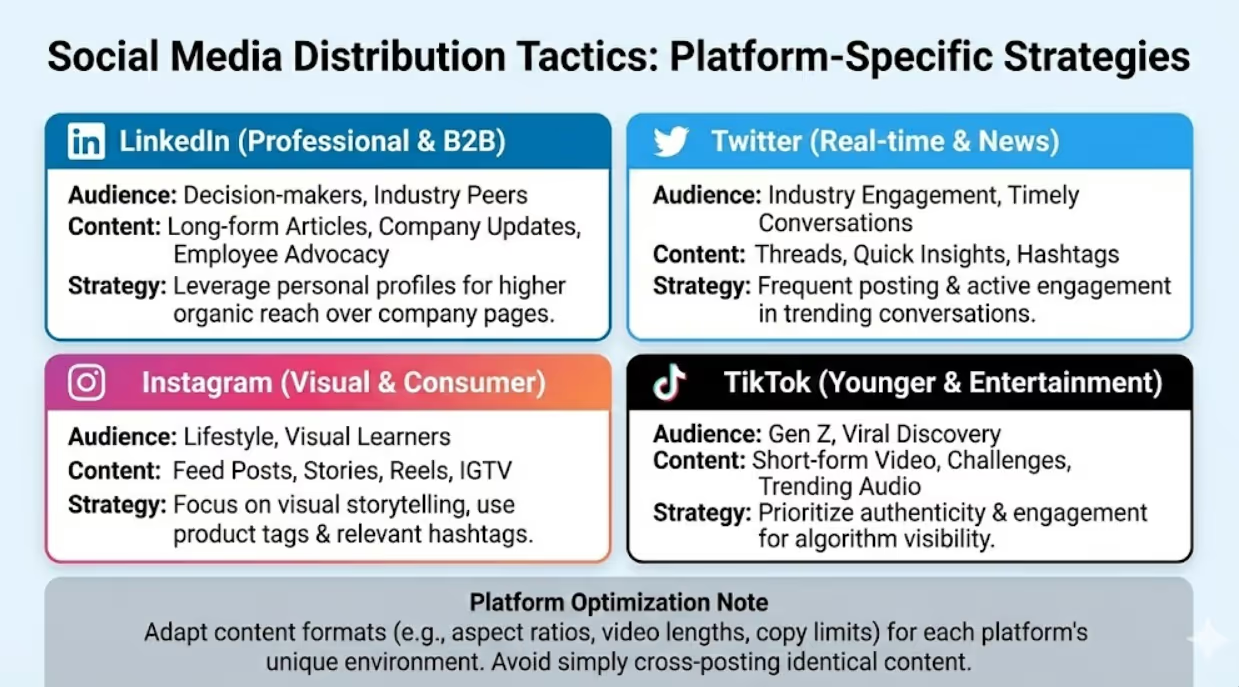
LinkedIn content distribution reaches professional audiences including decision-makers, industry peers, and potential business partners. Long-form LinkedIn articles perform well for detailed insights whilst shorter status updates drive conversation. Company pages provide official presence but personal profiles typically achieve better organic reach as LinkedIn algorithms favour individual engagement. Employee advocacy programmes where team members share company content multiply reach through personal networks. According to LinkedIn's own research, content shared by employees receives 8 times more engagement than content shared by company pages, highlighting the importance of personal distribution.
Facebook distribution strategies recognise that organic reach has declined dramatically as the platform prioritises paid content and personal connections over business pages. Facebook groups provide community-building opportunities where valuable content contributions establish expertise within target audience communities. Video content receives algorithm preference over text and images. Timing posts for peak audience activity hours improves initial engagement triggering algorithmic distribution. Despite declining organic reach, Facebook's targeting capabilities make it valuable for paid content amplification discussed in later sections.
Twitter distribution leverages real-time conversation and hashtag discovery for timely content and industry engagement. Thread formats enable detailed storytelling whilst individual tweets share quick insights. Strategic hashtag usage improves discoverability without excessive tag stuffing appearing spammy. Tagging relevant accounts and influencers can generate shares and conversation. Twitter's fast-moving timeline requires more frequent posting than other platforms, with successful accounts often posting multiple times daily. Lists help monitor competitor and influencer activity whilst DMs facilitate relationship building.
Instagram content distribution prioritises visual storytelling through feed posts, stories, reels, and IGTV formats each serving different content purposes. Feed posts provide permanent content whilst stories create ephemeral engagement. Reels tap into Instagram's TikTok-influenced short-form video algorithm receiving significant reach boosts. Product tags enable direct shopping whilst location tags improve local discoverability. Hashtag research identifies relevant tags balancing reach and competition. Instagram's visual nature suits industries like fashion, food, design, and lifestyle more naturally than text-heavy professional services, though creative adaptation enables effective usage across sectors.
TikTok distribution reaches younger demographics through short-form video content emphasising entertainment, education, and authenticity over production polish. Trending audio, hashtags, and challenges provide viral discovery opportunities. Algorithm prioritises watch time and completion rates, favouring engaging content over follower counts. Whilst primarily consumer-focused, TikTok increasingly reaches business audiences as demographics expand. Australian businesses targeting Gen Z and younger Millennials should evaluate TikTok's relevance to their audience and brand.
Platform-specific content optimisation recognises that identical content performs differently across platforms due to format preferences, algorithm priorities, and audience expectations. Images require different aspect ratios for each platform. Video lengths vary from TikTok's seconds to YouTube's minutes or hours. Copy lengths differ from Twitter's character limits to LinkedIn's long-form articles. Strategic distribution adapts content for each platform's unique characteristics rather than cross-posting identical content expecting similar results.
Social media scheduling tools including Hootsuite, Buffer, and Later enable efficient distribution across multiple platforms through calendar views, bulk scheduling, and analytics integration. Scheduling maintains consistent presence during optimal posting times without requiring manual publishing. However, real-time engagement and conversation remain important for relationship building that scheduled posts can't fully replace.
Content Repurposing and Format Transformation
Strategic content repurposing multiplies reach and longevity of content investments by transforming single pieces into multiple formats serving different audiences, platforms, and consumption preferences.
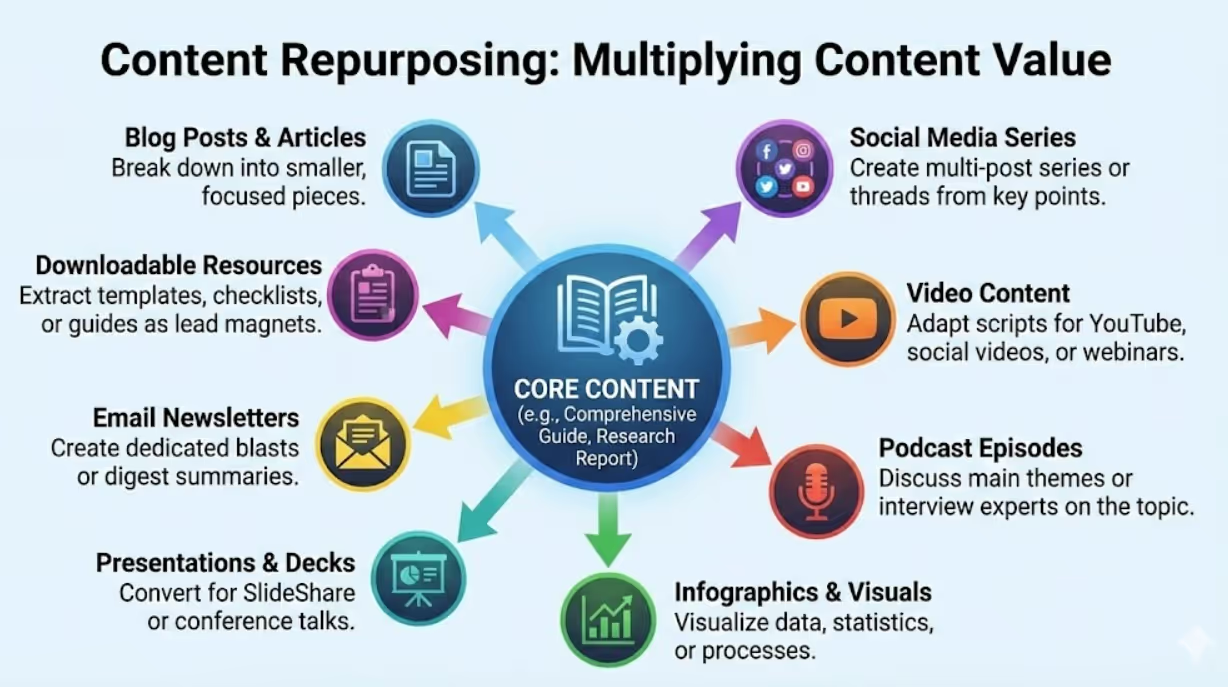
The content repurposing framework starts with comprehensive foundational content that becomes source material for multiple derivative pieces. A detailed blog post becomes social media content, email newsletters, video scripts, podcast episodes, infographics, presentations, and more. This approach maximises initial content investment by extracting multiple distribution opportunities from single research and creation efforts.
Blog to video transformation adapts written content into visual format reaching audiences preferring video consumption. Article main points become video script segments. Key statistics and quotes become on-screen text. Blog images and graphics become B-roll footage. Screen recordings demonstrate technical tutorials. Talking head presentations deliver educational content. According to Wyzowl research, 86% of businesses use video as a marketing tool, with video content generating higher engagement than text across most platforms.
Video to blog transcription creates searchable text content from video assets, improving SEO whilst serving audiences preferring reading over watching. Transcript editing removes filler words and verbal tics producing readable articles. Additional context, links, and resources enhance transcribed content beyond straight verbatim conversion. Embedded videos within transcribed blog posts provide format choice allowing consumption preference selection.
Podcast to blog and social content extracts multiple distribution pieces from audio episodes. Episode transcripts become blog posts optimising search visibility. Key quotes become social media posts with audio clips. Episode themes generate quote graphics and discussion threads. Show notes with timestamps improve accessibility whilst providing content summaries. Guest appearances create cross-promotion opportunities through guest promotion of episodes to their audiences.
Long-form to short-form content breakdown segments comprehensive resources into bite-sized pieces suitable for social media and email distribution. Ultimate guides become 10-post social series highlighting individual sections. Detailed articles generate multiple tweets each addressing specific points. Comprehensive resources create email sequences delivering information progressively. This serialisation maintains visibility over extended periods rather than single-moment publication.
Infographic and visual content creation transforms data, statistics, and processes into shareable visual formats. Research findings become data visualisation infographics. Step-by-step tutorials become visual process diagrams. Statistics compilations become social media carousel posts. Visual content typically generates higher engagement and sharing than text alone, particularly on visually-oriented platforms like Instagram and Pinterest.
Presentation and slide deck development converts written content into formats suitable for SlideShare, conference presentations, and webinar materials. Strategic decks shared on SlideShare can generate thousands of views whilst establishing expertise. Conference presentation opportunities provide earned media through event attendance and recording distribution. Webinar formats enable lead generation whilst reaching engaged audiences consuming content in real-time or via recording.
Template and resource extraction creates downloadable assets from content insights. Checklists distil articles into actionable steps. Worksheets apply concepts to reader-specific situations. Templates provide starting points for implementing advice. Resource lists curate tools and references mentioned throughout content. These tangible takeaways increase content value whilst serving as lead magnets supporting email list growth.
Earned Media and Syndication Strategies
Earned media distribution leverages third-party platforms and influencers to amplify content reach whilst building credibility through association with established voices and publications.
Guest posting on industry publications and relevant blogs exposes content and expertise to established audiences whilst generating backlinks improving search visibility. Strategic guest posting targets publications your ideal customers read rather than maximising volume across any accepting submissions. Contributor guidelines research ensures proposals align with publication standards and audience interests. Author bio optimisation includes compelling credentials and strategic links driving traffic back to owned properties. According to research from Orbit Media, 60% of bloggers who publish guest posts report strong results, making it effective earned distribution tactic.
Media outreach and press coverage generate third-party validation through journalist coverage in news publications, trade magazines, and online media outlets. Newsworthy angles frame pitches around trends, research findings, expert commentary, or unique perspectives rather than promotional content. Press release distribution through services like PR Newswire reaches journalist networks. Relationship building with relevant journalists through social media and genuine engagement improves pitch success rates. Australian businesses should target local media initially building coverage portfolio before approaching national and international publications.
Industry syndication platforms like Medium, LinkedIn Publishing, and niche content aggregators provide additional distribution whilst maintaining content attribution. Strategic syndication republishes content on high-traffic platforms accessing audiences unlikely to discover original publication. Canonical tags indicate original source preventing duplicate content SEO penalties. Syndication timing typically follows several weeks after original publication allowing search engines to index original content first. Some platforms require exclusive content or specific formatting, necessitating evaluation of requirements against distribution benefits.
Influencer collaboration and content sharing leverage individuals with established audiences in target markets. Influencer content creation involves paying creators to produce content featuring products or services. Content collaboration includes co-creating resources with influencers contributing expertise. Simple sharing involves sending content to relevant influencers requesting consideration for sharing with their audiences. Micro-influencers with smaller but highly engaged audiences often provide better ROI than celebrity influencers with massive but less engaged followings.
Social sharing and virality tactics optimise content for organic sharing without explicitly paid promotion. Click-worthy headlines balance curiosity with clarity encouraging clicks without misleading. Visual assets including custom images and infographics increase shareability. Emotional resonance through storytelling, humour, or controversial perspectives generates sharing motivation. Easy sharing mechanisms through prominent social buttons reduce friction. Strategic content timing considers news cycles and trending topics increasing relevance and sharing likelihood.
Backlink building through content excellence creates sustainable earned distribution as others naturally link to valuable resources. Comprehensive guides become reference materials others cite. Original research and data provide quotable statistics. Controversial or unique perspectives generate discussion and linking. Broken link building identifies relevant broken links on other sites, offering your content as replacement. These tactics generate backlinks improving search rankings whilst creating referral traffic from linking sites.
Community participation in forums, online communities, and social groups provides distribution opportunities through genuine helpfulness rather than spam promotion. Answering questions in Reddit communities, Quora, industry forums, and Facebook groups establishes expertise whilst strategically linking to relevant content when genuinely helpful. Comment sections on relevant blogs and articles provide engagement opportunities. Stack Exchange and niche Q&A sites enable expert demonstration through detailed answers referencing deeper content resources.
Paid Content Amplification Methods
Paid distribution accelerates content reach through monetary investment, providing targeting precision and guaranteed visibility that organic methods develop slowly if at all.
Social media advertising amplifies high-performing content to targeted audiences through platform advertising systems. Facebook and Instagram ads reach detailed demographic and interest-based targeting. LinkedIn advertising accesses professional targeting including job titles, industries, and company sizes. Twitter promoted tweets boost visibility for timely content. Platform native advertising blends with organic content reducing ad resistance whilst maintaining clear labelling. Retargeting shows content to website visitors across platforms maintaining visibility and encouraging return visits. According to Hootsuite research, businesses report average 95% increase in website traffic from paid social promotion.
Google Ads search and display campaigns drive targeted traffic to content through search intent matching and display network visibility. Search ads appear for relevant queries indicating active information seeking. Display ads with visual creative appear across millions of websites reaching browsing audiences. Remarketing lists for search ads (RLSA) adjust bidding for previous website visitors. YouTube video ads promote video content to targeted audiences. Cost per click (CPC) models ensure payment only for actual traffic whilst impression-based pricing suits brand awareness objectives.
Native advertising platforms like Taboola and Outbrain promote content through "recommended content" widgets on major publisher websites. Native ad formats blend with surrounding editorial content whilst maintaining sponsorship disclosure. Performance-based pricing charges per click or engagement rather than impressions. Targeting options include interests, demographics, and contextual relevance. Native advertising suits content promotion more than direct response selling, working particularly well for thought leadership and educational content distribution.
Sponsored content and advertorials place branded content within editorial publications, blending advertising with journalism through clearly labelled sponsored material. Publishers create or host content meeting editorial standards whilst incorporating brand messaging. Sponsorships provide credibility through association with respected publications. Australian businesses should ensure clear sponsorship disclosure meeting advertising standards whilst maximising content quality to justify premium placements. Sponsored content works best when providing genuine reader value rather than thinly veiled promotion.
Influencer paid partnerships compensate creators for content featuring or discussing your brand, products, or content. Micro-influencer campaigns work with smaller creators typically delivering higher engagement rates at lower costs than celebrity partnerships. Affiliate arrangements compensate influencers for driving traffic or conversions through tracked links. Campaign objectives might include awareness, engagement, traffic, or conversions depending on funnel stage. FTC guidelines and Australian consumer law require clear disclosure of paid partnerships maintaining transparency.
Content discovery platforms including Reddit advertising, Quuu, and Scoop.it facilitate content distribution to targeted audiences actively seeking information. Reddit advertising reaches niche communities through subreddit targeting when done respectfully and relevantly. Content discovery tools help interested audiences find resources on specific topics. Strategic targeting ensures distribution reaches audiences likely to value content rather than wasting budget on disinterested viewers.
Paid amplification budget allocation typically applies 80/20 rule where 20% of content receiving 80% of amplification budget, focusing investment on proven high-performers rather than equally promoting everything. Initial testing with small budgets identifies top performers warranting increased investment. Performance metrics including engagement rates, click-through rates, and conversion rates determine amplification continuation or cancellation. Lifetime value calculations justify amplification spend by comparing customer acquisition costs against customer lifetime value.
Measuring Distribution Effectiveness
Systematic measurement reveals which distribution channels, content types, and tactics deliver strongest results, enabling data-driven optimisation and resource allocation.
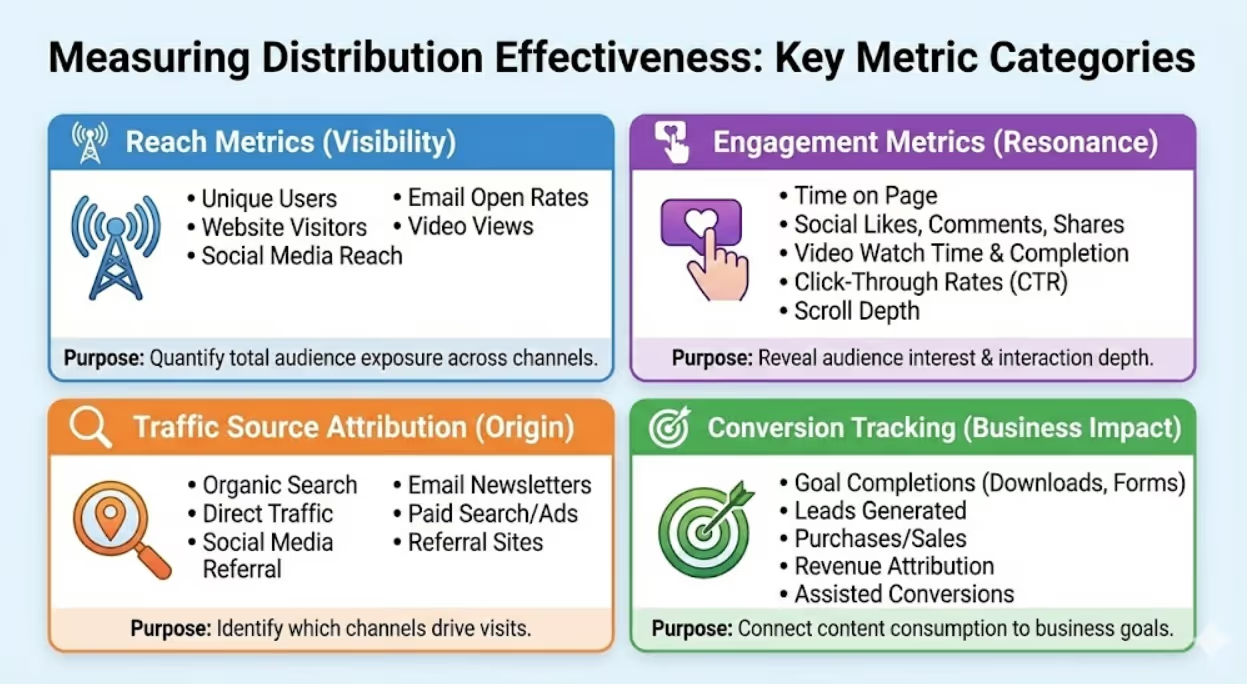
Reach metrics quantify content visibility across channels measuring unique users exposed to content. Website traffic from Google Analytics tracks visitors, page views, and traffic sources. Social media reach indicates users who saw posts though not necessarily engaged. Email open rates measure newsletter distribution effectiveness. Video view counts show consumption across YouTube and social platforms. Reach provides top-funnel awareness metrics contextualising downstream engagement and conversion performance.
Engagement metrics reveal content resonance and audience interest through interaction measurements. Time on page indicates reading depth and content value. Social media engagement including likes, comments, and shares demonstrates content resonance. Video watch time and completion rates show viewing behaviour. Click-through rates from social posts and emails measure call-to-action effectiveness. Scroll depth tracking reveals how thoroughly visitors consume long-form content. Engagement metrics predict conversion likelihood better than reach alone.
Traffic source attribution identifies which distribution channels drive website visits enabling channel performance comparison. Google Analytics acquisition reports break traffic into direct, organic search, social, email, and referral sources. UTM parameters track specific campaigns and content pieces across channels. Multi-touch attribution recognises that conversions typically involve multiple touchpoints across channels rather than single interactions. Channel-specific tracking links measure performance accurately when visitors transition between platforms before converting.
Conversion tracking connects content consumption to business objectives measuring content contribution to revenue and goals. Goal completions in Google Analytics track desired actions including form submissions, downloads, and purchases. Assisted conversions credit content touchpoints contributing to eventual conversions even when not the final interaction. Revenue attribution calculates content marketing ROI by connecting costs to generated revenue. Lead quality assessment evaluates whether content attracts ideal customers versus tire-kickers creating busy work without business value.
Channel comparison frameworks enable objective evaluation of distribution channel performance identifying strengths, weaknesses, and optimisation opportunities. Cost per acquisition compares paid channel efficiency calculating marketing spend divided by conversions generated. Engagement rate per channel reveals which platforms generate deepest audience connection. Time investment versus results assesses whether high-maintenance channels justify required effort. Audience quality by channel determines whether traffic converts or bounces immediately indicating misalignment.
Dashboard creation consolidates metrics from multiple platforms providing unified view of distribution performance. Google Data Studio, Tableau, or similar tools pull data from Google Analytics, social platforms, email services, and advertising accounts. Custom dashboards highlight key performance indicators relevant to specific businesses rather than overwhelming with every available metric. Automated reporting schedules ensure regular review without manual data compilation. Shared dashboards align teams around common metrics improving coordination and accountability.
Testing frameworks systematically compare distribution approaches identifying optimal tactics through controlled experiments. A/B testing compares headline variations, posting times, content formats, and distribution platforms measuring performance differences. Multivariate testing examines multiple variables simultaneously when sufficient traffic supports complexity. Sequential testing runs experiments one after another building on previous learnings. Documentation captures insights preventing repeated testing of already-answered questions.
Building Sustainable Distribution Systems
Long-term content distribution success requires systematic processes and team alignment rather than sporadic tactical execution dependent on individual initiative.
Distribution planning integrates into content creation processes ensuring distribution receives equal strategic attention as creation. Content briefs include distribution strategies specifying target channels, required formats, and promotion timeline. Pre-publication checklists verify distribution preparation completion including social media assets, email copy, and outreach lists. Launch timelines coordinate owned, earned, and paid distribution for maximum initial impact. This systematic planning prevents the common failure mode where excellent content publishes with no distribution plan hoping organic discovery somehow materialises.
Team responsibilities assign specific distribution tasks preventing diffusion of responsibility where everyone assumes someone else handles distribution. Content creators focus on core content development. Social media managers handle platform-specific distribution. Email marketers manage newsletter distribution. PR teams execute media outreach. Paid media specialists manage advertising campaigns. Clear ownership with accountability metrics ensures consistent execution rather than sporadic attention when schedules permit.
Tool and technology stack selections provide infrastructure supporting efficient distribution across multiple channels. Social media management tools like Hootsuite or Buffer enable scheduling and monitoring. Email marketing platforms like Mailchimp or ConvertKit manage list distribution. Analytics tools including Google Analytics and platform native analytics provide performance data. Content management systems with distribution integrations streamline publishing workflows. Project management tools coordinate team distribution activities. Strategic tool investments compound efficiency gains over time.
Documentation and process refinement capture institutional knowledge preventing reinvention of effective approaches with team changes. Distribution playbooks outline platform-specific best practices, optimal posting times, and content format requirements. Template libraries store reusable assets including image dimensions, copy frameworks, and promotion schedules. Success pattern identification documents what works enabling replication across future content. Regular retrospectives review distribution performance identifying improvement opportunities.
Budget allocation dedicates resources to distribution activities ensuring adequate investment relative to creation spending. Many businesses spend 80% on creation and 20% on distribution despite distribution determining whether content achieves objectives. Rebalancing toward 50/50 or even 40/60 creation/distribution split often dramatically improves content marketing ROI by ensuring excellent content actually reaches target audiences. According to Content Marketing Institute research, only 42% of B2B marketers rate their content marketing as effective, with inadequate distribution frequently cited as the primary limitation.
Ready to Amplify Your Content Reach?
Creating exceptional content without strategic distribution wastes the substantial investment businesses make in research, writing, design, and production. The frameworks and tactics outlined here provide comprehensive approaches to content distribution that transform isolated website content into multi-channel marketing assets reaching audiences wherever they consume information.
The difference between content that drives business results and content that generates minimal impact often has nothing to do with quality. It's distribution strategy, execution consistency, and measurement discipline that separate successful content programmes from expensive disappointments.
Need expert guidance developing and executing content distribution strategies? Maven Marketing Co. specialises in comprehensive content marketing including strategic distribution planning and execution for Australian businesses. Our team helps identify optimal distribution channels for your audience, develop repurposing frameworks maximising content investment, implement systematic distribution processes, and measure performance across owned, earned, and paid channels.
We don't just help create content. We ensure it reaches the audiences who need it through strategic multi-channel distribution that transforms content investments into measurable business results including traffic, leads, and revenue growth.
Contact Maven Marketing Co. today for a complimentary content distribution audit. We'll analyse your current distribution approach, identify untapped channel opportunities, and develop a strategic roadmap for amplifying content reach beyond your website. Let's transform your content from hidden gems into powerful business growth drivers through systematic distribution excellence.
Frequently Asked Questions
Q: How should Australian businesses decide which content distribution channels to prioritise when resources are limited and attempting presence everywhere seems overwhelming?
Channel prioritisation should follow a strategic framework evaluating each platform against specific business criteria rather than attempting equal presence across all available options. Start by deeply understanding where your target audience actually spends time consuming content, using customer interviews, surveys, and analytics data revealing which platforms drive current traffic and conversions. Conduct competitive analysis identifying where competitors successfully reach shared audiences whilst looking for underutilised channels offering less competition. Assess internal capabilities honestly evaluating which channels align with existing team skills, available time, and content strengths, as attempting platforms requiring unfamiliar formats or intensive time investments often leads to inconsistent execution undermining results. Calculate resource requirements for each channel including content creation time, posting frequency expectations, engagement demands, and paid amplification costs necessary for meaningful reach. Estimate potential return by examining typical conversion rates, audience quality, and business value of traffic from each channel. Prioritise channels scoring highest on audience presence, competitive opportunity, capability alignment, and potential return whilst scoring lowest on resource requirements.
Most Australian small businesses should focus deeply on two to three channels rather than spreading attention across five or more platforms. Professional services companies typically prioritise LinkedIn for professional audiences, their blog for thought leadership and SEO, and email newsletters for direct subscriber engagement. Consumer brands might focus on Instagram for visual storytelling, Facebook for community building, and YouTube for video content. B2B software companies often succeed through blog content for SEO, LinkedIn for professional targeting, and strategic guest posting for earned media. The key is concentration enabling excellence through depth rather than superficial presence across many channels. After establishing strong presence on priority channels, businesses can expand systematically to additional platforms following the same evaluation framework. Regular quarterly reviews assess whether chosen channels continue delivering results warranting investment or whether emerging platforms or changing audience behaviours necessitate strategic shifts. Many businesses discover that reducing channel presence whilst deepening focus on top performers actually improves overall results by enabling consistent quality and engagement impossible when attention fragments across too many platforms.
Q: What's the ideal balance between investing time and money in content creation versus content distribution, and how does this ratio change based on business size or industry?
The creation versus distribution investment balance represents one of content marketing's most misunderstood elements, with most businesses dramatically over-investing in creation relative to distribution then wondering why excellent content generates minimal results. Traditional marketing wisdom suggested the 80/20 rule where 80% of effort focuses on creation and 20% on distribution, but this ratio typically underserves distribution needs in today's crowded content landscape. More effective approaches allocate 50/50 between creation and distribution, or even 40/60 creation/distribution for businesses in competitive markets where distribution challenges exceed creation challenges. The optimal ratio depends on several factors including content quality and uniqueness, where truly exceptional or unique content requires less distribution investment as organic sharing and discovery mechanisms work more effectively, whilst commodity content in crowded spaces needs heavier distribution investment to achieve visibility. Industry competitiveness influences ratios, with highly competitive industries requiring greater distribution investment to break through noise whilst niche industries with limited competition can succeed with lighter distribution. Business maturity affects optimal allocation, as new businesses with zero audience require heavier distribution investment building initial awareness and discovery pathways, whilst established businesses with loyal audiences can rely more on owned channel distribution to engaged subscribers. Content type considerations matter, as evergreen content justifying long-term distribution investment warrants different allocation than timely content with brief relevance windows.
Budget constraints require pragmatic adjustments, with businesses lacking budgets for significant paid distribution needing to compensate through increased time investment in organic distribution tactics like social media engagement, community participation, and relationship building. Australian small businesses with limited marketing budgets should typically invest 40% to 50% of content programme time on distribution activities including social promotion, email marketing, repurposing for multiple channels, strategic outreach for earned media, and community engagement. This might translate to spending three days creating a comprehensive guide then spending two to three days distributing it across owned channels, repurposing into multiple formats, pitching to relevant publications, and potentially running paid promotion. Larger businesses with dedicated marketing teams often benefit from 50/50 or even 40/60 allocation because they can afford paid amplification accelerating reach whilst organic distribution develops. The critical insight is that distribution deserves equal or greater investment than creation because even mediocre content with excellent distribution typically outperforms excellent content with minimal distribution. Calculate your current allocation honestly by tracking time spent on creation versus distribution activities. Most businesses discovering they invest 80% or more on creation should systematically rebalance toward distribution, potentially through reducing content volume whilst deepening distribution of fewer pieces. Quality content distributed thoroughly delivers better results than high-volume content published with minimal distribution effort.
Q: How can businesses measure the true ROI of content distribution efforts when attribution across multiple channels and touchpoints becomes complex and unclear?
Content distribution ROI measurement requires acknowledging attribution complexity whilst implementing frameworks providing actionable insights despite imperfect data. Perfect attribution proves impossible because customers interact with multiple touchpoints across channels before converting, making single-touch attribution models misleadingly simple whilst multi-touch attribution requires sophisticated analytics implementations beyond most small business capabilities. Pragmatic measurement approaches balance precision with practicality. First-touch attribution credits the initial channel driving website discovery, useful for understanding awareness-building channel effectiveness but ignoring subsequent nurturing touchpoints. Last-touch attribution credits the final interaction before conversion, clearly identifying conversion drivers but undervaluing earlier awareness and consideration touchpoints. Linear attribution distributes credit equally across all touchpoints, acknowledging multiple interactions whilst oversimplifying by treating all equally valuable. Time-decay attribution gives more credit to recent interactions, recognising recency bias in decision-making whilst still acknowledging earlier touchpoints. Position-based attribution allocates more credit to first and last interactions, recognising their unique importance whilst acknowledging middle touchpoints.
Most Australian businesses should use last-touch attribution as primary metric whilst reviewing assisted conversions data revealing other channels' contribution to eventual conversions. Google Analytics provides assisted conversion reports showing which channels contribute to conversion paths even when not receiving last-touch credit. Channel-specific tracking URLs using UTM parameters enable precise measurement of traffic and conversion from specific distribution efforts. Survey new customers about how they discovered you and what influenced their decision, providing qualitative attribution insights complementing analytics data. Calculate channel-specific metrics including cost per visit, cost per lead, and cost per customer acquisition for each major distribution channel, enabling comparative evaluation even without perfect attribution. Track engagement progression metrics showing how content consumption correlates with conversion likelihood, such as visitors who read three or more articles converting at much higher rates than single-article visitors. Monitor incremental impact by testing distribution intensity variations measuring whether increased distribution investment produces proportional traffic and conversion increases. Implement conversion windows recognising that content marketing typically influences decisions over weeks or months rather than immediate conversions, so evaluate distribution effectiveness over 30, 60, or 90-day periods rather than demanding immediate results. Focus on directional insights rather than precise attribution, asking whether distribution investments generally drive positive returns and which channels show strongest performance even if exact attribution remains uncertain.
Many successful businesses use proxy metrics like content engagement, email list growth, and social following expansion as leading indicators predicting eventual revenue impact even when direct attribution proves elusive. The key is systematic measurement providing decision-making guidance rather than abandoning measurement because perfect attribution seems impossible. Start with basic tracking, gradually implementing more sophisticated attribution as capabilities and budgets allow. Even imperfect measurement dramatically improves distribution effectiveness compared to no measurement at all.

Table of contents
read more blogs
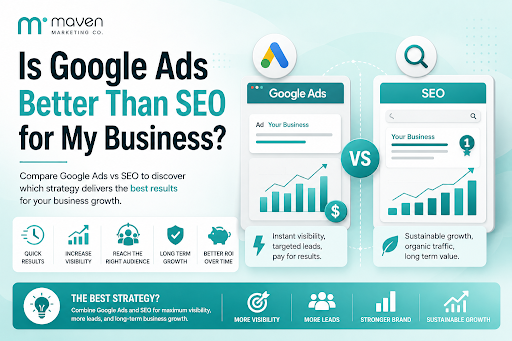
Is Google Ads Better Than SEO for My Business
One of the biggest questions business owners ask when they are planning online growth is whether they should invest in Google Ads or SEO. Both are strong marketing plays that help your company show up in Google search results, but they do things in separate lanes. Google Ads gives quicker visibility and can bring in leads fast, whereas SEO more or less focuses on slow, steady organic traffic that tends to grow the longer you keep building it. Picking the right direction depends on what you want to achieve, how much money you can spend, how crowded the market is, and how quickly you need results, like sooner rather than later. The good news is you don’t always have to choose one or the other; it’s not exactly a black-and-white situation. If you take time to understand the strongest points of both, you can put together a more sensible digital marketing plan that supports consistent expansion. In this guide, we’ll compare Google Ads vs SEO, explain the main differences, and help you figure out what option makes the most sense for your business.

When Should I Hire a Digital Marketing Agency
Growing a business today takes more than just having a website or throwing a post on social media; customers usually search around online, compare providers, skim reviews, and basically expect the brand to show up with a solid digital presence before they even think about buying. Many businesses try to run their marketing themselves, but there comes a point when “doing it all in-house” becomes clunky and hard to manage, all at once. Knowing when to hire a digital marketing agency can end up making a big, real difference for your growth. If you’re not getting enough leads, or your online visibility feels stuck, or sales are just not moving, the right agency can bring the know-how, plus a clear plan, to help you get noticeably better outcomes. In this guide, we’ll dig into what a digital marketing agency actually does, the usual signs it’s time to bring one on, and how picking the right marketing partner can help your business move forward at a faster pace.
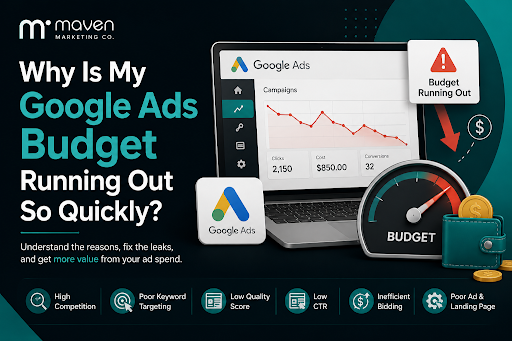
Why Is My Google Ads Budget Running Out So Quickly
Running a successful Google Ads budget isn’t only about throwing more money at it. It’s more like making every dollar, doing a bit extra. A lot of businesses start a Google Ads campaign with big hopes, then find out their daily budget is gone within a few hours, and that feels weird, right? After that, your ads stop showing effectively, new leads slip away, and your return on investment dips. So if your Google Ads budget is running out too fast, don’t stress. It’s a fairly common issue, and in most situations, it can be repaired with the right approach. There are multiple little things that can drain your advertising money quicker than you expected, from costly keywords to audience targeting that just doesn’t quite fit. In this guide, we’ll walk through why your budget disappears so quickly, how to cut wasteful spend, and the most reliable ways to boost your Google Ads ROI, even if your budget stays the same.