.svg)


%201.svg)
.avif)
Key Takeaways
- Quality trumps quantity in every scenario: A list of 500 engaged subscribers who open emails and take action delivers more revenue than 5,000 uninterested contacts who ignore everything you send, making engagement metrics more important than raw subscriber counts
- Lead magnets must solve specific problems: Generic "newsletters" or vague offers convert poorly compared to targeted resources like templates, checklists, or guides addressing precise pain points your audience actively seeks solutions for
- Multiple opt-in opportunities outperform single signup forms: Strategic placement across website locations including blog content, homepage, about page, and exit-intent popups captures subscribers at various engagement stages rather than relying on single conversion points
- Content marketing drives sustainable growth: Consistently publishing valuable content that addresses audience needs establishes authority, builds trust, and creates ongoing discovery opportunities through search engines and social sharing
- Referral systems leverage existing subscribers: Encouraging current subscribers to refer friends through incentives or simple sharing mechanisms multiplies growth without additional marketing investment
- List hygiene maintains deliverability and engagement: Regularly removing unengaged subscribers, validating email addresses, and monitoring bounce rates protects sender reputation and ensures emails reach active subscribers
- Permission and transparency build trust: Clear value propositions, transparent data usage, easy unsubscribe processes, and GDPR compliance create positive subscriber relationships that drive long-term retention
- Optimisation never ends: Continuous testing of subject lines, opt-in copy, lead magnet offers, and email content through A/B testing identifies improvements that compound over time into significantly better results
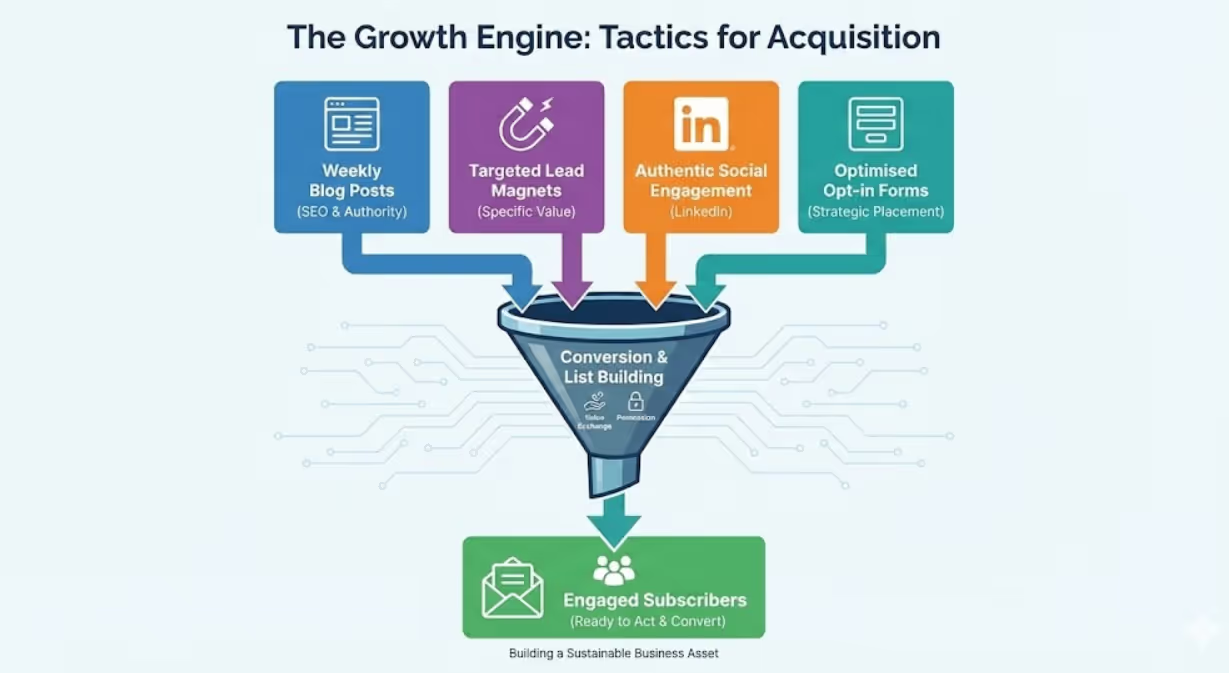
A Melbourne-based marketing consultant started with zero newsletter subscribers in January 2023. No existing audience, no database, no shortcuts. She committed to organic growth tactics: publishing weekly blog posts addressing client questions, creating targeted lead magnets for specific industry segments, optimising opt-in forms across her website, and engaging authentically on LinkedIn whilst directing interested professionals to her newsletter.
By December 2023, she'd built 3,200 subscribers. Her open rates averaged 42%, click rates reached 8%, and most importantly, 23% of her new client inquiries originated from newsletter subscribers. No purchased lists, no aggressive popups, no spam tactics. Just consistent value delivery and strategic optimisation.
The difference between her success and countless failed newsletter attempts wasn't budget or connections. It was understanding that organic email list growth builds sustainable business assets through patient, strategic execution focused on genuine value exchange rather than extraction.
Understanding Organic Email List Growth
Organic email list growth fundamentally differs from paid or purchased list building in ways that determine long-term success or failure for newsletter initiatives.
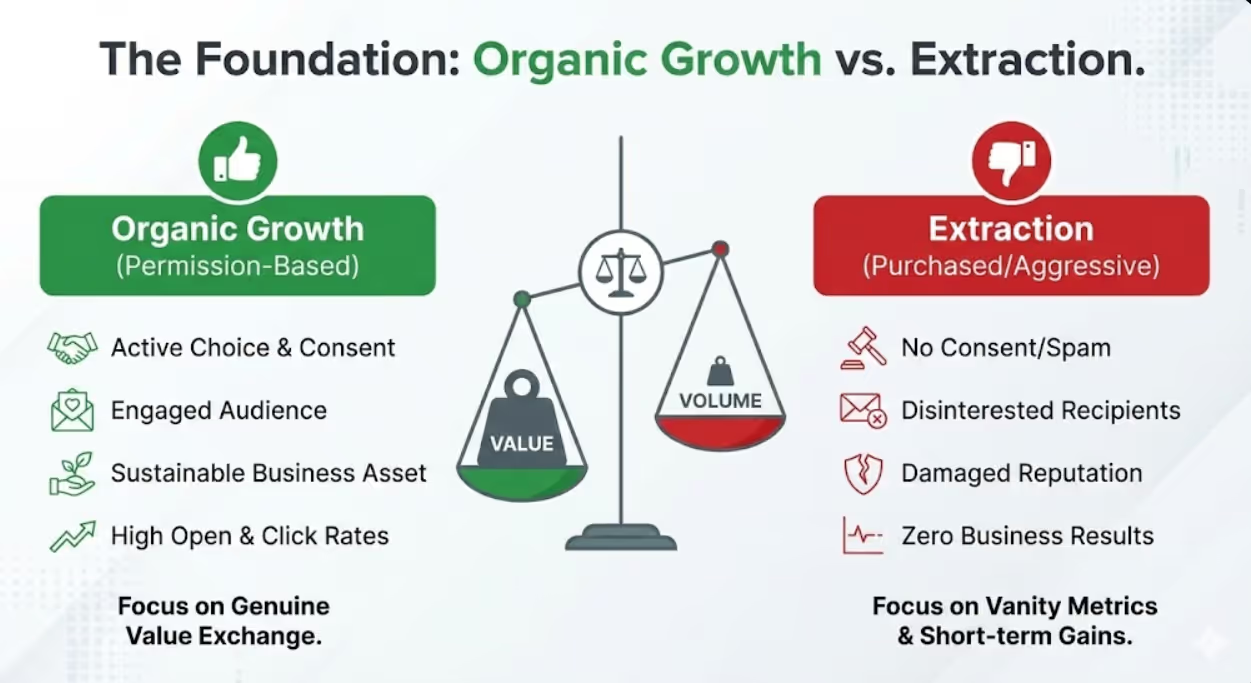
Organic growth prioritises permission-based acquisition where subscribers actively choose to receive your emails because they perceive value in what you offer. This consent creates engagement foundations that purchased lists or aggressive capture tactics can never replicate. When someone deliberately provides their email address requesting your content, they're predisposed to open, read, and act on your messages. Contrast this with purchased lists where recipients never asked for your emails and typically mark them as spam, damaging sender reputation whilst producing zero business results.
Quality versus quantity represents the philosophical divide separating successful newsletter strategies from vanity metric chasing. A small engaged list outperforms a large disinterested one across every meaningful metric. Five hundred subscribers who open 40% of emails and click through 8% generate more revenue, referrals, and relationships than 5,000 subscribers with 5% open rates and negligible engagement. Yet many businesses obsess over subscriber counts whilst ignoring engagement quality, pursuing growth tactics that inflate numbers whilst degrading list value.
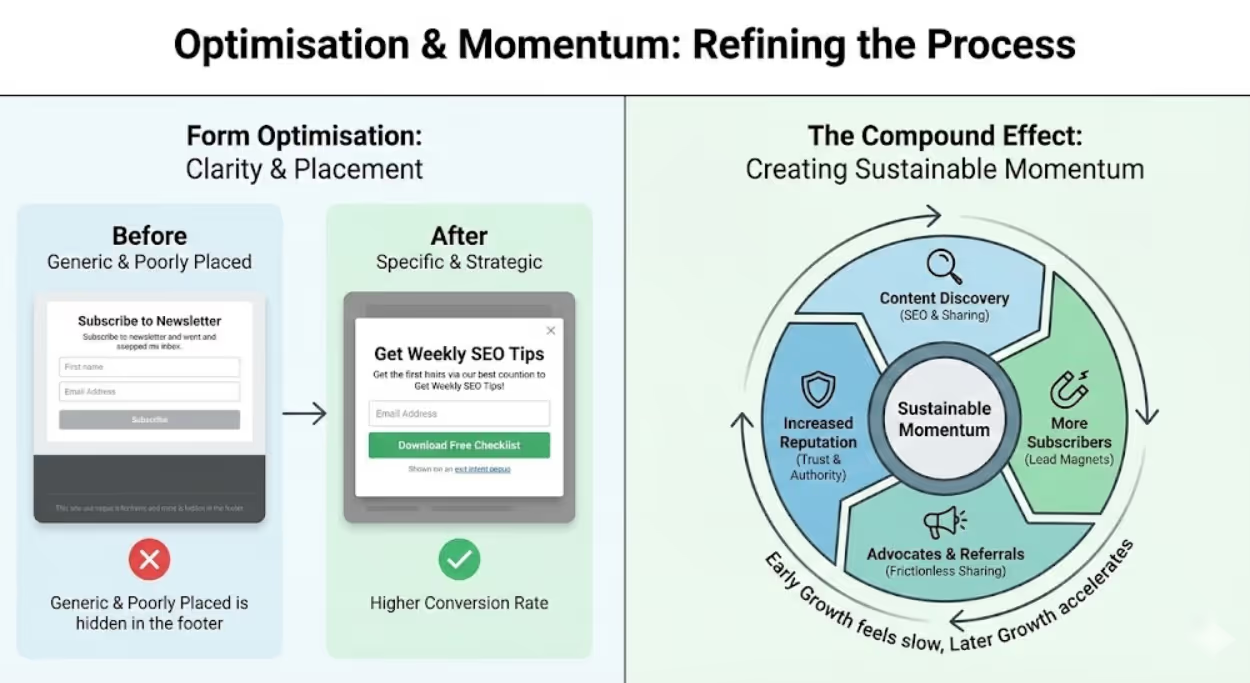
The compound effect of organic growth creates sustainable momentum where initial subscribers become advocates referring others, content marketing generates ongoing discovery, search visibility increases with content volume, and reputation builds through consistent value delivery. This flywheel effect means early growth feels slow whilst later growth accelerates as multiple channels compound. Patience during initial stages determines whether businesses persist long enough to experience exponential growth phases.
Algorithmic independence makes email lists uniquely valuable compared to social media followers or search traffic. When you build a Facebook following, Facebook controls access to that audience through algorithms determining which posts reach how many followers. When you depend on search traffic, Google algorithm changes can eliminate traffic overnight. When you own an email list, you control direct access to subscribers' inboxes, making email the most stable marketing channel available. This independence justifies significant investment in list building despite slower growth compared to algorithm-amplified channels.
Australian privacy context requires particular attention to consent and compliance. The Privacy Act 1988 and Spam Act 2003 mandate explicit consent for commercial emails, accurate sender identification, functional unsubscribe mechanisms, and clear privacy policy communication. These regulations protect consumers whilst ensuring ethical list building, making compliance both legal requirement and competitive advantage. Subscribers trust businesses respecting their data and preferences, improving engagement whilst reducing complaints.
Creating Irresistible Lead Magnets
Lead magnets represent value offered in exchange for email addresses, with effectiveness determined by specificity, immediacy, and relevance to audience needs.
Successful lead magnet formats solve problems immediately rather than promising future value. Checklists provide actionable steps subscribers can implement immediately. Templates offer ready-to-use frameworks eliminating starting-from-scratch friction. Cheat sheets condense complex information into scannable quick-reference guides. Resource lists curate tools, services, or information saving subscribers research time. Calculators or assessment tools provide personalised insights based on subscriber-specific inputs. These formats deliver instant value justifying email address exchange.
Specificity dramatically improves conversion rates compared to generic offerings. "Free Marketing Guide" converts poorly because it's vague and commodity-like. "7-Step SEO Checklist for Brisbane Service Businesses" converts significantly better through specificity addressing particular audience needs. "WordPress Security Audit Template" targets precise pain points. "Monthly Content Calendar Template for Social Media Managers" speaks directly to specific role challenges. The more precisely lead magnets address particular problems for defined audiences, the higher the perceived value and conversion rate.
Gated versus ungated content represents a strategic decision balancing immediate value against list building. Ungated content published freely on your website builds authority, generates search traffic, and demonstrates expertise without requiring email addresses. Gated content offered only to email subscribers creates exclusive value driving list growth. Optimal strategies combine both approaches by publishing foundational content freely whilst gating premium resources, templates, or tools. This balance provides discovery pathways through free content whilst reserving highest-value resources for subscribers.
Multiple lead magnets targeting different audience segments outperform single generic offerings by acknowledging that audiences contain diverse interests and needs. A web development agency might offer separate lead magnets for small business owners needing basic websites, e-commerce businesses requiring online stores, and enterprises seeking custom solutions. Each lead magnet addresses segment-specific challenges, improving relevance and conversion whilst enabling list segmentation for targeted email campaigns.
Lead magnet quality determines subscriber satisfaction and retention more than design polish or production complexity. Simple but useful beats beautiful but useless every single time. A basic checklist solving real problems outperforms a gorgeously designed guide containing generic advice. Focus implementation effort on content usefulness, actionability, and problem-solving rather than excessive design production. Quality content in simple formats builds trust whilst over-designed but shallow content damages credibility.
Delivery mechanisms must be frictionless to prevent subscriber frustration after opt-in. Automated email delivery sending lead magnets immediately after subscription confirmation maintains momentum. Clear download instructions prevent confusion. File formats should be universally accessible, preferring PDFs over proprietary formats requiring specific software. Mobile-friendly formats acknowledge that many subscribers access lead magnets on phones. Technical friction between opt-in and value delivery creates negative first impressions that damage subscriber relationships before they begin.
Creating lead magnets requires understanding audience pain points through customer conversations, support enquiries, social media questions, competitor analysis, and keyword research revealing what people actively search for. These insights identify genuine problems warranting lead magnet solutions rather than assumed needs that generate little interest. According to research from OptinMonster, targeted lead magnets convert 3 to 5 times better than generic newsletter signups, validating the importance of specificity and relevance.
Optimising Opt-In Forms and Placement
Strategic opt-in form design and placement dramatically influences conversion rates, with small optimisations often doubling or tripling subscriber acquisition from existing traffic.
Form field optimisation balances information collection against completion friction. Every additional field reduces completion rates by 5% to 15% according to research from HubSpot, making minimalist approaches generally more effective. Email address alone converts best for initial subscriptions, with name fields optional rather than required. Asking for phone numbers, company names, or detailed information during initial opt-in creates unnecessary barriers. Progressive profiling collects additional information gradually through subsequent emails rather than upfront, optimising initial conversion whilst building subscriber profiles over time.
Copy and messaging on opt-in forms must clearly communicate value proposition rather than making generic subscription requests. "Subscribe to our newsletter" explains mechanism but not benefit, converting poorly compared to benefit-focused alternatives. "Get weekly SEO tips delivered to your inbox" specifies value and frequency. "Download the free website audit checklist" emphasises immediate benefit. "Join 5,000+ Brisbane business owners receiving marketing insights" adds social proof alongside value. Clear value communication answers the implicit question every visitor asks: what's in it for me?
Visual design influences form prominence and conversion through contrasting colours ensuring visibility against page backgrounds, adequate size making forms noticeable without overwhelming content, and strategic whitespace drawing attention through isolation. However, design should enhance rather than overshadow value proposition clarity. Beautiful forms communicating unclear value convert worse than simple forms with compelling copy. Prioritise message clarity over design complexity.
Strategic placement across website touchpoints captures subscribers at various engagement stages rather than relying on single locations. Homepage placement reaches first-time visitors with brand-level lead magnets. Blog post inline forms within content capture readers engaged with specific topics, enabling topic-specific lead magnets. Sidebar forms maintain persistent opt-in opportunities throughout site navigation. Footer forms provide low-pressure subscription options at natural decision points. About page forms convert visitors researching your business credibility. Each placement serves different visitor mindsets, collectively maximising subscription opportunities.
Exit-intent popups display opt-in offers when visitors show leaving behaviour, providing last-chance conversion opportunities. Whilst potentially intrusive if poorly implemented, exit-intent popups convert well because they trigger at moments when visitors have already decided to leave, meaning interruption creates minimal additional friction. Effective exit-intent implementations offer specific value rather than generic subscription requests, use delay timing preventing immediate intrusion, and appear only once per visitor to avoid annoyance. Research from Sumo shows that exit-intent popups can recover 10% to 15% of abandoning visitors as subscribers.
Welcome gates or mats display opt-in offers to new visitors before showing content, creating subscription opportunities during high-attention arrival moments. These full-page or large overlays work well for content-focused sites where immediate subscription offers align with visitor intent. However, they require careful implementation to avoid damaging user experience or SEO performance. Delayed display after several seconds of engagement works better than immediate popups. Easy dismissal through clear close buttons prevents frustration. Frequency capping ensures visitors don't see welcome gates on every visit.
Mobile optimisation becomes critical as mobile traffic represents 60% or more of website visitors for most Australian businesses. Mobile-optimised forms use larger tap targets, simplified layouts, appropriate input types triggering correct keyboards, and strategic placement considering thumb-friendly screen zones. Forms designed for desktop often fail on mobile through small text, difficult tapping, or awkward positioning. Mobile-first design approaches create forms working everywhere rather than desktop-focused designs requiring mobile adaptation.
A/B testing systematically identifies optimal form variations through controlled experiments comparing different approaches. Test value proposition copy variations, form field combinations, button copy and colours, form lengths, and placement locations. Statistical significance requires sufficient traffic and conversions, typically 100+ conversions per variation minimum. Prioritise high-impact tests like value proposition and placement before optimising minor elements like button colours. Continuous testing compounds improvements over time.
Leveraging Content Marketing for List Growth
Consistent content publication creates discovery opportunities, establishes authority, and provides natural subscription pathways that drive sustained organic growth without paid promotion.
Blog post strategy balances search optimisation with genuine value delivery. Keyword research identifies topics your target audience actively searches for, ensuring content addresses real information needs rather than assumed interests. Comprehensive coverage of topics establishes topical authority signalling expertise to both readers and search engines. Regular publishing schedules build audience expectations whilst creating compounding content assets. Strategic internal linking connects related articles, increasing site engagement and search performance. Quality content attracts backlinks naturally, improving search visibility and driving referral traffic.
Content upgrades offer topic-specific lead magnets related to blog post subjects, converting engaged readers into subscribers through relevant bonus materials. A blog post about social media strategy might offer a content calendar template. An article about website optimisation could provide an audit checklist. Content upgrades convert significantly better than generic opt-in offers because they're contextually relevant to content readers actively consume. According to Brian Dean's research at Backlinko, content upgrades can achieve conversion rates of 20% to 40% compared to 2% to 5% for generic opt-in forms.
Guest posting on relevant industry publications exposes your content and expertise to established audiences whilst building backlinks improving search visibility. Strategic guest posting targets publications your ideal customers read, includes bio links to opt-in landing pages, and provides genuine value rather than promotional content. Quality over quantity matters more than volume, with one guest post on a highly relevant publication outperforming dozens on tangentially related sites.
Podcast appearances introduce your expertise to engaged audiences whilst providing content repurposing opportunities. Being interviewed on relevant podcasts exposes you to listeners predisposed to trust podcast host recommendations. Promoting newsletter opt-in offers during podcast discussions provides clear calls-to-action. Recording your own podcast creates original content whilst building subscriber relationships through intimate audio format. Podcast show notes and transcripts create additional content assets supporting search visibility.
Video content on YouTube and social platforms reaches audiences preferring visual formats whilst supporting search visibility through YouTube's position as the second-largest search engine. Educational videos demonstrating expertise naturally lead to newsletter promotion. End screens and descriptions direct interested viewers to opt-in pages. Video content repurposes into blog posts, social media content, and email newsletter material, maximising content investment efficiency.
Social media content distribution extends content reach whilst directing engaged followers to newsletter signup. Each platform serves different purposes with LinkedIn reaching professional audiences, Instagram engaging visual consumers, Twitter facilitating conversation, and Facebook accessing broader demographics. Cross-promotion directing social followers to email lists converts algorithm-dependent audiences into owned contacts. However, social media should support rather than replace email focus, as algorithmic control makes social platforms inherently unstable compared to owned email lists.
Content consistency matters more than perfection or volume. Publishing weekly delivers better results than sporadic excellence because consistent publishing builds audience habits, maintains search visibility, and compounds content assets over time. Start with sustainable frequency, prioritising consistency over ambitious schedules that prove unsustainable. One excellent post weekly beats three mediocre posts monthly through cumulative effect.
Implementing Referral and Viral Growth Mechanisms
Existing subscribers represent your most powerful growth channel when referral systems make sharing easy and incentivised, turning engaged readers into active advocates.
Referral incentives motivate subscribers to recommend your newsletter through rewards or recognition. Exclusive content access for successful referrals provides value without financial cost. Early access to new resources rewards advocates with priority. Recognition in newsletter features or subscriber spotlights offers social currency. Entry into prize draws or giveaways creates tangible incentive. Digital products or discounts provide direct value. The key is ensuring incentives align with subscriber values whilst being significant enough to motivate action without seeming manipulative.
Frictionless sharing mechanisms make referral easy through one-click sharing buttons, pre-written referral copy subscribers can edit, unique referral links tracking attribution, and social media sharing integration. Complex referral processes requiring multiple steps reduce participation dramatically. The easier sharing becomes, the more subscribers participate in referral programmes.
Social proof leverages existing subscriber numbers and testimonials to encourage signup. Displaying subscriber counts like "Join 10,000+ Melbourne marketers" creates bandwagon effect. Featuring subscriber testimonials about newsletter value builds credibility. Showcasing subscriber success stories demonstrates tangible benefits. However, social proof works only when numbers or testimonials are genuine, as false claims damage trust catastrophically.
Content worth sharing drives organic referral through exceptional quality, unique perspectives, or actionable insights subscribers naturally want to share with peers. When newsletter content consistently delivers value, subscribers forward emails without explicit referral programmes because sharing useful resources builds their own credibility and helps their networks. This organic sharing represents the highest quality growth mechanism because it's based purely on content merit rather than artificial incentives.
Forward-to-a-friend functionality enables simple email sharing with integrated buttons encouraging subscribers to share interesting content with colleagues or friends. Clear forwarding instructions and pre-filled subject lines reduce friction. Landing pages for forwarded recipients explain newsletter value and facilitate easy subscription. This mechanism works particularly well for B2B newsletters where professional sharing is common.
Strategic partnerships with complementary businesses create cross-promotion opportunities where each business promotes the other's newsletter to their subscribers. Partnerships work best when audiences overlap whilst businesses don't compete directly. Co-created content like webinars or guides provides natural cross-promotion contexts. Guest newsletter swaps expose each audience to the other. Bundled resources featuring both businesses' materials create shared value. These partnerships leverage existing audiences without paid promotion costs.
Maintaining List Health and Engagement
List hygiene practices protect sender reputation, maintain deliverability, and ensure emails reach engaged subscribers rather than languishing in spam folders or going to inactive addresses.
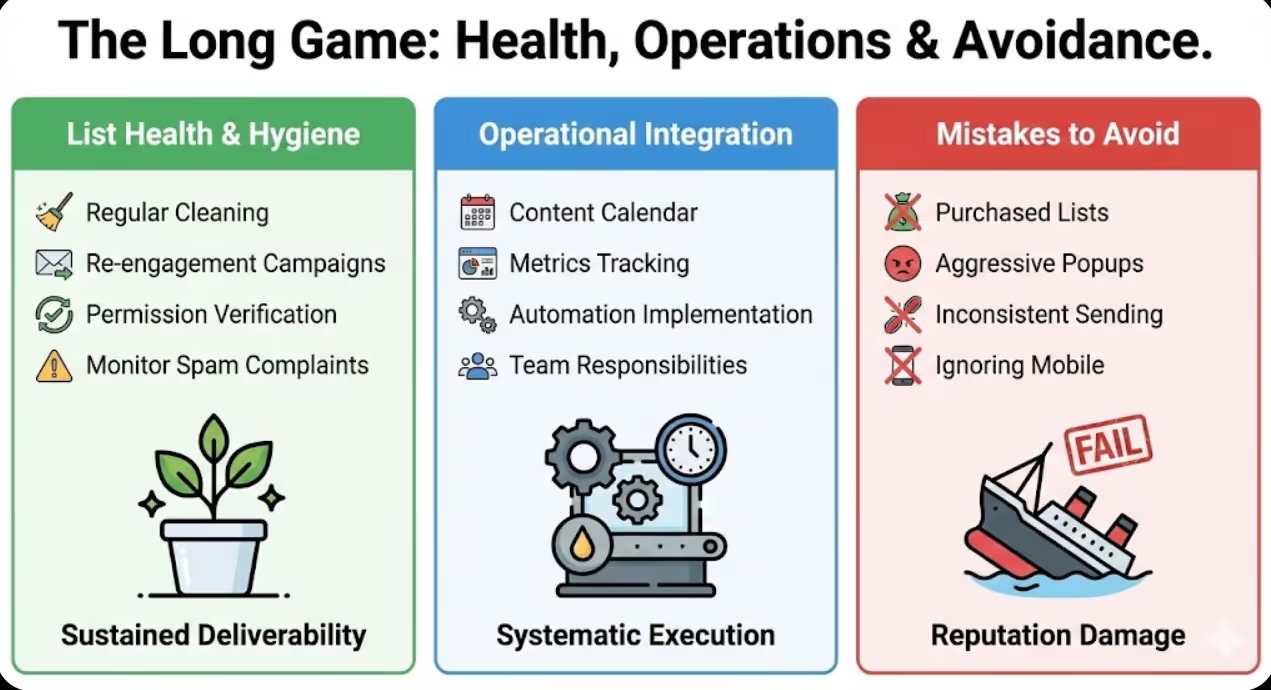
Regular list cleaning removes unengaged subscribers who haven't opened emails in 90 to 180 days, improving engagement metrics whilst reducing costs for email platforms charging by subscriber count. Whilst counterintuitive, removing non-engaged subscribers improves deliverability for engaged subscribers because email providers judge sender reputation partly on engagement rates. A smaller engaged list delivers better results than a larger list including many inactive subscribers dragging down metrics.
Re-engagement campaigns attempt reactivating inactive subscribers before removal through targeted emails asking whether they want to continue receiving newsletters. Subject lines like "Should we break up?" or "We miss you" grab attention. Preference centres let subscribers choose email frequency or content types rather than unsubscribing entirely. Special offers or exclusive content incentivise re-engagement. However, subscribers not responding to re-engagement campaigns should be removed rather than continuing to receive unwanted emails damaging sender reputation.
Bounce management addresses technical issues preventing email delivery. Hard bounces from invalid addresses should be removed immediately to protect sender reputation. Soft bounces from temporary issues like full inboxes warrant monitoring and eventual removal if persistent. High bounce rates signal list quality problems to email providers, potentially triggering spam filtering. Maintaining bounce rates below 2% preserves deliverability.
Spam complaint monitoring tracks subscribers marking emails as spam, indicating mismatched expectations or poor targeting. High spam complaint rates damage sender reputation severely. Investigating complaint sources helps identify whether specific content types, sending frequencies, or acquisition methods create problems. Making unsubscribe processes easier than spam reporting reduces complaint rates by providing preferred exit paths.
Email authentication protocols including SPF, DKIM, and DMARC validate sender legitimacy, improving deliverability whilst protecting brand from phishing attempts. These technical configurations signal to email providers that emails genuinely originate from claimed senders. Proper authentication dramatically improves inbox placement rates whilst reducing spam filtering.
Permission verification ensures subscribers genuinely want emails through double opt-in processes where subscribers confirm subscription by clicking links in confirmation emails. Whilst single opt-in creates faster list growth, double opt-in produces higher quality lists with lower bounce rates and complaints. Double opt-in also provides legal protection by documenting explicit consent.
Preference centres allow subscribers to customise email frequency, content types, and topics rather than unsubscribing completely. Some subscribers want weekly emails whilst others prefer monthly. Some care about certain topics but not others. Providing granular control maintains subscriber relationships whilst respecting preferences, reducing unsubscribe rates through customisation.
Building Newsletter Growth into Business Operations
Sustainable newsletter growth requires systematic integration into regular business activities rather than sporadic campaign efforts.
Content calendar planning schedules newsletter content, lead magnet creation, and promotional activities, ensuring consistent execution rather than reactive publishing. Planning quarterly or monthly creates strategic cohesion whilst allowing tactical flexibility. Including content themes, lead magnet timelines, and promotion schedules in calendars makes growth activities routine rather than exceptional.
Team responsibilities assign newsletter growth tasks to specific people, preventing diffusion of responsibility where everyone assumes someone else handles tasks. Designating content creation, form optimisation, list management, and analysis responsibilities ensures accountability. Even small businesses benefit from explicit assignment preventing neglect during busy periods.
Metrics tracking monitors growth progress and identifies successful tactics warranting increased investment versus unsuccessful approaches requiring revision. Core metrics include subscriber growth rate showing velocity, open rate indicating content relevance, click rate demonstrating engagement depth, unsubscribe rate signalling content-audience mismatch, and conversion rate from subscribers to customers or desired actions. Regular review of metrics informs strategic adjustments whilst celebrating progress maintains motivation.
Budget allocation dedicates resources to email marketing tools, content creation, lead magnet development, and potentially paid promotion of opt-in content. Many businesses under-invest in email marketing despite superior ROI compared to other channels. According to research from Litmus, email marketing delivers an average return of $36 for every $1 spent, making it one of the highest-ROI marketing channels available.
Automation implementation uses email marketing platform capabilities to streamline repetitive tasks. Welcome series automatically onboard new subscribers. Drip campaigns deliver sequenced content. Triggered emails respond to subscriber actions. Automated segmentation organises subscribers based on behaviour or attributes. Automation frees time for strategic activities whilst ensuring consistent subscriber experience.
Avoiding Newsletter Growth Mistakes
Common mistakes undermine newsletter growth efforts despite good intentions, with awareness and prevention protecting time and reputation investments.
Purchased email lists represent the most damaging shortcut, appearing to offer quick subscriber numbers whilst actually destroying sender reputation and deliverability. Recipients never consented to emails, marking them as spam and damaging your sender reputation with email providers. Engagement rates from purchased lists average near zero. Legal risks emerge from anti-spam law violations. No legitimate business should ever purchase email lists regardless of promised targeting or quality.
Aggressive popups appearing immediately on site arrival, on every page, or repeatedly to same visitors create negative user experiences that damage brand perception despite potentially increasing conversions. Strategic popup timing and frequency capping balance subscription goals with visitor experience. Appearing after 30 seconds or scroll depth rather than immediately allows visitors to assess site value first. Showing once per visitor per week rather than every visit reduces annoyance.
Generic value propositions fail to differentiate newsletters or communicate specific benefits, resulting in low conversion rates despite good traffic. "Subscribe to our newsletter" provides no compelling reason. Clear benefit communication explaining what subscribers receive and why they should care dramatically improves conversions.
Inconsistent sending schedules damage subscriber expectations and engagement. Subscribers receiving weekly emails come to expect regular cadence, with inconsistency appearing unprofessional or suggesting content quality issues. Establishing sustainable sending frequency and maintaining consistency builds reliability and habit formation.
Neglecting mobile optimisation ignores the reality that most subscribers read emails on mobile devices. Emails and opt-in forms not optimised for mobile create poor experiences for majority audiences. Mobile-first design ensures functionality across all devices.
Ignoring engagement metrics whilst obsessing over subscriber counts pursues vanity metrics rather than meaningful business outcomes. Large unengaged lists create costs without benefits whilst small engaged lists drive revenue and relationships.
Ready to Build Your Newsletter Audience?
Organic newsletter growth builds sustainable marketing assets through strategic execution focused on genuine value exchange. The tactics outlined here create frameworks for systematic list building that compounds over time, transforming initial trickles into powerful streams of engaged subscribers.
The difference between successful newsletter initiatives and abandoned attempts isn't usually complexity or secret tactics. It's consistent execution of fundamentals: creating valuable lead magnets, optimising opt-in opportunities, publishing relevant content regularly, making sharing easy, and maintaining list health through ethical practices.
Need expert guidance building your newsletter from zero to thousands of engaged subscribers? Maven Marketing Co. specialises in email marketing strategy and execution for Australian businesses. Our team helps develop compelling lead magnets, optimise website opt-in forms, create content strategies driving organic discovery, and implement referral systems that leverage existing subscribers.
We don't just focus on subscriber numbers. We build engaged audiences that actually open emails, click through content, and convert into customers because we prioritise quality over vanity metrics throughout every growth initiative.
Contact Maven Marketing Co. today for a complimentary newsletter growth audit. We'll analyse your current email marketing approach, identify untapped opportunities, and develop a strategic roadmap for building a newsletter audience that drives measurable business results. Let's transform your email list from an underutilised asset into a powerful growth engine for your Australian business.
Frequently Asked Questions
Q: How long does it take to build a substantial newsletter subscriber list organically, and what growth rate should Australian small businesses realistically expect?
Timeline expectations for organic newsletter growth vary dramatically based on business type, content quality, optimisation effort, and existing traffic levels, but most Australian small businesses should anticipate 12 to 24 months to reach 1,000 engaged subscribers through purely organic methods. Businesses starting from zero with limited website traffic typically grow at 20 to 50 subscribers monthly during the first six months as they establish content foundations, optimise opt-in forms, and build search visibility. Growth often accelerates to 50 to 150 subscribers monthly during months 7 through 12 as content compounds, search rankings improve, and referral mechanisms begin working. Beyond the first year, well-executed strategies can achieve 150 to 300+ monthly subscriber additions as multiple growth channels compound simultaneously. However, these figures represent averages, with actual results varying significantly based on niche competitiveness, content quality, promotion effort, and website traffic volume.
Businesses with existing substantial website traffic can grow faster by optimising conversion of that traffic through improved lead magnets and opt-in placement. Service businesses with limited addressable audiences in specific geographic regions might grow slower in absolute numbers but achieve higher penetration rates within target markets. The key is maintaining consistency and patience during early stages when progress feels slow, as organic growth creates compound effects where initial subscribers refer others, content attracts ongoing search traffic, and reputation builds through demonstrated expertise. Businesses pursuing aggressive growth timelines often resort to paid promotion of lead magnets, guest posting on established platforms, or strategic partnerships accelerating initial growth whilst maintaining organic methodology. Setting realistic expectations prevents premature abandonment of strategies that require time to produce results, with many businesses giving up during months 3 to 6 before experiencing growth acceleration typical in months 9 through 15.
Q: What's the optimal email sending frequency for keeping subscribers engaged without overwhelming them or triggering unsubscribes?
Email sending frequency represents a balance between maintaining top-of-mind awareness and avoiding subscriber fatigue, with optimal frequency varying by industry, content type, and audience preferences rather than following universal rules. Research from HubSpot indicates that weekly email frequency produces the best engagement for most B2B businesses, whilst B2C audiences often tolerate or prefer 2 to 3 emails weekly, particularly for e-commerce brands with promotional content. However, these averages mask significant variation across contexts. Newsletter content focused on deep, valuable insights works best weekly or biweekly, giving subscribers time to consume and implement ideas between emails. News-oriented newsletters covering timely developments might send daily or several times weekly without overwhelming subscribers who expect frequent updates. Promotional emails for sales or limited offers naturally send less frequently to maintain impact. The most important principle is consistency, where subscribers receiving weekly emails every Tuesday develop expectations and habits around that schedule, with consistency mattering more than absolute frequency. Irregular sending patterns appear unprofessional and reduce engagement regardless of frequency.
Testing different frequencies through controlled experiments measures impact on open rates, click rates, and unsubscribe rates, identifying optimal approaches for specific audiences. Preference centres allowing subscribers to choose frequency accommodates varying preferences within single lists, with some subscribers wanting weekly updates whilst others prefer monthly digests. Australian businesses should also consider cultural communication norms favouring less aggressive frequency compared to American standards, with weekly to biweekly sending aligning well with Australian professional communication expectations. Starting with conservative weekly or biweekly frequency whilst monitoring engagement metrics provides safe baseline, with gradual frequency increases tested through A/B experiments measuring impact. The goal is maximising total engagement and business results rather than maximising individual email metrics, meaning 2 weekly emails each generating 30% open rates might produce better total engagement than 1 weekly email with 40% open rate if subscribers engaged with different weekly emails respond to varied content.
Q: Should Australian businesses prioritise growing newsletter subscribers or social media followers for long-term marketing effectiveness?
Email newsletters should receive priority over social media follower growth for most Australian businesses because email represents owned audiences with direct access unmediated by algorithms, whilst social media followers exist on platforms controlling access through algorithmic feeds determining which followers see content. This fundamental difference makes email lists significantly more valuable as business assets despite social media's apparent advantages in reach and virality. Research consistently demonstrates that email marketing delivers substantially higher ROI than social media marketing, with studies showing email converting customers at rates 40 times higher than Facebook or Twitter according to McKinsey research. Email subscribers who explicitly requested your content demonstrate higher purchase intent than social media followers who might have followed for various reasons unrelated to buying intent. Email enables personalisation, segmentation, and targeted messaging at levels impossible on social platforms. Newsletter content reaches nearly all subscribers through inbox delivery, whilst organic social media posts typically reach only 5% to 10% of followers due to algorithmic filtering. However, optimal strategy integrates both channels rather than choosing exclusively, using social media for discovery, brand building, and community whilst converting engaged followers into email subscribers for deeper relationships and direct marketing access. Social platforms excel at content distribution, viral potential, and community building, making them valuable for awareness and engagement.
The strategic approach directs social audiences toward newsletter subscription through regular promotion of lead magnets, exclusive email content, and clear value propositions. This funnel converts algorithm-dependent social followers into owned email contacts, capturing value before inevitable algorithm changes or platform policy shifts eliminate access. For Australian businesses with limited marketing resources, prioritising email list building first establishes reliable marketing infrastructure, with social media efforts focused on directing audiences toward newsletter subscription rather than building follower counts for their own sake. Businesses in visual industries like food, fashion, or design might weight social media more heavily due to platform strengths in visual content, whilst professional services, SaaS, and B2B businesses benefit more from email's depth and directness. The key is recognising email subscribers as owned assets under your control whilst social followers exist at platform discretion, making newsletter growth the foundation with social media as complementary discovery and engagement channel.

Table of contents
read more blogs
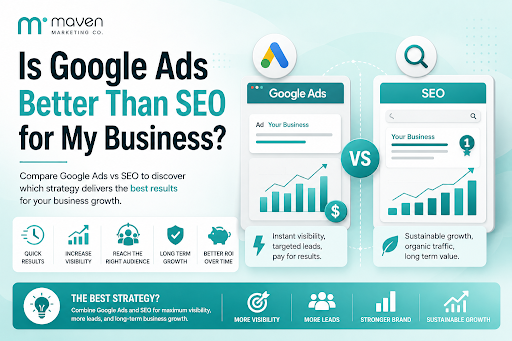
Is Google Ads Better Than SEO for My Business
One of the biggest questions business owners ask when they are planning online growth is whether they should invest in Google Ads or SEO. Both are strong marketing plays that help your company show up in Google search results, but they do things in separate lanes. Google Ads gives quicker visibility and can bring in leads fast, whereas SEO more or less focuses on slow, steady organic traffic that tends to grow the longer you keep building it. Picking the right direction depends on what you want to achieve, how much money you can spend, how crowded the market is, and how quickly you need results, like sooner rather than later. The good news is you don’t always have to choose one or the other; it’s not exactly a black-and-white situation. If you take time to understand the strongest points of both, you can put together a more sensible digital marketing plan that supports consistent expansion. In this guide, we’ll compare Google Ads vs SEO, explain the main differences, and help you figure out what option makes the most sense for your business.

When Should I Hire a Digital Marketing Agency
Growing a business today takes more than just having a website or throwing a post on social media; customers usually search around online, compare providers, skim reviews, and basically expect the brand to show up with a solid digital presence before they even think about buying. Many businesses try to run their marketing themselves, but there comes a point when “doing it all in-house” becomes clunky and hard to manage, all at once. Knowing when to hire a digital marketing agency can end up making a big, real difference for your growth. If you’re not getting enough leads, or your online visibility feels stuck, or sales are just not moving, the right agency can bring the know-how, plus a clear plan, to help you get noticeably better outcomes. In this guide, we’ll dig into what a digital marketing agency actually does, the usual signs it’s time to bring one on, and how picking the right marketing partner can help your business move forward at a faster pace.
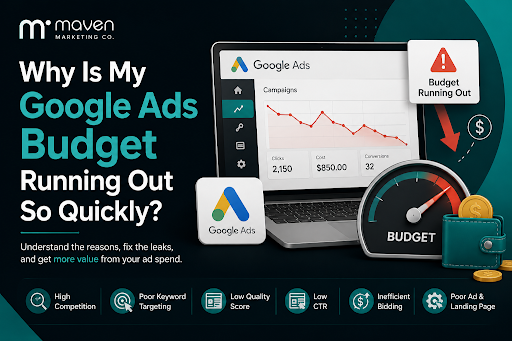
Why Is My Google Ads Budget Running Out So Quickly
Running a successful Google Ads budget isn’t only about throwing more money at it. It’s more like making every dollar, doing a bit extra. A lot of businesses start a Google Ads campaign with big hopes, then find out their daily budget is gone within a few hours, and that feels weird, right? After that, your ads stop showing effectively, new leads slip away, and your return on investment dips. So if your Google Ads budget is running out too fast, don’t stress. It’s a fairly common issue, and in most situations, it can be repaired with the right approach. There are multiple little things that can drain your advertising money quicker than you expected, from costly keywords to audience targeting that just doesn’t quite fit. In this guide, we’ll walk through why your budget disappears so quickly, how to cut wasteful spend, and the most reliable ways to boost your Google Ads ROI, even if your budget stays the same.