.svg)


%201.svg)

Key Takeaways
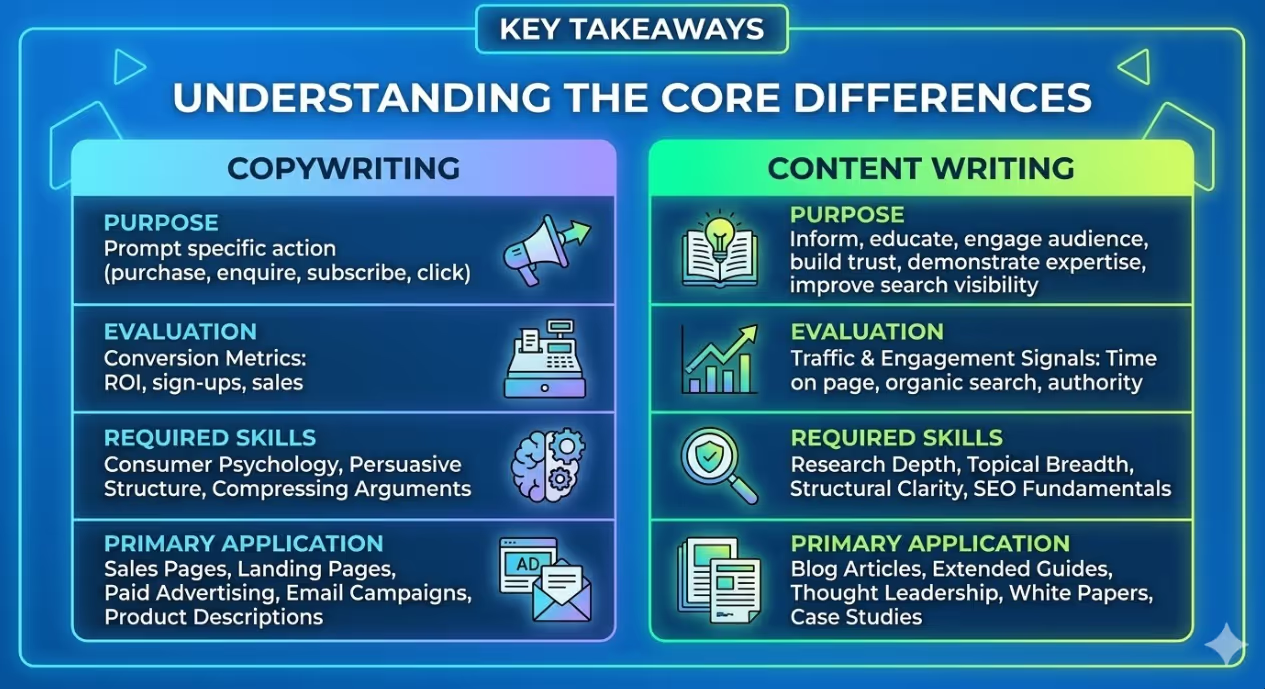
- Copywriting is writing designed to prompt a specific action, whether a purchase, an enquiry, a subscription, or a click. It is evaluated primarily by conversion metrics and is optimised for persuasion.
- Content writing is writing designed to inform, educate, or engage an audience, typically with the goal of building trust, demonstrating expertise, and improving search visibility over time. It is evaluated by traffic, engagement, and authority signals.
- The two disciplines require different skills. Copywriting demands understanding of consumer psychology, persuasive structure, and the ability to compress a compelling argument into minimal space. Content writing demands research depth, topical breadth, structural clarity, and SEO fundamentals.
- Many writing projects require a blend of both disciplines: a blog article that builds topical authority while also including a compelling call to action, or a landing page that ranks in organic search while also converting paid traffic. The primary discipline should be identified before briefing.
- Copywriting applies most directly to sales pages, landing pages, paid advertising, email campaigns, product descriptions, and any content whose primary measure of success is an immediate commercial response.
- Content writing applies most directly to blog articles, extended guides, thought leadership pieces, white papers, case studies, and any content whose primary measure of success is audience growth, search visibility, and sustained brand authority.
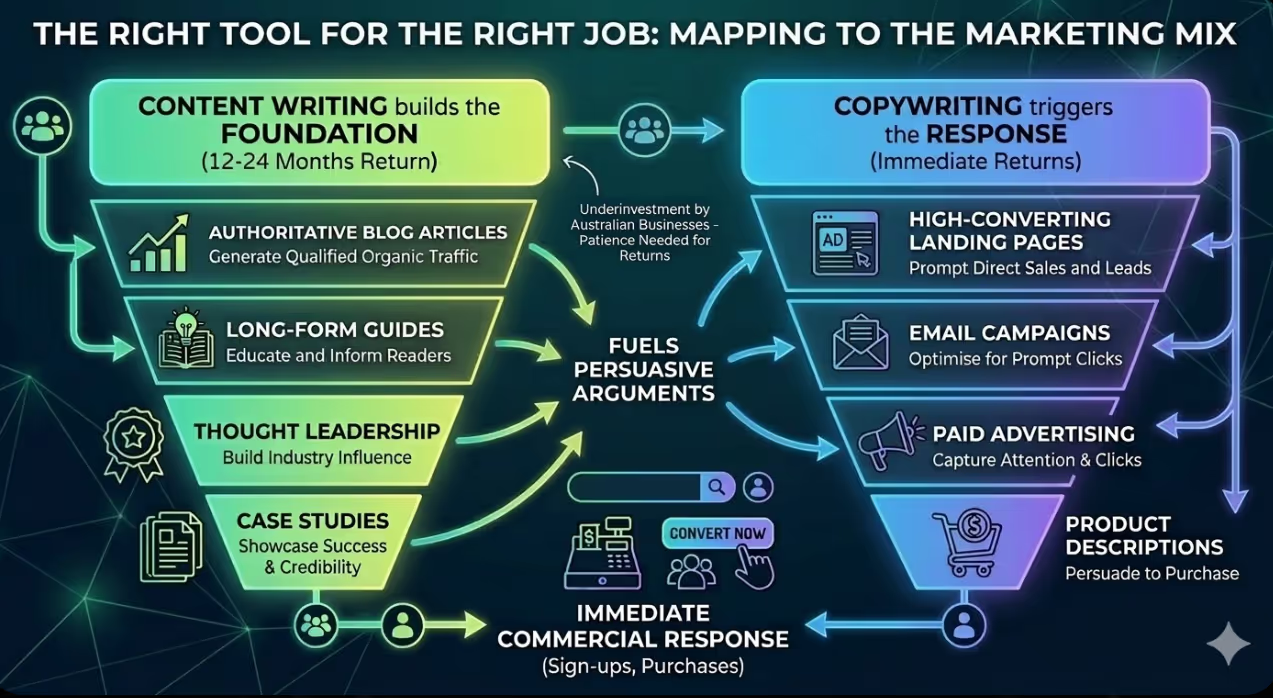
- Australian businesses often underinvest in content writing because its returns accumulate slowly and are harder to attribute directly than the returns linked to conversion metrics of copywriting, despite content writing producing some of the highest returns in the entire marketing mix over a twelve to 24 month horizon.
The Purpose Behind the Words
The distinction between copywriting and content writing is fundamentally a distinction of purpose, and purpose determines every meaningful decision about how the writing should be structured, how long it should be, what tone it should take, and what success looks like.
Copywriting exists to move people toward a specific action. A sales page copywriter is writing with one question in mind at every sentence: does this move the reader closer to clicking, buying, or enquiring? Every word that does not serve that purpose is a word that should be cut. The discipline is inherently economical, because attention is finite and the cost of every sentence that does not advance the conversion argument is measured in lost reader focus. The best copywriters are students of human motivation, persuasion psychology, and the specific hesitations and objections that stand between a prospect and a purchase decision.
Content writing exists to build relationships between a brand and its audience through the sustained delivery of genuine value. A content writer producing a guide to independently managed superannuation funds for an Australian financial services brand is not writing to prompt an immediate purchase. They are writing to be useful, to demonstrate expertise, and to establish the brand as a trustworthy authority in the reader's mind and in Google's quality assessment of the domain. The measure of success is not the number of readers who buy something after reading the article. It is the number of readers who find the article through organic search, spend meaningful time engaging with it, and remember the brand as credible and knowledgeable the next time they are evaluating a financial decision.
Both purposes are commercially valuable. Neither is superior to the other in absolute terms. The error is treating them as the same thing.
What Copywriting Does Well
Copywriting is the appropriate discipline for any situation where the writing must trigger a specific, measurable action from the reader in a compressed timeframe. The commercial contexts where skilled copywriting produces the most significant results are concentrated at the bottom of the marketing funnel, where a prospect has expressed intent, is actively evaluating options, and needs to be persuaded that a specific choice is the correct one.
Sales pages and landing pages. A landing page for a paid search campaign that costs hundreds of dollars per day in ad spend has a direct, direct relationship between its conversion rate and its commercial output. A page that converts at three percent instead of two percent on a campaign spending five hundred dollars per day produces significantly more revenue from the same budget. The writing on that page is the primary conversion lever, and skilled copywriting is the appropriate investment to optimise it.
Email marketing. Subject lines, preview text, and email body copy are all copywriting. The goal of an email is a click, an open, a reply, or a conversion event, and every element of the email is evaluated against that goal. Email copywriting requires particular skill because the attention window is extremely short and the tolerance for filler is minimal.
Paid advertising. Google Ads headlines, Meta Ads body copy, LinkedIn Ads text, and any other advertising format where the writing must capture attention and prompt a response in limited characters or limited exposure time is copywriting. The writing must work hard and fast.
Product descriptions. For Australian ecommerce businesses, product description copy is a hybrid task: it needs to inform the shopper sufficiently to support a purchase decision while simultaneously persuading them that this specific product meets their need. The persuasive and informational requirements coexist, but the primary measure of success is conversion, making copywriting the dominant discipline.
What Content Writing Does Well
Content writing is the appropriate discipline for any situation where the writing is building something over time rather than converting in the immediate moment. The commercial contexts where skilled content writing produces the most significant results are concentrated earlier in the marketing funnel, where potential customers are researching, learning, and forming preferences that will eventually translate into purchase decisions.
Blog articles and editorial content. A thoroughly researched blog article targeting a commercially valuable query can generate qualified organic traffic for years after publication. The investment is made once and the return accumulates continuously. This is the economic characteristic that makes content writing one of the most efficient use of marketing capital activities available to Australian businesses with a patient investment horizon. A library of fifty articles of genuine quality ranking for relevant queries is a durable traffic and lead generation asset that continues to work without ongoing advertising spend.
Long-form guides and educational resources. Comprehensive guides that address a complex topic thoroughly, answer the full range of questions a reader might have, and provide genuine expert perspective serve both SEO and audience trust simultaneously. For Australian professional services firms, technology companies, and specialist retailers, a library of authoritative guides is one of the most effective ways to demonstrate expertise to both prospective clients and to Google's quality assessment systems.
Thought leadership and opinion content. Content that articulates a clear, informed point of view on industry developments, regulatory changes, or market trends builds the kind of brand authority that influences how an audience thinks about the brand before they are actively in a buying cycle. It is difficult to attribute direct revenue to thought leadership content, which is one reason it is underinvested in by Australian businesses, and one reason those that do invest in it consistently tend to carry disproportionate influence in their industries.
Case studies and success stories. Case study writing sits at the boundary between content writing and copywriting: it must tell a compelling story (persuasion) while providing enough detail and credibility to satisfy a reader doing serious research (informational depth). The emphasis typically leans toward the content writing end, with the persuasive work done through evidence rather than rhetorical technique.
The Skill Sets Are Genuinely Different
It is common for job advertisements and agency briefs to list copywriting and content writing as interchangeable or to treat them as a single role. They are not, and treating them as the same produces a talent matching problem that results in both tasks being done less well than they could be.
A skilled copywriter has developed fluency in persuasive structure, which includes frameworks such as Problem-Agitate-Solve, the awareness, interest, desire and action sequence, and benefit versus feature framing. They understand how to handle objections within copy, how to use social proof effectively, how to create urgency without being manipulative, and how to write a call to action that converts. These are learnable skills, but they take time to develop and they require a specific kind of practice: writing and testing copy against real conversion data.
A skilled content writer has developed fluency in research, structure, and the building of arguments across longer formats. They understand how to find and synthesise credible sources, how to organise a complex topic into a readable structure, how to calibrate depth and length to the reader's needs and the competitive landscape, and how to integrate keywords and search intent requirements without disrupting readability. They write primarily to inform and engage rather than to persuade, and their craft is measured in reader satisfaction and search visibility rather than conversion events.
The overlap is real but limited. Most competent copywriters can produce readable, clearly structured content. Most competent content writers can include a persuasive call to action in their work. The point is not that the skills are mutually exclusive, but that they are distinct enough in their primary orientation that briefing the wrong one for a priority task produces results that are noticeably weaker than briefing the right one.
Hybrid Scenarios and When Both Apply
Several common marketing assets sit in the territory between copywriting and content writing, and identifying which discipline should lead is a practical necessity before briefing.
SEO landing pages. A landing page targeting an organic search query needs content writing depth to rank: it must be sufficiently thorough, topically complete, and clearly structured to satisfy Google's quality assessment for the query. It also needs copywriting skill to convert the traffic it earns: visitors who arrive from organic search have not been filtered through a specific ad, and the page must work to capture their interest and move them toward an action. The recommended approach is to lead with content writing for the depth and structural elements and bring copywriting skill to the conversion elements, particularly the headings, calls to action, and any framing visible before scrolling.
Email newsletters with editorial content. An email newsletter that includes industry commentary or educational content alongside a product promotion requires both. The editorial sections should be written with content writing discipline: genuinely informative, thoroughly researched, and valuable to the reader independent of any commercial intent. The promotional sections should be written with copywriting discipline: focused, led by clear benefits, and directed toward a specific action.
Product-focused blog articles. A blog article that nominally addresses an informational query but has a significant commercial component, such as a comparison article where the brand's product is one of the options, requires content writing rigour for the informational sections and copywriting skill in the framing and product positioning sections.
FAQs
Should Australian businesses hire a copywriter or a content writer first?The answer depends entirely on the current state of the business's marketing programme and where the most significant commercial gap lies. A business launching a new product with no digital presence needs sales pages, ad copy, and email sequences before it needs a blog, which means a copywriter addresses the most immediate commercial requirement. An established Australian service business with a working sales conversion process but minimal organic search presence will get better returns from a content writer who builds the library of authoritative articles that generates qualified inbound traffic over time. Most mature marketing programmes need both, and the budgeting decision should be made by mapping each writing need to the discipline it requires rather than assuming one professional can serve both functions at a high level simultaneously.
Is SEO copywriting a separate discipline from both?SEO copywriting is a term used in two different ways that are worth distinguishing. In its most common usage in Australian agencies, SEO copywriting refers to the writing of content that is optimised for search, which is largely synonymous with SEO content writing. The confusion arises from using the word copywriting to mean any form of professional writing rather than the specific discipline of persuasive writing designed to drive action. In its more precise usage, SEO copywriting refers to the integration of persuasive writing with search optimisation requirements, which is the hybrid discipline required for pages that must both rank and convert. Australian businesses commissioning this work should specify clearly whether they need content writing with SEO optimisation, persuasive copy with SEO requirements, or both, to ensure they receive the appropriate service.
How should Australian businesses evaluate whether they have received good copywriting or content writing?The evaluation criteria are different for each discipline, which is why confusing the two creates assessment problems. Copywriting should be evaluated primarily against conversion data: does the sales page convert at a higher rate after the rewrite? Does the email sequence generate more replies or purchases? Does the ad copy produce better click and conversion rates? Good copywriting may not be the most elegant writing, but it moves people to action. Content writing should be evaluated against traffic and engagement data over time: does the article rank for its target query? Does it generate organic visits? Do readers engage with it meaningfully, as measured by time on page and scroll depth? Good content writing may not produce immediate revenue, but it builds the organic presence and brand authority that drive sustainable commercial performance over a twelve to 24 month horizon.
The Right Tool for the Right Job
Writing serves the marketing function most effectively when it is matched to the specific commercial goal it is meant to serve. Copywriting and content writing are not competing alternatives. They are complementary tools that address different stages of the customer journey, different success metrics, and different time horizons for commercial return. Australian businesses that invest in both, with a clear understanding of where each applies, build marketing programmes that convert the traffic they attract and attract the traffic they convert.
Maven Marketing Co provides both professional copywriting and content writing services for Australian businesses, matched to the specific goals and commercial context of each project.
Talk to the team at Maven Marketing Co →

Table of contents
read more blogs

How to Choose the Right Digital Marketing Channels for Your Business
Choosing digital marketing channels is one of the easiest places for businesses to lose clarity. There are more options than ever, every platform promises reach and results, and it is easy to assume that the best strategy is simply to be everywhere. In reality, most businesses do better when they choose channels with intention rather than spreading budget and effort too thinly.The right channel mix depends on where your audience spends time, how they search or discover solutions, what your business is trying to achieve and how much resource you actually have to support execution properly. A channel is only useful if it helps move the right people towards a commercial outcome that matters to the business.This is why strong digital marketing strategy is not really about finding one perfect platform. It is about understanding the role each channel can play across awareness, demand capture, conversion and retention. SEO might build long-term visibility, Google Ads might capture active intent, social media might support familiarity and reach, while email may help nurture prospects and strengthen customer value over time.This guide explains what digital marketing channels are, how to assess them properly and how to build a balanced channel mix for your business. The focus is practical. Rather than chasing every new platform, the goal is to help you choose the channels that fit your audience, goals, budget and internal capability.

How to Build a Customer Journey Map for Your Digital Marketing Strategy
A strong digital marketing strategy is not just about channels, creative or traffic. It is about understanding how real people move from first awareness through to enquiry, purchase and ongoing loyalty. That is exactly why customer journey mapping matters.Without a clear view of the journey, businesses often optimise in fragments. They improve the website without thinking about the ad that drove the visit, produce content without considering where the audience is in the decision process, or judge conversion performance without understanding the friction points that sit earlier in the experience.A customer journey map helps you step back and see the bigger picture. It shows the stages people move through, the touchpoints they interact with, the questions they ask, the barriers they face and the moments where your marketing can either help or lose them.This guide explains how to build a practical customer journey map for your digital marketing strategy, what information to include, how to use the map to improve performance and which common mistakes to avoid. The goal is not to create a pretty workshop artefact that gets forgotten. It is to build a working tool that improves messaging, user experience, channel decisions and conversion outcomes.

Why Your Google Ads Campaign Is Not Getting Results: Common Mistakes and Solutions
If your Google Ads campaign is getting impressions or clicks but not producing enough enquiries, sales, or qualified leads, the problem is usually not Google Ads itself. It is more often a strategy, tracking, or conversion issue somewhere in the system.That matters because paid search can look busy without being commercially effective. You can have traffic coming in, a reasonable click-through rate and money leaving the account every day, yet still have very little to show for it if your keywords are weak, your ad copy is misaligned, your landing pages do not convert or your tracking is incomplete.A strong campaign works as one connected chain. Search intent, keyword targeting, ad relevance, bidding, landing-page experience, and conversion tracking all need to support the same commercial outcome. If one link breaks, results usually suffer quickly.This guide explains the most common reasons a Google Ads campaign is not getting results, what those issues normally look like in practice and how to fix them without relying on guesswork. The focus is not on vanity metrics. It is on improving lead quality, conversion rate, and return on spend.