.svg)


%201.svg)

Quick Answers
What is content pruning and why does it matter for SEO?
Content pruning is the strategic process of reviewing existing website content and deciding whether to update, merge, consolidate, or remove pages that no longer serve your business or SEO goals. Unlike content decay which happens passively, pruning is intentional removal or optimization of underperforming content.
Why it matters for SEO:
- Improves crawl efficiency by helping search engines focus on your best pages rather than wasting budget on low value content
- Reduces keyword cannibalization when multiple pages compete for the same terms
- Strengthens site quality signals to search engines by removing thin or outdated content
- Enhances user experience by making valuable content easier to find
- Redistributes link equity to high performing pages
Research from SEO agencies shows sites can benefit from removing 20 to 25 percent of total content, with some seeing dramatic improvements in rankings and traffic after strategic pruning. The goal isn't arbitrary deletion but removing content that genuinely provides no value, has outdated information, creates duplicate content issues, or no longer aligns with business objectives.
When to consider pruning:
- Pages with little to no organic traffic over 12 months
- Content that no longer represents what your business offers
- Multiple pages targeting the same keywords causing cannibalization
- Outdated information that could harm credibility
- Thin content with minimal depth or value
How often should you prune website content?
Pruning frequency depends on your site size and content velocity. For sites up to 1,000 pages, conduct comprehensive content audits every six to twelve months. Larger sites publishing content daily or weekly should review in batches every three to six months. Sites that publish infrequently can extend to every 12 to 18 months.
Framework by site type:
- Small business sites (under 100 pages): Annual or biannual full audits
- Medium sites (100-1,000 pages): Biannual comprehensive reviews with quarterly spot checks
- Large sites (1,000 plus pages): Quarterly batch reviews focusing on specific content types
- High-velocity publishers: Monthly light reviews for recent content, quarterly deep dives for older material
Best practice approach:Rather than massive one-time pruning exercises, establish regular maintenance cycles. Start with one comprehensive audit to establish baselines, then integrate lighter ongoing reviews into your content calendar. This prevents overwhelm while keeping your site healthy.
Trigger points for immediate pruning:Beyond scheduled audits, prune immediately when experiencing high bounce rates across multiple pages, declining organic traffic without clear external cause, major business direction shifts requiring content realignment, or site redesigns and migrations. These moments present natural opportunities to reassess your entire content library rather than migrating low value pages into new structures.
The Full Guide
Let's address the elephant in the room. You're scared to delete content. You spent hours creating those pages. They represent investment, effort, and value. The idea of removing them feels wasteful, even destructive. What if you delete something important? What if traffic tanks? What if you make an irreversible mistake?
This fear keeps thousands of Australian business websites bloated with underperforming content that actively harms their SEO. Because here's what most people don't understand: in the world of search engines, more content isn't always better content. Sometimes it's just more clutter.

Why Content Pruning Actually Works
The counterintuitive truth is that removing content can improve your SEO performance. Understanding why requires grasping how search engines evaluate websites.
Google has a crawl budget for your site, meaning there's a limit to how many pages it will crawl in a given timeframe. When your site contains hundreds or thousands of pages, many offering little value, Google wastes precious crawl budget on content that doesn't deserve attention. By pruning low value pages, you redirect that crawl budget toward your best content, helping it get discovered, indexed, and ranked faster.
Quality signals matter enormously in modern SEO. Google doesn't just count pages. It evaluates your site's overall quality based on the average value of your content. A site with 100 excellent pages will outperform a site with 90 excellent pages and 400 mediocre ones. The mediocre content drags down your site's perceived quality, affecting how Google treats even your good content.
Keyword cannibalization occurs when multiple pages target the same search terms, confusing search engines about which page should rank. Rather than one strong page ranking well, you end up with multiple weak pages competing against each other, none achieving top positions. Pruning eliminates this competition by consolidating overlapping content.
User experience improves when visitors can find valuable content without navigating through outdated or irrelevant pages. Better user experience translates to better engagement metrics including lower bounce rates and longer session duration. These signals feed back into SEO, creating a virtuous cycle.
The data supports this approach. Agencies report that strategically removing or consolidating 20 to 25 percent of site content can lead to measurable improvements in rankings and organic traffic. These aren't edge cases. They're consistent patterns across sites that commit to quality over quantity.
Building Your Content Inventory
Before you can prune, you need to know what you have. This means creating a comprehensive content inventory that maps your entire site.
Start with Google Search Console, which provides a list of indexed pages and their performance data. Export the Pages report showing impressions, clicks, click through rate, and average position over the last 12 months. This gives you hard data on what's actually getting discovered and clicked in search.
Google Analytics adds engagement context. Export page level metrics including sessions, bounce rate, average session duration, and conversion rates over the same 12 month period. Look for pages with high impressions but low clicks, indicating title and description problems rather than fundamental content issues, or pages with decent traffic but terrible engagement, suggesting content quality problems.
Use crawler tools like Screaming Frog or Sitebulb to generate a complete list of pages including those that might not appear in Search Console if they're not indexed. These tools also identify technical issues like broken links, redirect chains, and duplicate content that influence pruning decisions.
For sites with substantial content libraries, spreadsheets become essential. Combine data from multiple sources into one master document. Include columns for URL, page title, content type, publication date, last update date, organic traffic, impressions, position, bounce rate, conversions, and backlinks. This centralised view makes pattern recognition easier.
Don't forget to inventory non-blog content. Product pages, landing pages, resource downloads, and supporting pages all need evaluation. Sometimes the biggest opportunities come from pruning or consolidating pages outside your primary blog.
Evaluating What Stays and What Goes
With inventory complete, the real work begins: deciding each page's fate. This requires establishing clear evaluation criteria that balance multiple factors.
Traffic isn't everything but it matters. Pages receiving zero organic traffic over 12 months are prime candidates for action. However, low traffic alone doesn't justify deletion. Some pages serve other purposes like supporting conversions for paid traffic, providing essential company information, or building topical authority even without directly ranking.
Backlink profiles deserve careful attention. A page with minimal traffic but strong backlinks from authoritative sites provides SEO value through link equity. Deleting pages with valuable backlinks can harm your overall authority unless you properly redirect them to relevant alternatives.
Content relevance to your current business is crucial. As businesses evolve, old content often becomes misaligned with current offerings, positioning, or strategy. A 2020 article about a discontinued service offers no value regardless of its historical traffic. Content that no longer represents what you do creates confusion and hurts brand perception.
Search intent alignment matters as much as ranking. If your page ranks position 8 for a keyword but provides informational content when searchers want transactional results, the mismatch means it will never rank well. Either rewrite to match intent or prune and redirect to content that does.
Quality and depth separate thin content from valuable resources. Pages under 300 words that provide minimal information, lack depth, or duplicate content found elsewhere on your site are pruning candidates. Consolidating multiple thin pages into one comprehensive resource often works better than trying to beef up each individually.
Technical health influences the decision. Pages with broken links, missing images, slow load times, or poor mobile experience may be worth fixing if the content itself is valuable. But if the content is marginal and the technical problems extensive, pruning might be more efficient than repair.

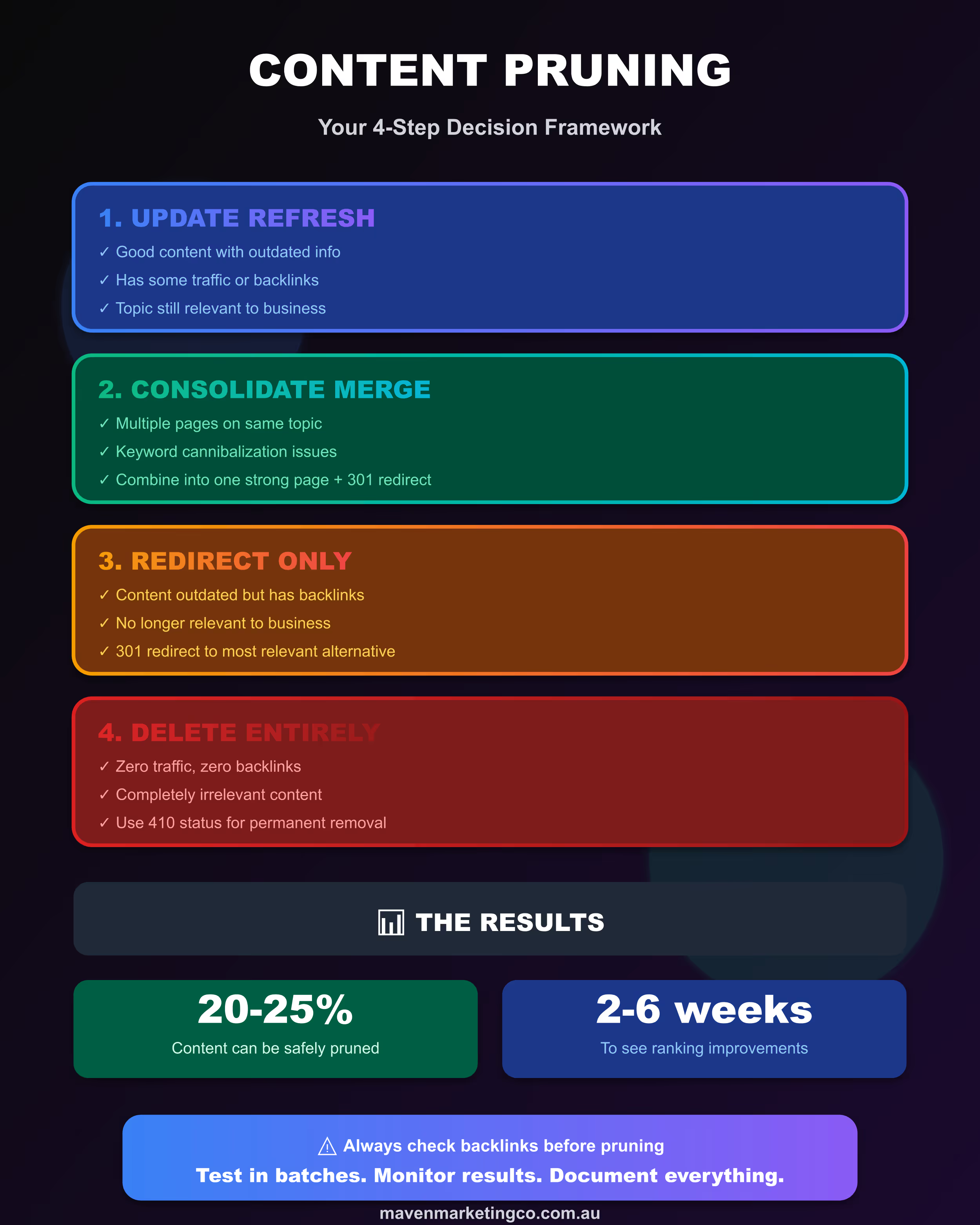
The Four Pruning Options
Once you've evaluated your content, you face a critical decision point for each page. The art lies in understanding which approach fits each situation, and why that approach will deliver the best outcome for both your users and your SEO.
The first option, updating and refreshing, works beautifully for pages that have good bones but outdated execution. These are pages where the core topic remains relevant, the existing structure is sound, and there's evidence of historical authority through backlinks or past traffic. The content just needs modernising. Update the statistics with current data, replace old examples with fresh ones, add new sections that address emerging subtopics, improve formatting for better readability, and republish with a current date. This approach works particularly well for evergreen topics that need periodic maintenance to stay current. A guide to Instagram marketing from 2022 doesn't need deletion, it needs updating with new features, current best practices, and fresh examples.
Consolidation and redirection addresses a different problem entirely: scattered topical authority. When your site has multiple pages targeting similar keywords or covering overlapping topics, you're competing against yourself. Search engines see three mediocre pages where they could see one authoritative resource. The solution involves merging the best elements from each page into one comprehensive piece, then redirecting the other URLs using 301 redirects to the consolidated page. Choose the URL with strongest existing authority to keep as your destination. This approach eliminates internal competition, concentrates your topical signals, and often results in the consolidated page ranking better than any individual page did previously. A site with separate posts on "email marketing tips," "email marketing best practices," and "email marketing strategies" would benefit enormously from consolidating these into one definitive guide.
Sometimes content has outlived its usefulness but still carries technical value through backlinks or residual traffic patterns. In these cases, redirection without consolidation makes sense. Rather than leaving visitors with 404 errors or search engines with dead ends, redirect to the most relevant current alternative. If you wrote extensively about a product version you no longer sell, redirect to the current product page. If the topic has become completely irrelevant to your business, redirect to a related category page or your most relevant pillar content. The key consideration is maintaining user experience while preserving the link equity those pages accumulated. A poorly chosen redirect destination frustrates users and wastes the SEO value you're trying to preserve.
The final option, complete removal, applies when content truly provides zero value and has no redeeming technical qualities. Pages with no traffic, no backlinks, information so outdated it could harm credibility, and no relation to your current business can be deleted outright. Use 410 status codes rather than 404s to signal permanent removal to search engines. This communicates that the content isn't temporarily missing but deliberately removed, helping search engines update their index more efficiently. Reserve this option for genuine dead weight where even redirection makes little sense. An announcement about a 2018 conference you attended, with no backlinks and no ongoing relevance, deserves removal rather than complicated redirection schemes.
There's actually a fifth option worth understanding: the noindex approach. Some content serves purposes beyond SEO rankings. Company announcements, press mentions, historical archives, or reference materials might need to remain accessible through direct links while not cluttering search results. Adding a noindex meta tag removes these pages from search engine indexes while keeping them live and accessible. This works well for content that supports business operations without needing organic discovery.

Execution Without Disaster
Knowing what to prune matters less than executing properly. Poor implementation can create more problems than it solves. Follow these steps to prune safely and effectively.
Start small and test. Don't delete 300 pages simultaneously on day one. Begin with an obvious batch of 20 to 30 low value pages. Implement your changes, wait two to four weeks, and monitor impact. If results are positive or neutral, proceed with the next batch. This measured approach lets you catch problems before they escalate.
Document everything meticulously. Before changing anything, record each URL, its status, what action you took, when you took it, and why. Use spreadsheets, project management tools, or content management notes. If problems emerge, documentation helps you understand what might have caused them and how to reverse course if necessary.
Implement redirects properly. Every pruned URL needs a destination. Map each removed page to the most relevant existing page. Redirects should be 301 permanent redirects, not 302 temporary ones. Test redirects after implementation to ensure they work correctly. Broken redirects or redirect chains cause both user experience and SEO problems.
Update internal links pointing to pruned pages. Don't rely solely on redirects to handle internal navigation. Search your site for links to removed URLs and update them to point directly to the new destination. This eliminates redirect chains and ensures clean internal linking structure.
Submit updated sitemaps to Google Search Console after major pruning. This helps search engines discover your changes faster and reindex your site with its new structure. Don't wait for natural recrawling to catch up when you can expedite the process.
Monitor performance closely for several weeks after pruning. Watch Google Search Console for indexing issues, traffic changes, and ranking fluctuations. Check Google Analytics for unexpected traffic drops on specific pages. Most properly executed pruning shows neutral to positive results, but catching problems early matters.
Add annotations in Google Analytics marking when you pruned content and what pages were affected. These notes help you connect later traffic changes to specific actions, making it easier to understand what worked and what didn't.
Common Mistakes That Cause Problems
Even with good intentions, certain errors undermine pruning efforts. Being aware of these pitfalls helps you avoid them.
Deleting pages with strong backlinks without proper redirects wastes valuable link equity. Always check backlink profiles before removing any page. If quality sites link to the page, redirect it to preserve that authority rather than letting it disappear.
Ignoring internal link structure means your pruning creates broken links across your site. These 404 errors hurt user experience and waste crawl budget. Always audit internal links and update them when pruning content.
Pruning too aggressively in one session creates risk. If something goes wrong, you won't know which change caused it. Batch pruning allows you to identify problems and adjust approach before major damage occurs.
Focusing purely on traffic numbers without considering other factors leads to bad decisions. A page with low traffic might have high conversion rates, support important business messaging, or rank for valuable long tail terms. Holistic evaluation prevents value loss.
Failing to redirect deleted pages leaves users and search engines hitting 404 errors. While some true dead weight warrants 410 permanent removal, most pruned content should redirect somewhere relevant. The redirect preserves user experience and link equity.
Not monitoring results means you miss both problems and opportunities. Track the impact of your pruning on traffic, rankings, and conversions. These insights inform future pruning cycles and help you refine your approach.
Removing evergreen content simply because it's old represents a fundamental misunderstanding. Content age alone doesn't determine value. Evergreen topics remain relevant regardless of publication date. Evaluate content based on quality and relevance, not arbitrary age thresholds.
Australian Business Considerations

For Australian businesses, content pruning presents specific opportunities and challenges worth noting.
Local relevance matters more for Australian content than generic international material. Content referencing local regulations, market conditions, or cultural context becomes outdated faster than broader topics. Australian tax law changes annually. Superannuation rules evolve. Content on these topics needs more frequent review and pruning than evergreen international subjects.
Seasonal patterns differ in Australian markets. Content optimised for Northern Hemisphere seasons obviously needs adjustment, but subtler patterns around school terms, financial years, and local events also affect relevance. Prune or update content that's out of sync with Australian cycles.
Resource constraints at smaller Australian SMEs make efficiency critical. You likely cannot prune thousands of pages simultaneously. Prioritise pages with highest potential impact: those dragging down performance in your key markets, content on topics central to your business, and pages competing for your most valuable keywords.
Competitive dynamics in Australian markets often involve fewer players than global markets. This means individual content decisions have outsized impact. Consolidating three mediocre pages into one strong page can shift competitive positioning significantly when there are only five to ten serious competitors for a term.
After The Prune: What Comes Next
Pruning isn't a one time fix but an ongoing maintenance practice. Post-pruning work ensures you maximise benefits and avoid backsliding.
Monitor recovery and results over the first 30 to 60 days. Most pruning shows positive effects within two to six weeks as search engines recrawl your site and reassess its quality signals. Track ranking changes for your most important keywords, overall organic traffic trends, crawl statistics in Search Console, and user engagement metrics in Analytics.
Fill identified gaps that pruning revealed. Sometimes removing multiple weak pages on a topic highlights the need for one strong authoritative piece. Use pruning insights to inform your content strategy, creating comprehensive resources that genuinely serve user intent rather than multiple thin pages.
Strengthen remaining content through improved internal linking. With low value pages removed, your high quality content can interlink more effectively. Build logical content clusters and pillar structures that help both users and search engines understand your topical authority.
Schedule your next review while insights are fresh. Don't wait until problems accumulate before the next audit. Put the next pruning cycle on your calendar now, whether that's three months, six months, or a year out depending on your site's velocity and size.
Document lessons learned about what worked and what didn't. Did consolidating pages A, B, and C create a ranking boost? Did redirecting page D cause unexpected problems? These insights refine your pruning criteria and process for next time.
Adjust publishing strategy based on what you learned. If you discovered lots of thin content, perhaps your content requirements need strengthening before publication. If keyword cannibalization was rampant, improve your content planning to avoid creating competing pages in the future.
When Not To Prune

For all pruning's benefits, certain situations warrant caution or different approaches.
Brand new content under six months old hasn't had time to prove itself. Google's algorithm takes time to understand and rank new pages. What looks like underperforming content might simply be immature content that will develop over time. Let new pages breathe before judging them.
Seasonal content that looks dead most of the year may spike during its relevant season. Christmas gift guides, tax time resources, and back to school content all show this pattern. Evaluate seasonal pages based on annual performance rather than overall averages that miss their peak relevance.
Conversion focused pages with low traffic but high conversion rates provide value beyond rankings. A technical product specification page might get minimal organic traffic but convert paid traffic beautifully. SEO metrics alone don't capture this value.
Brand essential content like company history, team pages, or core value statements may generate little search traffic but serve important business purposes. Not everything needs to rank. Some content exists for customers who are already engaged rather than discovery.
Recently updated pages that haven't shown improvement yet might need more time. If you refreshed a page three months ago, give it at least six months before concluding the update didn't work. SEO moves slowly. Patience matters.
The Bigger Picture
Content pruning isn't about deletion for its own sake but about focusing your site on content that genuinely serves your audience and business. It's about quality over quantity, depth over breadth, and strategic value over vanity metrics.
Most Australian businesses built their content libraries organically over years without systematic planning. The result is inevitably accumulation of outdated, overlapping, and underperforming material. Pruning gives you the opportunity to reshape that library into something more purposeful.
Think of your website as a garden rather than a storage unit. Gardens need tending. Dead plants get removed not because they were bad but because they're no longer contributing to the garden's health and beauty. The same philosophy applies to your content.
The businesses that thrive at SEO in 2026 won't be those publishing most prolifically. They'll be those maintaining the highest quality content libraries through systematic creation, maintenance, and pruning. They'll focus crawl budgets on worthy pages, eliminate keyword cannibalization, strengthen topical authority, and deliver superior user experiences.
Your content library is too important to neglect and too valuable to bloat with underperformers. Regular, systematic pruning keeps it healthy, focused, and optimised for both search engines and the human visitors they send your way.
The question isn't whether your site needs pruning. It's whether you'll approach it systematically and strategically, or wait until content sprawl creates serious problems. Choose wisely.
Ready To Optimise Your Content Library?
At Maven Marketing Co, we help Australian businesses conduct comprehensive content audits, develop strategic pruning plans, and execute them safely to improve SEO performance without risking traffic loss. Our team combines technical SEO expertise with strategic content thinking to identify what's holding your site back and what changes will drive the biggest improvements.
Whether you need a full content audit, guidance on which pages to prune, or hands on execution support including proper redirects and monitoring, we're here to help you build a leaner, more effective content library that ranks better and converts more.
Let's optimise your content strategy together

Table of contents
read more blogs

Is Google Ads Better Than SEO for My Business
One of the biggest questions business owners ask when they are planning online growth is whether they should invest in Google Ads or SEO. Both are strong marketing plays that help your company show up in Google search results, but they do things in separate lanes. Google Ads gives quicker visibility and can bring in leads fast, whereas SEO more or less focuses on slow, steady organic traffic that tends to grow the longer you keep building it. Picking the right direction depends on what you want to achieve, how much money you can spend, how crowded the market is, and how quickly you need results, like sooner rather than later. The good news is you don’t always have to choose one or the other; it’s not exactly a black-and-white situation. If you take time to understand the strongest points of both, you can put together a more sensible digital marketing plan that supports consistent expansion. In this guide, we’ll compare Google Ads vs SEO, explain the main differences, and help you figure out what option makes the most sense for your business.

When Should I Hire a Digital Marketing Agency
Growing a business today takes more than just having a website or throwing a post on social media; customers usually search around online, compare providers, skim reviews, and basically expect the brand to show up with a solid digital presence before they even think about buying. Many businesses try to run their marketing themselves, but there comes a point when “doing it all in-house” becomes clunky and hard to manage, all at once. Knowing when to hire a digital marketing agency can end up making a big, real difference for your growth. If you’re not getting enough leads, or your online visibility feels stuck, or sales are just not moving, the right agency can bring the know-how, plus a clear plan, to help you get noticeably better outcomes. In this guide, we’ll dig into what a digital marketing agency actually does, the usual signs it’s time to bring one on, and how picking the right marketing partner can help your business move forward at a faster pace.
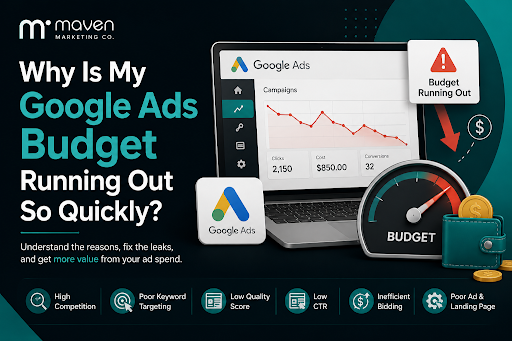
Why Is My Google Ads Budget Running Out So Quickly
Running a successful Google Ads budget isn’t only about throwing more money at it. It’s more like making every dollar, doing a bit extra. A lot of businesses start a Google Ads campaign with big hopes, then find out their daily budget is gone within a few hours, and that feels weird, right? After that, your ads stop showing effectively, new leads slip away, and your return on investment dips. So if your Google Ads budget is running out too fast, don’t stress. It’s a fairly common issue, and in most situations, it can be repaired with the right approach. There are multiple little things that can drain your advertising money quicker than you expected, from costly keywords to audience targeting that just doesn’t quite fit. In this guide, we’ll walk through why your budget disappears so quickly, how to cut wasteful spend, and the most reliable ways to boost your Google Ads ROI, even if your budget stays the same.