.svg)


%201.svg)

Quick Answers
What is content decay and how do you identify it in your content?
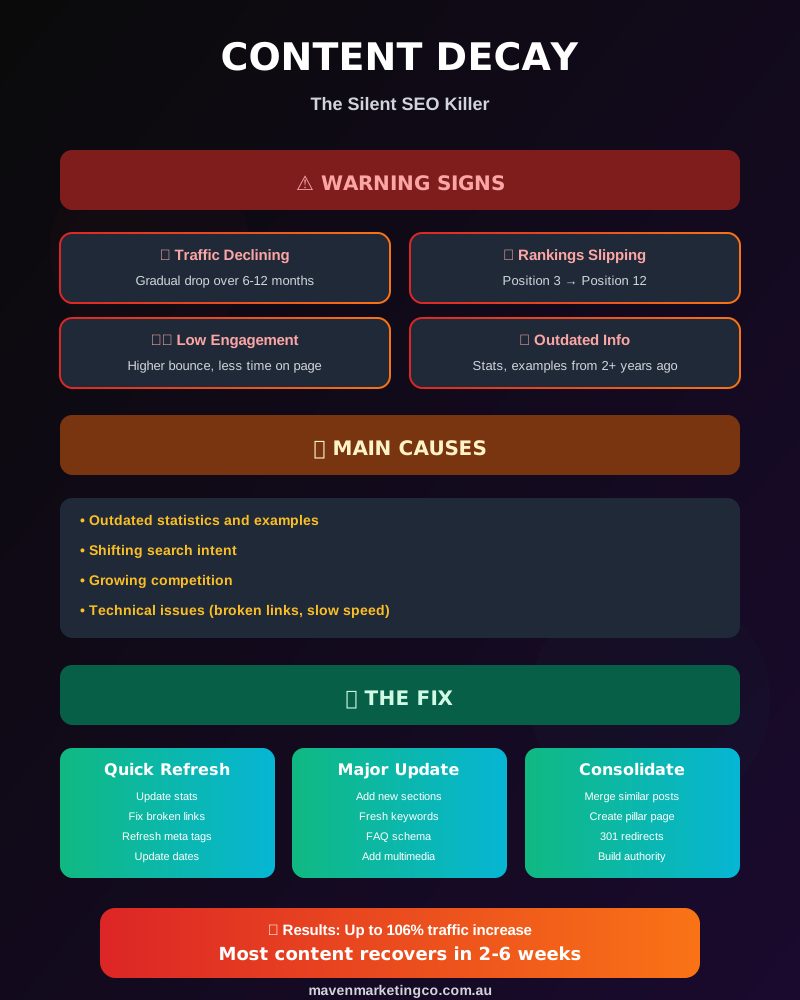
Content decay refers to the gradual decline in a page's organic search performance over time, manifesting as drops in rankings, traffic, and engagement. Unlike sudden algorithmic penalties, decay happens slowly as content becomes outdated, loses relevance, or gets outcompeted.
How to identify content decay:
- Use Google Search Console to monitor pages showing consistent traffic declines over six to twelve months
- Check for keyword rankings dropping from top positions (1 to 5) to page two or beyond (position 11 plus)
- Analyse engagement metrics like bounce rates increasing and time on page decreasing in Google Analytics
- Compare current performance against historical data from 12 months prior
- Look for pages that once drove significant traffic but now underperform significantly
Tools for detection: Pages that historically performed well but show steady decline over months rather than sudden drops are prime candidates for decay. Set up content decay alerts in SEO tools like Ahrefs or Semrush that notify you when pages start losing rankings, allowing early intervention before serious damage occurs.

What are the most effective strategies to fix content decay and recover rankings?
The most effective fix depends on the severity and cause of decay. Research shows different approaches work for different situations.
For moderate decline (quick refresh):
- Update outdated statistics and replace old examples with current data
- Add new keywords from fresh research that reflect current search intent
- Improve meta titles and descriptions to match what currently ranks
- Fix broken links and add new relevant internal and external links
- Update publish dates to signal freshness to search engines
For severe decay (comprehensive update):
- Reassess search intent by analysing what currently ranks in top positions
- Expand depth with new sections, FAQ schema, and multimedia elements
- Improve internal linking structure to and from related content
- Add videos, infographics, and data tables for better engagement
- Research shows this approach can boost organic traffic by up to 106 percent
For complete obsolescence (consolidation or rewrite): In some cases, consolidating multiple overlapping posts into one authoritative pillar page works better than updating individually. Set up 301 redirects from old URLs to preserve link equity. For content where search intent has fundamentally shifted, a complete rewrite treating it as new content on the same URL preserves link equity while serving current users.
Post-update actions: Always republish with updated dates, promote refreshed content through email and social channels, and monitor recovery progress in Search Console over the following four to eight weeks. Most properly refreshed content shows ranking improvements within two to six weeks.
The Full Guide
You check your analytics and notice something unsettling. That comprehensive guide you published eighteen months ago, the one that ranked in position 2 and drove hundreds of monthly visits, now sits at position 12. Traffic has dropped by 60 percent. Engagement metrics have tanked.
You haven't touched the content since publication. Neither has Google, or so you thought. Yet somehow, your once stellar performer has become nearly invisible.
Welcome to content decay, the silent killer that's slowly destroying your organic visibility while you sleep.
Understanding Content Decay
Content decay isn't a technical glitch or algorithmic penalty. It's the natural, gradual decline in a piece of content's search performance over time. Rankings slip. Traffic fades. Engagement drops. The decay happens so slowly that many businesses don't notice until they've lost substantial organic visibility.
The term describes an ongoing decrease in organic performance, whether that content is a blog post, landing page, product description, or resource guide. No digital content is immune. Even high quality content with excellent visuals, strong readability, topical depth, and previously impressive engagement metrics will eventually decay if left unattended.
Research from multiple SEO agencies demonstrates that content typically experiences a lifecycle: initial growth when published, a plateau period where performance stabilises, then gradual decline as the content ages. The decline isn't steep, it's the slow erosion of rankings and traffic over months or years.
Understanding this lifecycle is crucial because content decay fundamentally differs from algorithmic penalties or technical issues. A penalty hits suddenly and affects multiple pages. Content decay affects individual pieces progressively, one page at a time, making it harder to notice but equally damaging over the long term.
Why Content Decays

Several factors contribute to content decay, often working in combination to gradually undermine performance.
Outdated information is the most obvious culprit. An article about social media trends from 2023 loses relevance as platforms evolve, features change, and user behaviour shifts. Statistics become stale. Examples become dated. What was cutting edge becomes passé.
Shifting search intent means that what users want from a search query evolves over time. A query that once sought informational content might now demand transactional results. The search "electric vehicles" has shifted from educational guides to shopping comparisons as adoption increased. If your content doesn't match current intent, Google demotes it regardless of quality.
Algorithm updates continuously refine how Google evaluates content. The emphasis on E-E-A-T (Experience, Expertise, Authoritativeness, Trustworthiness) means content lacking these signals gets deprioritised. Google's helpful content update specifically targeted generic, consensus-driven SEO content, favouring unique perspectives based on first hand experience.
Growing competition constantly raises the bar. When you published, maybe only ten competitors targeted your keywords. Now there are fifty, many with deeper content, better design, and stronger backlink profiles. Your content didn't get worse, but the competitive landscape improved around it.
Technical issues accumulate over time. External links break as other sites restructure or disappear. Internal links become orphaned as you redesign navigation. Images load slowly as file sizes balloon. Page speed degrades as scripts and plugins accumulate. Each issue chips away at user experience and search engine favour.
Audience evolution changes what resonates. Your target audience's knowledge level increases. Their questions become more sophisticated. What beginners needed two years ago doesn't serve intermediate users today. Content that once perfectly matched audience needs falls out of alignment as that audience matures.
Loss of topical authority happens when you stop publishing on a subject. Google evaluates sites partly on topic clusters and content depth. If you published extensively on a topic then went silent, Google may assume you're no longer an active authority, affecting how it ranks even your older, stronger pieces.
Spotting Content Decay Early
Early detection is critical. The longer decay progresses, the harder recovery becomes. Fortunately, identifying decaying content doesn't require guesswork but rather systematic monitoring across several key platforms.
Start with Google Search Console, which provides your most direct view into content performance. Navigate to the Performance report and examine both keyword rankings and impressions over time. The key is distinguishing genuine decay from normal seasonal fluctuation. Look for pages experiencing consistent decline across multiple months rather than temporary dips that align with predictable patterns. Filter by specific pages or queries showing traffic drops over six to twelve months to identify clear trends. Pay particularly close attention to the Average Position column. Pages that once ranked comfortably in positions 1 to 5 but now sit at position 15 or lower represent classic decay cases requiring immediate attention.
Google Analytics complements Search Console by revealing engagement problems that rankings alone might miss. Pull comparative reports showing page traffic over the last six to twelve months against the prior year to identify declining performers. Focus your attention on pages showing steady, consistent decline rather than sudden drops, which often indicate technical issues or algorithm penalties rather than decay. Examine engagement metrics closely, including bounce rates, average time on page, and conversion rates. Rising bounce rates combined with declining time on page signal that content no longer resonates even when users initially land on it. This disconnect between visibility and engagement often indicates content that has fallen out of alignment with user expectations.
Dedicated SEO platforms like Ahrefs, Semrush, or Moz provide more comprehensive tracking capabilities than native Google tools. These platforms monitor rankings over extended periods, making long-term trends clearly visible through visualisations and reports. More importantly, they allow you to set up automated content decay alerts that notify you immediately when pages start losing rankings or traffic. This proactive notification system enables intervention before damage becomes severe, often catching decay in its earliest stages when recovery requires minimal effort.
Don't neglect manual audits despite the power of automated tools. Human review catches issues that algorithms might miss. Schedule systematic reviews of your content library, looking specifically for outdated statistics, broken links, dated examples, and shifts in the competitive landscape. Check whether top ranking competitors have significantly evolved their content while yours remained static. Sometimes the decay isn't about your content getting worse but about the competitive bar rising around you. Manual review also helps you assess whether search intent has shifted in ways that automated tools cannot detect.
As you monitor, watch for several key indicators that signal decay. Gradual traffic drops over several months rather than sudden declines indicate organic decay rather than technical problems. Keyword rankings slipping progressively down search results, particularly moving from page one to page two or beyond, represent classic decay patterns. Increasing bounce rates combined with declining engagement metrics suggest content that no longer serves user needs. Outdated information when compared to current top ranking competitors signals a growing relevance gap. Finally, broken or obsolete external links indicate content that hasn't been maintained, sending negative quality signals to both users and search engines.
The Content Audit Process

Before fixing content decay, you need a systematic audit to identify which pages need attention and what type of intervention each requires.
Conduct comprehensive audits at least twice yearly. For larger sites or those in fast-moving industries, quarterly audits work better. The process involves several steps that together give you a complete picture of content health.
Gather performance data from Search Console and Analytics. Export traffic, ranking, and engagement metrics for all significant pages over the past twelve months. Look for patterns: which content types decay fastest, which topics remain stable, which pages were strong performers that have since declined.
Evaluate content accuracy by reviewing whether information remains current. Check statistics, examples, and references. Look for changes in industry standards, practices, or technologies that impact content value. If the content is substantially outdated, flag it for major refresh or removal.
Assess competitive landscape by searching for your target keywords and analysing what currently ranks. Note angles, subtopics, and content formats that appear across top results. If your content significantly differs from what now ranks, search intent has likely shifted.
Check technical health including page speed, mobile friendliness, broken links, and proper internal linking. Use crawler tools to identify 404 errors, redirect chains, and orphaned pages. Technical issues compound content problems, making recovery harder.
Prioritise action based on traffic potential and business impact. Pages that once drove significant traffic and conversions deserve immediate attention. Content with moderate decay and high potential gets priority over low-traffic pages with severe decay.
Create a decision matrix that evaluates each page on current traffic, historical performance, decay severity, and business relevance. This framework prevents wasting resources on content that doesn't warrant revival.
Fixing Content Decay: The Strategies
Different levels of decay require different solutions. Understanding which strategy suits each situation maximises efficiency and results.
Quick refreshes work for content with minor decay. These are strong pages that have remained mostly relevant but need updating. The process involves updating statistics and examples with current data, refreshing meta titles and descriptions to match evolved search intent, fixing broken links and adding new relevant ones, and updating publish dates to signal freshness. This light touch often reverses small decay before it becomes serious.
Comprehensive updates suit content with moderate to significant decay where the core remains valuable but substantial revision is needed. Start by reassessing search intent using current top ranking pages as guides. Add new sections addressing questions or subtopics that have emerged. Incorporate fresh keyword research including long-tail variations. Expand depth with FAQ schema, data tables, and multimedia elements. Improve internal linking to and from related content. This approach can boost organic traffic by up to 106 percent according to research.
Complete rewrites become necessary when search intent has fundamentally shifted or content has become completely outdated. Treat it as creating new content on the same URL, preserving any remaining link equity while building something that genuinely serves current users. This intensive approach works best for high-value keywords where competition has evolved dramatically.
Content consolidation addresses situations where you have multiple overlapping posts on similar themes. Rather than updating each individually, merge them into one comprehensive, authoritative pillar page. Set up 301 redirects from old URLs to preserve link equity. This strategy, sometimes called "de-consolidation" in reverse, creates stronger topical authority by concentrating signals.
Strategic redirects apply when content has become irrelevant or unviable. A 2021 product launch announcement no longer serves any purpose. Redirect it to either a current equivalent or a relevant resource page. This preserves user experience by preventing 404 errors while consolidating link equity where it's useful.
Content removal is occasionally the right answer. If content is substantially wrong, harmful to brand reputation, or creates duplicate content issues, deletion may serve better than updating. Use 410 status codes for permanently removed content or redirects when better alternatives exist.
Australian Business Considerations

For Australian businesses, content decay presents specific challenges and opportunities that differ from global markets.
Local relevance decay happens faster in Australian contexts. References to local trends, regulations, or market conditions become outdated quickly. Content about Australian tax law, superannuation rules, or industry regulations requires more frequent updates than evergreen international content.
Competitive dynamics differ in the Australian market. With a smaller overall market, you might face less competition for some keywords but more intense competition from well-established local players for others. Understanding your specific competitive position informs decay priorities.
Seasonal patterns affect Australian content uniquely. Content optimised for Australian seasons obviously needs different timing than Northern Hemisphere content. But subtler patterns around school terms, financial years, and local events also influence when content needs refreshing.
Regional search behaviour varies across Australian states and territories. What works for Sydney audiences might need adjustment for Perth or Brisbane. Monitor performance geographically to identify whether decay affects all regions equally or concentrates in specific markets.
Resource constraints for many Australian SMEs mean prioritisation becomes critical. You likely cannot update all decaying content simultaneously. Focus on pages with highest ROI potential: those targeting local markets where you have advantage, content supporting key products or services, and pages that previously converted well.
Preventing Future Decay
While you cannot prevent content from eventually aging, you can slow decay and make maintenance more manageable through strategic planning and systematic processes.
The foundation starts with building evergreen content. When planning your editorial calendar, prioritise topics with longer relevance timelines. Yes, trending topics drive quick traffic spikes, but they decay fastest and require constant replacement. A balanced content portfolio mixes timely pieces that capture current interest with evergreen resources that deliver value for years. Think of trending content as your sprint efforts and evergreen pieces as your marathon investments.
Structure matters as much as topic selection. Design your content from the start to make future updates easier. Use clearly marked date-stamped sections for statistics and time-sensitive information that you can quickly locate and refresh annually. Rather than burying numbers throughout paragraphs, place them in callout boxes or tables where they're easy to spot and update. Create modular content where individual sections can be revised independently without requiring wholesale rewrites. This structural thinking saves substantial time when maintenance comes due.
Technology can do much of the heavy lifting for detection. Rather than waiting for quarterly audits to discover problems, automate monitoring using SEO tools that alert you to ranking drops or traffic declines in real time. Catching decay in its early stages makes fixes simpler and recovery faster. The difference between intervening at a 20 percent traffic drop versus a 60 percent decline can be weeks of recovery time and significant lost revenue.
Make maintenance a planned activity rather than an emergency response. Schedule specific blocks in your content calendar quarterly or semi-annually dedicated exclusively to content audits and updates. Treat this maintenance time as seriously as new content creation because it often delivers better ROI. Your existing content library represents years of accumulated investment. Protecting that investment through systematic maintenance is strategic business management, not optional housekeeping.
Internal linking plays a crucial protective role that many businesses underestimate. When publishing new content, consciously link to older pieces you want to sustain. Internal links from fresh, high-authority pages help maintain older content's search engine favour. Think of this as feeding authority back through your content ecosystem. When planning new articles, ask how they can support and refresh related older pieces through strategic linking and updated context.
Your competitive landscape never stays static. Continuous competitor monitoring identifies when rivals make major updates that might threaten your positions. Set up alerts for your most valuable keywords so you know immediately when the competitive landscape shifts. This awareness lets you respond proactively rather than discovering problems months later through declining metrics.
Finally, stay informed about Google's algorithm evolution. Major updates often signal shifting priorities in how Google evaluates content quality, relevance, and user experience. Understanding these shifts helps you proactively adjust your content before decay accelerates. You don't need to panic over every minor update, but tracking major algorithmic changes and their stated focus areas provides strategic guidance for maintenance priorities.
The ROI of Content Revival
Many businesses question whether updating old content delivers sufficient return compared to creating new content. The data strongly supports revival efforts.
Updating existing content typically costs 50 to 70 percent less than creating equivalent new content from scratch. The existing structure, research, and foundation remain. You're enhancing rather than building, saving substantial time and resources.
Performance improvements often exceed new content results. Pages that previously ranked well and drove traffic already proved they could succeed. Strategic updates frequently recover most or all lost performance and sometimes exceed historical peaks as you incorporate competitive insights gained since original publication.
Timeline to results is faster for updates than new content. New pages might take three to six months to achieve ranking momentum. Updated pages often see improvement within weeks because they retain existing authority and link equity.
Risk is lower with content revival. You're investing in proven performers. New content is speculative, you hope it will work but cannot guarantee it. Updates target pages with demonstrated success, reducing uncertainty.
Compounding benefits accrue over time. A well maintained content library that you systematically refresh creates sustainable organic visibility. You build authority that attracts links naturally, improving your site's overall strength and making future content more likely to succeed.

Taking Action
Content decay is inevitable but manageable. The brands that win at SEO in 2025 aren't necessarily those creating the most new content. They're the ones systematically maintaining their existing content library while adding strategically.
Start with your highest performing pages that show moderate decay. These offer the best combination of preservation value and recovery potential. Use the strategies outlined here to refresh, update, and republish. Monitor results. Refine your approach based on what works.
Build content maintenance into your ongoing process rather than treating it as emergency response. The most sustainable SEO strategies balance creation, promotion, and preservation.
Your content library represents years of investment. Don't let it slowly erode through neglect. With systematic monitoring and strategic updates, you can extend the productive life of your content indefinitely, maximising the return on every piece you've ever published.
The question isn't whether to address content decay. It's whether you'll address it proactively or wait until your organic visibility has substantially declined. The choice, and the rankings, are yours.
Ready to Revive Your Content and Recover Lost Rankings?
At Maven Marketing Co, we help Australian businesses conduct comprehensive content audits, identify decay before it becomes critical, and implement strategic refresh programmes that recover and sustain organic visibility. Our team combines SEO technical expertise with content strategy to maximise the value of your existing content library.
Whether you need a full content audit, help prioritising which pages to update first, or comprehensive refresh services that bring your content back to life, we're here to turn your decaying content into renewed traffic and conversions.
Let's bring your rankings back to life

Table of contents
read more blogs
Is Google Ads Better Than SEO for My Business
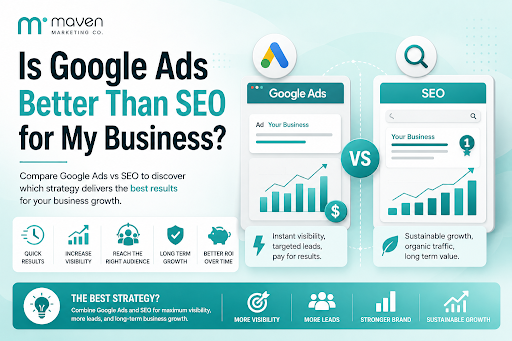
One of the biggest questions business owners ask when they are planning online growth is whether they should invest in Google Ads or SEO. Both are strong marketing plays that help your company show up in Google search results, but they do things in separate lanes. Google Ads gives quicker visibility and can bring in leads fast, whereas SEO more or less focuses on slow, steady organic traffic that tends to grow the longer you keep building it. Picking the right direction depends on what you want to achieve, how much money you can spend, how crowded the market is, and how quickly you need results, like sooner rather than later. The good news is you don’t always have to choose one or the other; it’s not exactly a black-and-white situation. If you take time to understand the strongest points of both, you can put together a more sensible digital marketing plan that supports consistent expansion. In this guide, we’ll compare Google Ads vs SEO, explain the main differences, and help you figure out what option makes the most sense for your business.

When Should I Hire a Digital Marketing Agency
Growing a business today takes more than just having a website or throwing a post on social media; customers usually search around online, compare providers, skim reviews, and basically expect the brand to show up with a solid digital presence before they even think about buying. Many businesses try to run their marketing themselves, but there comes a point when “doing it all in-house” becomes clunky and hard to manage, all at once. Knowing when to hire a digital marketing agency can end up making a big, real difference for your growth. If you’re not getting enough leads, or your online visibility feels stuck, or sales are just not moving, the right agency can bring the know-how, plus a clear plan, to help you get noticeably better outcomes. In this guide, we’ll dig into what a digital marketing agency actually does, the usual signs it’s time to bring one on, and how picking the right marketing partner can help your business move forward at a faster pace.
Why Is My Google Ads Budget Running Out So Quickly
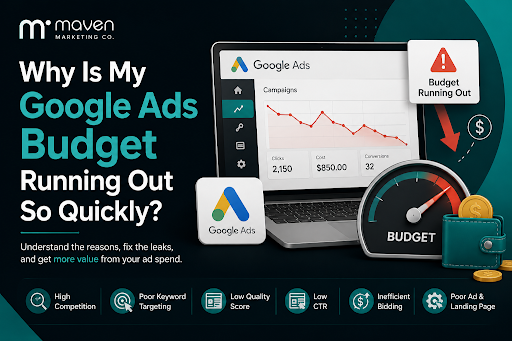
Running a successful Google Ads budget isn’t only about throwing more money at it. It’s more like making every dollar, doing a bit extra. A lot of businesses start a Google Ads campaign with big hopes, then find out their daily budget is gone within a few hours, and that feels weird, right? After that, your ads stop showing effectively, new leads slip away, and your return on investment dips. So if your Google Ads budget is running out too fast, don’t stress. It’s a fairly common issue, and in most situations, it can be repaired with the right approach. There are multiple little things that can drain your advertising money quicker than you expected, from costly keywords to audience targeting that just doesn’t quite fit. In this guide, we’ll walk through why your budget disappears so quickly, how to cut wasteful spend, and the most reliable ways to boost your Google Ads ROI, even if your budget stays the same.