.svg)


%201.svg)

Key Takeaways
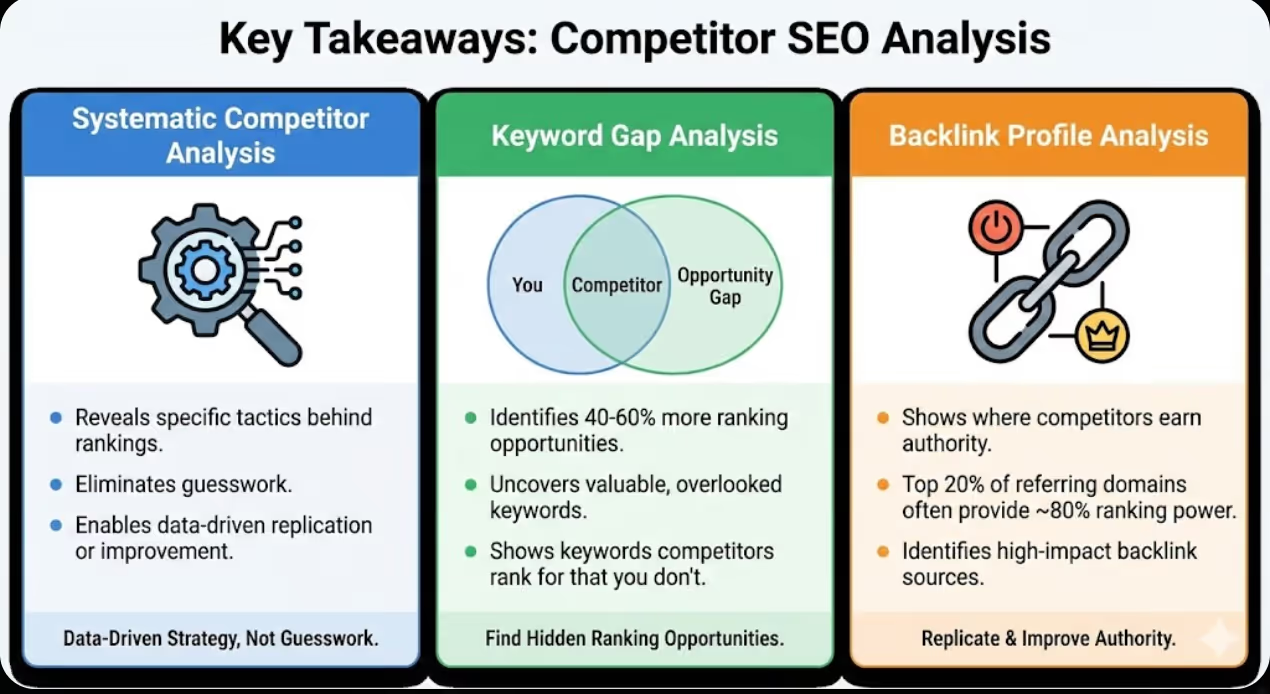
- Systematic competitor SEO analysis reveals specific tactics driving competitor rankings, eliminating guesswork and enabling data-driven replication or improvement of successful strategies
- Keyword gap analysis identifies 40-60% more ranking opportunities, uncovering valuable keywords competitors rank for that you don't, plus opportunities they've overlooked
- Backlink profile analysis shows where competitors earn authority, with top 20% of referring domains typically providing 80% of ranking power
- Brisbane's geographic concentration creates unique competitive advantages, with local backlink opportunities from Brisbane directories, news outlets, and community sites providing disproportionate local influence
- Competitive analysis is ongoing intelligence gathering, with quarterly monitoring identifying when competitors launch new strategies or create vulnerabilities
Brisbane's digital landscape presents fascinating competitive dynamics. Search "accountant Brisbane CBD" and established firms dominate page one. Check "best coffee Paddington" and discover cafes with strong local presence outranking chains.
These rankings aren't accidents. They're the result of deliberate SEO strategies you can observe, analyse, and replicate or improve.

Identifying Your True SEO Competitors
Your business competitors aren't always your SEO competitors. Businesses you'd never consider direct competitors may dominate keywords you target.
SEO competitor identification:
Search your target keywords. Input 10-15 high-priority keywords. Who consistently appears in top 10?
Analyze organic visibility overlap. Use SEMrush or Ahrefs "Organic Competitors" identifying domains with highest keyword overlap.
Geographic specificity matters. Prioritize competitors appearing in local pack results and geo-modified searches.
Create tiered list:
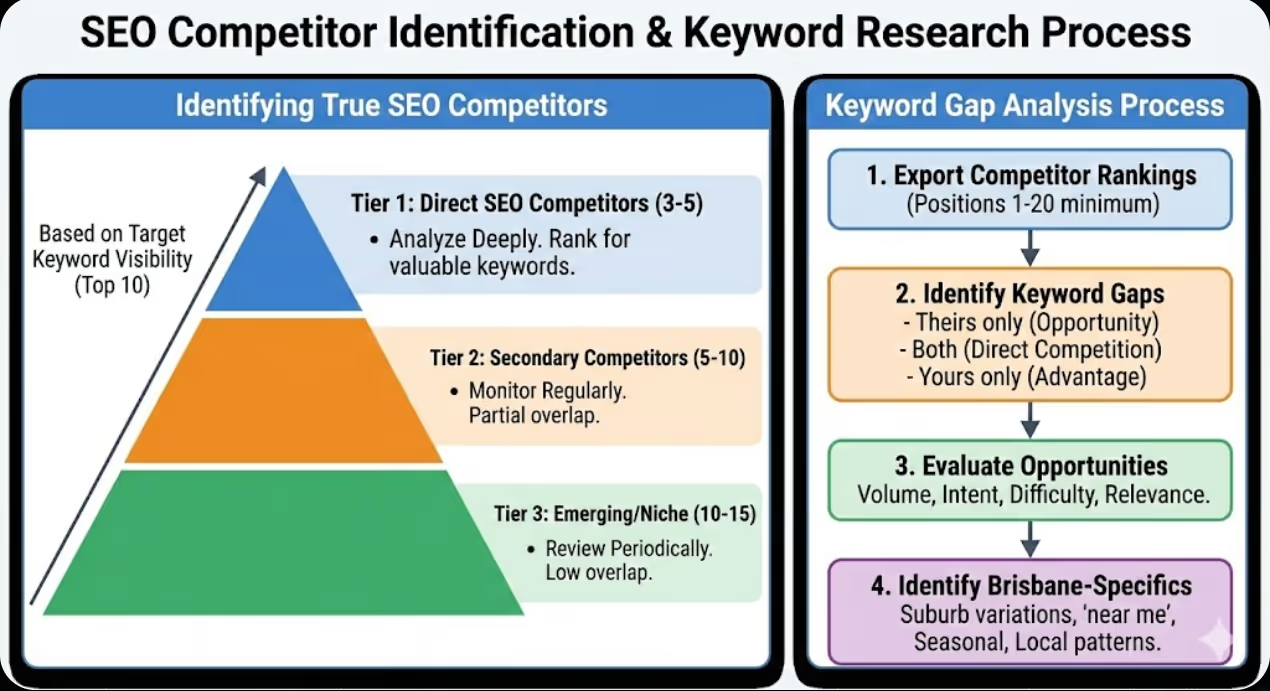
Tier 1 (3-5): Direct SEO competitors ranking for your most valuable keywords. Analyze deeply.
Tier 2 (5-10): Secondary competitors with partial overlap. Monitor regularly.
Tier 3 (10-15): Emerging competitors or niche players. Review periodically.
Keyword Research and Gap Analysis
Tools: SEMrush, Ahrefs, or similar platforms.
Process:
1. Export competitor keyword rankings (positions 1-20 minimum).
2. Identify keyword gaps:
- Keywords they rank for that you don't (immediate opportunities)
- Keywords you both rank for (direct competition)
- Keywords you rank for that they don't (your advantages)
3. Evaluate search volume, commercial intent, relevance, difficulty.
4. Identify Brisbane-specific opportunities: Suburb-specific, "near me" variations, seasonal Brisbane keywords.
Brisbane keyword patterns: Suburb variations, "Brisbane" vs "QLD" vs generic, mobile/local patterns.
Content Analysis
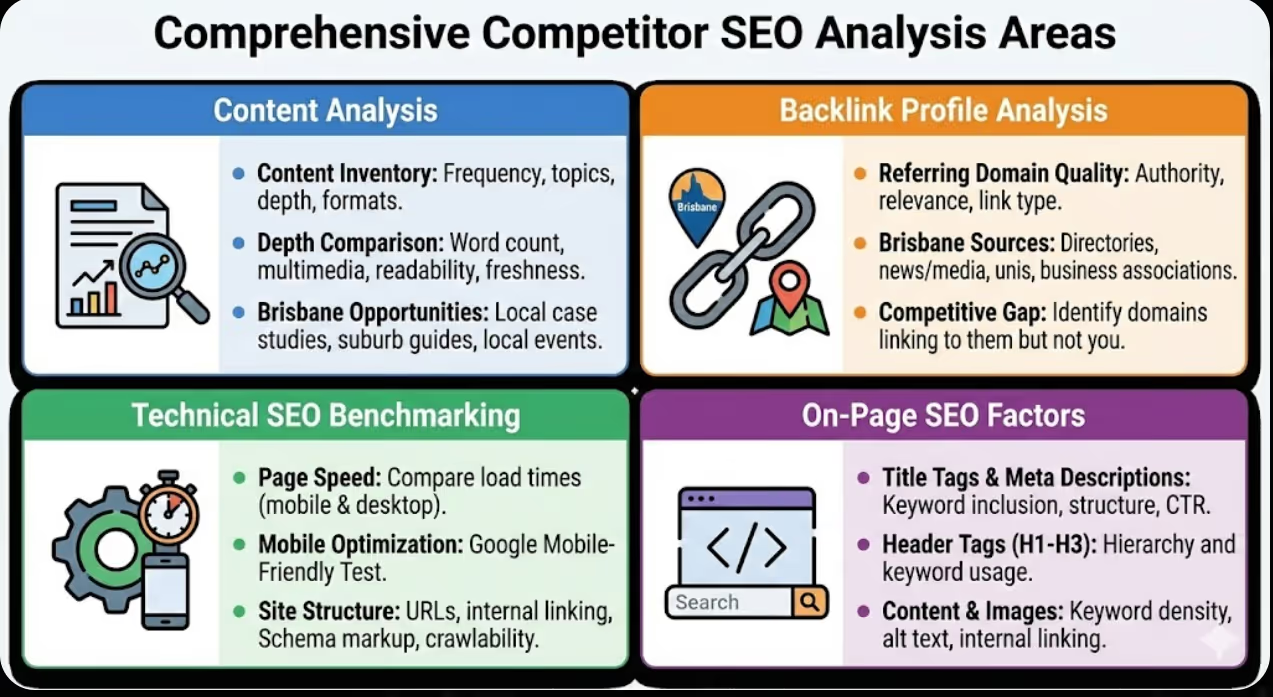
Content inventory: Blog frequency, topics, depth, formats. Service page details and structure. Resources, tools, video content.
Content depth comparison: For outranking competitor pages, compare word count, topic coverage, multimedia, readability, freshness, internal linking.
Brisbane content opportunities: Local case studies, suburb guides, Brisbane event coverage, Brisbane-specific how-to content.
Backlink Profile Analysis
Process:
1. Export competitor backlink profiles using Ahrefs or SEMrush.
2. Analyze referring domain quality: Domain Authority, relevance, link type.
3. Identify backlink sources: Local directories, Brisbane news/media, industry publications, guest posting, partnerships.
4. Identify replicable opportunities.
Brisbane-specific backlinks:
- Brisbane directories (True Local, Yellow Pages, suburb directories)
- Brisbane news (Courier Mail, Brisbane Times, Quest News, InQueensland)
- Brisbane business associations
- Brisbane universities (Griffith, QUT, UQ)
- Brisbane event sponsorships
- Brisbane bloggers and influencers
Competitive backlink gap: Identify domains linking to competitors but not you. Use Ahrefs "Link Intersect."
Technical SEO Benchmarking
Page speed: Google PageSpeed Insights. Compare competitor load times to yours.
Mobile optimization: Google Mobile-Friendly Test. Manual mobile testing.
Site structure: URL structures, internal linking, breadcrumbs, sitemaps.
Schema markup: Google Rich Results Test. What structured data do competitors implement?
Crawlability: Screaming Frog. Analyze crawl depth, redirects, 404s, robots.txt.
On-Page SEO Factors
Title tags: Keyword inclusion, structure, location modifiers, length.
Meta descriptions: Compelling, keyword-inclusive, CTAs, length.
Header tags: H1 usage, H2/H3 hierarchy, keyword incorporation.
Content: Keyword density, semantic keywords, comprehensiveness.
Images: Alt text, file naming, compression, formats.
Internal linking: Contextual links, anchor text, link distribution.
URLs: Clean, descriptive, keyword inclusion.
Local SEO Competitive Factors
Google Business Profile:
- Completeness
- Reviews (count, rating, recency, responses)
- Post frequency
- Photo count and quality
- Q&A management
Local citations: Count, consistency, quality, Brisbane-specific directories.
Local content signals: Brisbane-focused content, local keywords, suburb references, local backlink percentage.
Case Study: Brisbane Coffee Roaster
A Brisbane coffee roaster struggled to rank despite quality products. Their primary competitor dominated coffee-related Brisbane searches.
Analysis revealed:
Competitor ranked for 89 keywords the roaster didn't. Published comprehensive coffee education content. Had 47 referring domains (vs roaster's 8). Site loaded in 2.1 seconds (vs 5.8), implemented schema, had mobile-optimized design.
Implementation (Q2-Q3 2024):
Launched coffee education blog (3x weekly), rewrote product descriptions with schema, contacted food bloggers for reviews, optimized images and improved mobile design.
Results after 6 months:
Rankings increased from 12 to 67 first-page positions. Organic traffic increased 340%. Revenue from online sales increased 156%. Backlinks grew from 8 to 31.
Case Study: Brisbane Plumbing Service
A northside plumbing service competed against 20+ plumbers. One competitor consistently appeared in local pack.
Analysis revealed:
Competitor had 127 reviews (vs 23), posted 3x weekly, published suburb-specific content for 12 northside suburbs, appeared in 52 directories (vs 12), had local backlinks from northside news sites and community organizations.
Implementation (Q2-Q3 2024):
Systematic review requests, GBP optimization with 3x weekly posts, built suburb pages for 8 key areas, submitted to all competitor directories, sponsored local sports club.
Results after 5 months:
Local pack appearances increased from 15% to 68%. Reviews grew from 23 to 81. Organic local traffic increased 287%. Emergency calls from local search increased 156%.
Competitive Monitoring
Quarterly protocol: Keyword ranking changes, content updates, backlink acquisition, technical changes, local SEO changes.
Annual deep-dive: Comprehensive analysis updating competitive intelligence.
Tools: SEMrush Position Tracking, Ahrefs Alerts, Google Alerts, manual searches.
Frequently Asked Questions
Is analyzing competitor SEO ethical and legal in Australia?
Completely legal and ethical using publicly available information and standard tools. Everything relies on publicly accessible data: rankings, website content, backlinks, technical factors. You're not hacking systems or accessing non-public information. Competitive intelligence through public information is standard business practice.
How do Brisbane businesses compete with national competitors?
Leverage local relevance signals national competitors can't match: hyperlocal content, local backlinks from Brisbane sources, Google Business Profile optimization, Brisbane customer reviews, Brisbane address/phone, suburb-specific content. National competitors often neglect geo-modified variations and lack deep local presence.
What if competitors use black-hat SEO—should you replicate?
Never replicate black-hat tactics. They create temporary rankings followed by penalties. If competitor analysis reveals black-hat methods, accelerate white-hat efforts knowing their strategy is unsustainable. Focus on sustainable tactics that withstand algorithm updates.
Transform Intelligence Into Rankings
Competitor SEO analysis transforms "why do they rank better?" into actionable roadmaps.
At Maven Marketing Co, we conduct professional-grade competitor SEO analysis for Brisbane businesses, uncovering specific tactics driving competitor rankings and developing data-driven strategies to outrank them.
Contact Maven Marketing Co today to commission comprehensive analysis. We'll identify your SEO competitors, reverse engineer their strategies, uncover keyword and backlink opportunities, and develop the tactical roadmap transforming competitive disadvantages into dominant Brisbane rankings.

Table of contents
read more blogs
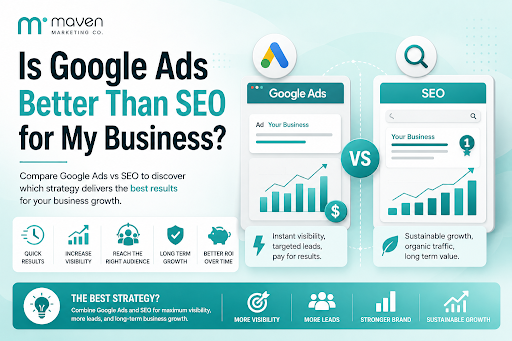
Is Google Ads Better Than SEO for My Business
One of the biggest questions business owners ask when they are planning online growth is whether they should invest in Google Ads or SEO. Both are strong marketing plays that help your company show up in Google search results, but they do things in separate lanes. Google Ads gives quicker visibility and can bring in leads fast, whereas SEO more or less focuses on slow, steady organic traffic that tends to grow the longer you keep building it. Picking the right direction depends on what you want to achieve, how much money you can spend, how crowded the market is, and how quickly you need results, like sooner rather than later. The good news is you don’t always have to choose one or the other; it’s not exactly a black-and-white situation. If you take time to understand the strongest points of both, you can put together a more sensible digital marketing plan that supports consistent expansion. In this guide, we’ll compare Google Ads vs SEO, explain the main differences, and help you figure out what option makes the most sense for your business.

When Should I Hire a Digital Marketing Agency
Growing a business today takes more than just having a website or throwing a post on social media; customers usually search around online, compare providers, skim reviews, and basically expect the brand to show up with a solid digital presence before they even think about buying. Many businesses try to run their marketing themselves, but there comes a point when “doing it all in-house” becomes clunky and hard to manage, all at once. Knowing when to hire a digital marketing agency can end up making a big, real difference for your growth. If you’re not getting enough leads, or your online visibility feels stuck, or sales are just not moving, the right agency can bring the know-how, plus a clear plan, to help you get noticeably better outcomes. In this guide, we’ll dig into what a digital marketing agency actually does, the usual signs it’s time to bring one on, and how picking the right marketing partner can help your business move forward at a faster pace.
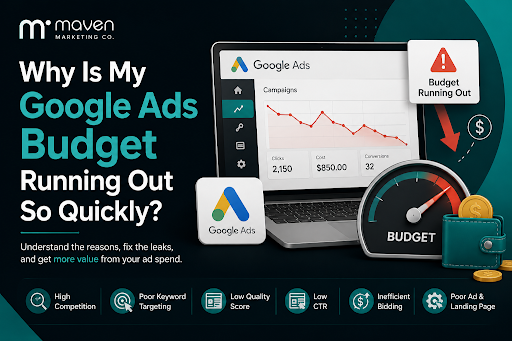
Why Is My Google Ads Budget Running Out So Quickly
Running a successful Google Ads budget isn’t only about throwing more money at it. It’s more like making every dollar, doing a bit extra. A lot of businesses start a Google Ads campaign with big hopes, then find out their daily budget is gone within a few hours, and that feels weird, right? After that, your ads stop showing effectively, new leads slip away, and your return on investment dips. So if your Google Ads budget is running out too fast, don’t stress. It’s a fairly common issue, and in most situations, it can be repaired with the right approach. There are multiple little things that can drain your advertising money quicker than you expected, from costly keywords to audience targeting that just doesn’t quite fit. In this guide, we’ll walk through why your budget disappears so quickly, how to cut wasteful spend, and the most reliable ways to boost your Google Ads ROI, even if your budget stays the same.