.svg)


%201.svg)

Key Takeaways
- Canonical tags tell search engines which URL version to index when multiple URLs contain identical or substantially similar content, consolidating ranking signals rather than dividing them across duplicates
- URL parameters including tracking codes, session IDs, sorting options, and filter combinations create the most common duplicate content problems requiring systematic canonical implementation across affected page types
- Self-referencing canonical tags on preferred URLs confirm their canonical status whilst cross-referencing canonicals on duplicates point to preferred versions, creating clear consolidation signals search engines reliably follow
- Google Search Console URL parameter handling provides additional layer beyond canonical tags enabling explicit instructions about how search engines should treat specific parameters particularly for crawl budget optimisation
- Canonical implementation requires ongoing monitoring through Search Console canonical reports validating that search engines respect declared canonicals rather than selecting different versions undermining intended consolidation
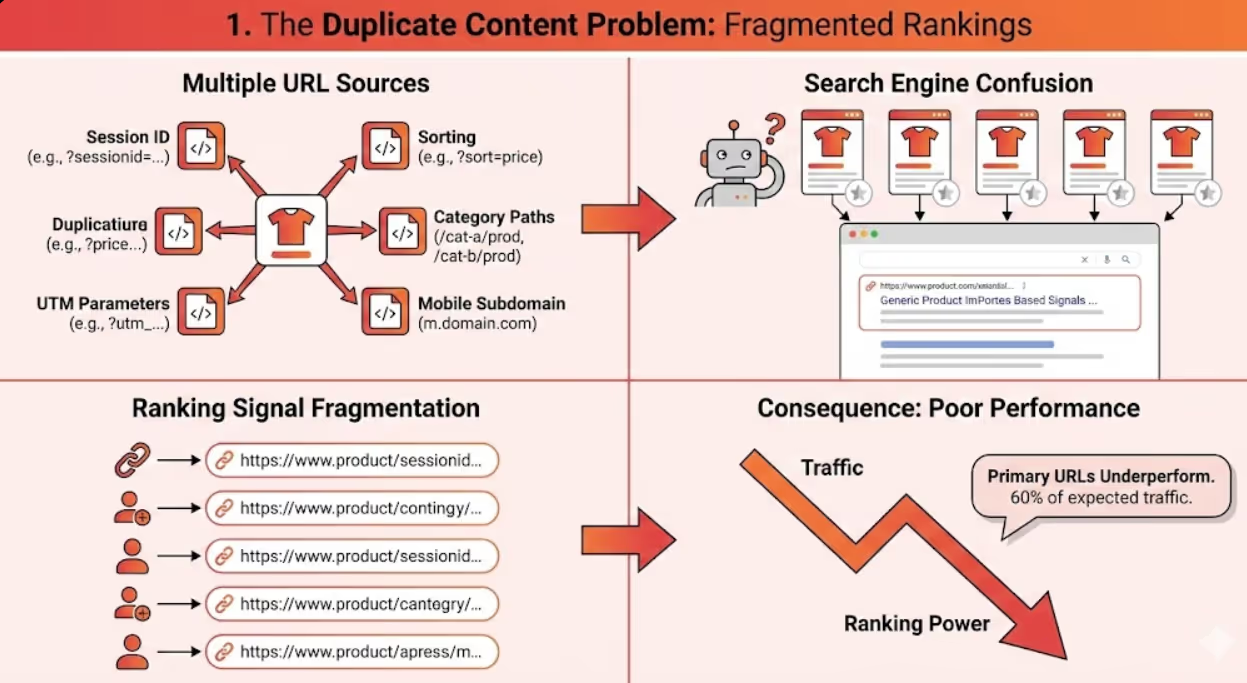
An Australian online retailer with 12,000 products discovered through organic traffic analysis that their product pages were generating only 60% of expected traffic despite ranking well for target keywords. Investigation revealed that search results contained multiple URL variations for the same products with rankings distributed across duplicates rather than consolidated to optimised canonical versions.
The duplicate content problem stemmed from multiple sources. Session IDs appended to every URL created user-specific variations like /product-name?sessionid=abc123 that search engines discovered and indexed. Sorting parameters including ?sort=price-low and ?sort=newest created additional indexed variations. UTM tracking parameters from marketing campaigns generated more duplicates when shared URLs containing campaign codes got crawled through external backlinks. Product pages accessible through multiple category paths created URL variations like /category-a/product versus /category-b/product for the same product. Mobile-specific URLs using m.domain.com subdomain duplicated entire catalog.
According to research from Moz, duplicate content issues affect approximately 29% of websites with multiple URL variations competing against each other in search results, demonstrating that canonicalization problems represent common rather than exceptional technical SEO challenges.
Google was indexing an average of 4.3 URL variations per product, distributing ranking signals across these duplicates rather than consolidating to the preferred clean product URLs. The primary product URLs that the SEO team had optimised with quality content, proper titles, and strategic keywords often weren't the versions Google chose to rank, whilst inferior duplicate variations with default titles and minimal optimisation appeared in search results instead.
Maven Marketing Co. implemented comprehensive canonicalization strategy including self-referencing canonical tags on all primary product URLs confirming their preferred status, cross-referencing canonicals on all parameter variations pointing to clean URLs without parameters, URL parameter configuration in Google Search Console instructing Google how to handle session IDs and sorting parameters, 301 redirects consolidating www and non-www variations to single domain version, mobile responsive design eliminating m.subdomain duplicates entirely, and systematic canonical tag validation ensuring proper implementation across all page types and templates.
Within six weeks, Google's index consolidated with average URL variations per product decreasing from 4.3 to 1.2 as duplicate variations deindexed whilst canonical preferred versions strengthened. Rankings for target keywords improved substantially as consolidated signals strengthened primary URLs. Organic traffic increased 43% as proper canonical versions ranking in search results were the optimised pages with compelling titles and descriptions rather than parameter variations with generic content. The canonicalization implementation required approximately 60 hours of technical work delivering immediate ongoing traffic improvements that investment in content or links couldn't have achieved without addressing the fundamental duplicate content problem fragmenting ranking authority.
Understanding Canonicalisation Fundamentals
Effective canonical implementation requires understanding what canonical tags actually accomplish, how search engines interpret them, and what problems proper canonicalization solves versus creates when implemented incorrectly.
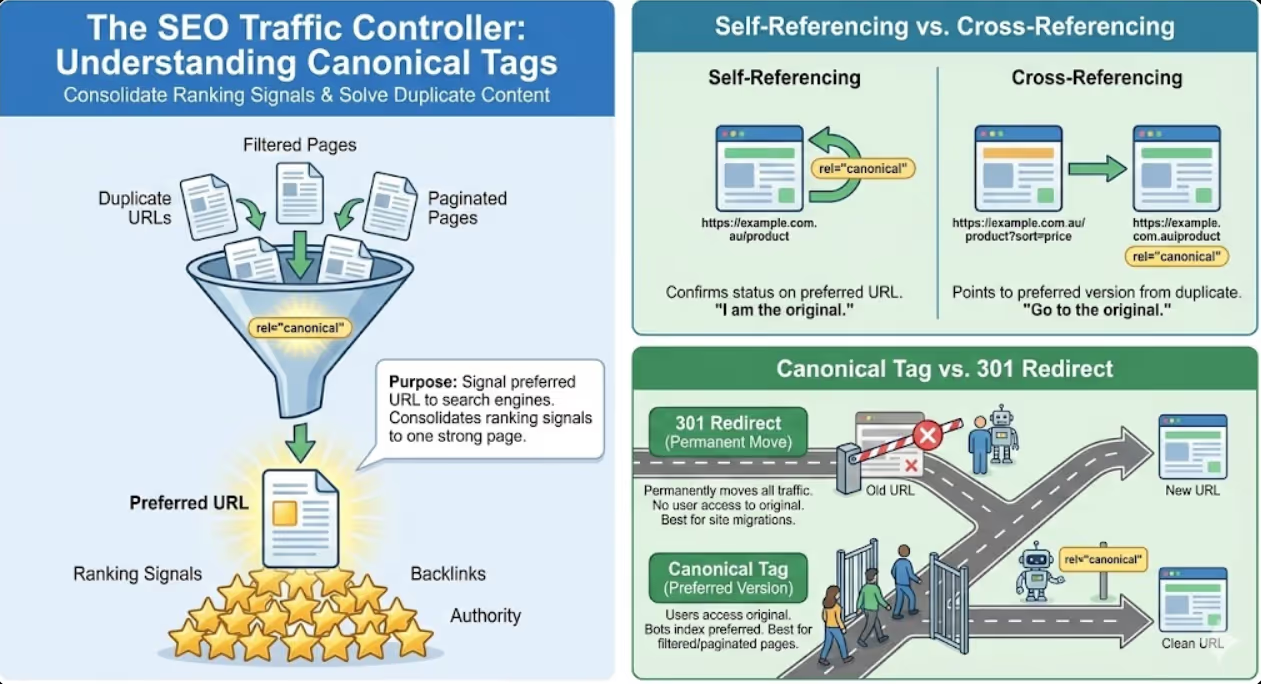
Canonical tag purpose signals to search engines which URL version should be indexed when multiple URLs contain identical or substantially similar content. The canonical tag is an HTML link element with rel="canonical" attribute placed in page head sections pointing to the preferred URL version. When search engines encounter canonical tags, they consolidate ranking signals including backlinks, content quality assessments, and user engagement metrics to the canonical URL whilst typically deindexing non-canonical variations. Canonical tags solve the duplicate content problem where identical content accessible through multiple URLs fragments ranking signals across variations rather than consolidating authority to single strong version.
Self-referencing versus cross-referencing canonicals represent two implementation patterns serving different purposes. Self-referencing canonicals on preferred URLs point to themselves confirming their canonical status like <link rel="canonical" href="https://example.com/product-name" /> on the /product-name page itself. Cross-referencing canonicals on duplicate variations point to preferred versions like <link rel="canonical" href="https://example.com/product-name" /> on /product-name?sort=price variation directing search engines to the clean URL. Best practice implements both patterns with self-referencing canonicals on all preferred URLs whilst cross-referencing canonicals on all known duplicate variations provide explicit consolidation instructions rather than leaving canonicalization to search engine algorithms.
Canonical tag versus 301 redirect distinction clarifies when to use each duplicate content solution. 301 redirects send users and search engines to preferred URLs preventing duplicate access entirely, whilst canonical tags allow duplicate URLs to remain accessible to users whilst instructing search engines which version to index. Use 301 redirects when duplicate URLs serve no user purpose and should permanently redirect to preferred versions including www versus non-www consolidation, HTTP versus HTTPS migration, and old URLs after site restructuring. Use canonical tags when duplicate URLs serve legitimate user purposes but shouldn't fragment search engine indexes including filtered category pages, paginated sequences, and parameter variations that users need for functionality but search engines shouldn't index separately. Australian businesses should prefer 301 redirects when user access to duplicates is unnecessary whilst reserving canonical tags for scenarios where duplicates must remain accessible for user experience reasons.
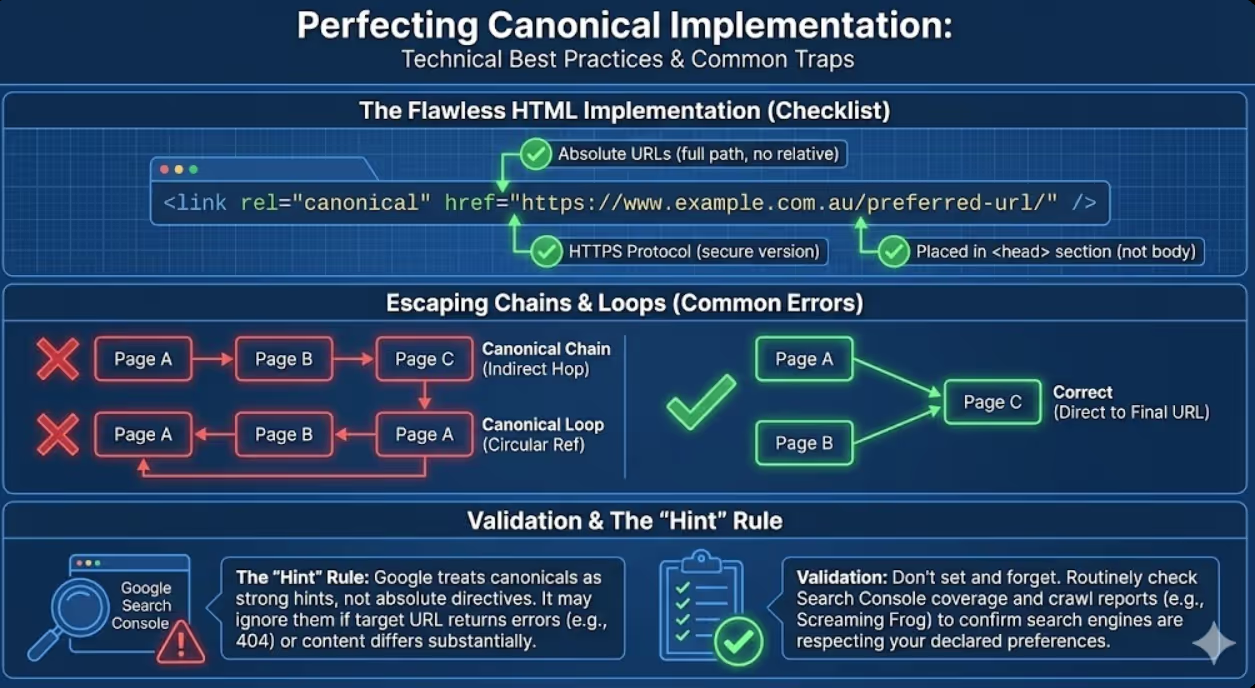
Canonical tag hint versus directive understanding prevents false expectations about guaranteed search engine compliance. Google's documentation explicitly states that canonical tags are strong hints that Google usually respects but not absolute directives that guarantee compliance. Search engines may ignore canonical tags when evidence suggests the declared canonical is inferior to alternatives including when canonical targets return errors, when cross-referencing canonicals point to wrong versions, when content differs substantially between canonical and duplicate making consolidation inappropriate, or when other signals including external backlinks, sitemap inclusion, and internal linking contradict canonical declarations. Australian businesses should implement canonicals correctly whilst monitoring Search Console canonical reports validating that search engines actually respect declared preferences rather than assuming that implementation alone guarantees desired behaviour.
Canonical chains and loops represent common implementation errors preventing proper canonicalization. Canonical chains occur when page A canonicalizes to page B which canonicalizes to page C creating indirect relationships that search engines may not follow properly. Canonical loops happen when page A canonicalizes to page B whilst page B canonicalizes back to page A creating circular references that search engines cannot resolve. Proper implementation requires that all canonical tags point directly to final preferred URLs without intermediary hops, and that canonical targets themselves have self-referencing canonicals confirming they are ultimate destinations rather than pointing elsewhere creating chains or loops.
Partial duplicate content creates canonicalization ambiguity where pages share substantial content but aren't identical requiring judgment about whether canonicalization is appropriate versus accepting them as distinct pages. Product pages with 90% identical descriptions but different SKU-specific details might warrant separate indexing whilst paginated category pages with identical introductions but different product listings clearly suit canonical consolidation to page 1. Australian businesses should apply canonical tags conservatively only when pages are truly duplicate or substantially similar rather than applying broadly to any pages sharing common elements like headers, footers, or navigation that appear site-wide.
URL Parameter Canonicalisation
URL parameters create the most common duplicate content problems requiring systematic canonicalization strategies addressing tracking codes, session IDs, filtering, sorting, and pagination parameters.
Tracking parameter handling addresses UTM codes, campaign identifiers, and analytics parameters that create duplicate URLs without changing content. Tracking parameters including utm_source, utm_medium, utm_campaign, gclid, fbclid, and similar codes append to URLs for analytics attribution creating infinite URL variations for identical content. Canonical implementation for tracking parameters requires self-referencing canonical tags on all pages pointing to clean URLs without parameters like <link rel="canonical" href="https://example.com/product" /> regardless of whether page was accessed via /product?utm_source=facebook or /product?gclid=abc123. This implementation allows tracking parameters to function for analytics whilst preventing search engine indexing of parameter variations. Australian businesses should implement this canonicalization universally across all page types because tracking parameters can append to any URL through marketing campaign links, social media sharing, or third-party referrals.
Session ID canonicalisation prevents user-specific session identifiers from fragmenting indexes across millions of user-specific URL variations. Session IDs like ?sessionid=abc123 or ?PHPSESSID=xyz789 create unique URLs for every visitor whilst serving identical content. Session ID canonicalization requires removing session IDs from URLs entirely when possible through cookie-based session management, implementing canonical tags pointing to clean URLs without session IDs when removal isn't feasible, configuring Google Search Console URL parameters marking session ID parameters as not affecting content, and using robots.txt to block known session ID parameter patterns as additional protection beyond canonicals. Session ID problems are particularly severe because every site visitor potentially creates new discoverable URL that search engines might index creating index bloat with millions of duplicate user-specific variations.
Sorting and filtering canonicalisation addresses faceted navigation and user preference parameters that change display order without changing actual content. Sorting parameters including ?sort=price-low, ?sort=newest, ?sort=bestselling create URL variations displaying identical products in different sequences. Filtering parameters including ?color=blue, ?size=large, ?brand=nike create subset views of larger category content. Canonical implementation for sorting should point all sort variations to the default unsorted category URL. Filtering canonicalization is more nuanced with options including pointing filtered pages to unfiltered category URLs when filters create true duplicates, allowing strategic filters to self-canonicalize when they represent legitimate landing pages worth indexing separately, and blocking less important filter combinations entirely through robots.txt preventing discovery. Australian e-commerce businesses should develop filter canonicalization strategies balancing SEO consolidation against capturing traffic for valuable filtered category searches like "blue dresses" that users specifically seek.
Pagination canonicalisation patterns require choosing between consolidating paginated sequences to page 1 versus allowing each pagination page to self-canonicalize as distinct content. Consolidation approach implements canonical tags on all pagination pages pointing to page 1 with <link rel="canonical" href="https://example.com/category" /> appearing on /category?page=2, /category?page=3 and all subsequent pages. This consolidates all ranking signals to page 1 whilst preventing deep pagination indexing. Self-canonicalization approach implements self-referencing canonicals on each pagination page treating them as distinct content supplemented by rel="next" and rel="prev" tags indicating sequence relationships. View-all alternative provides non-paginated version of complete content with canonical tags on paginated pages pointing to view-all URL consolidating signals whilst maintaining pagination for user experience. Google's pagination guidance recommends either allowing each page to self-canonicalize with proper next/prev implementation or using view-all approach whilst discouraging blanket consolidation to page 1 that hides valuable content from indexing.
Case sensitivity handling addresses duplicate content when URLs differing only in capitalization serve identical content. URLs including /Product versus /product or /Category/Item versus /category/item create duplicates on case-sensitive servers whilst appearing identical to users. Case sensitivity canonicalization requires implementing 301 redirects from non-preferred case variations to preferred lowercase versions establishing permanent consolidation, configuring web servers to handle URLs case-insensitively preventing duplicate access entirely, implementing canonical tags on all pages pointing to consistent lowercase versions as defensive measure, and auditing internal links ensuring they point to preferred case versions rather than creating discoverable paths to non-preferred variations. Australian businesses should standardize on lowercase URLs enforced through server configuration and canonical tags rather than allowing mixed case implementations that create unnecessary duplicate content problems.
Mobile URL canonicalisation addresses the now-outdated practice of separate mobile URLs that some Australian businesses still maintain. Separate mobile URLs using m.domain.com or domain.com/m/ subdomains or directories create complete catalog duplication requiring canonical implementation pointing mobile URLs to desktop equivalents like <link rel="canonical" href="https://example.com/product" /> on m.example.com/product. However, best practice in 2026 is responsive design serving identical URLs across devices eliminating mobile duplication entirely rather than managing canonicalization complexity. Australian businesses still maintaining separate mobile URLs should prioritize migrating to responsive design eliminating duplicate versions rather than indefinitely managing canonicalization between parallel mobile and desktop implementations that responsive design makes unnecessary.
Canonical Tag Implementation
Proper technical implementation ensures canonical tags function as intended rather than being ignored or misinterpreted by search engines.
HTML implementation format requires canonical tags to appear in page head sections using specific syntax that search engines recognize. Proper format is <link rel="canonical" href="https://www.example.com.au/preferred-url" /> with several critical requirements including absolute URLs rather than relative paths preventing resolution ambiguity, HTTPS protocol when site supports HTTPS avoiding mixed signals, proper domain including www or non-www matching preferred version, and self-closing tag format with trailing slash. Common implementation errors include using relative URLs like /preferred-url instead of complete absolute URLs, omitting protocol or using wrong protocol, including trailing slashes inconsistently, and placing canonical tags in body instead of head sections where search engines expect them.
JavaScript-rendered canonicals require special consideration when canonical tags are inserted client-side through JavaScript rather than appearing in initial server HTML. Search engines that render JavaScript including Google can detect JavaScript-inserted canonicals but experience delays while rendering executes creating timing risks where crawlers might not wait for complete rendering. Best practice implements canonical tags server-side in initial HTML ensuring search engines detect them immediately without depending on JavaScript rendering. When server-side implementation is impractical due to platform limitations, JavaScript canonicals should execute immediately in head rather than after page load, and critical pages should undergo testing validating that search engines successfully detect canonicals through JavaScript rendering inspection tools rather than assuming detection without verification.
Canonical tag validation confirms implementation correctness before relying on tags to consolidate duplicates. Validation includes viewing page source in browsers confirming canonical tags appear in head sections, checking that canonical URLs are absolute not relative, verifying canonical targets are accessible returning 200 status codes not errors or redirects, testing that canonical URLs match intended preferred versions without typos, and using tools including Screaming Frog, Sitebulb, or browser extensions displaying canonical tags across crawled pages enabling systematic validation rather than manual page-by-page inspection. Australian businesses should validate canonical implementation comprehensively after initial deployment and periodically thereafter confirming that template updates, platform changes, or content management system modifications haven't broken canonicalization.
CMS and platform implementation varies substantially across different content management systems requiring platform-specific approaches. WordPress canonical implementation through SEO plugins including Yoast SEO or Rank Math provides automatic canonical generation with manual override options, whilst theme-level implementation requires template modification adding canonical tags programmatically. Shopify implements canonical tags automatically for product and collection pages but requires manual implementation for custom page types through theme liquid templates. Magento provides native canonical URL configuration in admin panels whilst custom implementations override defaults. BigCommerce generates canonicals automatically for standard page types with customization through Stencil theme files. Australian businesses should understand their specific platform's canonical handling before implementing custom solutions that might conflict with platform defaults creating duplicate or conflicting canonical declarations.
Canonical tag priority determines which canonical declaration search engines respect when multiple conflicting canonicals appear on pages. When conflicts exist, search engines typically prioritize canonical tags in this order: HTTP header Link canonical declarations, HTML head link canonical tags, and then potentially XML sitemap declarations as weakest signal. Most implementations use HTML head canonicals as standard whilst HTTP header canonicals provide alternative for non-HTML content including PDFs. Australian businesses should avoid creating conflicts through multiple canonical declarations with different targets instead implementing single consistent canonical across all methods used.
Monitoring and maintenance ensures canonicals continue functioning correctly as websites evolve. Ongoing monitoring includes weekly Search Console canonical reports review checking for new canonical issues, monthly crawling with tools like Screaming Frog validating canonical consistency across page types, quarterly comprehensive audits checking canonical targets remain valid and accessible, and immediate validation after major website changes including platform migrations, template updates, or URL structure modifications. Canonical implementation isn't set-and-forget configuration but requires ongoing attention ensuring continued proper function as websites grow and change.
Google Search Console URL Parameter Handling
Search Console provides additional canonicalization control through explicit parameter handling instructions supplementing canonical tag implementations.
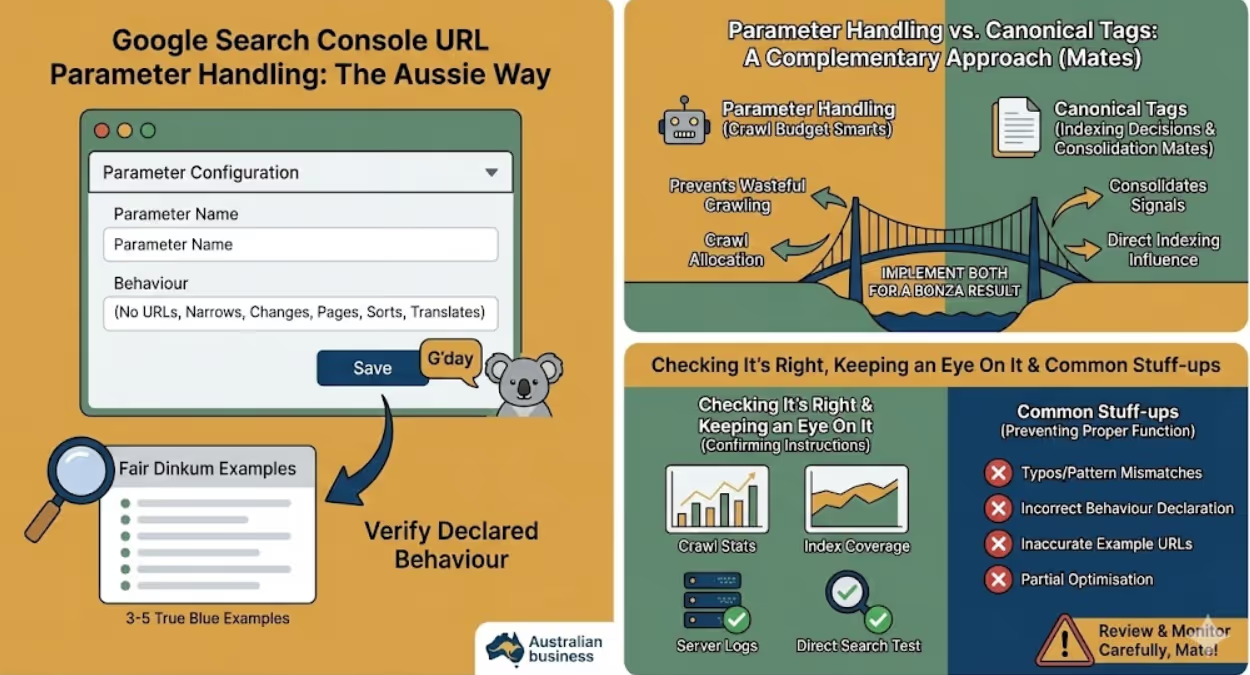
Parameter configuration interface enables specification of how Google should treat individual URL parameters. Configuration includes defining parameter name exactly as it appears in URLs, specifying parameter behaviour selecting from "No URLs" when parameter doesn't affect content and Google shouldn't crawl variations, "Narrows" when parameter filters content subset from larger set, "Changes" when parameter fundamentally alters content, "Pages" when parameter creates pagination, "Sorts" when parameter only changes display order, and "Translates" when parameter provides language or regional variations. Proper parameter configuration prevents wasteful crawling of parameter variations whilst ensuring Google understands parameter purposes enabling intelligent handling.
Example URLs configuration helps Google understand parameter effects by providing representative URLs showing how parameters change or don't change content. When configuring parameters, Google requests example URLs demonstrating parameter usage enabling their algorithms to verify declared behaviour matches actual content differences. Providing accurate examples improves configuration reliability whilst incorrect examples may cause Google to ignore configuration when detected behaviour contradicts declared purpose. Australian businesses should provide 3 to 5 representative URLs for each parameter showing its effect range rather than single examples that might not fully represent parameter behaviour.
Parameter handling versus canonical tags raises the question of which approach to prioritize when both are available. Best practice implements both approaches with canonical tags providing primary consolidation signal whilst parameter handling provides supplementary crawl efficiency guidance. Parameter handling primarily affects Google's crawl budget allocation rather than indexing decisions whilst canonical tags directly influence which URLs get indexed. The two approaches work complementarily with parameter handling preventing wasteful crawling of parameter variations and canonical tags ensuring that any crawled variations consolidate signals to preferred URLs. Australian businesses should not rely exclusively on either approach but implement both for maximum effectiveness.
Configuration validation and monitoring confirms that parameter handling instructions are being respected rather than ignored. Validation includes monitoring crawl statistics in Search Console tracking whether parameter URL crawling decreases after configuration, checking index coverage reports confirming parameter variations are deindexing or not being discovered, analyzing server logs verifying crawler behaviour aligns with parameter handling instructions, and testing parameter URLs directly in search to confirm they're not indexed separately from canonical versions. If parameter configuration doesn't produce expected crawl behaviour changes, investigate whether parameter patterns are correctly identified, example URLs accurately represent behaviour, or conflicting signals from canonical tags or internal linking contradict parameter handling instructions.
Common parameter handling mistakes prevent proper function requiring awareness for successful implementation. Common errors include configuring parameters that don't actually appear in URLs due to typos or pattern mismatches, declaring parameters as "No URLs" when they do affect content causing Google to ignore important variations, overusing "Changes" declaration when "Narrows" is more accurate, providing example URLs that don't actually demonstrate declared parameter behaviour, and failing to configure all active parameters leaving some unhandled creating partial optimisation. Australian businesses should carefully review parameter configuration ensuring accuracy before deployment and monitoring results confirming intended effects materialize rather than assuming configuration alone produces desired outcomes.
Canonical Implementation Across Page Types
Different page types require tailored canonical strategies reflecting their specific duplicate content vulnerabilities and business priorities.
Product page canonicalization addresses e-commerce duplicate content from multiple category paths, parameter variations, and sorting options. Product canonical strategy includes implementing self-referencing canonicals on primary product URLs establishing preferred versions, canonicalizing category-path variations like /category-a/product and /category-b/product to single preferred product URL, consolidating colour and size variations when they represent same core product with attribute differences, handling "out of stock" product pages that temporarily lack inventory through maintaining canonicals rather than noindexing preventing loss of accumulated ranking signals, and managing discontinued products through redirecting to replacement products or category pages rather than serving duplicate content variations indefinitely.
Category page canonicalization manages filtered views, sorting options, and pagination creating duplicate category content. Category canonical strategy includes self-referencing canonicals on clean unfiltered category URLs, consolidating sorting variations to default sort order, implementing strategic canonicalization decisions for filters determining which filter combinations deserve independent indexing versus consolidation to unfiltered category, managing pagination through chosen approach whether consolidating to page 1, allowing self-canonicalization with next/prev, or using view-all alternatives, and handling empty categories that temporarily lack products through maintaining canonical structure rather than creating errors preventing future reindexing when inventory replenishes.
Article and blog content canonicalization addresses publication archives, tag pages, and syndicated content creating blog duplicate issues. Article canonical strategy includes self-referencing canonicals on primary article URLs, consolidating archive pages, date-based URLs, and tag pages that display article snippets pointing to full article URLs, managing AMP versions through canonical tags on AMP pages pointing to standard HTML versions establishing preferred indexing, handling syndicated content published on multiple domains through cross-domain canonicals on syndicated copies pointing to original publication, and managing content updates and republication without creating duplicate date-stamped URLs through proper canonical maintenance.
Location page canonicalization for multi-location businesses addresses city pages, service area pages, and location variations. Location canonical strategy includes self-referencing canonicals on primary location URLs, consolidating neighborhood and district variations to primary city location pages when content doesn't justify separate pages for each neighborhood, managing service area pages that overlap geographically through canonical consolidation when content duplicates, handling temporary locations or seasonal operations through strategic canonical implementation maintaining year-round presence, and preventing duplicate content from template-generated location pages through sufficient unique content or canonical consolidation when uniqueness cannot be achieved.
Landing page and campaign canonicalization manages marketing campaign pages and A/B test variations creating temporary duplicates. Landing page canonical strategy includes canonicalizing A/B test variations to single preferred version preventing test pages from fragmenting long-term SEO signals, consolidating campaign-specific landing pages to evergreen equivalents when campaigns end, managing seasonal campaign pages through annual canonicalization to current year version or permanent campaign landing page, handling PPC-specific landing pages that duplicate organic landing pages through canonical consolidation unless distinct content justifies separate indexing, and implementing canonicals on microsites and campaign subdomains pointing to main domain equivalents when appropriate.
Troubleshooting Canonical Issues
Common canonical problems require systematic diagnosis and resolution when canonicalization doesn't produce intended consolidation effects.
Canonical tag conflicts occur when multiple signals contradict each other creating confusion about preferred URLs. Conflict diagnosis includes checking whether canonical tags match sitemap submissions rather than declaring different URLs as canonical, verifying internal links point to canonical versions rather than non-canonical variations creating conflicting importance signals, confirming that redirects don't contradict canonicals by redirecting to URLs different from declared canonicals, checking for multiple conflicting canonical tags on single pages, and analyzing whether hreflang annotations declare different URLs for same language contradicting canonical consolidation. Resolution requires aligning all signals consistently pointing canonical tags, sitemaps, internal links, redirects, and hreflang to identical preferred URLs eliminating contradictions that prevent search engines from confidently following canonicalization.
Ignored canonical tags where search engines index non-canonical variations despite proper canonical implementation require investigation beyond surface-level checks. Common causes include canonical targets returning 4xx or 5xx errors making search engines unable to index declared canonical URLs, canonical chains pointing through multiple intermediaries rather than directly to final destinations, content differences between canonical and variation being substantial enough that search engines determine they're not actually duplicates, canonical variations receiving significantly more external backlinks than canonical targets suggesting organic preference for variations over declared canonicals, and server or rendering issues preventing search engines from detecting canonical tags reliably. Diagnosis requires checking Search Console coverage reports for canonical-related warnings, testing canonical target URLs for accessibility, comparing content between canonical and variations for similarity, and analyzing backlink profiles of all URL variations.
Canonical reporting in Search Console provides visibility into how Google interprets canonical declarations. Coverage reports show which URLs Google selected as canonical potentially differing from declared preferences when ignored, page indexing reports indicate whether pages are indexed as canonical or excluded as duplicates, URL inspection tool shows Google-selected canonical for specific URLs enabling direct checking, and enhancement reports sometimes provide canonical information for structured data pages. Australian businesses should regularly review these reports identifying discrepancies between declared and Google-selected canonicals investigating why declarations were ignored rather than assuming implementation alone guarantees compliance.
Partial canonicalisation where some duplicates consolidate whilst others don't suggests implementation inconsistencies requiring systematic diagnosis. Common causes include incomplete canonical deployment where some templates or page types lack canonicals, JavaScript rendering issues where some pages successfully render canonicals whilst others fail, intermittent server errors causing canonical tags to occasionally not appear, canonical tag syntax errors on specific page variations preventing their detection, and platform or plugin conflicts where different systems compete creating implementation inconsistencies. Resolution requires comprehensive site crawling identifying all pages lacking proper canonicals, systematic template review ensuring canonical implementation exists in all required locations, testing JavaScript rendering across page types, and monitoring server logs for errors affecting pages with canonical problems.
Canonical tag removal timing when legitimate duplicates are eliminated raises questions about when to remove canonical tags after consolidating content. After implementing 301 redirects permanently consolidating duplicates, canonical tags on source pages become unnecessary because redirects prevent access making canonicals unreachable. After deduplicating content making pages genuinely unique, canonical cross-references should be removed allowing pages to self-canonicalize establishing their independent indexing worthiness. After removing duplicate URL parameters through improved URL handling, self-referencing canonicals should remain confirming preferred status whilst cross-referencing canonicals become unnecessary when parameter variations no longer exist. Australian businesses should maintain self-referencing canonicals permanently on preferred URLs whilst removing cross-referencing canonicals when the duplicates they reference are eliminated through redirects or deduplication.
Frequently Asked Questions
Should Australian businesses implement canonical tags on every page including those without duplicate content, or only on pages with known duplicates?
Best practice implements self-referencing canonical tags on every page regardless of known duplicates because canonicals serve defensive purposes beyond just resolving current duplication. Self-referencing canonicals confirm each page's canonical status preventing search engines from arbitrarily selecting duplicates if they're discovered in future through external links, scraped content, or parameter variations the website doesn't intentionally create. Implementing canonicals universally adds negligible overhead through template-level implementation whilst providing insurance against duplicate content problems emerging unexpectedly. However, cross-referencing canonicals should only be implemented on actual duplicate pages pointing to preferred versions rather than arbitrarily pointing random pages to other URLs that aren't actually duplicates. The minimal cost of universal self-referencing canonical implementation delivers substantial protection justifying default inclusion in all page templates. Australian businesses using modern CMS platforms should ensure canonical generation is enabled globally rather than selectively applied only to pages where duplication is currently known because unknown or future duplication can emerge through multiple pathways including marketing campaigns, URL sharing with parameters, and external scraping or linking that website owners don't control.
What should Australian businesses do when Google Search Console shows that Google selected a different canonical URL than the one declared in canonical tags?
Google selecting different canonicals than declared indicates underlying problems requiring investigation beyond simply re-implementing canonical tags. First, verify declared canonical URLs are actually accessible returning 200 status codes rather than errors or redirects that would cause Google to select alternatives. Second, compare content between declared canonical and Google-selected version checking for substantial differences suggesting they're not actually duplicates warranting consolidation. Third, analyze backlink profiles for both URLs checking whether Google-selected version has significantly more external backlinks indicating organic preference. Fourth, review internal linking checking whether site architecture promotes non-canonical variation more than declared canonical through more internal links or higher prominence. Fifth, check for conflicting signals including sitemap submission of non-canonical URLs, hreflang pointing to different versions, or previous canonical tags that might still be cached. Resolution requires addressing underlying causes rather than simply reasserting canonical tags that Google already ignored, which could include improving canonical target quality, redirecting stronger variation to intended canonical, or accepting that Google's selection might actually be superior if evidence supports it. If thorough investigation reveals no legitimate reason for Google ignoring properly implemented canonicals, document the issue through Search Console feedback or forums because it might represent a bug or algorithm problem requiring Google's attention.
How should Australian e-commerce businesses handle canonical tags for product variants like different colours or sizes that have unique URLs but very similar content?
Product variant canonicalization strategy depends on whether variants represent distinct products or merely different presentations of the same core product. When variants have distinct SKUs, separate inventory, individual pricing, and are purchased independently, implement self-referencing canonicals allowing each variant to index separately because they represent distinct products that users might specifically search for. When variants are merely attribute selections of single product sharing inventory and pricing, consolidate through canonical tags pointing all variant URLs to base product URL preventing duplicate content whilst maintaining variant URLs for user experience and attribute-specific deep linking. The distinction is whether "blue shirt" versus "red shirt" are different products in your catalog system versus presentation options of single "shirt" product. For true separate products, the duplicate content concern is addressed through sufficient unique content in descriptions differentiating variants rather than canonical consolidation. For presentation variants, canonical consolidation to base product concentrates ranking signals whilst variant URLs remain functional for direct attribute linking. Australian businesses should audit their specific product structure determining whether variants warrant separate indexing through sufficient content differentiation or should consolidate through canonicals based on how the products are actually merchandised and whether variant-specific search demand exists justifying separate ranking opportunities.
Can Australian businesses use canonical tags to consolidate mobile and desktop versions of their sites, or should they implement responsive design instead?
Canonical consolidation of separate mobile URLs to desktop equivalents is technically feasible but represents inferior solution compared to responsive design serving identical URLs across devices. If maintaining separate mobile URLs like m.example.com, implement bidirectional alternate/canonical annotations where desktop URLs include <link rel="alternate" media="only screen and (max-width: 640px)" href="https://m.example.com/page" /> whilst mobile URLs include <link rel="canonical" href="https://example.com/page" /> establishing desktop as canonical with mobile as alternate. However, this creates ongoing maintenance burden managing duplicate content across parallel implementations whilst responsive design eliminates duplication entirely by serving identical URLs with CSS adapting presentation to devices. Mobile-first indexing means Google primarily uses mobile content for ranking making canonicalization from mobile to desktop counterintuitive since mobile version determines rankings. Australian businesses still maintaining separate mobile URLs should prioritize migration to responsive design eliminating the need for canonical management between device versions rather than indefinitely maintaining complex alternate/canonical annotation systems that responsive design makes unnecessary. The technical complexity and potential for implementation errors with separate mobile URLs substantially outweighs any legacy benefits from separate implementations that were relevant in early mobile web but are definitively outdated in 2026.
How do canonical tags interact with hreflang tags for international websites, and which should take priority when they conflict?
Canonical and hreflang tags serve complementary purposes that shouldn't conflict when properly implemented. Canonical tags consolidate duplicate content to preferred versions whilst hreflang tags indicate language and regional variations of equivalent content. Proper implementation includes self-referencing canonical tags on each language version confirming its canonical status for that language, hreflang annotations on each version pointing to all equivalent language/region alternatives including self-referencing hreflang to own URL, and ensuring canonical tags and hreflang tags never contradict by pointing to different URLs. Common implementation error is canonicalizing all language versions to single language like English creating conflict with hreflang declaring them as distinct alternatives. Correct implementation allows English version to self-canonicalize whilst having hreflang pointing to French version, French version to self-canonicalize whilst having hreflang to English version, and so on. The cardinal rule is canonical tags consolidate duplicates within single language whilst hreflang connects equivalent content across languages without consolidation. Australian businesses with international sites should implement both signals ensuring they complement rather than contradict, using canonical for parameter handling and duplicate consolidation within each language whilst hreflang connects language versions. Search Console international targeting reports and hreflang validation tools help identify conflicts requiring resolution before they confuse search engines about intended international structure.
Should Australian businesses remove canonical tags after successfully eliminating duplicate content through 301 redirects or other consolidation methods?
After implementing 301 redirects permanently consolidating duplicate URLs, canonical tags on redirected pages become irrelevant because redirects prevent access making canonical tags unreachable by search engines or users. However, self-referencing canonical tags should remain on redirect target pages confirming their canonical status defensively. The appropriate action depends on consolidation method: when duplicates are eliminated through 301 redirects, canonical tags can be removed from source pages becoming inaccessible but should remain on target pages as self-referencing canonicals; when duplicate URLs are eliminated by fixing link generation or removing parameter creation, self-referencing canonicals should remain on all pages defensively whilst cross-referencing canonicals can be removed since duplicates no longer exist; when content is deduplicated by creating unique variations, canonical cross-references should be removed allowing each page to self-canonicalize establishing independent indexing worthiness; and when duplicates are blocked through robots.txt preventing crawling, canonical tags become redundant since pages aren't crawled but maintaining them provides defensive signal if robots.txt is later modified. Australian businesses should maintain universal self-referencing canonical tags as standard practice whilst removing cross-referencing canonicals when the duplicates they addressed are eliminated through other technical solutions making the canonical references obsolete.
How long after implementing canonical tags should Australian businesses expect to see duplicate content consolidation in search results and Search Console?
Canonical consolidation timing varies based on crawl frequency, implementation correctness, and existing indexing status typically manifesting over 4 to 12 weeks rather than immediately. Week 1 to 2 shows minimal visible changes as search engines encounter canonical tags during regular crawling but haven't yet processed implications. Week 3 to 6 begins showing consolidation signals including Search Console coverage reports indicating pages are "Duplicate, Google chose different canonical than user" transitioning to "Duplicate, submitted URL not selected as canonical" as Google processes declarations, index coverage numbers shifting as duplicates begin deindexing, and crawl statistics showing reduced crawling of non-canonical variations. Week 7 to 12 shows full consolidation including most duplicate variations removed from index, canonical versions strengthened in rankings as signals consolidate, organic traffic potentially improving as preferred optimised versions rank instead of inferior duplicates, and Search Console reports stabilizing showing consistent canonical selection. Australian businesses should not expect instant results from canonical implementation because indexing is iterative process where search engines gradually process declarations across successive crawls rather than immediately implementing changes. Monitor progress through Search Console canonical reports, site: searches tracking indexed URL count changes, and ranking monitoring observing whether preferred canonical versions improve positions as consolidation strengthens. If 12 weeks pass without meaningful consolidation, investigate implementation correctness, canonical target quality, and conflicting signals that might be preventing Google from respecting declarations rather than simply waiting longer expecting eventual consolidation.
Strategic Canonicalisation Consolidates Ranking Authority
Canonicalization strategy transforms duplicate content from ranking signal dilution problem into controlled consolidation where all authority flows to preferred URL versions that businesses have optimised rather than fragmenting across parameter variations, session identifiers, and multiple access paths that search engines discover and index arbitrarily.
The implementation frameworks outlined in this guide including systematic parameter handling, proper canonical tag syntax, cross-referencing strategies, Search Console configuration, and ongoing monitoring provide comprehensive foundation for Australian businesses to resolve duplicate content problems that conventional SEO optimisation cannot address whilst canonicalization specifically solves.
Australian businesses working with Maven Marketing Co. benefit from professional canonical audits identifying all duplicate content sources affecting their websites, technical implementation ensuring proper canonical deployment across all page types and templates, and ongoing monitoring validating that search engines respect canonical declarations rather than selecting alternative versions undermining optimisation efforts.
Ready to implement strategic canonicalization resolving duplicate content problems and consolidating ranking signals to your preferred URLs? Maven Marketing Co. provides comprehensive canonicalization services including duplicate content audits, canonical tag implementation, URL parameter optimisation, and ongoing monitoring ensuring search engines index the specific page versions you've optimised rather than duplicate variations that waste your SEO investment.

Table of contents
read more blogs

Is Google Ads Better Than SEO for My Business
One of the biggest questions business owners ask when they are planning online growth is whether they should invest in Google Ads or SEO. Both are strong marketing plays that help your company show up in Google search results, but they do things in separate lanes. Google Ads gives quicker visibility and can bring in leads fast, whereas SEO more or less focuses on slow, steady organic traffic that tends to grow the longer you keep building it. Picking the right direction depends on what you want to achieve, how much money you can spend, how crowded the market is, and how quickly you need results, like sooner rather than later. The good news is you don’t always have to choose one or the other; it’s not exactly a black-and-white situation. If you take time to understand the strongest points of both, you can put together a more sensible digital marketing plan that supports consistent expansion. In this guide, we’ll compare Google Ads vs SEO, explain the main differences, and help you figure out what option makes the most sense for your business.

When Should I Hire a Digital Marketing Agency
Growing a business today takes more than just having a website or throwing a post on social media; customers usually search around online, compare providers, skim reviews, and basically expect the brand to show up with a solid digital presence before they even think about buying. Many businesses try to run their marketing themselves, but there comes a point when “doing it all in-house” becomes clunky and hard to manage, all at once. Knowing when to hire a digital marketing agency can end up making a big, real difference for your growth. If you’re not getting enough leads, or your online visibility feels stuck, or sales are just not moving, the right agency can bring the know-how, plus a clear plan, to help you get noticeably better outcomes. In this guide, we’ll dig into what a digital marketing agency actually does, the usual signs it’s time to bring one on, and how picking the right marketing partner can help your business move forward at a faster pace.
Why Is My Google Ads Budget Running Out So Quickly
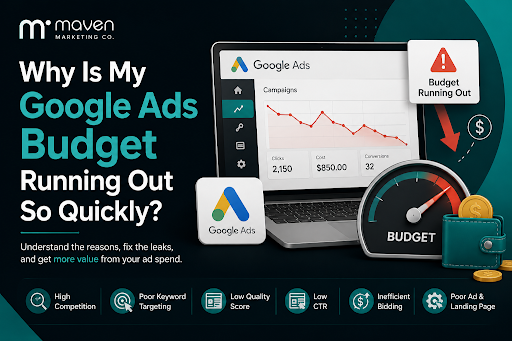
Running a successful Google Ads budget isn’t only about throwing more money at it. It’s more like making every dollar, doing a bit extra. A lot of businesses start a Google Ads campaign with big hopes, then find out their daily budget is gone within a few hours, and that feels weird, right? After that, your ads stop showing effectively, new leads slip away, and your return on investment dips. So if your Google Ads budget is running out too fast, don’t stress. It’s a fairly common issue, and in most situations, it can be repaired with the right approach. There are multiple little things that can drain your advertising money quicker than you expected, from costly keywords to audience targeting that just doesn’t quite fit. In this guide, we’ll walk through why your budget disappears so quickly, how to cut wasteful spend, and the most reliable ways to boost your Google Ads ROI, even if your budget stays the same.