.svg)


%201.svg)

Quick Answers
What is Search Everywhere Optimisation (SEvO) and why does it matter?
Search Everywhere Optimisation, or SEvO, is an evolved approach to SEO that expands beyond Google to optimise content for every platform where users search for information. This includes social media platforms like TikTok and Instagram, e-commerce marketplaces like Amazon, video platforms like YouTube, forums like Reddit, AI-powered tools like ChatGPT and Perplexity, voice assistants like Alexa and Siri, and in-app searches across various applications. Unlike traditional SEO that focuses primarily on ranking in Google search results, SEvO ensures your brand is omnipresent and discoverable wherever your audience spends time searching. For Australian businesses, SEvO matters because search behaviour has fundamentally fragmented. Predictions suggest traditional search engine traffic could drop by 25% by 2026 as users increasingly turn to alternative platforms for different types of queries. The businesses capturing this shifting attention are those treating search as a multi-platform ecosystem rather than a Google-centric activity.
Which platforms should Australian businesses prioritise for SEvO in 2026?
Platform prioritisation depends entirely on your audience demographics, industry, and business model, but data reveals clear trends. For consumer brands targeting Gen Z and millennials, TikTok and Instagram dominate discovery, with 40% of Gen Z using these platforms instead of Google for search. For B2B companies, LinkedIn serves as a critical search platform where professionals discover solutions, with YouTube providing detailed product research through video content. Reddit has emerged as essential across industries, with threads ranking prominently in Google results whilst serving as a standalone search engine where 52 million daily users seek authentic recommendations. AI-powered platforms like ChatGPT and Perplexity increasingly influence purchase decisions, particularly for complex research requiring synthesis of multiple sources. For ecommerce businesses, Amazon functions as the starting point for 63% of product searches. Voice assistants capture 20% of mobile queries, demanding conversational content optimisation. Australian businesses should audit where their target customers actually search, then systematically build presence across those platforms rather than spreading resources thin across every possible channel.
Your Google Analytics shows declining organic traffic despite your SEO fundamentals remaining solid. Meanwhile, your competitor just went viral on TikTok, another is dominating Reddit discussions in your industry subreddit, and a third appears first whenever prospects ask ChatGPT for recommendations.
The rules changed. You are still playing the old game.

The Search Fragmentation Reality
Search in 2026 is no longer a single behaviour occurring in one place. It is a constellation of discovery activities happening across dozens of platforms, each with unique algorithms, content formats, and user expectations.
The statistics tell a sobering story for businesses built on Google dependency. Forty-six percent of adults now use social media as their first platform for online search. For younger demographics, the shift proves even more dramatic, with 40% of Gen Z preferring TikTok or Instagram over Google.
AI-powered search exploded from near zero to directing significant traffic. AI traffic to websites has grown 9.7 times in the past year, with 63% of websites now receiving AI-driven traffic. ChatGPT alone reached 500 million weekly users in April 2025, with that number continuing to climb.
Forum platforms like Reddit experienced a 40% increase in organic search traffic during 2025's first half, capturing attention that previously flowed to traditional websites. Reddit saw a 500% increase in organic visitors from 2022 to 2025, establishing itself as both a search destination and a source feeding Google's own results.
For Australian businesses, this fragmentation creates both threat and opportunity. The threat is that Google-centric strategies deliver diminishing returns as audience attention disperses. The opportunity is that competitors slow to adapt leave market share available for businesses implementing comprehensive SEvO strategies.
Understanding SEvO: More Than Multi-Channel Marketing
Search Everywhere Optimisation differs fundamentally from simply maintaining social media profiles or running campaigns across multiple platforms. SEvO treats each platform as a distinct search engine with unique discovery mechanics requiring platform-specific optimisation strategies.
The core insight is that people search differently depending on context and platform. When researching complex topics, they turn to AI assistants for synthesised information. When seeking authentic product reviews, they browse Reddit threads. When learning how to do something, they watch YouTube tutorials. When discovering trending products, they scroll TikTok.
Each platform rewards different content types, engagement patterns, and discovery signals. YouTube prioritises watch time and engagement velocity. TikTok values completion rates and shares. Reddit rewards early engagement and community value. ChatGPT cites sources demonstrating authority and structured information. Instagram surfaces visually compelling content aligned with trending searches.
Traditional SEO focuses on keywords, backlinks, and technical optimisation for Google's algorithm. SEvO requires understanding platform-specific ranking factors whilst maintaining brand consistency across fragmented ecosystems.
For Australian businesses, this demands strategic focus. You cannot optimise equally for every platform simultaneously. Successful SEvO starts with identifying where your specific audience actually searches, then systematically building presence and optimisation across those priority platforms.
Platform-Specific Strategies: The Practitioner's Playbook
Effective SEvO requires mastering platform-specific tactics rather than applying generic "best practices" uniformly.
Reddit: Authentic Authority Building
Reddit functions as both a standalone search destination and a traffic source for Google results. Reddit threads rank prominently in Google whilst serving 52 million daily active users searching for recommendations.
Successful Reddit SEO starts with understanding subreddit culture. Each community has distinct rules, communication styles, and expectations. The cardinal sin is overt self-promotion. Redditors detect marketing instantly and respond with bans and downvotes.
The winning approach is participation first, promotion later. Start as a member by engaging as a normal user before promoting your brand. Comment genuinely on discussions, share relevant insights from your expertise, and provide helpful answers without mentioning your business.
Once you have established credibility through consistent value contribution, strategic linking becomes acceptable when genuinely relevant. A software company discussing project management challenges might naturally reference their own tool when it solves the specific problem being discussed, but only after establishing authority through dozens of helpful, non-promotional contributions.
Optimise Reddit content for both platform and external search. Use keyword-rich titles formatted as questions or specific statements that mirror how people search. "Best project management tools for Australian marketing agencies 2026" performs better than vague titles. Include relevant keywords naturally throughout your posts and comments whilst maintaining conversational tone.
Timing matters enormously on Reddit. New posts receive the most visibility, so set alerts for relevant keywords and engage early in high-potential discussions. The first quality responses often capture most upvotes and visibility.
Australian businesses should prioritise subreddits where their target customers actively participate. For B2B companies, this might include industry-specific professional communities. For consumer brands, this includes lifestyle and interest-based subreddits aligned with customer demographics.

TikTok: Discovering Through Entertainment
TikTok has evolved beyond entertainment into a primary search platform for younger demographics, with users seeking product recommendations, how-to guidance, and authentic reviews.
TikTok SEO centres on discovery mechanics unique to the platform. The algorithm prioritises completion rate above all else. Videos users watch completely signal quality, triggering broader distribution through the For You page.
Optimise TikTok content by front-loading value. The first three seconds determine whether users continue watching or scroll past. Open with hooks that immediately address the viewer's implied question or need.
Use keyword-rich captions and hashtags strategically. TikTok's search function matches text in captions, so include target keywords naturally. "How to optimise website speed for Australian ecommerce stores" performs better than vague captions.
Leverage trending sounds and formats whilst adapting them to your content topic. TikTok rewards participation in trending formats, providing distribution advantages for content that joins popular audio tracks or visual styles whilst delivering genuine value.
Create content series addressing common customer questions or problems. Serial content encourages follows and repeat viewing, building audience relationships that compound over time.
For Australian businesses, localise content with Australian references, locations, and cultural context. International brands often overlook local nuances, creating opportunities for Australian businesses emphasising local expertise.
YouTube: Owning How-To and Review Queries
YouTube functions as the second-largest search engine globally, dominating video search whilst increasingly appearing in Google's own results for how-to queries, product reviews, and educational content.
YouTube SEO shares similarities with traditional SEO but adds video-specific factors. Optimise titles, descriptions, and tags with relevant keywords whilst maintaining natural, clickable phrasing. "Complete guide to Google Ads for Australian small businesses 2026" balances keyword optimisation with click-through appeal.
Thumbnails determine click-through rates dramatically. Create custom thumbnails with clear text, faces showing genuine expression, and high contrast design that stands out in search results and suggested videos.
Video structure affects retention and ranking. YouTube's algorithm weighs watch time and engagement heavily. Structure videos with clear introductions that state what viewers will learn, organised middle sections delivering on that promise, and strong conclusions that encourage likes, comments, and subscriptions.
Use timestamps and chapters to improve accessibility and searchability. Structured content helps both viewers navigate and YouTube's algorithm understand your video's organisation, potentially earning placement in Google's video snippets.
Build playlists organising content by topic. Playlists encourage binge-watching, increasing total watch time whilst helping YouTube understand your channel's topical focus.
Australian businesses should create content addressing local market specifics. International content often misses Australian regulations, seasonal patterns, or market conditions. Videos like "Australian tax deductions for small businesses 2026" capture searches competitors miss.
ChatGPT and AI Search: Being the Trusted Source
AI-powered search fundamentally changes discovery mechanics. Rather than ranking websites, AI systems synthesise information from multiple sources and generate responses citing selected content.
Getting cited by ChatGPT, Perplexity, Claude, and similar tools requires different optimisation approaches than traditional SEO. AI systems prioritise content demonstrating clear expertise, authority, and trustworthiness whilst providing well-structured, easily parsable information.
Implement comprehensive schema markup across your website. Structured data helps AI systems understand your content's meaning and relationships, increasing citation likelihood when topics align with user queries.
Create content answering specific questions directly and comprehensively. AI tools favour content that provides clear, complete answers without requiring readers to piece together information from multiple sections.
Format content with clear hierarchies using headers, bullet points, and concise paragraphs. AI systems parse well-structured content more effectively than walls of text.
Focus on depth over breadth. Comprehensive topic coverage on specific subjects builds authority AI systems recognise and cite. A single thorough guide often outperforms dozens of superficial posts.
Update content regularly. AI systems prioritise current information, particularly for time-sensitive topics. Outdated content loses citation potential regardless of quality.
For Australian businesses, emphasise local expertise and context. When AI systems field queries about Australian markets, regulations, or conditions, content demonstrating genuine local knowledge gets cited over generic international perspectives.
LinkedIn: Professional Discovery
LinkedIn increasingly functions as a search platform for B2B buyers, particularly during early research stages when professionals seek industry insights, vendor comparisons, and thought leadership.
LinkedIn SEO starts with profile optimisation. Use keywords naturally in your headline, about section, and experience descriptions. LinkedIn's search algorithm matches profiles against user queries, making keyword relevance critical for discovery.
Publish articles and posts addressing common professional challenges in your industry. LinkedIn's algorithm prioritises content generating meaningful engagement through comments and shares, not just likes.
Participate actively in relevant LinkedIn groups where your target customers discuss industry topics. Thoughtful contributions build visibility and authority whilst LinkedIn's algorithm rewards consistent engagement.
Use LinkedIn's native video feature for thought leadership content. Video posts typically receive higher engagement and visibility than text-only updates.
Australian businesses should emphasise local market expertise in LinkedIn content. Australian business conditions, regulations, and market dynamics differ from international markets. Content addressing these specifics attracts relevant local attention.

Voice Search: Conversational Optimisation
Voice search via Alexa, Siri, Google Assistant, and other devices accounts for 20% of mobile queries, with that percentage continuing to grow as device capability improves.
Voice search queries differ from typed searches. People speak more conversationally, asking complete questions rather than typing keyword fragments. "What are the best Italian restaurants near me in Melbourne" versus "Italian restaurants Melbourne."
Optimise for voice by structuring content around question-and-answer formats. Create FAQ sections addressing common queries in conversational language matching how people actually speak.
Focus on local optimisation for voice queries often seeking nearby businesses or services. Ensure Google Business Profile information remains accurate and comprehensive, as voice assistants pull heavily from local listings.
Target featured snippets. Voice assistants frequently read featured snippet content as responses to queries. Content formatted to capture snippets increases voice search visibility.
Use natural language throughout content rather than keyword-stuffed phrasing. Voice search algorithms reward content matching conversational patterns.
Australian businesses should consider local pronunciation and colloquialisms. Australians use specific terms and phrasing that differ from American or British English. Optimising for authentic Australian speech patterns improves voice search performance.
Content Strategy for Multi-Platform Discovery
Effective SEvO requires rethinking content creation from platform-first perspectives rather than creating content then distributing it uniformly.
The core principle is creating platform-native content rather than repurposing. TikTok videos work on TikTok because they match platform conventions. Direct uploads of those same videos to LinkedIn typically fail because format, tone, and content structure mismatch professional platform expectations.
Successful multi-platform content strategies start with understanding which content types each platform rewards. YouTube favours longer-form, educational content. TikTok prefers quick, entertaining snippets. Reddit values detailed, text-based explanations. LinkedIn wants professional insights with business relevance.
Create content specifically for each platform rather than forcing the same content everywhere. A comprehensive YouTube tutorial, TikTok highlight reel of key points, Reddit discussion about common challenges, and LinkedIn thought leadership piece about industry implications all address the same core topic whilst respecting platform-specific formats and audiences.
Build topic clusters across platforms. When you publish a comprehensive guide on your website, create supporting content across other platforms that links back whilst providing platform-appropriate value. This creates topic authority across ecosystems rather than isolated content pieces.
Maintain brand consistency whilst adapting to platform cultures. Your core message, visual identity, and values should remain consistent. How you communicate those elements adapts to platform expectations. Professional on LinkedIn, authentic and casual on TikTok, helpful and detail-oriented on Reddit.
Australian businesses should emphasise local relevance across all platforms. Every piece of content should consider Australian market context, regulations, seasons, and cultural nuances. This localisation creates differentiation versus international competitors whilst building stronger connections with Australian audiences.

Measurement and Attribution in Fragmented Ecosystems
Traditional SEO measurement focused on rankings, organic traffic, and conversions from Google. SEvO demands more sophisticated measurement frameworks tracking discovery across multiple platforms.
Implement UTM parameters consistently across all platforms to track traffic sources accurately. Understanding which platforms drive not just traffic but qualified traffic that converts is essential for resource allocation.
Use platform-specific analytics alongside website analytics. TikTok Analytics, YouTube Analytics, Reddit's analytics, and platform-specific tools provide insights into content performance and audience behaviour that Google Analytics cannot capture.
Track brand searches as a meta-metric indicating multi-platform effectiveness. When your presence across TikTok, Reddit, YouTube, and other platforms increases, branded search volume typically grows as people discover you on alternative platforms then search your name directly.
Monitor share of voice across platforms, not just website traffic. You might rank nowhere on Google but dominate Reddit discussions in your industry. That presence builds authority and drives business even without direct website clicks.
Analyse customer journeys across touchpoints. Modern buyers rarely convert from single platform exposure. They discover on TikTok, research on YouTube, verify on Reddit, then search your brand name to purchase. Attribution models must account for this multi-touch reality.
For Australian businesses, compare performance against local competitors specifically. Global benchmarks often mislead. Understanding how you perform versus Australian competitors across platforms provides more actionable insights.
The SEvO Implementation Framework
Implementing comprehensive SEvO requires systematic approaches preventing resource waste and maintaining strategic focus.
Phase One: Audience Discovery Audit (Week 1-2)
Survey existing customers about where they discover brands and products. The platforms your current customers use provide insights into where prospects likely search.
Analyse competitor presence across platforms. Where are competitors active? Which platforms generate engagement for them? Identify gaps where competitors underinvest.
Use platform-specific search tools to understand query volume and topics. YouTube search suggestions, TikTok's discover page, Reddit's search function, and platform analytics reveal what your audience actually searches for.
Phase Two: Platform Prioritisation (Week 3)
Rank platforms by strategic importance considering audience concentration, competitive intensity, and resource requirements. Most businesses should focus deeply on 3-5 platforms rather than spreading thin across everything.
For Australian B2B companies, typical priorities include LinkedIn, YouTube, Reddit, and AI search optimisation. For consumer brands targeting younger demographics, TikTok, Instagram, YouTube, and Reddit often dominate.
Phase Three: Foundation Building (Months 1-3)
Establish optimised profiles across priority platforms. Complete all profile sections fully, use consistent branding, and include relevant keywords naturally.
Begin consistent content publishing on priority platforms. Start with achievable publishing frequencies you can maintain. One well-produced weekly video beats three rushed, low-quality videos.
Engage authentically on community platforms like Reddit before promoting content. Build credibility through participation.
Phase Four: Optimisation and Scaling (Months 4-6)
Analyse performance data to identify what content types and topics resonate on each platform. Double down on winning formats whilst testing new approaches.
Increase publishing frequency on platforms showing strong engagement and business results. Maintain consistency on platforms showing moderate results whilst continuing to optimise.
Build cross-platform topic clusters. When you publish cornerstone content, create supporting content across platforms that interlinks whilst respecting platform-native formats.
Phase Five: Advanced Integration (Months 7+)
Develop platform-specific content calendars coordinated around business priorities and seasonal opportunities.
Test paid amplification on platforms showing organic traction. Paid distribution often works best for content already demonstrating organic engagement.
Build community management processes ensuring timely responses across platforms. Engagement speed affects algorithmic visibility on most platforms.
Common SEvO Mistakes Killing Results

Even well-intentioned multi-platform efforts fail through common errors that undermine effectiveness.
Treating All Platforms Identically
The biggest mistake is creating content once then posting it everywhere unchanged. Platform algorithms reward native content matching user expectations. Cross-posting identical content typically fails on all platforms simultaneously.
Abandoning Traditional SEO
SEvO supplements rather than replaces traditional SEO. Google still drives enormous traffic for most Australian businesses. Maintaining strong Google presence whilst expanding to other platforms creates compound advantages.
Inconsistent Presence
Publishing sporadically on platforms signals low commitment to algorithms and audiences. Consistent publishing beats frequency. Weekly YouTube videos maintained for months outperform daily uploads that stop after two weeks.
Ignoring Community Norms
Each platform has distinct cultural expectations. Overtly promotional content acceptable on Instagram fails spectacularly on Reddit. Understanding and respecting platform cultures is non-negotiable.
Measuring Vanity Metrics
Follower counts and likes rarely correlate with business results. Focus measurement on traffic quality, engagement depth, and conversion outcomes rather than superficial vanity metrics.
Spreading Too Thin
Attempting presence across every possible platform dilutes resources and attention. Deep engagement on three platforms consistently outperforms shallow presence on ten.
%20(1).avif)
The Australian SEvO Opportunity
Australian businesses face unique SEvO opportunities stemming from geography, market size, and competitive dynamics.
Australia's geographic isolation and distinct market conditions create content gaps international competitors often miss. Content addressing Australian regulations, seasonal patterns, cultural nuances, and local market dynamics attracts Australian searchers across all platforms.
The Australian market's moderate size means lower competitive intensity on many platforms compared to US or UK markets. Australian businesses can dominate local discussions on Reddit, capture Australian-specific queries on YouTube, and build strong local presence on TikTok with less competition than international counterparts face.
Australian English and cultural references create differentiation opportunities. Content using authentic Australian terminology, referencing local experiences, and understanding cultural context resonates more strongly with Australian audiences than generic international content.
The businesses capturing this opportunity are those systematically building Australian-focused presence across platforms whilst international competitors remain focused on larger markets.
Looking Forward: Search in 2027 and Beyond
Search fragmentation will accelerate, not reverse. New platforms will emerge, existing platforms will add discovery features, and AI will continue reshaping how people find information.
The businesses thriving in 2027 will be those that started building multi-platform presence in 2026. Network effects, community relationships, and platform authority compound over time. Early movers in SEvO gain advantages that later entrants struggle to overcome.
Voice search will continue growing as device capability improves and consumer comfort increases. Content optimised for conversational queries gains importance.
AI-powered search will mature, with more consumers defaulting to AI assistants for research. Being the source AI tools cite becomes as important as ranking in Google once was.
Social commerce will blur lines between discovery and transaction. Platforms will integrate purchasing capability, making presence essential for capturing attention at all funnel stages.
Video will dominate across all platforms. Even text-first platforms increasingly prioritise video content. Businesses without video capabilities face systematic disadvantages.
Your SEvO Starting Point
You cannot implement comprehensive SEvO overnight. Strategic SEvO starts with focused action on priority platforms whilst maintaining existing strengths.
Audit where your customers actually search today. That data guides platform prioritisation better than industry trends or competitor actions.
Choose 2-3 platforms where your audience concentrates and competitive gaps exist. Build deep presence there before expanding.
Create platform-native content consistently. Mediocre content published regularly outperforms brilliant content published sporadically.
Engage authentically in communities before promoting. Participation builds authority and relationships that promotional content alone cannot create.
Measure what matters. Traffic and engagement mean nothing without business outcomes. Track metrics connecting platform presence to revenue.
The window remains open but narrowing. Australian businesses implementing SEvO now gain compound advantages as search fragmentation accelerates. Those waiting for perfect clarity will find competitors have already captured the attention you need.
Ready to build systematic presence across the platforms where your Australian customers actually search? The specialists at Maven Marketing Co. implement complete Search Everywhere Optimisation strategies for Australian businesses. We do not just recommend posting on TikTok or Reddit. We conduct comprehensive audience discovery audits identifying exactly where your customers search, develop platform-specific content strategies respecting community norms and algorithmic priorities, build consistent publishing systems maintaining presence without overwhelming resources, and create measurement frameworks proving which platforms drive actual business results. Stop losing market share to competitors building multi-platform presence whilst you remain Google-dependent. Contact us today for a SEvO audit revealing where your customers search and creating your roadmap to capturing attention across fragmented ecosystems before competitors cement their advantages.

Table of contents
read more blogs
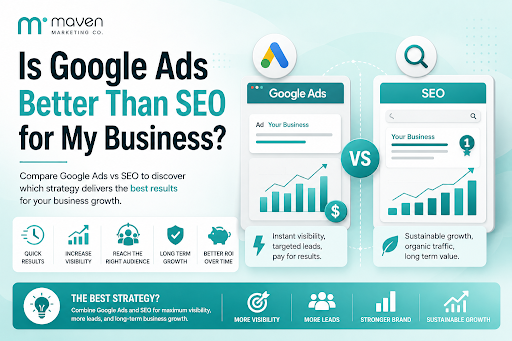
Is Google Ads Better Than SEO for My Business
One of the biggest questions business owners ask when they are planning online growth is whether they should invest in Google Ads or SEO. Both are strong marketing plays that help your company show up in Google search results, but they do things in separate lanes. Google Ads gives quicker visibility and can bring in leads fast, whereas SEO more or less focuses on slow, steady organic traffic that tends to grow the longer you keep building it. Picking the right direction depends on what you want to achieve, how much money you can spend, how crowded the market is, and how quickly you need results, like sooner rather than later. The good news is you don’t always have to choose one or the other; it’s not exactly a black-and-white situation. If you take time to understand the strongest points of both, you can put together a more sensible digital marketing plan that supports consistent expansion. In this guide, we’ll compare Google Ads vs SEO, explain the main differences, and help you figure out what option makes the most sense for your business.

When Should I Hire a Digital Marketing Agency
Growing a business today takes more than just having a website or throwing a post on social media; customers usually search around online, compare providers, skim reviews, and basically expect the brand to show up with a solid digital presence before they even think about buying. Many businesses try to run their marketing themselves, but there comes a point when “doing it all in-house” becomes clunky and hard to manage, all at once. Knowing when to hire a digital marketing agency can end up making a big, real difference for your growth. If you’re not getting enough leads, or your online visibility feels stuck, or sales are just not moving, the right agency can bring the know-how, plus a clear plan, to help you get noticeably better outcomes. In this guide, we’ll dig into what a digital marketing agency actually does, the usual signs it’s time to bring one on, and how picking the right marketing partner can help your business move forward at a faster pace.
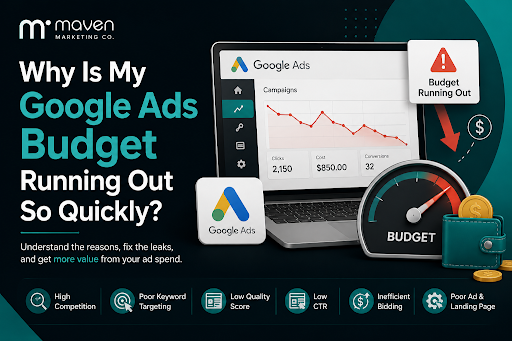
Why Is My Google Ads Budget Running Out So Quickly
Running a successful Google Ads budget isn’t only about throwing more money at it. It’s more like making every dollar, doing a bit extra. A lot of businesses start a Google Ads campaign with big hopes, then find out their daily budget is gone within a few hours, and that feels weird, right? After that, your ads stop showing effectively, new leads slip away, and your return on investment dips. So if your Google Ads budget is running out too fast, don’t stress. It’s a fairly common issue, and in most situations, it can be repaired with the right approach. There are multiple little things that can drain your advertising money quicker than you expected, from costly keywords to audience targeting that just doesn’t quite fit. In this guide, we’ll walk through why your budget disappears so quickly, how to cut wasteful spend, and the most reliable ways to boost your Google Ads ROI, even if your budget stays the same.