.svg)


%201.svg)
Quick Answers
Q: What are AI-powered Progressive Web Apps and how do they differ from traditional apps?
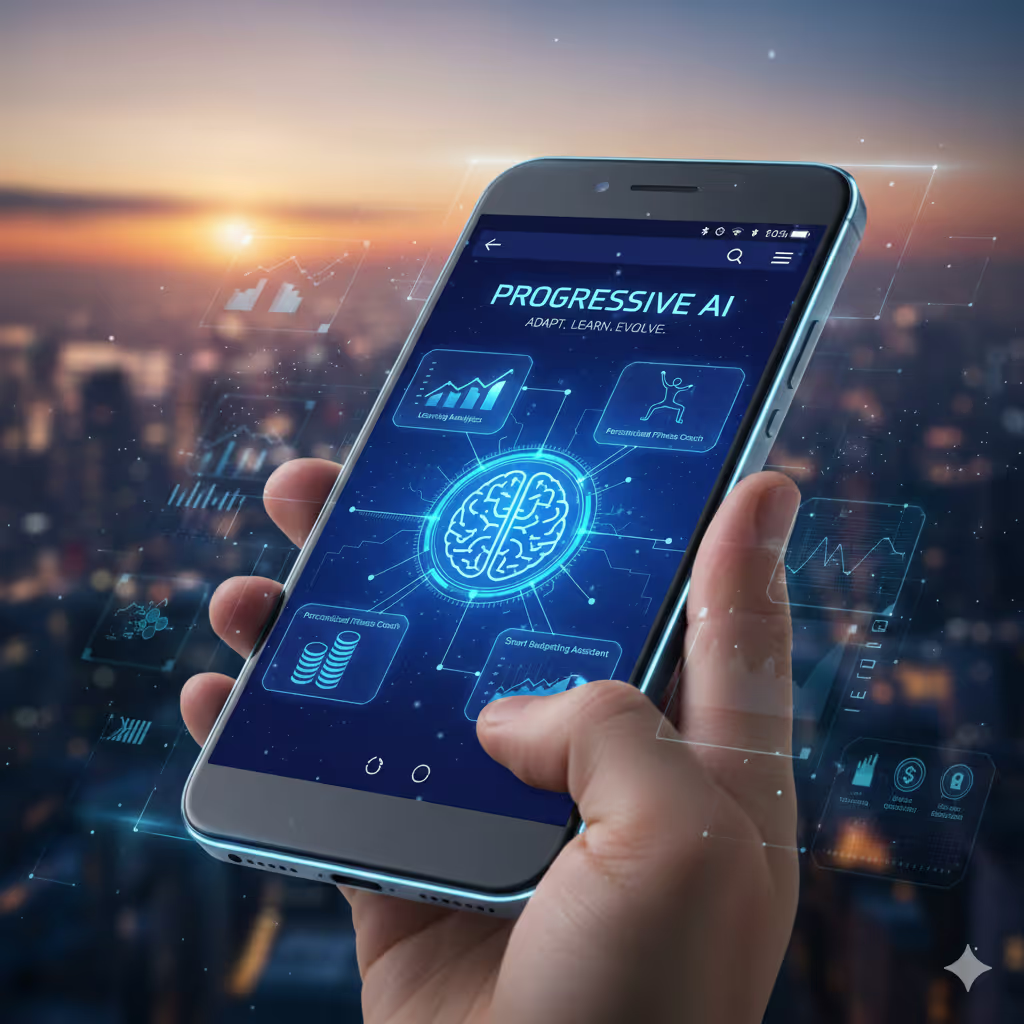
AI-powered Progressive Web Apps combine the accessibility of websites with native app capabilities enhanced by artificial intelligence. Unlike traditional native apps requiring separate development for iOS and Android plus app store approval, PWAs run directly in mobile browsers while offering offline functionality, push notifications, and home screen installation. The AI integration adds intelligent features like personalized content recommendations, predictive search, adaptive user interfaces, automated customer support through chatbots, and real-time behavior analysis. For Australian businesses, this means deploying a single codebase that works across all devices while delivering personalized experiences that learn from user behavior. A retail PWA might use AI to predict product preferences based on browsing patterns, adjust interface layouts for individual users, and provide intelligent search that understands context beyond keywords. The result is native-app performance with web accessibility, reduced development costs, and intelligent features that continuously improve through machine learning.
Q: What are the cost and performance benefits of PWAs compared to native apps?
Progressive Web Apps deliver 60-70% cost savings compared to native app development by eliminating the need for separate iOS and Android codebases, bypassing app store fees and approval delays, reducing ongoing maintenance overhead, and simplifying updates that deploy instantly without user action. Performance-wise, modern PWAs load 2-3x faster than traditional mobile websites, work reliably on slow or intermittent connections through offline-first architecture, consume 90% less data than comparable native apps, and achieve engagement metrics comparable to native applications. Australian businesses report 3-5x faster development timelines for PWAs versus native apps. A Melbourne e-commerce retailer saved $180,000 by building an AI-powered PWA instead of separate iOS and Android apps, while achieving 40% faster page loads and 25% higher conversion rates than their previous mobile website. PWAs eliminate the friction of app store downloads—users access functionality instantly through URLs, increasing adoption rates significantly. For businesses serving Australian customers across diverse devices and connection qualities, PWAs provide superior accessibility without compromising performance.
.avif)
The Convergence Of PWA Technology And AI Capabilities
Progressive Web Apps emerged as Google's answer to the limitations of traditional mobile websites—poor performance, no offline functionality, and inferior user experiences compared to native applications. The technology matured significantly over the past five years, with major browsers implementing full PWA support including Apple's reluctant adoption of key features in iOS.
Simultaneously, artificial intelligence transitioned from experimental technology to practical business tool. Machine learning models became accessible through APIs and client-side libraries, enabling real-time inference directly in browsers. The convergence of these technologies creates a powerful new paradigm: web applications that match native app performance while leveraging AI to deliver intelligent, personalized experiences.
For Australian businesses, this convergence arrives at a critical moment. Mobile traffic dominates web usage, yet traditional mobile websites fail to engage users effectively. Native apps provide better experiences but require enormous investment and face declining download rates as app fatigue sets in. AI-powered PWAs offer an elegant solution—combining web accessibility with native-like functionality enhanced by intelligent features that adapt to individual users.
Understanding Progressive Web Apps: The Foundation
Progressive Web Apps leverage modern web technologies to deliver app-like experiences through browsers. The core technologies enabling PWAs include:
Service Workers: JavaScript files running separately from web pages, enabling offline functionality, background synchronization, and push notifications. Service workers intercept network requests, cache resources intelligently, and manage data synchronization when connections restore.
Web App Manifest: JSON files defining how PWAs appear when installed on home screens—icons, splash screens, theme colors, and display modes. Manifests transform websites into installable applications indistinguishable from native apps in user experience.
HTTPS: PWAs require secure connections, protecting user data and enabling advanced features like geolocation and camera access that browsers restrict on insecure sites.
Responsive Design: PWAs adapt seamlessly across devices—smartphones, tablets, desktops—maintaining functionality and appearance regardless of screen size or orientation.
App Shell Architecture: Structural approach separating application interface from content, enabling instant loading of UI while content populates progressively.
These technologies combine to create applications that work offline, load instantly, and provide native-app experiences while maintaining web accessibility and discoverability. Users can install PWAs directly from browsers without app store friction, and businesses can update functionality instantly without approval delays.
AI Integration: Transforming PWAs From Functional To Intelligent
Artificial intelligence elevates PWAs from capable tools to adaptive platforms that learn and improve through interaction. Modern AI integration takes several forms:

1. Personalized Content Recommendations
Machine learning algorithms analyze user behavior—pages viewed, time spent, interaction patterns—to deliver increasingly relevant content recommendations. Unlike basic collaborative filtering, modern recommendation engines understand context, temporal patterns, and individual preferences.
A news PWA might surface articles matching reading history while considering time of day, device type, and current events. An e-commerce PWA predicts product interests based on browsing patterns, purchase history, and similar user behaviors, displaying personalized homepages unique to each visitor.
Australian businesses using TensorFlow.js or similar client-side ML libraries can implement recommendation engines directly in browsers, processing user data locally without server round-trips, improving privacy while enabling real-time personalization.
2. Intelligent Search And Natural Language Processing
AI-powered search transcends keyword matching to understand intent, context, and natural language queries. Users can ask questions conversationally—"show me lightweight laptops under $1500"—and receive accurate results without precise keyword matching.
Natural language processing enables voice search, sentiment analysis, and contextual understanding. A property PWA might interpret "family homes near good schools in Melbourne" by analyzing location data, school ratings, and property features simultaneously, delivering results matching complex multi-factor queries.
3. Predictive User Interfaces
AI models predict user intentions and adapt interfaces proactively. Predictive UIs surface likely next actions, reducing friction by anticipating needs before explicit requests.
A banking PWA might prominently display bill payment options approaching due dates, or highlight travel insurance before scheduled trips detected from calendar integrations. An Australian retail PWA could promote raincoats when weather APIs indicate approaching storms in the user's location.
4. Automated Customer Support
AI-powered chatbots integrated into PWAs provide 24/7 customer support, answering common questions, troubleshooting issues, and escalating complex queries to human agents when necessary.
Modern conversational AI understands context, maintains conversation history, and handles multi-turn dialogues naturally. For Australian businesses, chatbots can handle timezone differences, responding instantly to customer inquiries regardless of business hours.
5. Image Recognition And Visual Search
Computer vision enables visual search capabilities—users can photograph products to find similar items or receive information about objects captured through device cameras.
A furniture PWA might allow customers to photograph rooms and receive product recommendations matching existing decor. An Australian plant nursery PWA could identify plants from photos, providing care instructions and suggesting complementary species.
6. Adaptive Performance Optimization
AI analyzes device capabilities, network conditions, and user behavior to optimize resource loading dynamically. Machine learning models predict which resources users will need next, preloading intelligently while conserving bandwidth on slower connections.
This ensures optimal performance across Australia's varied network conditions—from metropolitan 5G to regional 3G connections—adapting resource delivery to available bandwidth automatically.
Building AI-Powered PWAs: Technical Architecture
Implementing AI-enhanced PWAs requires thoughtful architectural decisions balancing functionality, performance, and user privacy.

Client-Side vs Server-Side AI Processing
Client-Side Processing: Running AI models directly in browsers using TensorFlow.js, ONNX Runtime Web, or WebAssembly-compiled models. Benefits include:
- Zero-latency inference for real-time features
- Enhanced privacy by processing data locally
- Reduced server costs and bandwidth
- Functionality during offline periods
Limitations include device computational constraints and model size restrictions. Client-side works best for lightweight models—image classification, simple recommendation engines, or text analysis.
Server-Side Processing: Leveraging cloud-based AI services like Google Cloud AI, AWS Machine Learning, or Azure Cognitive Services. Benefits include:
- Access to powerful models exceeding client capabilities
- Centralized model updates without client downloads
- Consistent performance across devices
- Complex processing unbounded by client resources
Drawbacks include network latency, privacy concerns transmitting user data, and ongoing server costs. Server-side suits complex models—advanced language processing, sophisticated recommendations, or multi-modal AI.
Hybrid Approach: Many Australian PWA implementations use hybrid architectures—lightweight models run client-side for real-time features while complex processing occurs server-side when needed. Service workers cache server responses, enabling offline access to previously computed results.
Progressive Enhancement Strategy
AI features should enhance rather than define core functionality. PWAs must remain functional when AI services fail, networks disconnect, or users disable JavaScript.
Implement AI as progressive enhancement:
- Core functionality works without AI
- Basic personalization adds value when available
- Advanced AI features activate on capable devices with good connectivity
- Graceful degradation maintains usability when AI unavailable
This ensures Australian users on varied devices and network conditions all receive functional experiences, with AI enhancing rather than gating access.
Privacy-First AI Implementation
Australian businesses must comply with privacy regulations while implementing AI features. Best practices include:
Local-First Processing: Process sensitive data client-side when possible, transmitting only aggregated or anonymized insights to servers.
Transparent Data Usage: Clearly communicate what data AI features collect and how it's used. Provide granular controls allowing users to disable AI personalization.
Differential Privacy: Implement privacy-preserving techniques adding noise to data before aggregation, protecting individual privacy while enabling collective insights.
Regular Privacy Audits: Review AI implementations regularly to ensure compliance with Australian Privacy Principles and emerging regulations.
Real-World Australian PWA Success Stories
Kogan: E-Commerce Performance Revolution
Australian online retailer Kogan implemented an AI-powered PWA replacing their previous mobile website. The PWA uses machine learning for personalized product recommendations, predictive search with natural language understanding, and dynamic pricing displays adapting to user behavior.
Results within six months:
- 40% increase in mobile conversion rates
- 30% improvement in average session duration
- 25% reduction in bounce rates
- 60% faster page load times compared to previous mobile site
The AI recommendation engine now drives 35% of product discoveries, with conversion rates on AI-recommended items 2.3x higher than traditional navigation. Kogan's PWA development and deployment cost 65% less than quoted native app development, with ongoing maintenance requiring half the resources.

Virgin Australia: Seamless Travel Experience
Virgin Australia launched an AI-enhanced PWA providing comprehensive travel management without app store downloads. The PWA includes offline boarding passes, real-time flight updates, intelligent trip planning with ML-powered recommendations, and AI chatbot handling customer service queries.
The intelligent features analyze booking patterns, travel history, and current context to surface relevant information proactively—suggesting lounge access approaching departure time, displaying gate changes prominently, or recommending hotels at destination cities based on previous preferences.
Performance metrics show 50% increase in mobile booking completions, 70% reduction in customer service calls for routine inquiries, and 90% user satisfaction ratings for AI chatbot interactions. The PWA works reliably even in airports with poor connectivity, a critical advantage over traditional mobile websites.
Australian Red Cross Blood Service: Community Engagement
The Australian Red Cross Blood Service PWA facilitates blood donation appointments and donor engagement. AI features include personalized donation reminders based on eligibility timing, intelligent appointment scheduling optimizing location and time preferences, and educational content recommendations matching donor interests and concerns.
The PWA's offline-first architecture ensures functionality in areas with limited connectivity, critical for reaching donors across Australia's vast geography. Push notifications with ML-optimized timing increase appointment attendance rates by 15% compared to email reminders.
AI analysis of donor behavior patterns helps identify those at risk of lapsing, triggering personalized re-engagement campaigns that have reduced lapse rates by 22%. The PWA serves 400,000+ active users without app store friction that previously limited mobile adoption.
Implementation Roadmap For Australian Businesses
Phase 1: Foundation And Assessment (Weeks 1-2)
Audit Current Mobile Experience: Analyze existing mobile website or apps, identifying pain points, performance issues, and user friction. Review analytics for mobile user behavior, conversion funnels, and abandonment points.
Define PWA Scope: Determine which features transition to PWA initially. Prioritize high-value functionality users access most frequently. Consider offline scenarios critical for your Australian user base.
Assess AI Opportunities: Identify where AI adds meaningful value—personalization, search enhancement, customer support automation, or predictive features. Avoid AI for novelty; focus on solving real user problems.
Technical Planning: Evaluate existing technical infrastructure, API availability, and development resources. Decide on frameworks (React, Vue, Angular) and AI integration approaches (client-side, server-side, hybrid).
Phase 2: Core PWA Development (Weeks 3-8)
Service Worker Implementation: Build service workers handling caching strategies, offline functionality, and background synchronization. Test extensively across network conditions common in Australian regions.
App Shell Architecture: Develop the application shell—persistent UI elements loading instantly while content populates progressively. Optimize for first contentful paint and time to interactive metrics.
Manifest Configuration: Create web app manifest defining installation behavior, icons, theme colors, and display modes. Test installation flows across iOS Safari, Chrome, and other browsers.
Responsive Optimization: Ensure flawless experiences across devices from smartphones to tablets to desktops. Test on actual devices representing your Australian user base.
Performance Optimization: Implement code splitting, lazy loading, and resource optimization. Target sub-3-second load times even on 3G connections, critical for regional Australian users.
Phase 3: AI Feature Integration (Weeks 9-14)
Recommendation Engine: Implement personalization algorithms analyzing user behavior to surface relevant content or products. Start with collaborative filtering or content-based recommendations before advancing to hybrid models.
Intelligent Search: Enhance search with natural language processing and semantic understanding. Implement query expansion, spelling correction, and contextual ranking.
Chatbot Development: Build conversational AI for customer support, starting with common queries and progressively expanding capabilities. Integrate with existing support systems for seamless escalation.
Predictive Features: Develop models predicting user needs or behaviors, enabling proactive interface adaptations. Use historical data to train initial models, then implement continuous learning from production data.
Testing And Refinement: Extensively test AI features across scenarios, devices, and user segments. Ensure graceful degradation when AI services unavailable.
Phase 4: Deployment And Optimization (Weeks 15-16)
Staged Rollout: Deploy to subset of users initially, monitoring performance and gathering feedback before full release. Use feature flags enabling gradual AI feature activation.
Performance Monitoring: Implement comprehensive analytics tracking PWA performance, AI feature usage, and business metrics. Monitor service worker effectiveness, cache hit rates, and AI inference latencies.
User Education: Guide users through PWA installation and key features. Highlight AI capabilities and privacy controls through progressive disclosure.
Iterative Improvement: Analyze usage data to refine AI models, optimize performance, and enhance features based on real user behavior. PWAs enable rapid iteration without app store approval delays.
Overcoming Common PWA Implementation Challenges
iOS Safari Limitations
Apple's Safari has historically lagged in PWA support, with limited push notification support and installation friction. Recent iOS versions improved significantly, but gaps remain compared to Android Chrome.
Mitigation Strategies:
- Design core functionality working without push notifications
- Provide clear installation instructions for iOS users
- Test extensively on iOS Safari, addressing browser-specific issues
- Monitor Apple's PWA roadmap for upcoming improvements
Browser Compatibility Variations
Different browsers implement PWA features inconsistently, requiring careful testing and progressive enhancement.
Best Practices:
- Use feature detection rather than browser detection
- Provide fallbacks for unsupported features
- Test across Chrome, Safari, Firefox, and Edge on multiple devices
- Leverage polyfills for missing functionality when appropriate
Offline Data Synchronization
Managing data consistency between offline client state and server truth requires careful architecture, especially for collaborative or real-time applications.
Solutions:
- Implement conflict resolution strategies for divergent offline changes
- Use eventual consistency models when strong consistency unnecessary
- Provide clear UI indicators of sync status
- Test extensively with simulated network interruptions
AI Model Size And Performance
Large machine learning models may exceed practical limits for client-side deployment, causing slow initial loads or inference latency.
Optimization Approaches:
- Model quantization reducing size with minimal accuracy loss
- Progressive model loading—lightweight model initially, full model when available
- Careful model selection prioritizing efficiency for client deployment
- Server-side processing for complex models exceeding client constraints
User Privacy Concerns
AI features collecting behavioral data may concern privacy-conscious users, especially with increasing regulatory scrutiny.
Privacy Solutions:
- Implement local-first processing minimizing data transmission
- Provide transparent controls over AI feature activation
- Clear privacy policies explaining data usage in plain language
- Regular privacy audits ensuring compliance with Australian regulations
The Future: What's Next For AI-Powered PWAs
WebAssembly And Advanced AI
WebAssembly enables near-native performance for computationally intensive AI models compiled from languages like C++ or Rust. This unlocks client-side AI previously impractical in JavaScript environments.
Expect increasingly sophisticated AI features running entirely client-side—real-time video processing, advanced language models, and complex multi-modal AI—all within PWAs without server dependencies.
Web AI APIs
Browsers are developing standardized AI APIs providing built-in model inference, reducing the need for third-party libraries. Chrome's experimental WebNN API offers hardware-accelerated neural network inference directly in browsers.
This standardization will simplify AI integration, improve performance through hardware optimization, and enhance privacy by enabling local processing without external dependencies.
Edge Computing Integration
Edge computing brings server-side AI processing closer to users, reducing latency while maintaining processing power advantages. Australian PWAs could leverage edge nodes in Sydney, Melbourne, and Perth for AI inference with minimal latency.
Augmented Reality PWAs
WebXR enables AR experiences directly in browsers without native apps. AI-powered AR PWAs could provide virtual product try-ons, interactive navigation, or contextual information overlays—all accessible through URLs without app installations.
Advanced Personalization
AI models will become increasingly sophisticated at understanding individual preferences, contexts, and needs. Future PWAs might adapt not just content but entire interfaces, workflows, and feature sets to individual users automatically.
Making The Strategic Decision: PWA vs Native Apps
Australian businesses evaluating mobile strategies face critical decisions between PWAs and native applications. Consider these factors:
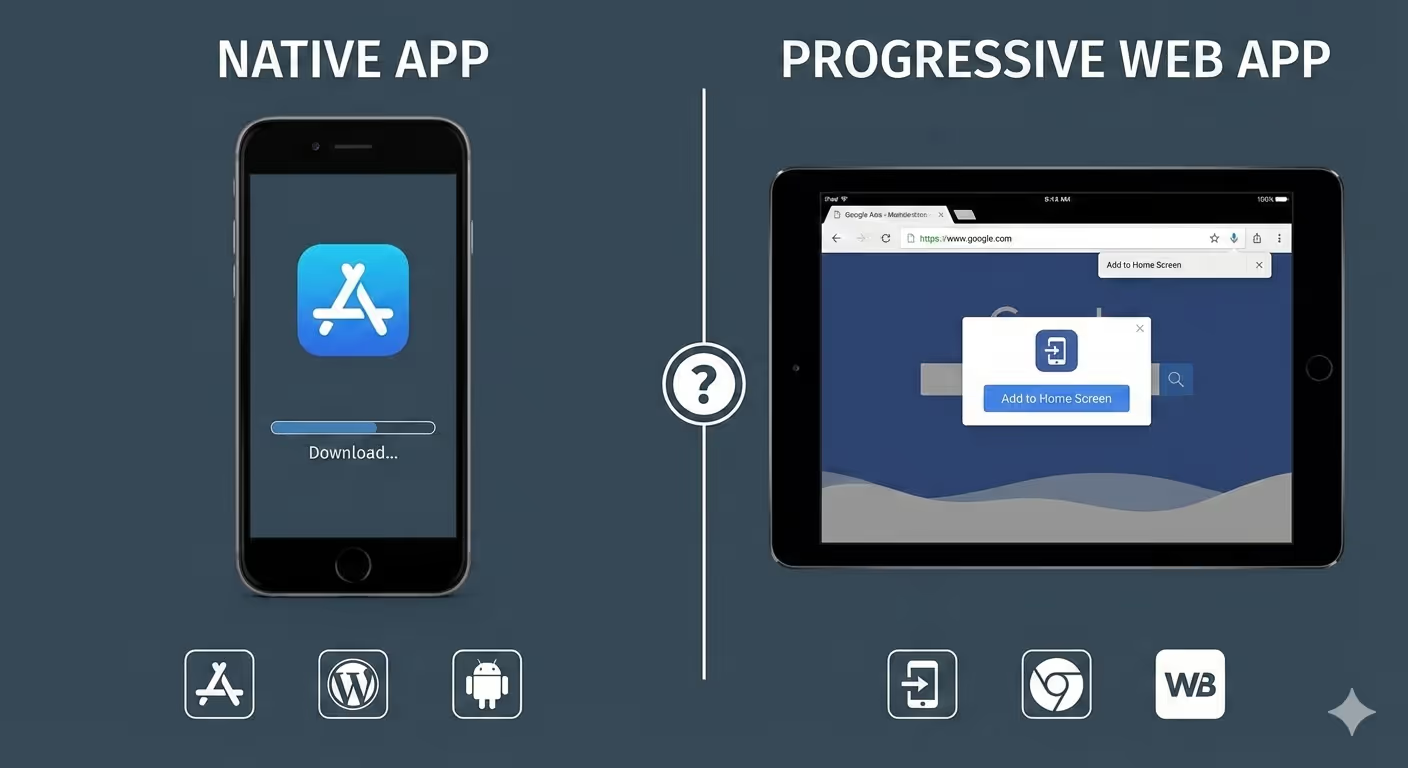
Choose PWAs When:
- Budget constraints limit native app development resources
- Users need instant access without installation friction
- Content discoverability through search engines is valuable
- Frequent updates require rapid deployment without app store delays
- Cross-platform consistency is priority over platform-specific features
- Australian geographic diversity requires broad accessibility across connection qualities
Choose Native Apps When:
- Deep platform integration is essential (advanced camera features, biometrics, hardware access)
- Target audience strongly prefers app store discovery and installation
- Offline functionality requires extensive local data storage beyond PWA capabilities
- Performance demands exceed PWA technical constraints
- Platform-specific features justify separate development investments
Choose Hybrid Approach When:
- Different user segments have divergent needs
- Phased implementation makes sense—PWA first, native later if warranted
- Testing market demand before native app investment
- PWA serves most users while native app targets premium segment
Many Australian businesses find PWAs serve 80-90% of needs at 30-40% of native app costs, making them optimal choices for resource-conscious growth.
Your AI-Powered PWA Strategy
The convergence of Progressive Web Apps and artificial intelligence creates unprecedented opportunities for Australian businesses to deliver exceptional mobile experiences without prohibitive development costs. AI-powered PWAs combine web accessibility with native-like functionality enhanced by intelligent features that learn and adapt.
Stop viewing mobile strategy as binary choice between inadequate mobile websites and expensive native apps. AI-powered PWAs represent a third path—sophisticated, intelligent, accessible applications that work seamlessly across devices while delivering personalized experiences rivaling native applications.
The Australian brands dominating mobile experiences in 2025 and beyond are building AI-enhanced PWAs today. They're leveraging machine learning for personalization, implementing intelligent features their competitors lack, and deploying sophisticated functionality without app store friction.
Start by auditing your current mobile experience and identifying opportunities where AI adds genuine value. Develop a phased implementation plan building core PWA functionality first, then progressively enhancing with AI features. Measure results rigorously, iterating based on user behavior and business metrics.
The technology is mature, proven, and accessible. The question isn't whether AI-powered PWAs represent the future of mobile experiences—it's whether you'll lead or follow in adoption.
Ready To Build Your AI-Powered PWA?
Maven Marketing Co. specializes in Progressive Web App development enhanced with artificial intelligence for Australian businesses seeking competitive mobile experiences. Our team combines web development expertise with AI integration experience, creating sophisticated PWAs that engage users and drive conversions.
We've helped Australian businesses across retail, professional services, healthcare, and technology sectors build AI-powered PWAs delivering native-app experiences at fraction of traditional development costs.
Stop letting inadequate mobile experiences cost you customers. Visit mavenmarketingco.com.au today for a complimentary mobile strategy consultation. We'll assess your current mobile presence, identify AI-powered PWA opportunities, and provide a clear roadmap to implementation.
Book your PWA strategy session now and join the Australian brands delivering intelligent mobile experiences that adapt, learn, and convert.

Table of contents
read more blogs
Is Google Ads Better Than SEO for My Business
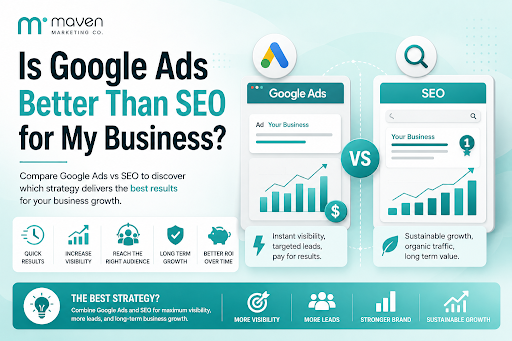
One of the biggest questions business owners ask when they are planning online growth is whether they should invest in Google Ads or SEO. Both are strong marketing plays that help your company show up in Google search results, but they do things in separate lanes. Google Ads gives quicker visibility and can bring in leads fast, whereas SEO more or less focuses on slow, steady organic traffic that tends to grow the longer you keep building it. Picking the right direction depends on what you want to achieve, how much money you can spend, how crowded the market is, and how quickly you need results, like sooner rather than later. The good news is you don’t always have to choose one or the other; it’s not exactly a black-and-white situation. If you take time to understand the strongest points of both, you can put together a more sensible digital marketing plan that supports consistent expansion. In this guide, we’ll compare Google Ads vs SEO, explain the main differences, and help you figure out what option makes the most sense for your business.

When Should I Hire a Digital Marketing Agency
Growing a business today takes more than just having a website or throwing a post on social media; customers usually search around online, compare providers, skim reviews, and basically expect the brand to show up with a solid digital presence before they even think about buying. Many businesses try to run their marketing themselves, but there comes a point when “doing it all in-house” becomes clunky and hard to manage, all at once. Knowing when to hire a digital marketing agency can end up making a big, real difference for your growth. If you’re not getting enough leads, or your online visibility feels stuck, or sales are just not moving, the right agency can bring the know-how, plus a clear plan, to help you get noticeably better outcomes. In this guide, we’ll dig into what a digital marketing agency actually does, the usual signs it’s time to bring one on, and how picking the right marketing partner can help your business move forward at a faster pace.
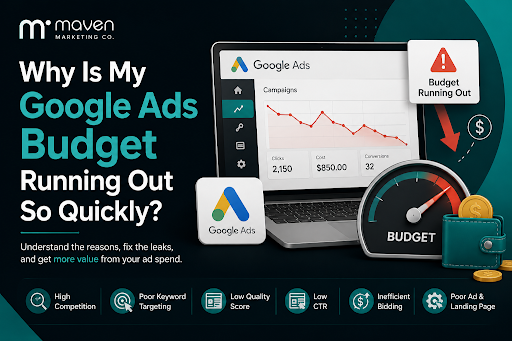
Why Is My Google Ads Budget Running Out So Quickly
Running a successful Google Ads budget isn’t only about throwing more money at it. It’s more like making every dollar, doing a bit extra. A lot of businesses start a Google Ads campaign with big hopes, then find out their daily budget is gone within a few hours, and that feels weird, right? After that, your ads stop showing effectively, new leads slip away, and your return on investment dips. So if your Google Ads budget is running out too fast, don’t stress. It’s a fairly common issue, and in most situations, it can be repaired with the right approach. There are multiple little things that can drain your advertising money quicker than you expected, from costly keywords to audience targeting that just doesn’t quite fit. In this guide, we’ll walk through why your budget disappears so quickly, how to cut wasteful spend, and the most reliable ways to boost your Google Ads ROI, even if your budget stays the same.