.svg)


%201.svg)
Quick Answers
What are the most important social media trends for marketers in 2026?
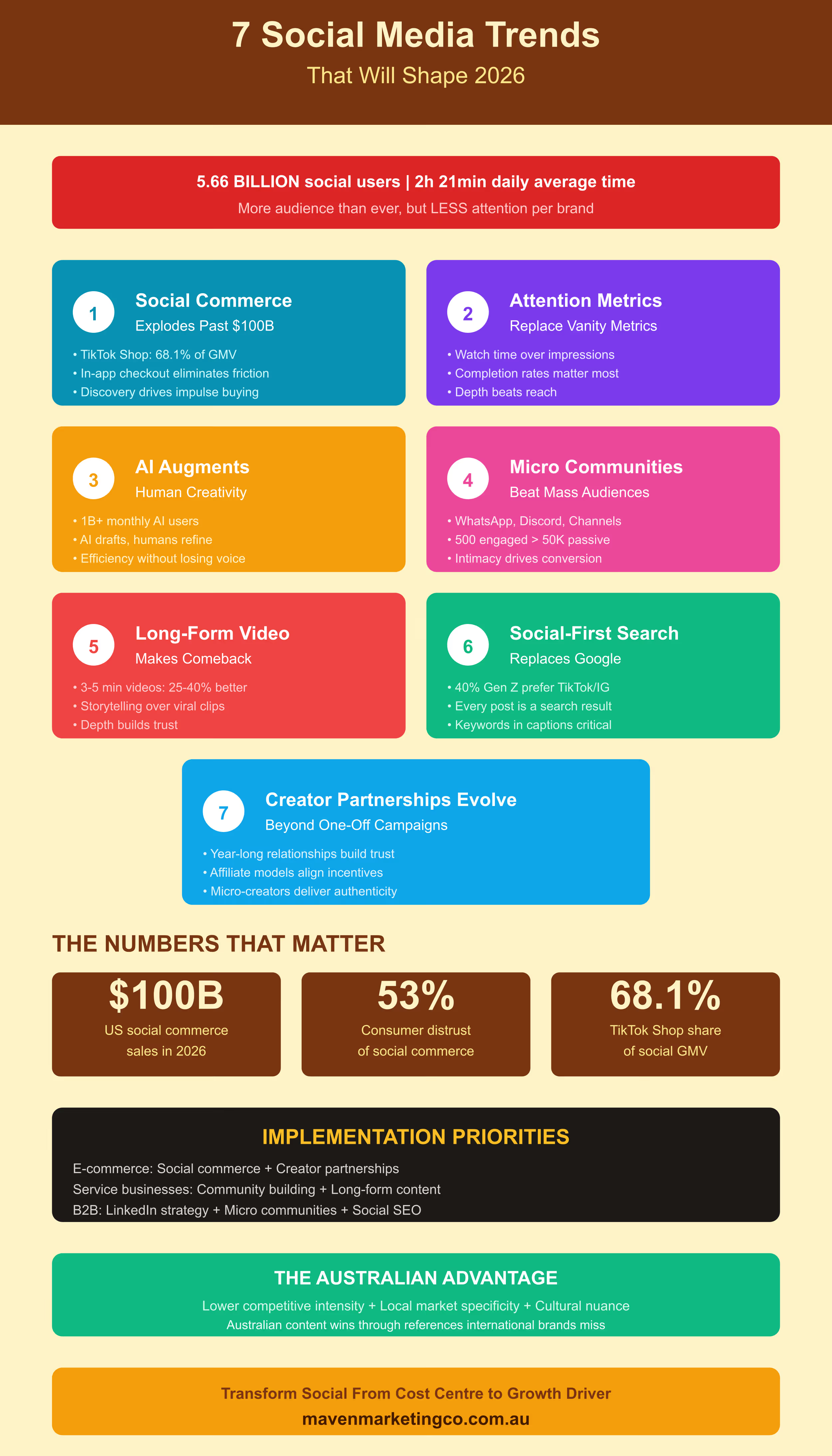
The seven most impactful social media trends for 2026 include social commerce surpassing $100 billion in US sales with TikTok Shop and Instagram Checkout driving in-app purchasing, attention-based metrics replacing vanity metrics as platforms prioritise watch time and engagement depth over reach, AI-augmented content creation where successful marketers use AI for efficiency whilst preserving human creativity and brand authenticity, micro communities and private channels replacing mass broadcast as intimate spaces like Discord and WhatsApp Channels build deeper customer relationships, long-form video making a comeback as audiences embrace 3 to 5 minute storytelling over 15-second clips, social-first SEO with platforms like TikTok and Instagram becoming primary search engines for younger demographics, and creator partnership evolution moving from one-off sponsored posts to year-long collaborations building genuine brand alignment. Australian marketers must understand these are not isolated tactics but interconnected shifts requiring fundamental strategy changes. The businesses thriving in 2026 treat social media as an integrated ecosystem driving commerce, community, and discovery simultaneously rather than just awareness and engagement.
How is social commerce changing in 2026 and should Australian businesses invest?
Social commerce in the United States is projected to surpass $100 billion for the first time in 2026, growing 19.5% year-over-year, driven primarily by TikTok Shop's frictionless in-app checkout and Instagram's expanding shoppable features. Globally, the social commerce market is projected to reach $2.9 trillion by 2026, with TikTok accounting for 68.1% of total social commerce GMV. For Australian businesses, investment depends on target demographics and product types. Social commerce performs exceptionally well for impulse purchases, beauty, fashion, and products under $100 that benefit from visual demonstration. TikTok Shop particularly resonates with Gen Z and millennial audiences who increasingly discover and purchase without leaving social apps. However, barriers exist including consumer trust concerns, with 53% of US consumers distrusting products sold through social media, and platform uncertainty surrounding potential TikTok restrictions. Australian businesses should start experimentally with shoppable posts and creator partnerships rather than complete platform migration, measuring conversion rates against traditional e-commerce channels whilst building trust through authentic content and transparent practices. Social commerce success in 2026 requires treating it as discovery-driven commerce rather than traditional retail transplanted to social platforms.
Your marketing team just presented quarterly social media results. Reach is up 40%. Engagement rate increased 15%. Yet revenue attributed to social media declined.
Something fundamental has changed. The metrics you have been chasing no longer correlate with business outcomes. Meanwhile, your competitor with a fraction of your following is driving actual sales through TikTok Shop, building engaged communities in private channels, and appearing first when prospects search on Instagram.
The social media playbook you mastered in 2024 is obsolete. These seven trends define what replaces it.
Trend 1: Social Commerce Moves from Experiment to Revenue Driver
Social commerce has finally reached critical mass in 2026, transforming from interesting experiment into genuine revenue channel for Australian businesses across categories.
The numbers tell the story. US social commerce sales will rise 19.5% in 2026 to reach $85.58 billion, surpassing $100 billion for the first time. Globally, the market approaches $2.9 trillion, driven primarily by seamless in-app purchasing experiences that eliminate friction between discovery and purchase.
TikTok Shop Dominates Discovery Commerce
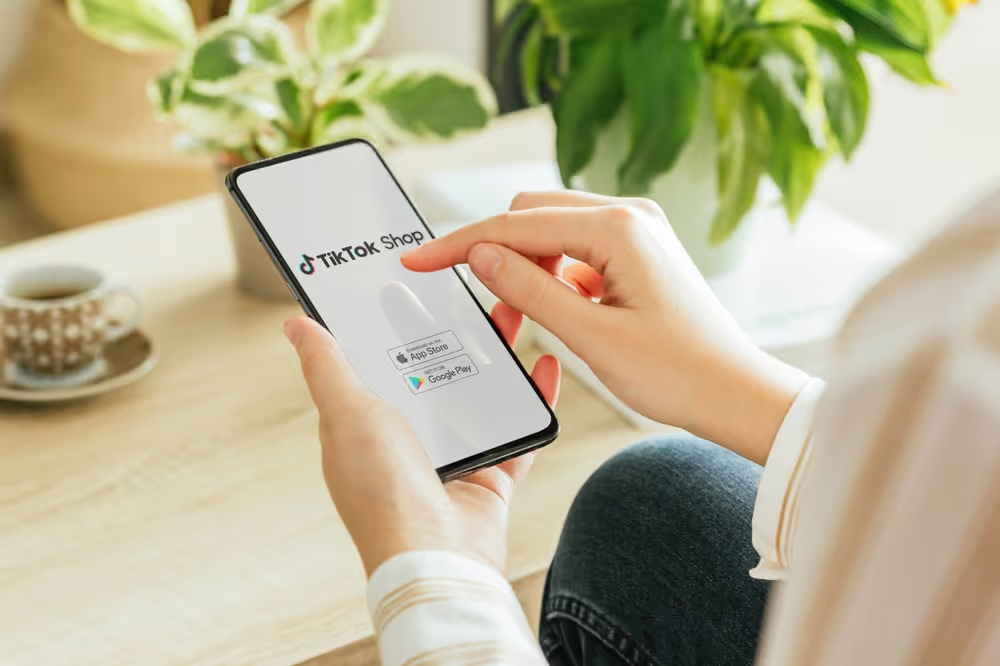
TikTok Shop drives the majority of social commerce growth, accounting for 68.1% of global social commerce GMV through its unique blend of entertainment and commerce. Unlike traditional e-commerce built on search intent, TikTok Shop capitalises on impulse discovery, where users encounter products through entertaining content they were already watching.
The platform's algorithm excels at blurring lines between organic creator content and shoppable videos, making commerce feel native rather than interruptive. For Australian businesses, this means products can go viral not through expensive advertising but through authentic creator demonstrations that drive immediate purchases without users leaving the app.
TikTok Shop performs particularly well for products under $100 in beauty, fashion, and personal care categories where visual demonstration drives purchase confidence. The platform has expanded beyond impulse buys into higher-ticket items as trust builds and creators establish authority in specific niches.
Instagram Balances Polish with Commerce
Instagram approaches social commerce differently, maintaining its visually polished aesthetic whilst integrating shopping across Reels, Stories, Posts, and the dedicated Shop tab. Instagram commerce sits higher in the purchase funnel than TikTok, focusing on discovery and consideration rather than immediate impulse buying.
For Australian brands prioritising heritage, luxury, or considered purchases, Instagram's commerce tools provide sophisticated options including product catalogs, collection curation, and brand storytelling that maintains premium positioning whilst enabling transactions.
The Trust Barrier Remains Real
Despite explosive growth, barriers persist. Roughly 53% of US consumers distrust products sold through social media, preferring to complete purchases on retailer websites even after social discovery. Three-quarters of shoppers browse social commerce but ultimately buy elsewhere, citing concerns about product authenticity, return policies, and payment security.
Australian businesses must address trust explicitly. Transparent return policies, authentic customer reviews, and creator partnerships with established credibility reduce purchase hesitation. Social commerce success in 2026 requires treating it as discovery commerce, accepting that many users will research on TikTok or Instagram before purchasing through your traditional e-commerce site.
Implementation Strategy
Start experimentally rather than committing fully. Test shoppable posts and creator partnerships on one platform whilst maintaining traditional e-commerce. Track full-funnel attribution recognising that social may drive initial discovery even when final purchase happens elsewhere. Invest in authentic content showing real product use rather than polished advertisements. Australian businesses selling physical products under $200 should prioritise TikTok Shop exploration, whilst those targeting older demographics or premium positioning should focus on Instagram's more mature commerce ecosystem.
Trend 2: Attention Metrics Replace Vanity Metrics
The shift from reach and impressions to genuine attention measurement represents fundamental rethinking of social media success metrics in 2026.
Attention is now finite currency. Average social media time per person has plateaued at approximately 2 hours 21 minutes daily, yet content published daily has skyrocketed across TikTok, YouTube Shorts, Instagram Reels, and countless ads competing for the same fixed attention pool.
The Interactive Advertising Bureau's Attention Standards
The IAB is rolling out attention measurement standards throughout 2025 and 2026, shifting industry focus from whether people saw content to how long they actually engaged. A post receiving fewer impressions but holding attention for 20 seconds drives more business results than one scrolled past instantly with high reach numbers.
For Australian marketers, this demands rethinking success metrics. Vanity metrics like follower counts and total reach become less meaningful than depth indicators including average watch time, completion rates on videos, scroll-stop rates measuring how often users pause, comments requiring genuine engagement rather than passive likes, and saves indicating content valuable enough to revisit.
Platform Algorithms Reward Depth
Every major platform's algorithm now prioritises content that holds attention. TikTok measures completion rate religiously. Instagram's Reels algorithm favours videos users watch multiple times or save. YouTube prioritises watch time over views. LinkedIn rewards dwell time on posts.
This creates clear strategic implications. Publishing frequency matters less than content quality that genuinely engages. Five shallow posts weekly perform worse than two deeply engaging pieces. The pressure to maintain arbitrary posting schedules damages results when it forces mediocre content publication.
Measuring What Matters
Australian businesses must implement measurement frameworks tracking attention properly. Use native platform analytics showing average watch duration, not just views. Monitor scroll-stop rates indicating content compelling enough to pause scrolling. Track completion rates on videos revealing whether audiences find value worth their time. Analyse save rates and shares indicating content valuable enough for users to preserve or recommend.
Compare these metrics against business outcomes. Which content types generating genuine attention correlate with website visits, lead generation, or sales? Attention metrics mean nothing without connecting to business results.
Trend 3: AI Augments Creativity Without Replacing It
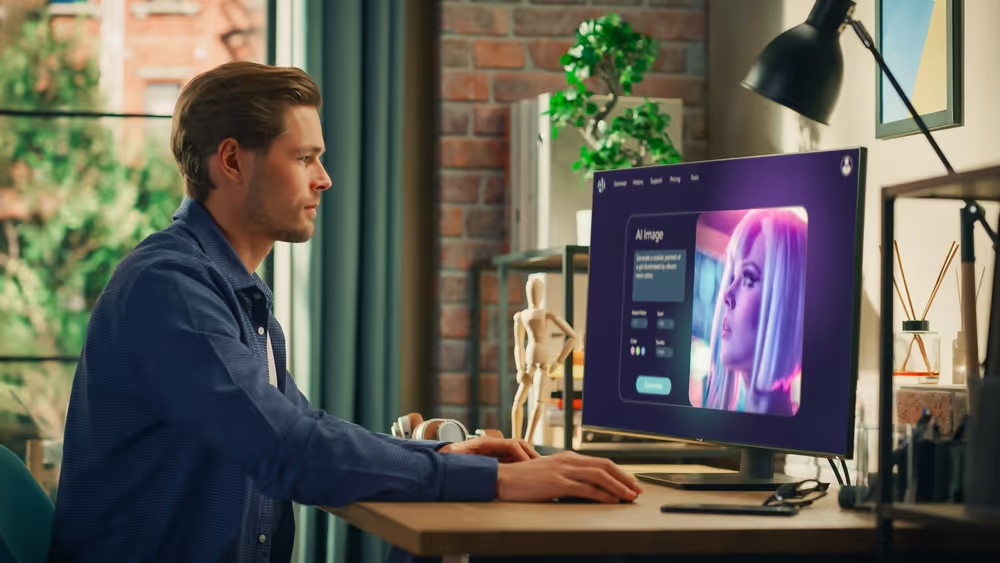
Artificial intelligence in content creation has evolved from novelty to necessity in 2026, but the relationship between AI and human creativity determines success or failure.
More than 1 billion people now use LLMs and generative AI platforms monthly. For marketers, AI tools accelerate content ideation, draft initial copy, generate variations for testing, and analyse performance patterns at scale humans cannot match.
Where AI Excels
AI tools in 2026 handle specific tasks brilliantly. They generate multiple headline options instantly. They analyse thousands of comments identifying sentiment patterns and common questions. They repurpose long-form content into platform-specific snippets. They suggest optimal posting times based on historical engagement data.
For Australian marketing teams with limited resources, AI multiplies output capacity. A single strategist with AI tools can produce content volume previously requiring entire teams, provided they understand AI's limitations.
Where Human Creativity Remains Essential
AI cannot replicate genuine brand voice developed through years of customer interactions and cultural positioning. It struggles with nuanced cultural references that resonate with Australian audiences specifically. It lacks the empathy required for community management responding to customer concerns authentically. It cannot make strategic decisions about which trends align with brand values versus which should be ignored.
The most successful approach in 2026 combines AI efficiency with human expertise. Use AI to accelerate research and drafting, then apply human knowledge to refine, personalise, and inject genuine authority. Approximately 58% of SEO professionals now use this hybrid approach, valuing quality over pure automation.
Transparency Builds Trust
Australian audiences increasingly value transparency about AI use. Brands explicitly acknowledging when AI assists content creation whilst emphasising human oversight and strategic direction build more trust than those pretending content is entirely human-created or entirely AI-generated.
Develop clear guidelines for your team about appropriate AI use. AI can draft, research, and format. Humans must strategise, refine for brand voice, inject proprietary insights, and make judgment calls about appropriateness and cultural sensitivity.
Trend 4: Micro Communities Outperform Mass Audiences

The shift from public broadcast to private community represents one of 2026's most significant strategic changes, with Australian businesses discovering that smaller engaged communities drive more business value than large passive followings.
The Rise of Closed Spaces
Users are spending more time in closed spaces like WhatsApp Channels, Discord servers, and Instagram Broadcast Channels. These communities offer exclusivity and genuine connection that public feeds cannot match, giving followers a sense of belonging whilst creating environments for authentic dialogue that does not get lost in algorithmic noise.
Public feeds feel crowded and algorithms prove unpredictable. Closed communities provide controllable environments where every member receives every message, engagement happens organically without algorithmic interference, and intimate conversation builds relationships impossible in public comments.
Why This Matters for Australian Businesses
A Discord server with 500 genuinely engaged members who trust your brand and actively participate drives more revenue than 50,000 Instagram followers who scroll past your posts. Community members become brand advocates, provide product feedback directly, generate user-generated content organically, and convert at dramatically higher rates than cold audiences.
Australian businesses in categories like fitness, education, B2B services, and hobbies benefit enormously from community strategies. Members pay for access to exclusive communities, creating recurring revenue models beyond product sales.
Building Communities That Thrive
Successful community building requires genuine value beyond promotional content. Provide exclusive access to founders, early product releases, special pricing, or educational content unavailable publicly. Foster member-to-member connections, not just brand-to-member relationships. Recognise and reward active contributors building their status within the community.
Start small and focused rather than trying to build massive communities immediately. A thriving 100-person community focused on a specific niche provides more value than a 10,000-member group with shallow engagement.
Platform choice matters. WhatsApp suits businesses targeting customers 40 and above. Discord works brilliantly for younger, digitally-native audiences. Instagram Broadcast Channels suit influencer-style relationships where one voice communicates to many. Choose platforms where your audience naturally congregates.
Trend 5: Long-Form Video Makes Its Comeback
After years of short-form video dominance, 2026 sees audiences embracing longer formats offering depth, storytelling, and genuine value beyond viral novelty.
Reels, Shorts, and TikTok videos up to 3 minutes are performing 25 to 40 percent better in watch time compared to 15-second clips that dominated 2023. Audiences seek emotional pacing and narrative arcs that 15-second videos cannot deliver.
Why the Shift Happened
Short clips proved efficient but ultimately limiting. They drive attention spikes but rarely build lasting connection or convey complex value propositions. As content saturation increases, audiences crave substance distinguishing genuinely valuable content from endless viral attempts.
Educational videos, behind-the-brand documentaries, and thoughtful editorials now outperform shallow trend participation. Creators mastering narrative timing with clear story arcs, emotional payoffs, and satisfying conclusions dominate attention in ways rapid-fire clips cannot.
The Hybrid Strategy
The most sophisticated Australian marketers in 2026 use hybrid approaches. Short-form video attracts new audiences scrolling feeds. Long-form content retains them, building depth and trust that converts attention into business relationships.
A 60-second TikTok introduces your brand's unique approach. A 10-minute YouTube video explains your methodology comprehensively. A 3-minute Instagram Reel showcases customer transformation stories. Each format serves specific funnel stages whilst working together systemically.
Platform-Specific Considerations
YouTube remains the premier long-form video platform, with viewers actively seeking tutorials, reviews, and deep dives. TikTok now supports videos up to 10 minutes, though 3 to 5 minutes performs optimally. Instagram Reels extended to 90 seconds, with the platform testing longer formats. LinkedIn embraces video content, with educational and thought leadership videos driving substantial engagement for B2B brands.
For Australian businesses, long-form video requires greater production investment than short clips but delivers compound returns. Quality long-form content remains relevant and continues attracting views months after publication, unlike short viral content that spikes then disappears.
Trend 6: Social Platforms Become Primary Search Engines
Social-first search behaviour continues accelerating in 2026, with 40% of Gen Z preferring TikTok or Instagram over Google for discovery. For Australian businesses, this means every social post is now a potential search result.
How Users Search on Social Platforms
People search differently on social versus traditional search engines. On TikTok, they type "best cafes Melbourne 2026" expecting video results showing actual venues. On Instagram, they search hashtags and location tags discovering businesses nearby. On YouTube, they seek tutorials and reviews explaining products comprehensively.
This search behaviour demands content optimisation for social discovery. Include keywords naturally in captions, titles, and spoken dialogue. Instead of generic "morning routine," use specific phrases like "Melbourne winter skincare routine for dry skin." Optimise like a search engine whilst maintaining authentic social tone.
Platform-Specific SEO Tactics
TikTok SEO favours keywords in video captions, voiceovers mentioning search terms naturally, popular sounds related to your topic, and hashtags combining broad and specific terms. Instagram prioritises keywords in captions and alt text, location tags for local businesses, hashtag strategy balancing reach and relevance, and profile optimisation with searchable business categories.
YouTube demands traditional SEO basics like keyword-rich titles and descriptions, custom thumbnails driving click-through, timestamps and chapters improving searchability, and engagement signals including watch time and comments.
For Australian businesses, local optimisation becomes critical. Include Australian English terminology, reference local locations specifically, and address market-specific needs that international content misses. A video about "Australian tax deductions for small businesses 2026" captures searches generic international content cannot.
Trend 7: Creator Partnerships Evolve Beyond One-Off Campaigns
One-time sponsored posts are fading in 2026 as brands choose smaller groups of creators who align with their message and create content consistently throughout the year. This approach builds deeper trust and recognisable style that audiences respond to more favourably than obvious advertisements.
Why Long-Term Partnerships Win
Audiences detect sponsored content instantly. Single sponsored posts feel transactional and lack authenticity. Creators working with brands long-term integrate products naturally into their ongoing content, building genuine endorsement credibility.
Long-term partnerships allow creators to develop deeper product knowledge, tell evolving stories about product benefits, maintain authentic voice rather than following brand scripts, and build trust with their audience about why they genuinely recommend your brand.
The Affiliate Creator Rise
Affiliate marketing through creators has evolved significantly. Platforms like LTK and ShopMy, plus native affiliate programs from retailers like Gap and Sephora, enable creators to earn ongoing commissions rather than flat fees. This aligns creator incentives with sales outcomes rather than just content production.
For Australian businesses, affiliate partnerships work particularly well for products with strong repeat purchase potential, accessible price points encouraging impulse buying, and visual appeal suited to demonstration.
Implementation Strategy
Start with micro-creators (10,000 to 100,000 followers) who demonstrate genuine passion for your category rather than mega-influencers charging premium rates for superficial engagement. Evaluate creators based on engagement quality not follower quantity, audience alignment with your target demographic, content style matching your brand aesthetic, and demonstrated authenticity in past partnerships.
Offer annual partnership contracts with monthly content requirements rather than one-off campaign deals. Provide creative freedom within brand guidelines rather than prescriptive scripts. Share sales data showing creators the business impact of their work, building partnership investment.
Strategic Implementation for Australian Businesses
Understanding trends means nothing without systematic implementation. Here is how Australian businesses should approach 2026 social media strategy.
Audit Current Performance Against These Trends
Evaluate your social commerce integration. Are products shoppable where your audience shops? Analyse attention metrics versus vanity metrics. Do you actually know which content holds attention? Assess AI usage. Does AI accelerate your team or replace strategic thinking? Review community building. Do you have spaces for intimate customer connection? Examine video strategy. Do you balance short and long-form effectively? Check social SEO optimisation. Does content target how users actually search? Evaluate creator partnerships. Are relationships transactional or transformational?
Prioritise Based on Business Model
Not every trend matters equally for every business. E-commerce businesses selling physical products should prioritise social commerce and creator partnerships. Service businesses should focus on community building and thought leadership long-form content. B2B companies should emphasise LinkedIn strategy, YouTube tutorials, and micro communities. Local businesses must dominate social search with location-specific optimisation.
Resource Allocation Shifts
Reallocate budget from high-frequency shallow content to lower-frequency high-quality pieces. Invest in community management as much as content creation. Dedicate resources to creator partnerships that deliver compound returns. Prioritise platforms showing genuine attention depth over those delivering hollow reach numbers.
Measurement Evolution
Implement attention-based metrics immediately. Track watch time, completion rates, saves, and meaningful engagement. Connect attention metrics to business outcomes showing which content types generating genuine engagement drive leads, sales, or retention. Report on community health metrics including participation rates, member growth, and user-generated content volume.

The Australian Opportunity
Australian businesses face unique advantages implementing these trends in 2026.
Lower competitive intensity compared to US markets means Australian-focused content faces less noise. Local market specificity creates defensible positioning that generic international content cannot replicate. Cultural nuance understanding gives Australian businesses advantages connecting with Australian audiences through references, humour, and context international brands miss.
The businesses dominating Australian social media in 2027 are those implementing these trends systematically throughout 2026, building advantages that compound as algorithms, audiences, and commerce behaviours continue evolving.
Ready to transform your social media from cost centre to growth driver? The specialists at Maven Marketing Co. build complete social media strategies for Australian businesses navigating 2026's fragmented landscape. We do not just recommend posting on TikTok or Instagram. We conduct attention-based audits revealing which content actually drives business results, develop social commerce strategies from product selection through creator partnerships to conversion optimisation, build and manage engaged micro communities that become recurring revenue sources, create hybrid content systems balancing AI efficiency with authentic brand voice, and implement measurement frameworks proving which social investments deliver ROI versus vanity metrics. Stop wasting budget on reach that does not convert whilst competitors capture attention that drives actual business results. Contact us today for a 2026 social media audit revealing exactly where your strategy needs evolution and creating your roadmap to winning the attention economy.

Table of contents
read more blogs
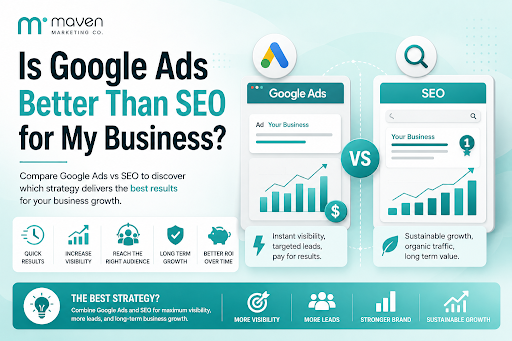
Is Google Ads Better Than SEO for My Business
One of the biggest questions business owners ask when they are planning online growth is whether they should invest in Google Ads or SEO. Both are strong marketing plays that help your company show up in Google search results, but they do things in separate lanes. Google Ads gives quicker visibility and can bring in leads fast, whereas SEO more or less focuses on slow, steady organic traffic that tends to grow the longer you keep building it. Picking the right direction depends on what you want to achieve, how much money you can spend, how crowded the market is, and how quickly you need results, like sooner rather than later. The good news is you don’t always have to choose one or the other; it’s not exactly a black-and-white situation. If you take time to understand the strongest points of both, you can put together a more sensible digital marketing plan that supports consistent expansion. In this guide, we’ll compare Google Ads vs SEO, explain the main differences, and help you figure out what option makes the most sense for your business.

When Should I Hire a Digital Marketing Agency
Growing a business today takes more than just having a website or throwing a post on social media; customers usually search around online, compare providers, skim reviews, and basically expect the brand to show up with a solid digital presence before they even think about buying. Many businesses try to run their marketing themselves, but there comes a point when “doing it all in-house” becomes clunky and hard to manage, all at once. Knowing when to hire a digital marketing agency can end up making a big, real difference for your growth. If you’re not getting enough leads, or your online visibility feels stuck, or sales are just not moving, the right agency can bring the know-how, plus a clear plan, to help you get noticeably better outcomes. In this guide, we’ll dig into what a digital marketing agency actually does, the usual signs it’s time to bring one on, and how picking the right marketing partner can help your business move forward at a faster pace.
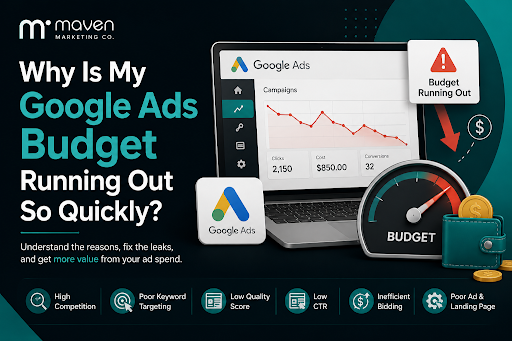
Why Is My Google Ads Budget Running Out So Quickly
Running a successful Google Ads budget isn’t only about throwing more money at it. It’s more like making every dollar, doing a bit extra. A lot of businesses start a Google Ads campaign with big hopes, then find out their daily budget is gone within a few hours, and that feels weird, right? After that, your ads stop showing effectively, new leads slip away, and your return on investment dips. So if your Google Ads budget is running out too fast, don’t stress. It’s a fairly common issue, and in most situations, it can be repaired with the right approach. There are multiple little things that can drain your advertising money quicker than you expected, from costly keywords to audience targeting that just doesn’t quite fit. In this guide, we’ll walk through why your budget disappears so quickly, how to cut wasteful spend, and the most reliable ways to boost your Google Ads ROI, even if your budget stays the same.