.svg)
.svg)
.svg)


%201.svg)
April 2, 2026
The Link Building Playbook That Still Works in 2026: Earn Authority Without Paying for It
Link building has a reputation problem it does not entirely deserve. When most Australian marketing teams hear the term, they picture one of two things: the paid link schemes that Google has been penalising for years and that still circulate in the shadier corners of the SEO industry, or the outreach programmes that require significant labour that produce a handful of marginal links per month at a cost that makes the return on investment look questionable at best. Both of these pictures miss the methods that actually work in 2026, which share a common characteristic: they earn links as a byproduct of producing something valuable rather than acquiring them as a standalone purchase or extraction exercise. The distinction matters commercially because earned links are structurally different from purchased links. They tend to come from more relevant and more authoritative sources. They are more stable because they are not contingent on a payment being maintained. They are more likely to produce lasting ranking improvements because they represent genuine signals of editorial endorsement. And they are not a liability that sits waiting for the next Google spam update to detonate. This article covers the link earning methods that Australian businesses and their marketing teams can execute in 2026 to build domain authority through genuine editorial signals rather than purchases or schemes.

Brand Guidelines Development: Creating Consistency Across All Touchpoints
Your brand isn't just a logo—it's every interaction, every visual element, and every word your customers encounter. Without clear brand guidelines, your business risks presenting a fragmented identity that confuses customers and dilutes brand equity. This comprehensive guide reveals how to create brand guidelines that protect your investment, empower your team, and ensure every touchpoint reinforces your brand promise. Whether you're a startup establishing your first guidelines or an established business refining existing standards, discover the framework that transforms brand chaos into strategic consistency.
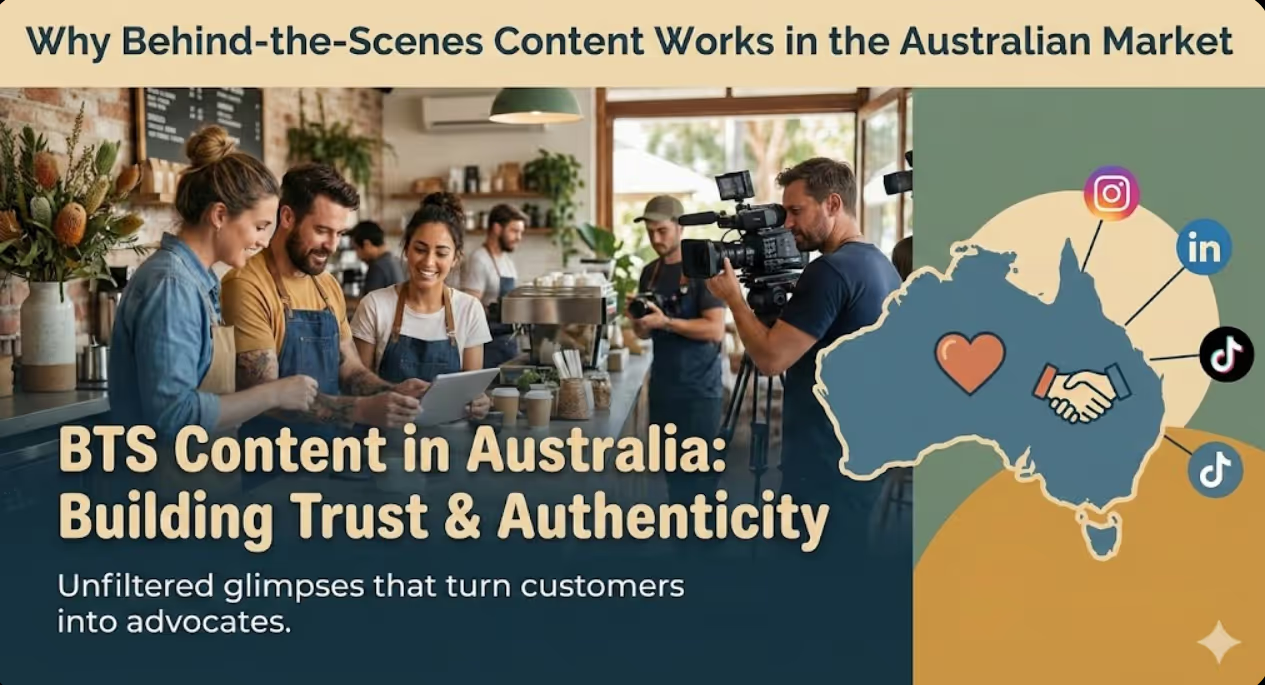
Behind-the-Scenes Content Strategy: Humanizing Your Australian Brand
Australian consumers can spot inauthenticity instantly. Learn how behind-the-scenes content transforms your brand from a faceless corporation into a relatable, trustworthy business that customers genuinely want to support. This comprehensive guide reveals proven strategies for creating BTS content that drives real engagement without overwhelming your team. Discover the psychology behind why BTS content works, platform-specific tactics for maximum impact, and measurable results you can expect. From team spotlights to product development processes, unlock the power of strategic transparency to build lasting customer relationships.

Social Media Advertising Budget Allocation: Platform-by-Platform Guide
Australian businesses waste an estimated $1.2 billion annually on poorly allocated social media advertising budgets—spreading spend too thin across irrelevant platforms or over-investing in channels that don't reach their target audiences. With platform costs varying by 400% and audience demographics differing dramatically, strategic budget allocation determines whether your advertising investment generates exceptional returns or disappointing results. This comprehensive guide reveals exactly how to allocate social media advertising budgets across platforms based on your business objectives, target audience, and industry, providing Australian-specific cost benchmarks and proven frameworks that maximize every advertising dollar.

User-Generated Content Campaigns: Leveraging Customer Advocacy
User-generated content has evolved from nice-to-have social proof to essential marketing infrastructure. Brands leveraging UGC achieve 29% higher web conversions and 4.5x higher click-through rates compared to brand-created content, whilst spending 50% less on content production. Yet 73% of businesses still struggle to generate consistent customer content, missing the authentic advocacy that modern consumers demand. This comprehensive guide reveals exactly how successful brands design UGC campaigns that transform satisfied customers into active advocates, creating sustainable content engines that build trust, reduce marketing costs, and drive measurable business growth through genuine customer voices.
Social Media Scheduling Best Practices: Timing Posts for Australian Audiences
Timing is everything in social media marketing—yet 68% of Australian businesses post randomly, missing peak engagement windows that could triple their reach. With Australian audiences consuming content across multiple time zones and exhibiting unique platform behaviors that differ from US and UK markets, generic posting advice fails local businesses. This guide reveals exactly when Australian audiences engage most actively across major platforms, which scheduling tools deliver best results, and how to build sustainable posting rhythms that maximize visibility whilst minimizing effort for businesses targeting the Australian market.
LinkedIn Newsletter Strategy: Establishing Thought Leadership
LinkedIn Newsletters have quietly become the most powerful tool for building professional authority and expanding reach on the platform. With over 1 billion members and newsletter open rates averaging 40-60%—nearly triple traditional email marketing—this native publishing format offers unprecedented opportunity for thought leaders, executives, and businesses to establish credibility, nurture relationships, and generate qualified leads. Yet most professionals misunderstand how to leverage newsletters strategically, treating them as glorified blog posts rather than relationship-building engines. This comprehensive guide reveals exactly how successful thought leaders use LinkedIn Newsletters to position themselves as industry authorities whilst building engaged audiences that convert to business opportunities.
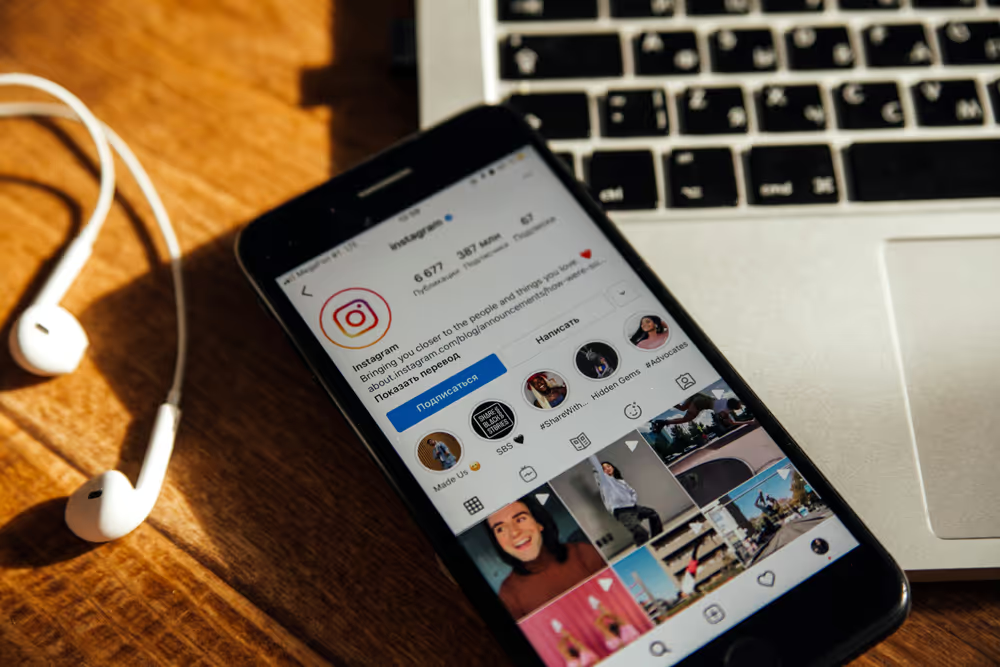
Instagram Stories Tactics: Engaging Brisbane Audiences with Ephemeral Content
Brisbane's 1.8 million Instagram users scroll through 500 million Stories daily, creating unprecedented opportunities for local businesses to connect with their community. Yet 73% of Brisbane brands still treat Stories as an afterthought, missing engagement rates that consistently outperform feed posts by 300%. This comprehensive guide reveals exactly how successful Brisbane businesses use Instagram Stories to build authentic connections, drive foot traffic, showcase local culture, and convert casual viewers into loyal customers through strategic ephemeral content.
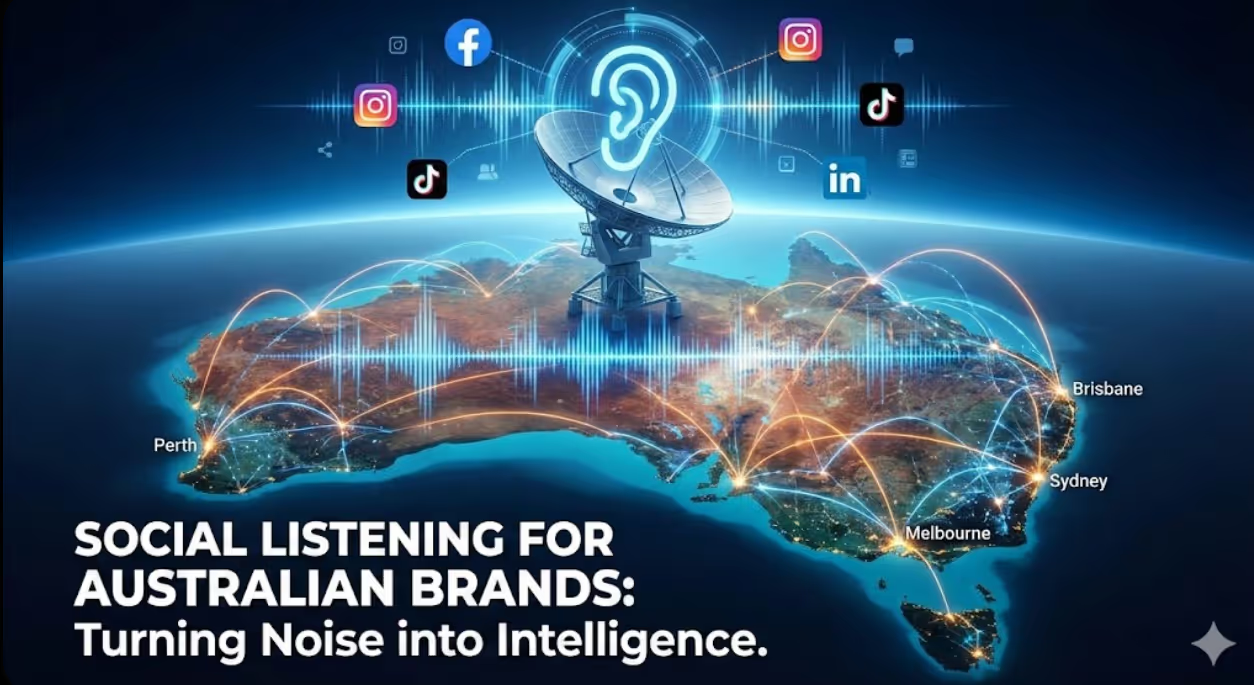
Social Media Listening Tools: Understanding Australian Consumer Sentiment
Social media listening has evolved from nice-to-have to business-critical for Australian brands. With 21 million Australians active on social platforms and 67% researching products through social channels before purchasing, understanding consumer sentiment isn't optional—it's essential. This comprehensive guide reveals how leading Australian brands use social listening tools to decode customer emotions, predict market trends, prevent PR crises, and gain competitive advantages that translate directly to revenue growth.

Facebook Group Marketing: Building Communities Around Your Brand
Facebook Groups are revolutionising how Australian brands connect with customers. With 70% of Australian Facebook users engaging in groups regularly and community-driven marketing generating 5-10x higher engagement than traditional posts, smart businesses are shifting from broadcasting to building genuine communities. Discover proven strategies, real Australian case studies, and actionable frameworks to transform your Facebook Group into a powerful marketing asset that drives loyalty, retention, and sustainable growth.
LinkedIn Content Calendar: Consistent B2B Marketing That Drives Results
Australian B2B businesses struggle with LinkedIn consistency, posting sporadically when inspiration strikes then disappearing for weeks—algorithmic punishment resulting in 70-85% reach decline compared to businesses maintaining regular publishing schedules. Yet systematic content calendars planning 30-90 days ahead transform LinkedIn from afterthought into reliable lead generation engine, with Brisbane consulting firm Nous Group attributing 34% of qualified leads to consistent LinkedIn presence publishing 4-5 weekly posts following strategic themes rather than random sporadic updates. Content calendars prevent posting gaps during busy periods, ensure balanced topic coverage avoiding redundant messaging, enable batch content creation maximizing efficiency, and provide measurement framework revealing which content types drive engagement and conversions rather than guessing effectiveness retrospectively. This comprehensive guide reveals how Australian B2B businesses should implement LinkedIn content calendars strategically, from quarterly planning frameworks and weekly theme structures through content creation workflows, employee advocacy programs, and performance measurement that proves LinkedIn's contribution to pipeline generation rather than dismissing platform as vanity metric time-sink.
.avif)
Instagram Reels Strategy for Australian Small Businesses
Australian small businesses struggling with declining organic Instagram reach averaging 1-3% of followers discover Reels delivering 15-50% reach through algorithmic prioritization favoring short-form video over static posts and carousels. Yet 73% of Australian SMEs ignore Reels entirely, dismissing video as too complex, time-consuming, or requiring creative expertise beyond their capabilities—misconceptions costing thousands in free organic reach whilst competitors dominate feeds through strategic 15-60 second videos filmed on smartphones requiring minimal editing. Sydney cafe Grounds of Alexandria grew followers from 4,200 to 47,000 in eight months posting daily Reels showcasing menu items, behind-scenes kitchen footage, and customer reactions—content requiring zero production budget achieving viral reach previously impossible without paid advertising. This comprehensive guide reveals how Australian small businesses should leverage Instagram Reels strategically, from content ideation and smartphone filming through editing shortcuts, posting optimization, and engagement tactics that transform dormant Instagram accounts into thriving audience-building engines driving foot traffic and online sales measurably.
.avif)
YouTube Advertising for Brisbane Businesses: Video Campaigns That Convert
Brisbane businesses overlook YouTube advertising's $4-$12 CPM (cost per thousand impressions) delivering brand awareness at fraction of traditional media costs, whilst simultaneously dismissing video advertising as complex production challenge requiring Hollywood budgets and creative expertise. Yet successful YouTube campaigns leverage simple smartphone footage, user-generated content, and static image slideshow ads achieving 3-8% view-through rates and $15-$45 cost per conversion—economics rivaling search advertising with added brand-building benefits impossible through text ads. Brisbane cafe collective Campos Coffee generated 340,000 video views on $3,200 monthly budget, driving 23% increase in store visits across Brisbane locations through local targeting and mobile-optimized creative showcasing cafe atmosphere and menu highlights filmed entirely on iPhone. This comprehensive guide reveals how Brisbane businesses should leverage YouTube advertising strategically, from audience targeting and ad format selection through production shortcuts, conversion optimization, and measurement frameworks proving video's contribution to business outcomes beyond vanity view counts.