.svg)
.svg)
.svg)


%201.svg)
April 2, 2026
The Link Building Playbook That Still Works in 2026: Earn Authority Without Paying for It
Link building has a reputation problem it does not entirely deserve. When most Australian marketing teams hear the term, they picture one of two things: the paid link schemes that Google has been penalising for years and that still circulate in the shadier corners of the SEO industry, or the outreach programmes that require significant labour that produce a handful of marginal links per month at a cost that makes the return on investment look questionable at best. Both of these pictures miss the methods that actually work in 2026, which share a common characteristic: they earn links as a byproduct of producing something valuable rather than acquiring them as a standalone purchase or extraction exercise. The distinction matters commercially because earned links are structurally different from purchased links. They tend to come from more relevant and more authoritative sources. They are more stable because they are not contingent on a payment being maintained. They are more likely to produce lasting ranking improvements because they represent genuine signals of editorial endorsement. And they are not a liability that sits waiting for the next Google spam update to detonate. This article covers the link earning methods that Australian businesses and their marketing teams can execute in 2026 to build domain authority through genuine editorial signals rather than purchases or schemes.

.avif)
Website Forms Optimisation: Reducing Friction in Lead Capture
Australian businesses lose an average of 67% of potential leads at the form completion stage, with users abandoning contact forms, quote requests, and signup processes due to unnecessary friction, confusing layouts, and excessive information requests. Every abandoned form represents a lost business opportunity—a prospect who expressed interest by clicking through to your form but gave up before converting. Form optimisation transforms these abandoned opportunities into captured leads through strategic reduction of friction points, thoughtful field design, and psychological understanding of what motivates completion versus abandonment. This comprehensive guide reveals the proven techniques for website form optimisation, from field reduction strategies and smart defaults through progress indicators and psychological triggers that drive completion. Whether you're optimising contact forms, lead generation forms, or complex multi-step processes, discover how to reduce friction and increase conversion rates for your Australian business's most critical conversion touchpoints.
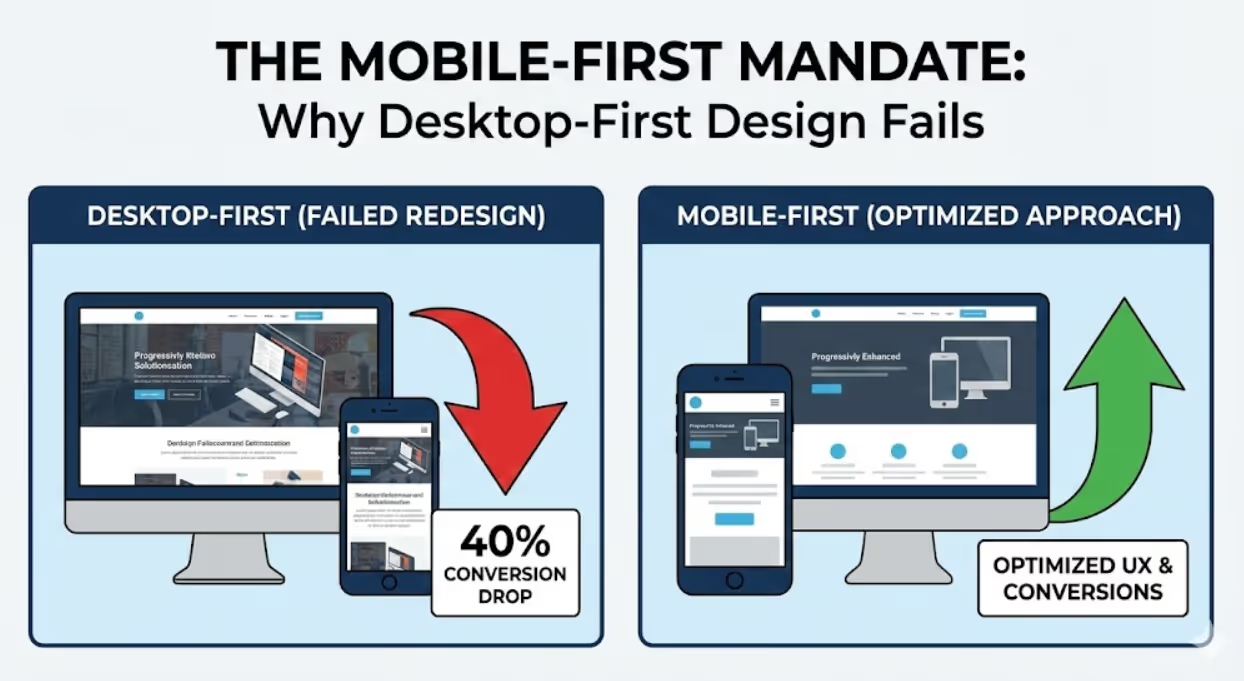
Mobile-First Development: Building Responsive Sites for Australian Users
n an era where over 92% of Australians rely on smartphones for everything from banking to booking tradespeople, treating mobile design as an afterthought is a revenue-killing mistake. With Google strictly enforcing Mobile-First Indexing, your search rankings now hinge entirely on your small-screen performance. This guide moves beyond basic "responsiveness" to explore the technical roadmap of Mobile-First Development—teaching you how to master Core Web Vitals, engineer for the "thumb zone," and capture the exploding market of local mobile searches. Stop losing leads to friction and start building for the device your customers actually use.
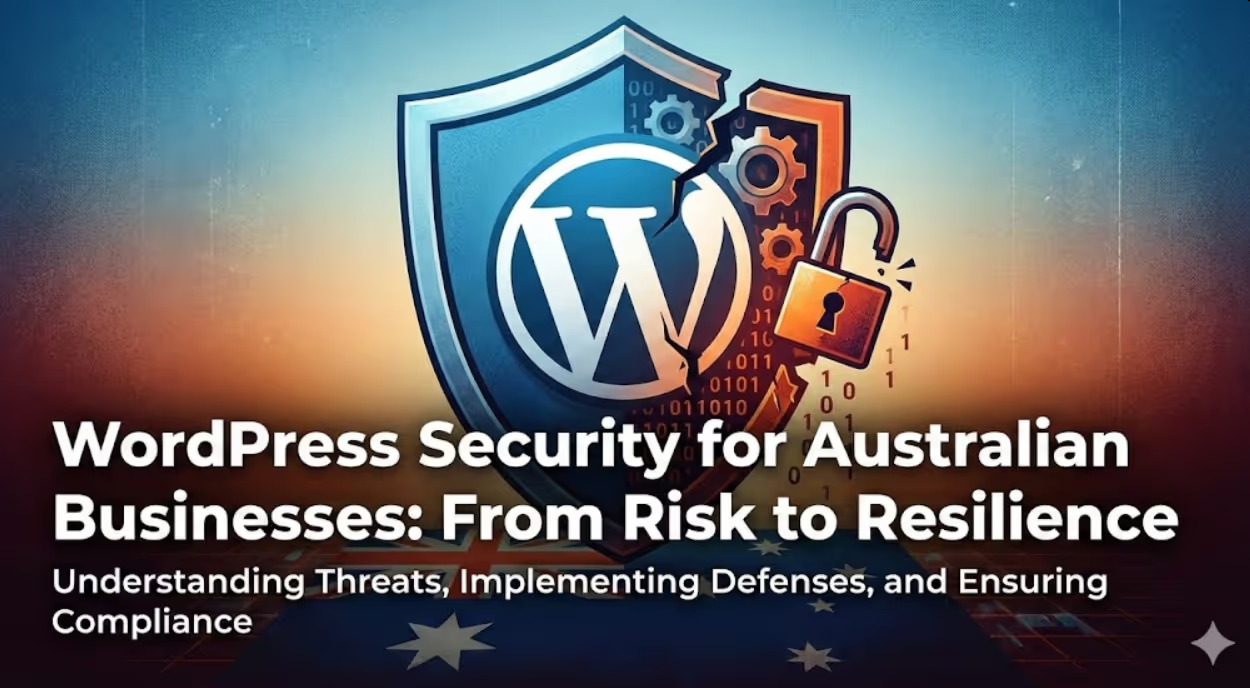
WordPress Security Essentials: Protecting Australian Business Websites
Australian businesses lose an average of $276,323 per cyber incident according to recent cybersecurity reports, with WordPress sites representing attractive targets due to platform popularity and often inadequate security measures. Small business owners frequently assume their sites are too insignificant to attract hackers, yet automated attacks target WordPress installations indiscriminately based on vulnerability rather than business size. The difference between WordPress sites that withstand attack attempts and those that suffer devastating breaches lies in implementing comprehensive security essentials before incidents occur rather than scrambling after damage is done. This comprehensive guide reveals the fundamental security measures every Australian WordPress business website requires, from hosting selection and access control through malware prevention and incident response planning. Whether you're launching a new WordPress site or securing an existing one, discover the proven strategies that protect your business reputation, customer data, and online presence against the evolving threat landscape targeting Australian businesses.

Typography Hierarchy: Creating Visual Flow in Marketing Materials
Most marketing materials fail not from poor messaging but from typography chaos that buries important information under visual clutter, exhausts readers with monotonous text blocks, or scatters attention without clear navigation paths through content. Typography hierarchy solves these problems by establishing visual order that guides eyes naturally from most to least important information, creating effortless reading experiences that increase comprehension and action-taking. Yet most Australian businesses treat typography as afterthought, randomly varying font sizes and weights without strategic systems that create consistent, professional communications. The difference between marketing materials that get read versus those that get discarded often lies in typography hierarchy that respects how human vision actually processes information. This comprehensive guide reveals the principles, systems, and techniques for creating typography hierarchy that transforms cluttered documents into clear communications, from establishing type scales and implementing visual rhythm to optimizing readability and building flexible design systems for Australian business contexts.
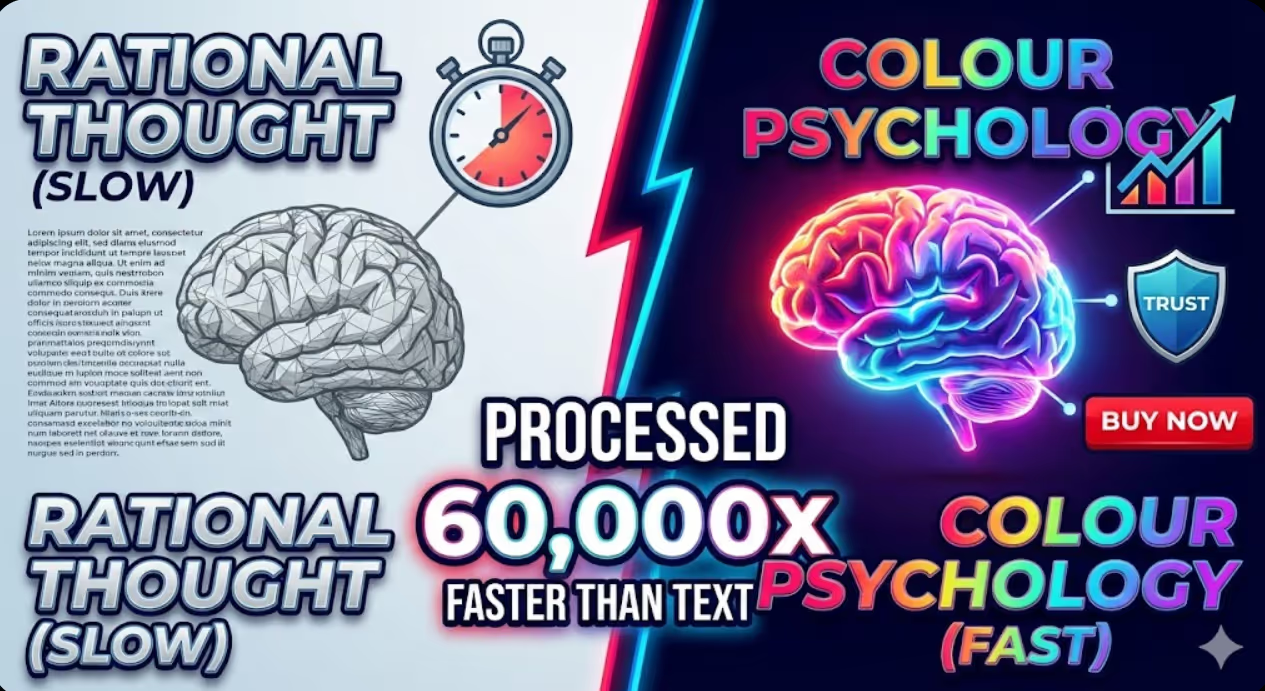
Colour Psychology in Branding: Choosing Palettes That Convert
Your brand colours communicate before customers read a single word, triggering subconscious associations that influence trust, purchase decisions, and brand recall within milliseconds. Yet most Australian businesses choose colours based on personal preference, competitor mimicry, or passing design trends rather than strategic psychology that drives measurable business results. The difference between colour palettes that convert and those that confuse lies in understanding how different hues trigger emotional responses, cultural associations, and physiological reactions that shape consumer behaviour. This comprehensive guide reveals the psychological principles behind effective brand colour selection, from primary colour meanings and cultural considerations to palette construction strategies and conversion optimization tactics. Whether you're building a new brand identity or refining existing colours, discover how to leverage colour psychology to increase brand recognition, influence purchase decisions, and create competitive advantages in crowded Australian markets.
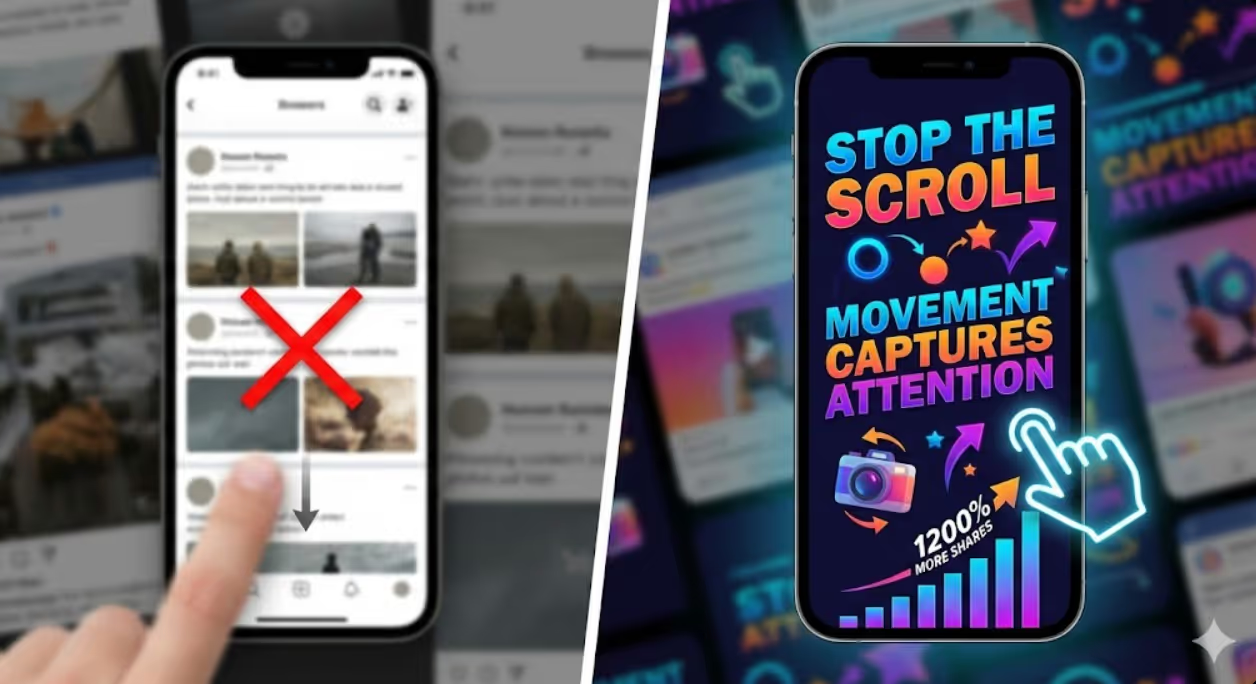
Motion Graphics for Social Media: Animated Content That Stops the Scroll
Static images disappear in endless social media feeds. Text posts get skipped without a second glance. Video content that doesn't capture attention in the first half-second loses viewers forever. Motion graphics solve the attention problem by combining movement, colour, typography, and strategic messaging into scrolling interruptions that demand notice and drive engagement. Yet most Australian businesses struggle with motion graphics, intimidated by perceived complexity or producing amateur animations that hurt rather than help brand perception. The gap between effective motion graphics that stop scrolls and boost conversions versus ineffective animations that look cheap and get ignored lies in understanding platform-specific requirements, psychological principles of attention capture, and practical production techniques. This comprehensive guide reveals how to create motion graphics that perform across Instagram, TikTok, LinkedIn, and Facebook, from concept development and storyboarding through animation execution and performance optimization for Australian audiences.
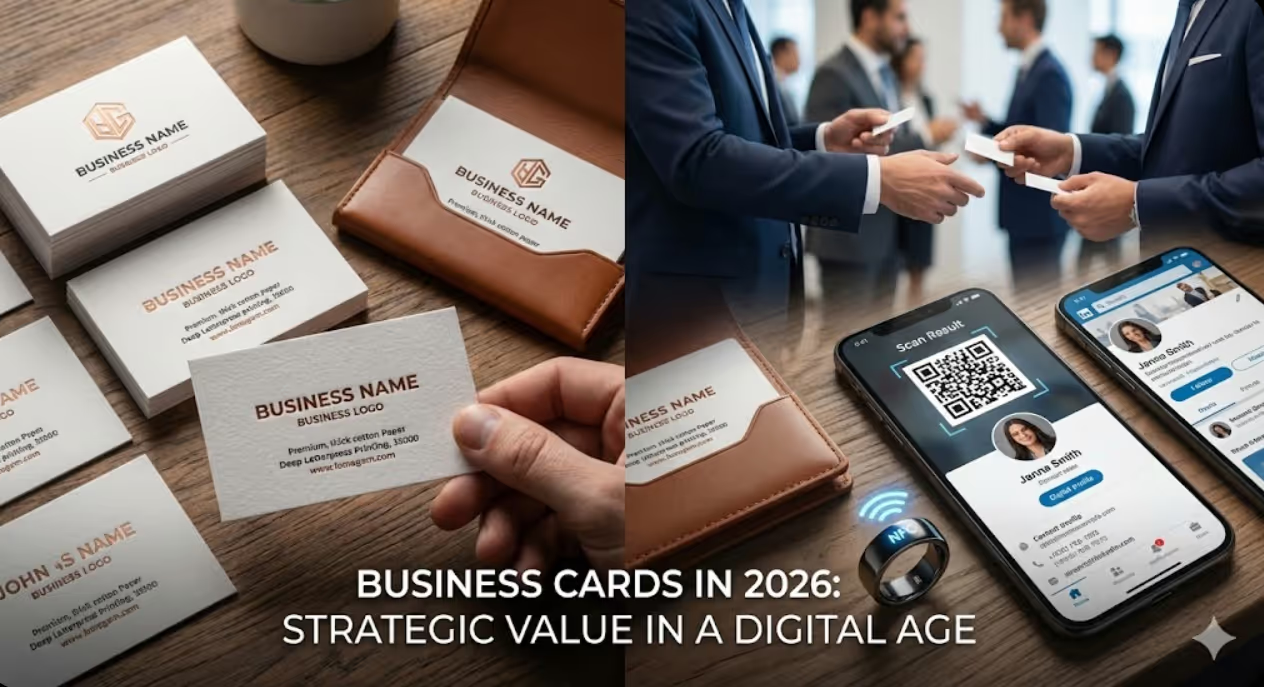
Business Card Design in the Digital Age: Making Print Count
In an era of LinkedIn connections, digital contact sharing, and smartphone-first networking, business cards might seem obsolete relics of analog business culture. Yet strategic business cards remain powerful networking tools that create tangible brand impressions, facilitate memorable introductions, and bridge physical meetings with digital relationships in ways that purely digital alternatives can't replicate. The difference between business cards that get filed away versus those that get discarded immediately lies in strategic design that delivers value beyond basic contact information. This comprehensive guide reveals how Australian businesses can design business cards that justify their continued existence, integrate seamlessly with digital workflows, leverage premium materials and finishes for maximum impact, and create networking advantages that digital-only approaches miss. Whether you're redesigning outdated cards or questioning whether to print cards at all, discover the strategic framework for making print count in Australia's increasingly digital business environment.

Packaging Design Trends: Standing Out on Australian Retail Shelves
Australian retail shelves are battlegrounds where products have three seconds to capture attention, communicate value, and trigger purchase decisions. In supermarkets stocked with 30,000+ product variations and consumers making 95% of purchase decisions at shelf, packaging design determines whether your product gets noticed or ignored. Yet most Australian businesses approach packaging as afterthought rather than strategic asset, missing opportunities to differentiate, command premium pricing, and build lasting brand recognition. This comprehensive guide reveals the packaging design trends reshaping Australian retail, from sustainability imperatives and minimalist aesthetics to sensory design and cultural localization. Discover the psychological principles behind effective packaging, the regulatory requirements you must navigate, and the strategic frameworks that transform packaging from container into compelling sales tool that performs 24/7 on retail shelves across Australia.
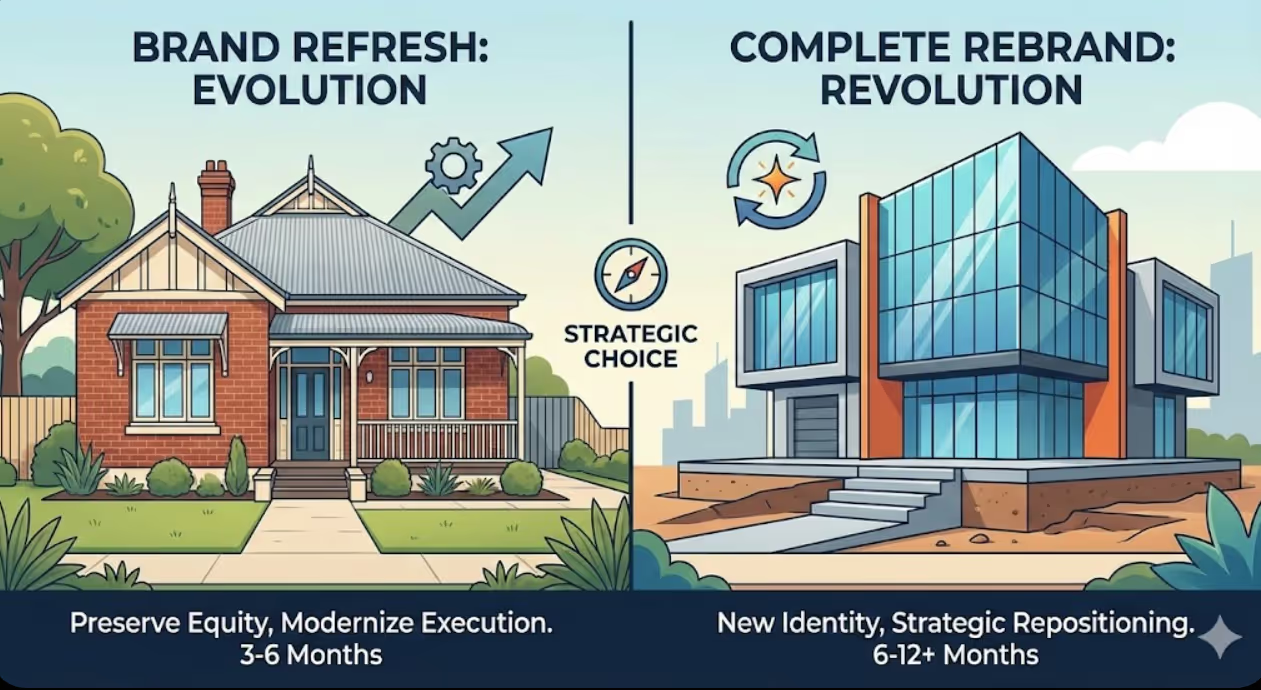
Brand Refresh vs Complete Rebrand: When Australian Businesses Should Pivot
Your brand feels dated. Customer perceptions don't match your current reality. Competitors have modernized while your identity remains stuck in 2010. You know something needs to change, but should you refresh your existing brand or burn it down and rebuild from scratch? This decision carries massive implications for budget, timeline, customer relationships, and business momentum. Get it wrong and you risk alienating loyal customers while confusing prospects. Get it right and you position your Australian business for accelerated growth with renewed market relevance. This comprehensive guide reveals the strategic frameworks that determine whether your business needs a subtle refresh or complete transformation, the warning signs that demand action, the costs and risks of each approach, and the implementation roadmaps that protect brand equity while driving necessary evolution.
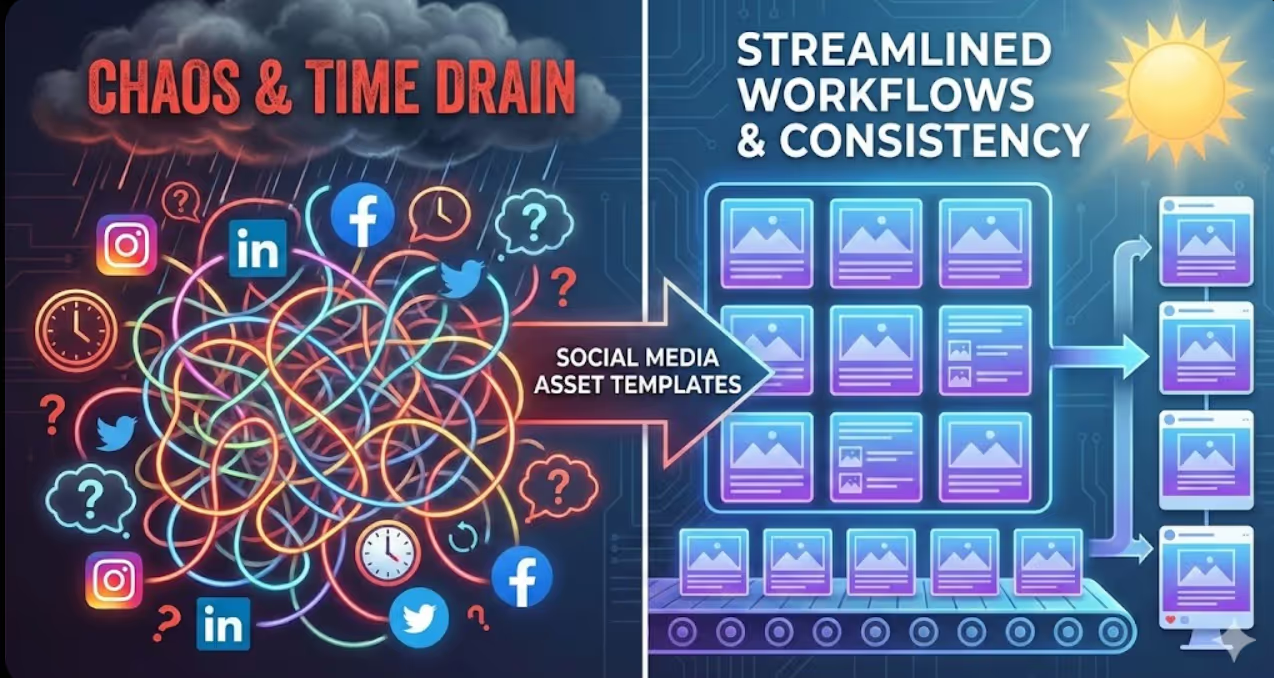
Social Media Asset Templates: Streamlining Content Creation Workflows
Creating fresh social media content daily drains time, energy, and creative resources from Australian businesses already stretched thin. Yet consistency and quality can't be compromised when your social presence directly impacts brand perception and customer acquisition. Social media asset templates solve this tension by transforming repetitive design work into streamlined, scalable systems that maintain brand consistency while accelerating production. This comprehensive guide reveals how to build template libraries that reduce content creation time by 70%, ensure brand consistency across platforms and team members, and free your team to focus on strategy and engagement rather than design mechanics. From establishing design systems and creating flexible template frameworks to implementing approval workflows and measuring template effectiveness, discover the blueprint for sustainable social media content production that scales with your business growth.
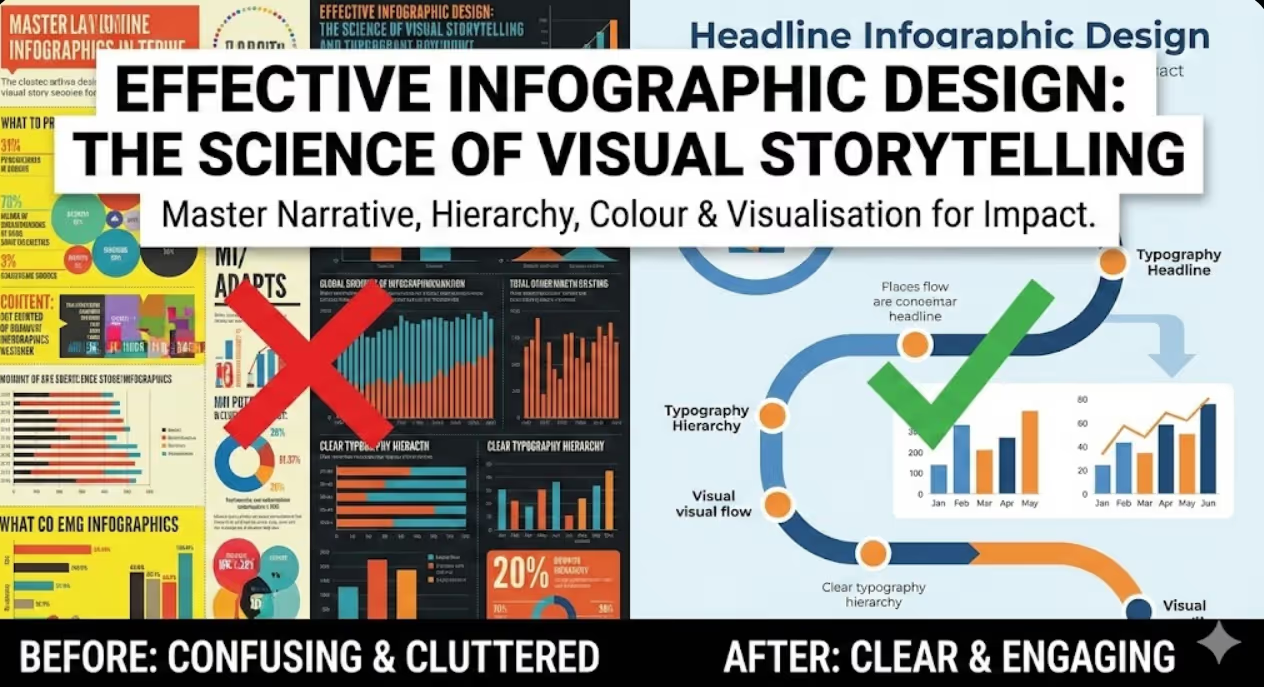
Infographic Design Principles: Visualizing Data for Maximum Engagement
In a world drowning in information, infographics cut through the noise by transforming complex data into compelling visual narratives that audiences actually remember. Yet most infographics fail spectacularly, cramming too much information into cluttered layouts that confuse rather than clarify. The difference between infographics that get ignored and those that get shared thousands of times lies in understanding fundamental design principles that align with how the human brain processes visual information. This comprehensive guide reveals the strategies behind high-performing infographics, from visual hierarchy and colour psychology to data visualization best practices and storytelling frameworks. Whether you're creating infographics for social media, presentations, or content marketing, discover how to transform your data into visual stories that Australian audiences engage with, remember, and share.
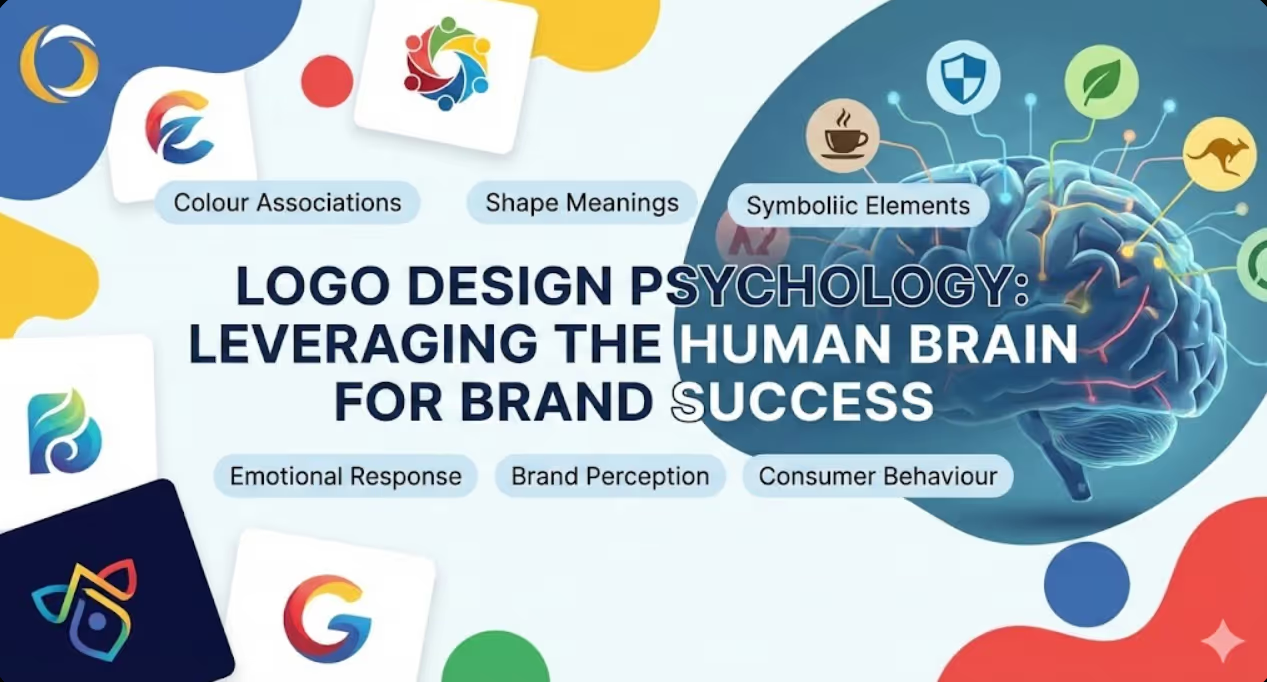
Logo Design Psychology: Colours, Shapes and Symbols That Resonate
Your logo communicates before a single word is read. Within milliseconds, colours trigger emotional responses, shapes convey brand personality, and symbols activate deep-seated associations in your customer's mind. Understanding logo design psychology transforms your brand identity from decorative to strategic, creating visual triggers that drive recognition, trust, and preference. This comprehensive guide reveals the psychological principles that separate forgettable logos from iconic brand marks. Learn how to harness colour psychology, leverage shape symbolism, and choose visual elements that resonate with Australian consumers while avoiding common design pitfalls that undermine brand effectiveness.