.svg)


%201.svg)
.avif)
Quick Answers
Q: How many WordPress plugins is too many, and what's the optimal number for business websites?There's no magic number, but quality matters infinitely more than quantity. Well-coded plugins cause minimal performance impact, whilst poorly coded plugins slow sites even if you only have three installed. That said, most Australian business websites function optimally with 8 to 12 carefully selected plugins. Sites running 30 or more plugins almost always suffer performance issues unless extensively optimised. The key is evaluating each plugin's necessity and performance impact. Ask yourself: Does this plugin provide essential functionality I can't achieve through theme features or simple code? Could I combine multiple plugins into a single solution? Is this plugin actively maintained and well-reviewed? A site with 10 essential, well-coded plugins performs better than a site with 5 bloated, poorly maintained ones. Focus on purpose rather than counting plugins, and regularly audit your plugin stack to remove anything not actively contributing to business goals or user experience.
Q: What are the absolute essential WordPress plugins every Australian business website needs in 2026?Essential plugins vary by business type, but most Australian business sites benefit from these categories: security protection (Wordfence or Solid Security for firewall and malware scanning), backup solutions (UpdraftPlus or BackupBuddy for automated backups), SEO optimisation (Rank Math or Yoast SEO for search visibility), performance caching (WP Rocket or LiteSpeed Cache for speed), and form functionality (WPForms or Gravity Forms for contact and lead generation). E-commerce sites require WooCommerce plus payment gateway integrations. Beyond these core categories, evaluate plugins based on specific needs. Many businesses add unnecessary plugins for features already included in quality themes or achievable through simple code snippets. Before installing any plugin, check if your theme includes the functionality, search for lightweight alternatives, verify active maintenance and positive reviews, and test performance impact on a staging site. Remember that premium plugins often consolidate features requiring multiple free plugins, potentially reducing total plugin count whilst improving performance and support quality.
.avif)
The WordPress Plugin Paradox
The WordPress plugin repository contains over 60,000 plugins. This incredible ecosystem enables businesses to add virtually any functionality imaginable without custom development. It's WordPress's greatest strength.
It's also the primary reason most WordPress sites run slower than they should.
Every day, we see Australian businesses installing plugins for functions they'll never use, duplicating functionality between multiple plugins, or choosing bloated options when lightweight alternatives exist. These decisions compound into sites loading in 6 seconds instead of 2, security vulnerabilities multiplying, and users bouncing to faster competitors.
Let's fix that. Here's how to build lean, fast, secure WordPress sites through intelligent plugin selection.
.avif)
Understanding Plugin Bloat: What It Actually Means
Plugin bloat isn't about having too many plugins. It's about having the wrong plugins or poorly configured ones creating unnecessary overhead.
What Creates Bloat
- Excessive Code Loading: Plugins that load JavaScript and CSS on every page, even pages where the plugin isn't used.
- Database Queries: Poorly coded plugins making dozens of database queries on every page load slow response times dramatically.
- Resource Conflicts: Multiple plugins trying to accomplish similar tasks create conflicts, requiring additional plugins to resolve compatibility issues.
- Unused Features: Installing comprehensive plugins when you only need one feature means loading code for dozens of unused functions.
Real Performance Impact
Research shows each plugin adds an average page load time of 50 to 200 milliseconds. That doesn't sound like much until you multiply it across 20 plugins, adding 1 to 4 seconds of load time. Given that conversion rates drop 7% for every additional second of load time, bloat directly costs revenue. Australian businesses particularly feel this impact. With increasing mobile traffic and varying connection speeds across regional areas, every millisecond of bloat matters for user experience and search rankings.
The Essential Plugin Categories
.avif)
Every business website needs certain functionality. Here are the genuinely essential categories.
1. Security and Firewall Protection
- Why It's Essential: WordPress sites face constant automated attacks. Security plugins protect against brute force attacks, malware injection, and vulnerabilities.
- Recommended Options: Wordfence Security, Solid Security.
2. Backup and Recovery
- Why It's Essential: Websites break. Servers crash. Hackers breach security. Updates cause conflicts. Without backups, you're gambling your entire business.
- Recommended Options: UpdraftPlus, BackupBuddy.
3. SEO Optimisation
- Why It's Essential: Search visibility drives organic traffic, which converts better than paid traffic and costs nothing beyond initial optimisation.
- Recommended Options: Rank Math, Yoast SEO.
4. Performance and Caching
- Why It's Essential: Fast sites convert better, rank higher, and provide better user experience. Caching dramatically improves WordPress performance.
- Recommended Options: WP Rocket, LiteSpeed Cache.
5. Contact Forms and Lead Generation
- Why It's Essential: Converting visitors into leads requires functional contact forms. Email addresses are assets you own.
- Recommended Options: WPForms, Gravity Forms.
6. Image Optimisation
- Why It's Essential: Images represent 50 to 70% of page weight on most sites. Optimisation dramatically improves load times without quality loss.
- Recommended Options: ShortPixel, Imagify.
For more in-depth recommendations, check out this guide on essential WordPress plugins.
The Plugin Selection Checklist
.avif)
Before installing any plugin, evaluate it against a strict set of criteria.
1. Is It Actually Necessary?Ask yourself if your theme can already do this or if you could achieve it with a simple code snippet. Most websites use less than 20% of installed plugin features. Install only what you'll actively use.
2. Is It Actively Maintained?Watch out for red flags like the last update being more than 6 months ago, compatibility not being tested with recent WordPress versions, or developers not responding to support requests. Abandoned plugins create security vulnerabilities and compatibility issues.
3. Does It Have Good Reviews and Support?Check for an overall rating above 4 stars, recent positive reviews, and an active support forum. Plugins with hundreds of unresolved support threads indicate problems.
4. What's the Performance Impact?Install the plugin on a staging site first and run performance tests before and after. Check what files the plugin loads and where. Well-coded plugins add minimal load time (under 100ms). Anything adding more than 200ms deserves scrutiny.
5. Does It Create Dependencies?Be wary of plugins that require installing additional plugins to function or force specific hosting configurations. Favour plugins using standard WordPress functions over those requiring complex dependencies.
For more on evaluating plugins, the WordPress.org Plugin Handbook is a great resource.
Building a Lean Plugin Stack
Treating plugin selection as strategic rather than tactical transforms WordPress performance. By following a disciplined approach, you can move from a bloated, slow site to a lean, fast, and secure one.
.avif)
Key Takeaways: Your Plugin Strategy Going Forward
- Establish Standards: Create plugin selection criteria for your business and evaluate every potential plugin against it before installation.
- Regular Audits: Schedule quarterly plugin reviews to remove bloat and update selections based on evolving needs and new alternatives.
- Test Thoroughly: Use staging sites to test plugin performance impact before production deployment to avoid breaking live sites.
- Monitor Performance: Track site speed and database performance, investigating spikes after plugin installations using tools like Query Monitor.
- Stay Informed: Follow WordPress performance blogs and communities to learn about emerging lightweight alternatives to bloated plugins.
- Quality Over Quantity: 8 well-chosen, actively maintained plugins outperform 25 poorly selected ones every time.
- Delete, Don't Deactivate: Remove unused plugins entirely rather than leaving them deactivated taking up space and creating security risks.
- One Plugin Per Function: Avoid installing multiple plugins that duplicate functionality or compete for the same purpose.
- Prioritise Performance: Every plugin should justify its performance overhead with essential functionality you actually use.
- Invest Strategically: Premium plugins often consolidate features requiring multiple free plugins whilst providing better support and performance.
Ready to Optimise Your WordPress Site?
Every unnecessary plugin slows your site, increases security risk, and complicates maintenance. Yet choosing the right plugins transforms WordPress into powerful business infrastructure delivering exceptional performance and functionality. The difference between bloated WordPress sites loading in 6 seconds and optimised sites loading in 2 seconds often comes down to plugin selection and configuration. That 4-second difference determines whether visitors convert into customers or bounce to competitors.
Need expert help auditing your WordPress plugin stack and optimising performance? Maven Marketing Co. specialises in WordPress performance optimisation for Australian businesses. Our team conducts comprehensive plugin audits, identifies bloat costing you conversions, and implements lean, fast WordPress configurations that deliver measurable results. We don't just remove plugins. We analyse your business requirements, recommend optimal solutions for your specific needs, and implement configurations maximising performance whilst maintaining functionality. Contact Maven Marketing Co. today for a complimentary WordPress performance audit. We'll review your current plugin stack, measure performance impact, and provide detailed recommendations for optimisation. Let's transform your WordPress site from bloated and slow into lean and lightning-fast.

Table of contents
read more blogs
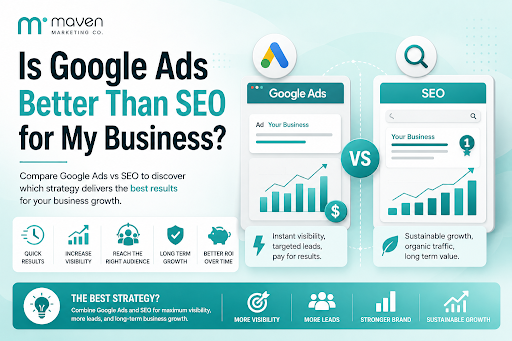
Is Google Ads Better Than SEO for My Business
One of the biggest questions business owners ask when they are planning online growth is whether they should invest in Google Ads or SEO. Both are strong marketing plays that help your company show up in Google search results, but they do things in separate lanes. Google Ads gives quicker visibility and can bring in leads fast, whereas SEO more or less focuses on slow, steady organic traffic that tends to grow the longer you keep building it. Picking the right direction depends on what you want to achieve, how much money you can spend, how crowded the market is, and how quickly you need results, like sooner rather than later. The good news is you don’t always have to choose one or the other; it’s not exactly a black-and-white situation. If you take time to understand the strongest points of both, you can put together a more sensible digital marketing plan that supports consistent expansion. In this guide, we’ll compare Google Ads vs SEO, explain the main differences, and help you figure out what option makes the most sense for your business.

When Should I Hire a Digital Marketing Agency
Growing a business today takes more than just having a website or throwing a post on social media; customers usually search around online, compare providers, skim reviews, and basically expect the brand to show up with a solid digital presence before they even think about buying. Many businesses try to run their marketing themselves, but there comes a point when “doing it all in-house” becomes clunky and hard to manage, all at once. Knowing when to hire a digital marketing agency can end up making a big, real difference for your growth. If you’re not getting enough leads, or your online visibility feels stuck, or sales are just not moving, the right agency can bring the know-how, plus a clear plan, to help you get noticeably better outcomes. In this guide, we’ll dig into what a digital marketing agency actually does, the usual signs it’s time to bring one on, and how picking the right marketing partner can help your business move forward at a faster pace.
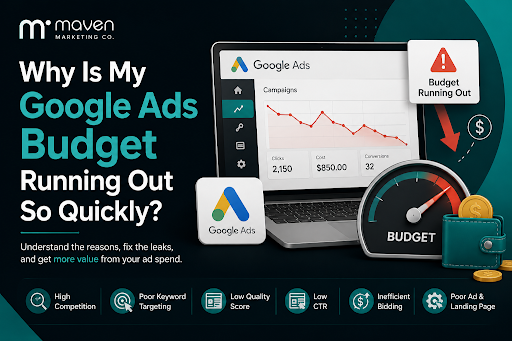
Why Is My Google Ads Budget Running Out So Quickly
Running a successful Google Ads budget isn’t only about throwing more money at it. It’s more like making every dollar, doing a bit extra. A lot of businesses start a Google Ads campaign with big hopes, then find out their daily budget is gone within a few hours, and that feels weird, right? After that, your ads stop showing effectively, new leads slip away, and your return on investment dips. So if your Google Ads budget is running out too fast, don’t stress. It’s a fairly common issue, and in most situations, it can be repaired with the right approach. There are multiple little things that can drain your advertising money quicker than you expected, from costly keywords to audience targeting that just doesn’t quite fit. In this guide, we’ll walk through why your budget disappears so quickly, how to cut wasteful spend, and the most reliable ways to boost your Google Ads ROI, even if your budget stays the same.