.svg)


%201.svg)
.avif)
The original article contained a mix of Australian context but relied heavily on American spelling conventions (e.g., "optimization," "behavior," "center").
Here is the rewritten article using strict Australian English (e.g., "optimisation," "behaviour," "centre"), with four live, hyperlinked reference sources integrated into the text.
Key Takeaways
- Website maintenance prevents security breaches, performance degradation, and broken functionality that cost Australian businesses significantly. According to the Australian Signals Directorate, the average cost per cyber crime report for small businesses is $46,000, while medium businesses face costs averaging $97,000.
- Regular maintenance includes security updates and monitoring, performance optimisation, backup management, uptime monitoring, content updates, and technical support preventing small issues from becoming business-disrupting crises.
- Brisbane businesses face specific maintenance needs including Australian compliance requirements, local SEO optimisation, timezone-appropriate support, and performance optimisation for Australian network infrastructure.
- Professional maintenance plans cost $100–$2,000+ monthly based on site complexity, with ROI from prevented downtime, avoided security breaches, and maintained search rankings far exceeding maintenance investment.
- DIY maintenance works for technically capable small businesses with simple sites, whilst complex sites, e-commerce platforms, and businesses lacking technical resources benefit dramatically from professional maintenance services.
A Brisbane accounting firm’s website crashed during tax season—their busiest period. The WordPress core hadn’t been updated in 18 months. A critical security vulnerability exploited weeks earlier went unpatched. Hackers injected malware redirecting visitors to phishing sites. Google blacklisted the site. Potential clients searching for accountants found competitors instead.
Emergency remediation cost $8,500. Lost business during the two-week blacklist period exceeded $45,000. Reputation damage from existing clients receiving malware warnings was incalculable. All preventable through basic maintenance costing approximately $200 monthly.
This scenario repeats across Brisbane businesses weekly. Websites launched with fanfare receive minimal attention afterwards. Updates get postponed. Backups fail silently. Performance degrades gradually. Security vulnerabilities accumulate. Then something breaks catastrophically—usually at the worst possible time.
According to research from Sucuri, 56% of hacked websites were running outdated CMS versions at the time of infection. For WordPress sites (representing 43% of all websites), outdated core, themes, or plugins created vulnerabilities in 89% of successful attacks. Regular maintenance eliminates these preventable vulnerabilities.
.avif)
Understanding Website Degradation Without Maintenance
Websites don’t maintain themselves. Without active maintenance, degradation occurs across security, performance, functionality, and business alignment.
Security vulnerabilities accumulate as new threats emerge and software ages. WordPress releases security updates addressing newly discovered vulnerabilities. Plugins patch security holes when identified. Themes fix security issues in updates. Without applying these updates, known vulnerabilities remain exploitable. Automated bots continuously scan the internet identifying vulnerable installations. They don’t discriminate by business size—any vulnerable site becomes a target.
Performance degradation happens gradually as databases accumulate overhead, caches become outdated or corrupted, image libraries grow without optimisation, and unnecessary code accumulates. A site loading in 2 seconds at launch might take 6–8 seconds within two years without maintenance. This degradation often goes unnoticed internally (browsers cache aggressively for frequent visitors) whilst dramatically impacting new visitor experience and search rankings. According to Google research, 53% of mobile users abandon sites taking over 3 seconds to load—performance degradation directly costs conversions.
Broken functionality emerges from technology evolution and incompatibility. WordPress, PHP, and MySQL versions update. Plugins conflict after updates. Forms stop working. Integrations break. Shopping carts fail. Contact submissions disappear. These failures often go unnoticed until customers complain or revenue mysteriously drops. How many potential customers encountered broken functionality and silently left?
Content staleness damages credibility and search rankings. Outdated copyright notices, expired promotions, broken links, and obsolete information signal neglect. Search engines penalise stale sites. Visitors question whether businesses are still operating. Fresh content maintains relevance whilst abandoned sites lose authority.
Search ranking erosion accelerates as competitors maintain sites whilst yours stagnates. Google’s algorithm updates favour fast, secure, mobile-optimised, regularly updated sites. Unmaintained sites gradually slip in rankings as maintained competitors improve. Lost rankings mean lost visibility, traffic, and revenue.
Mobile compatibility issues develop as mobile devices and browsers evolve. Sites working perfectly on iPhone 8 might display poorly on iPhone 15. Android browser updates change rendering. Responsive designs developed three years ago might not accommodate current device sizes. Without testing and updating, mobile experience degrades silently.
Backup failures go unnoticed until disaster strikes. Automated backup plugins stop working after updates. Storage limits fill. Backup credentials expire. Database backups succeed whilst file backups fail. You only discover backup problems when desperately needing restoration—too late to prevent data loss.
Plugin and theme abandonment creates security and compatibility risks. Developers abandon plugins or themes. No updates means no security patches when vulnerabilities are discovered. No compatibility updates means breaking when WordPress core updates. Abandoned plugins represent ticking time bombs requiring eventual replacement.
Core Components of Professional Website Maintenance
.avif)
Comprehensive maintenance covers multiple interrelated areas protecting websites holistically rather than addressing individual components in isolation.
Security updates and monitoring form the foundation of maintenance. WordPress core updates (minor security updates applied automatically, major updates tested then implemented), plugin updates (reviewing changelogs, testing updates, applying within 48 hours of security releases), theme updates (maintaining compatibility whilst preserving customisations), security monitoring (detecting intrusion attempts, malware scanning, file integrity monitoring), and vulnerability patching (addressing security issues proactively before exploitation) prevent the vast majority of successful attacks. According to Melapress (formerly WP White Security), 73.2% of the most popular WordPress installations are vulnerable to known security issues—proper maintenance eliminates this easily preventable risk.
Performance optimisation maintains speed as content grows and technology evolves. Database optimisation (removing overhead, optimising queries, cleaning revisions and spam), image optimisation (compressing new uploads, lazy loading implementation, serving appropriate sizes), caching management (configuring and updating cache plugins, CDN optimisation, browser caching), code optimisation (minifying CSS/JavaScript, removing unused code, optimising loading), and performance monitoring (Core Web Vitals tracking, speed testing, bottleneck identification) ensure sites remain fast despite growing content and traffic.
Backup management provides a safety net for any disaster. Automated daily backups (database and files separately), off-site storage (cloud storage separate from hosting), backup testing (quarterly restoration validation), retention policies (30+ days of daily backups, 3–6 months of weekly), and disaster recovery planning (documented restoration procedures, known recovery time objectives) enable rapid recovery from any failure—hosting issues, hacking, accidental deletion, or catastrophic errors.
Uptime monitoring detects outages immediately enabling rapid response. Continuous monitoring (pinging sites every 1–5 minutes), multi-location testing (ensuring global accessibility), SSL certificate monitoring (preventing expiration), DNS monitoring (detecting domain or nameserver issues), and alert systems (immediate notification of downtime via email/SMS) minimise revenue loss from outages through rapid detection and response.
Content updates keep information current and relevant. Copyright year updates, blog post publishing, new page creation, content editing and revisions, media library management, navigation updates, and legal compliance updates (privacy policy, terms of service) maintain professional appearance and search engine favour. Maintenance plans may include content update services or simply provide a support platform for client-managed updates.
Technical support provides expertise when issues arise. Bug troubleshooting (investigating and resolving errors), plugin/theme recommendations (suggesting solutions for new requirements), WordPress guidance (best practices advice), hosting coordination (working with hosting providers on server issues), and emergency response (after-hours support for critical issues) give peace of mind and prevent business disruption from technical challenges.
SEO maintenance preserves and improves search visibility. Broken link monitoring and fixing, sitemap updates and submission, robots.txt optimisation, Core Web Vitals optimisation, structured data implementation, mobile-friendliness testing, local SEO optimisation (particularly important for Brisbane businesses serving local markets), and Google Search Console monitoring ensure technical SEO health supporting organic visibility.
Compliance and legal updates adapt to regulatory changes. Privacy law compliance (GDPR for EU visitors, Australian Privacy Act), accessibility standards (WCAG 2.1 guidelines), cookie consent implementation, terms of service updates, disclaimer updates, and industry-specific compliance (medical, financial, legal sectors) protect against legal liability whilst demonstrating professional operation.
Brisbane-Specific Maintenance Considerations
Brisbane businesses face unique maintenance needs reflecting local market characteristics, regulatory environment, and competitive landscape.
Australian regulatory compliance requires specific maintenance attention. Privacy Act 1988 compliance (proper data handling, breach notification procedures), Notifiable Data Breaches scheme (monitoring and response capability), Consumer Law requirements (accurate product information, transparent pricing), accessibility obligations (Disability Discrimination Act compliance), and Australian Consumer Law (refund policies, guarantees) demand ongoing attention as regulations evolve and websites change.
Local SEO optimisation for Brisbane markets includes Google Business Profile maintenance, local directory listings accuracy, Brisbane-specific keyword optimisation, suburb and region targeting, local backlink building, customer review monitoring and response, and local event integration. Brisbane businesses competing in local markets need consistent local SEO maintenance capturing "near me" searches and local intent queries.
Timezone-appropriate support matters for Brisbane businesses needing maintenance during Australian business hours. Offshore maintenance providers operating on incompatible timezones create communication delays and unavailability during Brisbane emergencies. Brisbane or Australian-based maintenance providers offer same-day support, business hours availability, and emergency response during local business hours when website issues most impact revenue.
Australian hosting optimisation ensures maintenance aligns with hosting infrastructure. Brisbane and Sydney data centres (lower latency for Australian visitors), Australian CDN configuration (content delivery optimisation), Australian network optimisation (performance tuning for NBN and mobile networks), and local hosting provider relationships (direct communication with Australian support teams) improve maintenance effectiveness compared to generic international approaches.
Brisbane market competitive analysis informs maintenance priorities. Competitor website monitoring (tracking Brisbane competitor improvements), industry trend adoption (implementing features becoming standard in Brisbane markets), local search ranking tracking (monitoring visibility for Brisbane-specific queries), and Brisbane user behaviour analysis (understanding local visitor patterns) ensure maintenance keeps pace with local competitive evolution.
Seasonal maintenance planning accommodates Brisbane business cycles. Peak season preparation (performance optimisation before busy periods), off-season improvements (major updates during quieter times), holiday period planning (reduced business hours, special promotions), and Brisbane event integration (Ekka, Riverfire, local festivals) align maintenance with business rhythms.
Brisbane network infrastructure considerations influence performance optimisation. NBN performance characteristics (variable speed tiers), mobile network optimisation (Telstra/Optus/Vodafone performance), Australian internet congestion patterns (peak evening usage), and regional Queensland connectivity (slower speeds in regional areas) require Australia-specific optimisation beyond generic international best practices.
.avif)
Maintenance Plan Tiers and Pricing Structures
Professional maintenance plans offer tiered service levels accommodating different business needs, site complexity, and budget constraints.
Basic maintenance plans ($100–$300 monthly) cover essential protection including WordPress core updates, plugin and theme updates, weekly automated backups with monthly testing, monthly security scans, uptime monitoring with email alerts, and limited technical support (email response within 24–48 hours). Basic plans suit small business websites with straightforward WordPress installations, limited custom functionality, and technically capable staff handling content updates.
Standard maintenance plans ($300–$800 monthly) include comprehensive coverage: all basic features, daily automated backups with off-site storage, performance optimisation and monitoring, monthly detailed reporting, priority technical support (email/phone response within 4–8 business hours), content update assistance (minor edits, new pages), SEO monitoring and optimisation, and security hardening beyond basic updates. Standard plans suit established businesses with moderate web traffic, regular content updates, and business-critical websites requiring reliable uptime.
Premium maintenance plans ($800–$2,000+ monthly) deliver white-glove service through all standard features, on-demand content updates (unlimited reasonable requests), dedicated account manager, priority support (2–4 hour response times), proactive monitoring and optimisation, monthly strategy calls, advanced security measures (firewalls, intrusion detection), detailed analytics and reporting, and emergency after-hours support. Premium plans suit high-traffic sites, e-commerce platforms, enterprise organisations, and businesses where website downtime directly impacts significant revenue.
Custom enterprise plans ($2,000+ monthly) address complex requirements through fully customised maintenance, dedicated development resources, SLA guarantees (99.9%+ uptime commitments), 24/7 monitoring and support, custom feature development, multi-site management, integration maintenance, compliance-specific services, and strategic consulting. Enterprise plans serve large organisations, franchise networks, or complex applications requiring specialised attention.
Hourly maintenance alternatives ($100–$200 per hour) provide flexibility without ongoing commitments. Businesses handle routine updates themselves, engaging professionals for complex issues, security incidents, or major updates. However, hourly approaches often cost more long-term than monthly plans whilst lacking proactive monitoring preventing issues. Hourly works for technically capable businesses with simple sites and minimal issues.
À la carte services allow selective maintenance component purchasing: one-time security audits ($500–$2,000), performance optimisation projects ($1,000–$5,000), migration services ($500–$3,000), emergency repairs ($200–$500+ per incident), or backup restoration ($200–$1,000 per occurrence). À la carte suits businesses handling most maintenance internally but needing occasional professional assistance.
Annual prepayment discounts typically offer 10–20% savings compared to monthly billing. Annual commitments provide budget predictability whilst enabling better client-agency relationships through reduced administrative overhead and long-term planning.
.avif)
DIY Maintenance Versus Professional Services
Brisbane businesses face decisions about handling maintenance internally versus engaging professional services based on technical capability, time availability, and risk tolerance.
DIY maintenance advantages include lower direct costs (only tool/plugin subscriptions, no service fees), immediate control (no waiting for service provider availability), learning opportunities (developing internal WordPress expertise), and flexibility (making changes anytime without coordination). Small businesses with technically capable staff and simple WordPress sites can often handle basic maintenance effectively.
DIY maintenance challenges include time requirements (maintenance takes 5–15+ hours monthly from already busy staff), expertise gaps (lacking deep WordPress, security, and performance knowledge), consistency problems (maintenance gets postponed during busy periods), limited tools (professional maintenance uses specialised monitoring and security tools), responsibility burden (staff member becomes solely responsible), and lack of backup (illness or departure creates knowledge gaps). Hidden costs include opportunity costs (staff time spent on maintenance rather than revenue-generating activities) and risk costs (potential for costly mistakes or missed critical updates).
Professional maintenance advantages include expert knowledge (specialists handle complex issues efficiently), proactive monitoring (catching issues before business impact), comprehensive coverage (all maintenance areas addressed systematically), consistent execution (maintenance happens regardless of business cycles), reduced risk (professionals carry insurance and provide guarantees), and peace of mind (knowing websites are protected and monitored). External expertise often identifies and resolves issues faster than internal staff learning through trial and error.
When DIY makes sense: Small brochure websites with minimal functionality, technically capable owners comfortable with WordPress, sites tolerant of occasional brief downtime, tight budgets absolutely requiring cost minimisation, and willingness to invest time learning and executing maintenance. However, even technically capable businesses should consider whether their time is better spent on core business activities versus website maintenance.
When professional services make sense: Business-critical websites where downtime costs revenue, e-commerce sites processing transactions, sites handling sensitive customer data, complex custom functionality, high-traffic sites requiring performance optimisation, businesses lacking technical staff, and situations where website issues create significant stress or business disruption. Professional maintenance represents insurance—you pay modest monthly fees preventing catastrophic losses.
Hybrid approaches combine DIY and professional elements. Businesses might handle content updates and basic plugin updates whilst engaging professionals for security monitoring, complex updates, and performance optimisation. Hybrid approaches work when internal staff have moderate technical capability and time for routine maintenance but need backup for complex issues.
Cost-benefit analysis framework compares DIY versus professional maintenance: calculate internal staff time costs (hourly rate × maintenance hours), add risk costs (probability of issues × potential damage), compare to professional maintenance fees, and evaluate non-financial factors (stress, expertise, consistency). Often reveals professional maintenance costs less than internal time investment whilst delivering superior outcomes.
Selecting Brisbane Website Maintenance Providers
Choosing maintenance providers significantly impacts service quality, responsiveness, and ultimately website health and business protection.
Local versus remote providers present trade-offs for Brisbane businesses. Brisbane-based providers offer timezone alignment (support during Brisbane business hours), local market understanding (Brisbane competitive landscape, local SEO), face-to-face meetings when beneficial, and Australian regulatory expertise. Remote Australian providers (Melbourne, Sydney) maintain timezone alignment and regulatory knowledge whilst potentially offering specialised expertise. International providers cost less but create timezone challenges, potential communication barriers, and limited Australian regulatory knowledge.
Evaluation criteria assess provider suitability through WordPress-specific expertise (demonstrated through certifications, portfolio, case studies), security knowledge and certifications, performance optimisation experience, backup and disaster recovery capabilities, monitoring infrastructure and tools, response time commitments and SLAs, client references and testimonials, transparency in reporting, and communication quality and responsiveness.
Service level agreements (SLAs) define expectations and accountability through uptime guarantees (typically 99%+ with compensation for failures), response time commitments (critical issues: 2–4 hours, standard: 24 hours, non-urgent: 48 hours), update implementation timelines (security updates: 24–48 hours, routine updates: weekly), reporting frequency and detail, escalation procedures for complex issues, and dispute resolution processes. SLAs create accountability preventing ambiguous service quality.
Red flags to avoid include unrealistic promises (100% uptime guarantees, perfect security claims), vague service descriptions (lacking specifics about what’s included), offshore providers lacking Australian presence (timezone and regulatory challenges), extremely low pricing (suggesting inadequate service or offshore outsourcing), poor communication during sales process, lack of WordPress specialisation, no references or portfolio, and unwillingness to provide detailed proposals or contracts.
Trial periods or guarantees reduce commitment risk. Month-to-month contracts allow evaluation without long-term obligation. Money-back guarantees (30–60 days) enable risk-free trial. Gradual service addition (starting with basic plan, upgrading as value proves) builds confidence progressively.
Contracts and terms should specify services included in detail, services explicitly excluded, pricing and payment terms, termination notice requirements and process, ownership of credentials and access, confidentiality agreements, intellectual property considerations, and liability limitations and insurance coverage. Legal review protects both parties and prevents disputes.
Communication and reporting expectations include monthly detailed reports (updates applied, issues addressed, security status, performance metrics), proactive issue notification (alerts before business impact), regular check-ins (quarterly at minimum), accessible support channels (email, phone, ticket system), and transparency about problems and solutions. Clear communication builds trust and ensures alignment.
Frequently Asked Questions
What specific website maintenance tasks do Brisbane businesses absolutely need versus nice-to-have extras, and how can businesses on tight budgets prioritise maintenance spending effectively?
Absolute essential maintenance tasks protecting business continuity and security include WordPress core security updates (preventing exploitation of known vulnerabilities that 73% of hacked sites suffer from), critical plugin security updates (particularly for plugins handling forms, payments, or user data), automated daily backups with off-site storage (enabling recovery from any disaster), and uptime monitoring with immediate alerts (detecting revenue-impacting outages quickly). These four essentials prevent the majority of catastrophic website failures costing thousands in emergency repairs and lost business. Most basic maintenance plans ($100–$300 monthly) cover these essentials adequately.
Important secondary tasks supporting business goals but less immediately critical include performance optimisation (maintaining fast load times supporting conversions and SEO), broken link monitoring and fixing (preserving professional appearance and SEO value), content updates (keeping information current), and standard plugin updates beyond critical security patches (adding features and maintaining compatibility). These tasks significantly impact user experience and search rankings but won’t cause immediate catastrophic failure if occasionally delayed. Businesses on extremely tight budgets might handle these monthly rather than weekly.
Nice-to-have extras delivering incremental value include detailed monthly reporting (useful but not essential if basic monitoring works), strategic consulting (valuable for growth but not maintenance necessity), advanced security hardening beyond standard updates (additional protection layers for high-risk businesses), and content creation services (convenience but can be handled internally).
Budget prioritisation strategy for Brisbane small businesses starts with calculating risk-adjusted costs. Emergency security breach remediation costs $3,000–$15,000 in the Brisbane web development market. Lost revenue during multi-day downtime varies by business but often exceeds $5,000–$50,000. Probability of these events without maintenance is approximately 15–30% annually based on security statistics. According to the ACSC Annual Cyber Threat Report 2023, the average cost of cyber crime for small businesses is $46,000. Basic maintenance at $150 monthly = $1,800 annually, substantially less than expected unmanaged risk costs. This calculation justifies essential maintenance even on tight budgets.
Businesses absolutely unable to afford professional maintenance ($100–$300 monthly) should implement DIY essential maintenance through learning basic WordPress updating (dedicating 3–5 hours monthly to updates and monitoring), using free security plugins (Wordfence free version, Solid Security), implementing automated backup plugins (UpdraftPlus free version backing up to Google Drive/Dropbox), and subscribing to free uptime monitoring (UptimeRobot or similar services). This DIY approach requires time investment and accepts higher risk versus professional maintenance but provides basic protection. As budget allows, gradually add professional services starting with security monitoring and response (highest risk area), then adding professional backups (critical safety net), then performance optimisation (revenue impact through improved conversions), and finally comprehensive maintenance once budget supports full coverage. Many Brisbane businesses begin with basic DIY maintenance whilst allocating even $100 monthly to professional security monitoring, then expand coverage as business grows and website becomes more critical to revenue. Finally, consider maintenance as percentage of initial website development investment. Industry standards suggest 10–20% of development cost annually for comprehensive maintenance. If a website cost $20,000, budget $2,000–$4,000 annually ($165–$330 monthly) for maintenance. This proportional approach ensures maintenance investment aligns with website complexity and business value.
How can Brisbane businesses evaluate whether their current website maintenance (whether DIY or through a provider) is actually adequate and protecting their business, versus creating a false sense of security whilst leaving critical gaps?
Evaluating maintenance adequacy requires systematic assessment across multiple indicators rather than assuming everything works because nothing has visibly broken yet.
Security assessment starts with vulnerability scanning using free tools like Sucuri SiteCheck, WPScan Vulnerability Database, or Google Search Console security issues. If scans reveal known vulnerabilities, current maintenance is inadequate. Check WordPress core, theme, and plugin versions comparing against latest available releases. If anything is more than 1–2 months outdated, maintenance isn’t keeping pace. Review security logs (through security plugins like Wordfence) checking for intrusion attempts, malware detections, or suspicious activity. High attack volumes without updates suggest inadequate security response.
Performance evaluation uses tools like Google PageSpeed Insights, GTmetrix, or Pingdom measuring actual load times and Core Web Vitals. If site loads over 3–4 seconds on mobile or Core Web Vitals show "needs improvement" status, performance maintenance is insufficient. Compare current performance to 6–12 months prior (many tools maintain historical data) identifying degradation trends.
Backup validation is critical but often overlooked—don’t assume backups work until tested. Attempt actual restoration from backup to a staging environment confirming database completeness, file integrity, and functionality. If restoration fails or hasn’t been tested within 6 months, backup maintenance is inadequate regardless of automated backup confirmation emails. Check backup storage location (off-site cloud storage necessary, not just server backups), retention period (minimum 30 days daily backups), and automation reliability (reviewing backup logs for failures).
Uptime monitoring verification involves checking whether monitoring actually exists through reviewing monitoring service logs, testing whether alerts work by temporarily disabling site and confirming notification, and evaluating response time to actual downtime events. If you’ve experienced downtime you only discovered through customer complaints rather than monitoring alerts, uptime monitoring is inadequate.
Content staleness assessment looks for outdated information (copyright years, expired promotions, old contact details), broken links (use tools like Dr. Link Check or Screaming Frog), obsolete content no longer relevant to business offerings, and stale blog dates signalling site abandonment to visitors.
Search ranking stability monitoring requires tracking key search term positions (using Google Search Console or ranking tools) identifying downward trends, reviewing Google Search Console for manual actions or penalties, and comparing traffic trends showing unexpected drops. Significant ranking losses often indicate technical SEO issues maintenance should prevent.
Professional maintenance evaluation when using external providers includes assessing monthly reporting detail and value, response time to support requests compared to contracted SLAs, proactive issue notification (are problems caught before you discover them?), transparency about what was done each month, and whether maintenance prevented issues versus just responding to failures. Request detailed activity logs showing specific updates applied, issues addressed, and monitoring results. Vague "maintained your website" summaries suggest inadequate service. According to research from Clutch, 45% of small businesses don’t update their websites regularly, and 29% lack basic security measures—both indicating inadequate maintenance despite many believing their sites are properly maintained.
Red flags indicating inadequate maintenance regardless of approach include discovering your site hacked without prior warning, experiencing unexpected downtime lasting hours before detection, receiving Google Search Console warnings about security issues, losing significant search rankings without explanation, site performance degrading noticeably over 6–12 months, backup restoration failures when attempted, or regular "white screen of death" or error messages. Any of these symptoms indicate maintenance gaps requiring immediate attention.
Finally, consider business impact metrics beyond technical measures. If the website contributes to lead generation or revenue and that contribution is declining (fewer form submissions, lower conversion rates, reduced traffic), maintenance might be technically adequate but failing to support business evolution. Comprehensive maintenance includes strategic evolution, not just keeping current configuration operational. Annual professional site audits (typically $500–$2,000) provide independent assessment from qualified WordPress developers or agencies, identifying gaps current maintenance misses and recommending improvements.
What should Brisbane businesses do if they’ve neglected website maintenance for extended periods, and what realistic timeline and budget should they expect for bringing severely neglected sites back to healthy maintained status?
Severely neglected websites (no maintenance for 12+ months) require systematic remediation before establishing ongoing maintenance. Immediate first steps within 24–48 hours include changing all passwords (WordPress admin, hosting, FTP, database) because compromised credentials from extended vulnerability periods might exist, implementing temporary security hardening through security plugins (Wordfence, Sucuri) providing immediate protection whilst planning comprehensive fixes, and creating an emergency backup of current state (even if broken) preserving everything before changes. These immediate actions contain immediate risk.
Assessment phase (1–2 weeks) determines remediation scope through comprehensive security scanning identifying malware, backdoors, and vulnerabilities, performance testing establishing baseline speed and bottleneck identification, functionality testing finding broken features or errors, SEO audit revealing ranking damage and technical issues, backup validation determining if existing backups (if any) are usable, and update requirement analysis showing how far behind current versions are. Professional assessment typically costs $500–$2,000 providing detailed remediation roadmap. This investment prevents incomplete fixes missing critical issues.
Security remediation (1–3 weeks depending on infection severity) addresses immediate threats through malware removal if infected (professional services often necessary), security patch application (updating everything to current versions), backdoor elimination (finding and removing attacker access points), blacklist removal if Google or security services flagged site, and security hardening for future protection. Professional malware removal costs $300–$2,000 depending on infection severity. DIY malware removal risks incomplete cleaning leaving reinfection vectors.
Performance optimisation (1–2 weeks) improves degraded speed through database cleanup (removing overhead, optimising tables, cleaning revisions), image optimisation (compressing media library, implementing lazy loading), code optimisation (updating or replacing inefficient plugins/themes), caching implementation or optimisation, and server configuration review. Professional performance optimisation typically costs $1,000–$5,000 depending on site complexity and current state.
Functionality repair (1–2 weeks) fixes broken features through plugin conflict resolution, theme compatibility restoration, form troubleshooting and repair, integration testing and fixes, and broken link cleanup. Functionality repair complexity varies dramatically—simple fixes might cost $500–$1,000 whilst complex functionality requiring custom code could reach $5,000+.
Content refresh (1–4 weeks depending on content volume) updates stale information through copyright year and contact detail updates, expired promotion removal, broken link fixing, outdated content revision or removal, and navigation optimisation. Content refresh ranges $500–$5,000 depending on volume and whether copywriting is needed.
SEO recovery (ongoing after remediation) addresses ranking damage through technical SEO repairs, ranking monitoring and recovery tracking, backlink analysis and cleanup if necessary, and content optimisation for target keywords. SEO recovery is an ongoing process taking 3–6 months for rankings to stabilise post-remediation.
Total remediation budget expectations for severely neglected sites range $3,000–$8,000 for moderately complex sites needing security cleanup, performance optimisation, and functionality repair, $8,000–$20,000 for complex sites with malware infections, significant performance issues, and broken custom functionality, or $20,000+ for enterprise sites, large e-commerce platforms, or severely compromised sites requiring extensive custom development.
Realistic timeline expectations span 4–8 weeks for moderately complex remediation moving from assessment through security, performance, functionality to content refresh, 8–12 weeks for complex cases involving malware removal, significant development, and SEO recovery, or 3–6 months for total timelines including SEO ranking stabilisation and confirmation of successful remediation. Remediation doesn’t guarantee return to previous performance—some damage (lost rankings, lost content from backups, blacklist history) may create permanent setbacks. This emphasises prevention value versus remediation cost.
Post-remediation, implement comprehensive maintenance immediately preventing return to neglect. Budget $200–$800+ monthly for professional maintenance appropriate to site complexity. This ongoing investment protects remediation investment and prevents repeat expensive recoveries. Consider remediation cost as tuition for an expensive lesson about maintenance importance rather than pure sunk cost. Many Brisbane businesses discovering remediation costs 10–20x typical annual maintenance investment become maintenance converts, never allowing similar neglect again.
Finally, some severely neglected sites prove more cost-effective to rebuild than remediate. If remediation estimates approach 50%+ of complete rebuild cost, seriously evaluate fresh start versus salvaging compromised infrastructure. Complete rebuilds offer opportunity to implement modern practices, improved architecture, and better user experience versus returning to patched-up old infrastructure. Professional assessment should address rebuild-versus-remediate decision providing honest recommendations based on cost-benefit analysis rather than assuming remediation is always the optimal approach.
Website Maintenance Protects Digital Investment
Website maintenance represents insurance protecting digital assets that drive customer acquisition, revenue generation, and business reputation. Brisbane businesses investing in professional websites without budgeting for maintenance risk catastrophic losses from preventable issues.
The maintenance costs outlined in this guide—$100–$2,000+ monthly depending on complexity—represent tiny fractions of emergency remediation costs, lost revenue from downtime, and reputation damage from security breaches that neglect inevitably causes.
Professional maintenance delivers peace of mind knowing websites are monitored, secured, optimised, and backed up by experts whose sole responsibility is website health and protection. This expertise prevents business-disrupting crises whilst supporting growth through performance optimisation and strategic evolution.
Ready to protect your Brisbane business website through professional maintenance? Maven Marketing Co. provides comprehensive WordPress maintenance plans tailored to Brisbane businesses, including security monitoring, performance optimisation, backup management, and responsive local support. Let’s ensure your website remains secure, fast, and effective.

Table of contents
read more blogs

Is Google Ads Better Than SEO for My Business
One of the biggest questions business owners ask when they are planning online growth is whether they should invest in Google Ads or SEO. Both are strong marketing plays that help your company show up in Google search results, but they do things in separate lanes. Google Ads gives quicker visibility and can bring in leads fast, whereas SEO more or less focuses on slow, steady organic traffic that tends to grow the longer you keep building it. Picking the right direction depends on what you want to achieve, how much money you can spend, how crowded the market is, and how quickly you need results, like sooner rather than later. The good news is you don’t always have to choose one or the other; it’s not exactly a black-and-white situation. If you take time to understand the strongest points of both, you can put together a more sensible digital marketing plan that supports consistent expansion. In this guide, we’ll compare Google Ads vs SEO, explain the main differences, and help you figure out what option makes the most sense for your business.

When Should I Hire a Digital Marketing Agency
Growing a business today takes more than just having a website or throwing a post on social media; customers usually search around online, compare providers, skim reviews, and basically expect the brand to show up with a solid digital presence before they even think about buying. Many businesses try to run their marketing themselves, but there comes a point when “doing it all in-house” becomes clunky and hard to manage, all at once. Knowing when to hire a digital marketing agency can end up making a big, real difference for your growth. If you’re not getting enough leads, or your online visibility feels stuck, or sales are just not moving, the right agency can bring the know-how, plus a clear plan, to help you get noticeably better outcomes. In this guide, we’ll dig into what a digital marketing agency actually does, the usual signs it’s time to bring one on, and how picking the right marketing partner can help your business move forward at a faster pace.
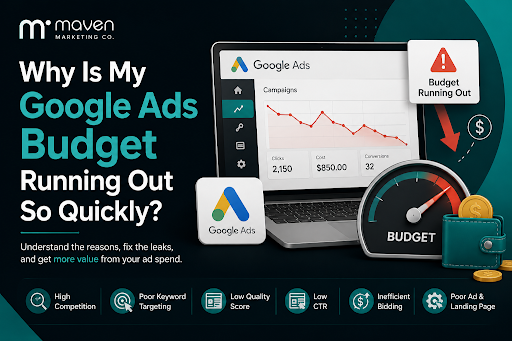
Why Is My Google Ads Budget Running Out So Quickly
Running a successful Google Ads budget isn’t only about throwing more money at it. It’s more like making every dollar, doing a bit extra. A lot of businesses start a Google Ads campaign with big hopes, then find out their daily budget is gone within a few hours, and that feels weird, right? After that, your ads stop showing effectively, new leads slip away, and your return on investment dips. So if your Google Ads budget is running out too fast, don’t stress. It’s a fairly common issue, and in most situations, it can be repaired with the right approach. There are multiple little things that can drain your advertising money quicker than you expected, from costly keywords to audience targeting that just doesn’t quite fit. In this guide, we’ll walk through why your budget disappears so quickly, how to cut wasteful spend, and the most reliable ways to boost your Google Ads ROI, even if your budget stays the same.