.svg)


%201.svg)
.avif)
Key Takeaways
- Effective SEO reports communicate business impact rather than technical metrics—clients care about revenue, leads, and customer acquisition, not crawl errors, domain authority scores, and keyword density statistics
- Report structure should follow executive communication principles—headline performance summary first, supporting evidence second, and technical detail last or in appendices for clients who want it
- Visualisation through charts, trend graphs, and traffic light indicators communicates performance faster than data tables—clients absorb visual information more readily than rows of numbers requiring active interpretation
- Contextualising metrics through comparison periods, industry benchmarks, and competitive positioning transforms raw numbers into meaningful performance assessments that clients can evaluate without specialist knowledge
- Regular reporting cadences combined with proactive communication during significant events build client relationships that survive inevitable performance fluctuations through established trust rather than requiring crisis management after client confidence erodes
A Melbourne SEO agency delivered comprehensive monthly reports to their fifteen clients—detailed documents covering keyword rankings across hundreds of terms, technical audit findings, backlink acquisition lists, content performance metrics, crawl statistics, and competitor comparisons. Reports averaged 34 pages and took approximately twelve hours each to produce. Client retention averaged 8.2 months before churn.
Exit interviews with churned clients revealed a consistent theme: clients felt confused rather than confident after reviewing reports. They couldn't determine whether SEO was working. They struggled to connect ranking improvements to business outcomes. They didn't understand which technical findings were serious versus minor. They felt they were receiving data rather than insight. Several churned clients admitted they'd never read beyond the executive summary—and even that felt too technical to be meaningful.
The agency rebuilt their reporting framework entirely. Reports shrank to eight pages. Executive summary led with business outcomes—leads generated from organic traffic, estimated revenue attributed to SEO, year-over-year traffic growth compared against industry benchmark. Technical detail moved to appendices available but not pushed. Visualisations replaced data tables. Narrative explained what happened, why it happened, and what would happen next.
Report production time dropped from twelve hours to three hours per client. Client retention improved to 22 months average. The agency charged the same fees whilst delivering more value through better communication—demonstrating that reporting quality is as important as SEO performance quality in sustaining client relationships.
According to research from Databox, clients who receive clear, outcome-focused reports are 3.4x more likely to renew service contracts than clients receiving technical-heavy reports that don't connect activity to business outcomes—demonstrating that reporting communication quality directly affects commercial outcomes for SEO service providers.
.avif)
Understanding What Clients Actually Need from SEO Reports
Effective report design requires understanding client psychological needs and information requirements rather than what SEO professionals find meaningful to measure.
Anxiety reduction represents the primary psychological function of effective SEO reporting. Clients investing in SEO without deep technical understanding feel inherent uncertainty—they're trusting experts with significant budgets and can't independently evaluate whether they're receiving value. Effective reports provide reassurance through clear performance indicators, honest contextualisation of challenges, and confident explanation of the strategy being executed. Reports that generate more questions than answers—because data is presented without interpretation—amplify rather than reduce client anxiety, creating the confusion that precedes churn decisions even when underlying SEO performance is strong.
Business outcome connection addresses what clients fundamentally care about beneath their questions about rankings and traffic. Business owners and marketing directors care about leads, sales, revenue, and customer acquisition—SEO is interesting to them only insofar as it contributes to these commercial outcomes. Reports demonstrating organic traffic growth without connecting that traffic to enquiries, leads, or revenue leave clients unable to evaluate whether SEO investment is worth continuing. Every SEO report should answer the implicit question every client is asking: "Is this investment generating business results I can point to?"
Progress narrative maintains client confidence through the extended timelines that SEO requires. Unlike paid advertising that generates immediate results, SEO compounds over 6-18 months before delivering full performance—clients who don't understand this timeline expectation lose confidence during normal early-stage performance plateau periods. Effective reports provide ongoing progress narrative—what milestones have been reached, what benchmarks have been hit, where current performance sits relative to trajectory, and what the path to further improvement looks like. Progress narrative transforms what clients might perceive as slow performance into visible momentum toward confirmed targets.
Competitive context enables clients to evaluate performance relative to the competitive environment they actually operate within rather than abstract benchmarks. A 12% organic traffic improvement is impressive or disappointing depending entirely on whether competitors achieved 2% or 40% during the same period. Australian SME clients rarely have independent visibility into competitor performance—SEO reports providing honest competitive context enable accurate performance assessment that clients without this context cannot make. Competitive context also justifies continued investment when performance is solid but not spectacular—confirming that maintaining relative competitive position requires ongoing investment rather than suggesting the problem is already solved.
Honest problem acknowledgement builds more trust than positive-only reporting that obscures challenges. Clients who discover problems through their own observation rather than proactive disclosure from their agency lose confidence in transparency—they wonder what else isn't being reported. Acknowledging challenges, explaining their causes, and presenting clear remediation plans demonstrates professional integrity that selective reporting undermines. Australian business clients are generally pragmatic—they understand that problems occur and respond more positively to honest acknowledgement with clear action plans than to varnished reporting that makes every development seem like controlled positive progress.
Clear next steps connect reporting to ongoing strategy rather than leaving clients wondering what happens after reading the report. Every effective SEO report should clearly communicate what will be done in the coming month, why those specific activities are prioritised, and what outcomes they're designed to produce. Clear next steps demonstrate strategic thinking and prevent clients from questioning whether the SEO programme is operating purposefully or reactively.
.avif)
Core SEO Report Structure and Template Framework
Proven report structures guide clients from business impact overview through supporting evidence to technical detail in an order matching how clients actually read and interpret information.
Executive summary section leads every SEO report regardless of total report length—this is the section most clients read most carefully and the section that creates the first impression determining whether clients engage with subsequent detail. Executive summary components include headline performance metrics (organic sessions versus prior period and year-over-year, leads or conversions from organic traffic, estimated revenue attributed to organic performance), performance trajectory description (is performance improving, stable, or declining and why), key achievements during the period (significant ranking improvements, traffic milestones, conversion improvements), primary challenges acknowledged honestly (ranking declines, technical issues discovered, algorithm impacts), and strategic priorities for the coming period. Executive summary length should be one to two pages maximum—clients who need more detail will find it in subsequent sections.
Organic traffic performance section documents website traffic generated through organic search, the fundamental SEO output metric clients understand most readily. Present month-over-month and year-over-year comparisons through trend visualisations rather than data tables—line charts showing traffic trajectory over 12 months communicate performance story more effectively than monthly comparison tables requiring active calculation. Segment traffic by device type (desktop versus mobile) revealing whether performance is consistent across how clients' customers actually search. Geographic segmentation showing Australian state-level traffic distribution serves clients with geographic business concentration. Landing page performance showing which pages generate most organic traffic identifies content contributing most to performance and content opportunities worth developing.
Keyword ranking performance section translates the technical SEO metric clients most commonly ask about into meaningful performance narrative. Rather than presenting hundreds of keyword rankings in data tables, focus on tracking progress for strategically important keyword groups—primary commercial terms, location-specific terms for local businesses, competitor terms, and featured snippet opportunities. Present ranking distribution rather than individual keyword tables—showing what percentage of tracked keywords rank in positions 1-3, 4-10, 11-20, and beyond 20 provides performance overview more meaningful than individual keyword movement that clients can't contextualise without broader understanding of search volumes and competitive difficulty.
Conversion and lead generation section connects organic traffic performance to the business outcomes clients care about most. For Australian businesses with properly configured GA4 conversion tracking, report organic traffic conversion rates, total conversions from organic channels, conversion trends over time, and estimated revenue attributed to organic conversions using average customer values. This section requires investment in proper conversion tracking configuration that many SEO clients haven't implemented—helping clients configure meaningful conversion tracking is prerequisite to being able to report on business outcomes rather than only traffic metrics. When conversion tracking isn't yet implemented, be explicit about this gap and explain the implementation plan rather than omitting the section without explanation.
Technical SEO health section reports on website technical foundation relevant to search performance without overwhelming non-technical clients with comprehensive audit findings. Present technical health through traffic light indicators—green for healthy, amber for monitoring required, red for action needed—across key technical categories including site speed (Core Web Vitals), mobile usability, indexation status, security (HTTPS), and crawl accessibility. Detail only red indicators requiring immediate action and amber indicators being actively monitored. Technical detail about resolved issues demonstrates ongoing maintenance value—showing what was fixed and why it mattered connects technical activity to performance outcomes clients can understand.
Content performance section documents how content investment contributes to organic visibility and audience development. For clients receiving content as part of SEO service, report individual content piece performance including organic sessions, engagement metrics, ranking positions for target keywords, and conversion contribution. Content performance reporting justifies content investment as a component of SEO strategy rather than leaving clients uncertain about why content creation appears on invoices alongside technical optimisation work.
Backlink and authority section contextualises link building activity and domain authority development for clients without misleading them about the influence of these metrics. Present quality backlinks acquired during the period with context about source relevance and authority, domain authority trends over time (acknowledging that Moz DA and Ahrefs DR are third-party estimates rather than Google metrics), and referring domain diversity as indicator of natural link profile development. Avoid presenting backlink metrics as primary performance indicators given clients' tendency to fixate on domain authority numbers rather than understanding them as directional indicators with significant limitations.
Competitive landscape section provides the market context enabling clients to interpret their own performance accurately. Present competitor organic visibility trends alongside client performance showing relative competitive positioning. Identify competitors gaining organic visibility rapidly—potential threats requiring strategic response. Highlight competitive keyword gaps where competitors rank for valuable terms the client doesn't—strategic opportunities worth targeting. Competitive section is often the report component generating most client engagement because it contextualises their investment within the competitive reality they care about rather than presenting performance in isolation.
.avif)
Visualisation Strategies for Non-Technical Clients
Visual communication enables rapid performance comprehension that data tables require significant analytical effort to extract—investing in visualisation quality dramatically improves report effectiveness.
Traffic trend line charts communicate organic performance trajectories at a glance. Display 12-month organic session trends as single line chart with comparison period overlay, clearly marking significant events—Google algorithm updates, website migrations, campaign launches—that explain performance variations. Month-over-month sparklines alongside current month metrics provide trend context without requiring separate chart examination. Colour coding using green for improvement and red for decline enables instant performance assessment before reading specific numbers.
Ranking distribution visualisations present keyword position data more meaningfully than individual ranking tables. Stacked bar charts showing percentage of tracked keywords in each ranking band (1-3, 4-10, 11-20, 21-50, 50+) across monthly periods visualise ranking improvement trends comprehensively without overwhelming clients with individual keyword movements. Tracking movement of key commercial terms through position history charts shows progress toward first-page dominance for priority keywords more clearly than monthly ranking snapshots.
Conversion funnel visualisations show how organic traffic progresses through website conversion journeys—from organic sessions through engaged sessions, goal events, and completed conversions. Funnel visualisation immediately reveals where organic traffic is converting effectively and where drop-off requires optimisation attention—presenting this as visual funnel rather than metric list communicates the relationship between stages that isolated metrics obscure.
Traffic light performance dashboards provide instant report health assessment enabling clients to gauge overall performance immediately upon opening reports. Assign red/amber/green status to each major performance category—organic traffic, keyword rankings, technical health, conversion performance, competitive position—with brief one-sentence explanations of status reasoning. Traffic light dashboards enable clients to instantly identify where attention is needed and where performance is healthy without reading detailed analysis first.
Comparison period visualisations contextualise current performance against relevant historical benchmarks. Year-over-year comparison bars alongside monthly metrics show seasonal patterns clearly—an apparent month-over-month decline that represents normal seasonal variation versus genuine performance deterioration looks completely different when displayed against equivalent prior year periods. Including benchmark comparison lines showing industry average performance levels contextualises client performance against sector norms that clients can't independently access.
Google Looker Studio dashboard integration provides clients with self-service access to live performance data between formal report cycles. Google Looker Studio (free) enables building interactive dashboards connecting GA4, Google Search Console, and third-party SEO platform data into client-accessible visual displays. Providing clients with live dashboard access between monthly reports reduces anxious mid-month performance inquiries whilst empowering client self-service that improves engagement with performance data. Looker Studio templates for SEO reporting available through Supermetrics and the broader Looker Studio community provide starting frameworks that customisation adapts to specific client contexts.
Platform Data Integration for Comprehensive Reports
SEO reports drawing from multiple data sources provide more complete performance pictures than single-platform reporting that misses important performance dimensions.
Google Search Console integration provides the authoritative source for organic search performance data directly from Google. Search Console data available for reporting includes impressions and clicks by query and page, average position by keyword cluster, click-through rate trends revealing title and meta description optimisation opportunities, Core Web Vitals performance by device type, mobile usability issues requiring attention, and manual action notifications requiring immediate response. Google Search Console is the foundation of all SEO reporting—any report not incorporating Search Console data is working from incomplete information. Connecting Search Console to GA4 in Admin > Property Settings > Search Console Links enables combined reporting through GA4's interface.
GA4 integration connects organic search traffic to on-site behaviour and conversion outcomes unavailable in Search Console alone. GA4 data enabling richer SEO reporting includes organic session engagement rates, organic traffic conversion rates by goal type, organic landing page performance showing which pages drive most valuable visits, organic traffic user journey analysis revealing how organic visitors navigate the site, and organic channel contribution to multi-touch conversion journeys through attribution reporting. GA4 integration is particularly important for demonstrating SEO business value through conversion attribution that Search Console's query-focused reporting doesn't provide.
Rank tracking platform integration provides keyword position monitoring more comprehensive and historically reliable than Search Console's position data. Platforms including Ahrefs, SEMrush, and Moz Pro provide daily keyword position tracking for specified keyword sets, SERP feature tracking showing featured snippet and People Also Ask appearances, share of voice metrics quantifying overall search visibility across tracked keyword sets, and competitive ranking comparisons. Third-party rank tracking data should supplement rather than replace Search Console data—presenting both with appropriate context about their different methodologies prevents client confusion from metric discrepancies between sources.
Backlink monitoring integration from Ahrefs, Majestic, or Moz Link Explorer provides link acquisition tracking and domain authority monitoring. These platforms identify new links acquired, links lost requiring investigation, referring domain diversity trends, domain authority or domain rating trends, and toxic link identification requiring disavow consideration. Backlink reporting should contextualise metrics appropriately—explaining that domain authority is a third-party metric estimate rather than a Google ranking factor prevents clients from treating DA improvements as primary success indicators.
Screaming Frog and technical audit integration documents technical issue identification and remediation for clients receiving technical SEO services. Screaming Frog crawl reports identify technical issues discovered during the reporting period—broken links, missing meta descriptions, duplicate content, page speed problems, and structured data errors—alongside confirmation of issues resolved. Presenting technical work as identified-and-fixed narrative rather than raw crawl data lists demonstrates value more effectively for non-technical clients who can't evaluate the significance of technical findings without contextual explanation.
Reporting Cadence and Communication Strategy
Report timing, frequency, and surrounding communication significantly affect client perception of service value beyond report content quality.
Monthly reporting cadence suits most Australian SEO clients as primary formal performance review rhythm—monthly frequency provides sufficient data accumulation for meaningful trend analysis whilst maintaining regular client touchpoints that sustain engagement. Monthly reports should be delivered on consistent dates (first week of each month reporting prior month performance) rather than variable delivery timing that creates uncertainty about when clients should expect performance updates. Consistency signals professionalism and enables clients to plan their own internal reporting cycles around known delivery timing.
Quarterly strategic reviews supplement monthly tactical reporting with deeper strategic analysis and programme direction assessment. Quarterly reviews connect accumulated monthly progress to longer-term goals, assess whether strategy remains appropriately calibrated to current search landscape and competitive conditions, identify strategic pivots warranted by performance data or market changes, and demonstrate progressive strategy development that monthly tactical reporting doesn't fully convey. Quarterly reviews are also appropriate moments for discussing scope expansions, service additions, or investment increases justified by demonstrated performance.
Proactive communication protocols address significant performance events between scheduled reporting cycles. Algorithm updates, significant ranking changes, traffic anomalies, or competitive landscape shifts warrant immediate proactive communication rather than waiting for the next scheduled report to explain dramatic metric changes. Clients who observe significant traffic drops through their own Google Analytics access before receiving explanation from their SEO provider experience anxiety that damages trust—proactive communication before clients notice and ask demonstrates monitoring vigilance and relationship priority that reactive communication cannot.
Onboarding report frameworks establish expectations during the critical first three months when clients are evaluating whether they've made the right investment decision. Onboarding reports should explicitly communicate SEO timeline expectations, explain the foundation-building activities that precede visible performance improvements, document baseline metrics establishing starting performance for future comparison, and celebrate early momentum indicators—technical improvements made, content published, initial ranking appearances—that demonstrate programme activity even before traffic results materialise. Managing new client expectations through explicit timeline communication during onboarding prevents churn from unrealistic performance expectations that silence allows to persist.
Annual performance reviews provide comprehensive year-in-review analysis connecting accumulated monthly activity to annual business outcomes. Annual reviews demonstrate cumulative programme value most effectively—twelve months of performance context shows compounding returns that monthly snapshots individually don't convey. Annual reviews are also the appropriate framework for investment case development—demonstrating annual revenue attributed to organic traffic alongside total annual SEO investment provides the clearest ROI calculation that justifies continued or increased investment for commercially focused clients.
.avif)
Handling Difficult Reporting Situations
Performance challenges, algorithm impacts, and client misunderstandings require specific communication approaches that honest, skilled reporting handles constructively.
Algorithm update impact reporting should immediately contextualise performance changes within the broader search landscape rather than presenting declining metrics without explanation. When Google algorithm updates cause traffic or ranking changes, proactive communication explaining the update, its intended impact on search quality, whether your client's site was positively or negatively affected, and the response strategy being implemented demonstrates informed expertise rather than defensive explanation. Industry resources including Google's official search central blog, Search Engine Land, and Search Engine Journal provide authoritative algorithm update coverage supporting client communication.
Declining performance explanation requires honest root cause analysis rather than minimisation that experienced clients recognise as evasion. Identify whether decline stems from algorithm changes (external, market-wide), competitor improvements (external, targeted), technical issues (internal, resolvable), content quality gaps (internal, resolvable), or seasonal patterns (external, predictable). Present each cause category with honest assessment and appropriate response. Clients who receive honest analysis with clear remediation plans maintain confidence through performance challenges; clients who receive vague explanations and unfounded optimism lose trust that neither good explanations nor improved performance easily rebuilds.
Expectation misalignment correction requires direct conversation when clients develop unrealistic performance expectations despite original briefing. Clients sometimes form expectations from competitor conversations, industry anecdotes, or misremembered initial discussions that diverge from agreed performance targets. Addressing expectation misalignment directly during reporting conversations—rather than allowing misaligned expectations to drive gradual client dissatisfaction—enables rational performance assessment based on agreed benchmarks. Document performance expectations explicitly in reporting templates, referencing agreed targets alongside actual performance to ensure assessment is against realistic benchmarks rather than retroactively elevated expectations.
Competitor outperformance reporting requires honest acknowledgement when competitors achieve stronger performance during reporting periods rather than focusing exclusively on owned metrics that obscure competitive context. Clients who later discover competitor outperformance that reports didn't acknowledge feel misled—even if all reported metrics were accurate, selective reporting that omits competitive context creates deceptive impressions. Acknowledging competitive challenges whilst presenting clear strategic responses demonstrates professional integrity that selective positive reporting undermines.
Frequently Asked Questions
What should Australian SEO agencies include in reports for clients who have no digital marketing background and struggle to understand even simplified SEO terminology?
Non-technical client reports should eliminate industry terminology almost entirely, replacing it with plain business language connecting every metric to commercial outcomes. Instead of reporting "organic sessions," report "visitors from Google search." Instead of "SERP features," report "special search result placements." Instead of "domain authority improvements," report "our website is building the online credibility that helps Google rank it higher." Lead with the business metrics clients definitely understand—how many people contacted you through Google search, how many leads came from organic traffic, what this represents in approximate business value—before explaining any of the underlying SEO activities producing those outcomes. Use visual metaphors rather than technical explanations when describing SEO concepts—explaining that backlinks are like peer recommendations that make Google more confident your site is authoritative communicates the concept without requiring clients to understand link equity and domain authority calculations. Test report comprehensibility by asking a non-marketing friend or family member to review draft reports and identify anything requiring explanation—any element requiring expert context to interpret needs simplification before client delivery.
How should Australian SEO professionals handle reporting when early campaign results don't yet show meaningful improvement and clients are questioning investment value?
Early campaign reporting when results haven't yet materialised requires proactive expectation management, milestone-based progress demonstration, and leading indicator reporting that shows programme momentum before lagging outcome metrics appear. Document and celebrate foundation milestones that precede performance improvements—technical issues resolved, content published, high-quality backlinks acquired, indexation improvements confirmed—demonstrating active programme execution even before traffic results appear. Present leading indicators that predict future performance—improving keyword rankings across the 11-20 position range that will transition to first-page visibility in coming months, increasing impressions indicating growing content indexation, improving Core Web Vitals scores that support ranking capability. Reference the performance timeline established during onboarding, confirming that current programme stage aligns with expected progression rather than suggesting delay. If timeline expectations weren't clearly established during onboarding, use early performance conversations as opportunity to do so explicitly rather than continuing to manage expectations implicitly through report narrative.
What's the appropriate level of detail for technical SEO findings in client reports, and how do agencies balance completeness with accessibility?
Technical detail level should match client technical literacy and business relevance rather than following universal standards. Most clients benefit from executive-level technical health summary using traffic light indicators rather than comprehensive technical audit findings—they need to know whether there are significant problems requiring attention, not the complete list of minor technical observations that crawl tools surface. Reserve comprehensive technical detail for appendices that technically curious clients can access but that don't dominate primary report reading experience for typical clients. When significant technical issues require client understanding or action—major site migration decisions, hosting performance investments, development resource prioritisation—invest additional report space in plain-language explanation connecting technical finding to business impact. The practical test: would understanding this technical finding change what the client does or how they evaluate service value? If yes, include it with clear explanation. If no, it belongs in the appendix or internal documentation rather than primary report sections.
How can Australian SEO agencies demonstrate ROI in reports when clients haven't implemented proper conversion tracking, making direct revenue attribution impossible?
Incomplete conversion tracking requires honest acknowledgement alongside practical estimation frameworks that provide reasonable business value approximations rather than pretending precise attribution is possible. Organic traffic valuation approaches include traffic value estimation—multiplying organic sessions by average cost-per-click for equivalent paid traffic positions using Google Keyword Planner data to approximate what the organic traffic would cost if purchased through paid advertising. Lead volume estimation—identifying organic contact form submissions, phone call clicks, and other commercial action indicators even without complete revenue attribution—provides conversion evidence even when full revenue tracking isn't implemented. Implementing conversion tracking should be explicitly listed as a programme priority, with clear explanation of why it matters for demonstrating programme value and what steps are required to implement it. Presenting an honest "we know organic traffic is growing and generating commercial activity, but we can't precisely measure revenue attribution yet because conversion tracking hasn't been implemented, and here's our plan to fix that" is more trustworthy than presenting estimated figures without acknowledging their limitations.
How should SEO agencies structure reporting for clients with multiple websites, locations, or international markets requiring consolidated performance views?
Multi-property reporting challenges require clear organisational frameworks preventing clients from losing performance context across multiple reporting data streams. Consolidated executive dashboard showing aggregate performance across all properties provides the headline view senior stakeholders need—total organic sessions, total conversions, total estimated revenue across all properties. Property-specific detail sections follow consolidated overview, enabling drill-down into individual property performance for stakeholders responsible for specific locations or markets. Comparison visualisations showing relative performance across properties identify highest and lowest performing assets, informing resource allocation decisions. For multi-location Australian businesses, geographic performance mapping showing organic visibility and conversion rates by state or city enables location-specific performance assessment. International multi-market reporting adds language and currency considerations, with country-specific performance sections ensuring local stakeholders receive performance data in their relevant market context rather than global aggregates that obscure local performance.
What tools and templates are available for Australian SEO agencies to streamline report production without sacrificing quality?
Several platforms and resources reduce report production time whilst maintaining quality standards. Google Looker Studio (free) connects directly to Google Analytics 4, Search Console, and via community connectors to Ahrefs, SEMrush, and other SEO platforms—enabling automated dashboard creation that updates with current data without manual extraction. Ahrefs and SEMrush both provide branded report export features that produce formatted performance summaries from their platforms—useful as report components rather than complete client-facing documents. AgencyAnalytics provides white-label SEO reporting specifically designed for agency client delivery, with pre-built templates and automated data connections reducing report production time significantly for agencies managing multiple clients. DashThis and Whatagraph similarly provide multi-platform marketing reporting with agency-focused features. For agencies seeking to build custom templates rather than subscribing to dedicated platforms, Google Looker Studio template galleries and the SEMrush community provide starting frameworks that customisation adapts to specific agency reporting standards. Investing in template development that enables data-driven report population with minimal manual effort typically pays back within two to three months of saved production time for agencies managing ten or more monthly client reports.
How should Australian SEO professionals communicate the impact of Google's AI-driven search changes, including AI Overviews, on client organic traffic in reports?
AI Overview and AI-driven search landscape changes require transparent communication helping clients understand external factors affecting organic performance rather than concealing or minimising their impact. When AI Overviews are reducing click-through rates for specific query types—particularly informational queries where AI summaries satisfy intent without requiring clicks—acknowledge this directly in reports with data demonstrating the impact on impression-to-click ratios for affected query categories. Contextualise AI Overview impact within broader performance rather than amplifying concern about individual metric changes—for most Australian businesses, AI Overviews affect a subset of query types whilst leaving commercial and local intent queries largely unchanged. Present strategic adaptation responses being implemented—optimising content for featured citation within AI Overviews, concentrating on commercial and transactional queries less affected by AI summaries, developing content types AI Overviews don't replace effectively—demonstrating that programme strategy adapts to search landscape evolution rather than ignoring changes affecting client performance. Referencing authoritative sources including the Google Search Central Blog and industry analysis from Search Engine Land demonstrates informed awareness of platform developments that clients will increasingly encounter through their own media consumption.
SEO Reporting Excellence Sustains Client Relationships
SEO reporting quality determines client relationship longevity as much as SEO performance quality—clients who don't understand the value they're receiving cannot sustain investment confidence through the extended timelines that meaningful SEO results require.
The frameworks outlined in this guide—business outcome focus, executive communication principles, visualisation investment, platform data integration, and proactive communication—provide comprehensive foundation for SEO reporting programmes that build client confidence, justify ongoing investment, and sustain the long-term engagements where SEO compounding effects deliver genuine competitive advantages for Australian businesses.
Australian SEO agencies and consultants implementing reporting excellence consistently discover that improved client communication reduces churn, enables longer engagements, justifies premium pricing, and generates referrals from confident clients who can clearly articulate the value they're receiving—making reporting investment one of the highest-return improvements available to SEO service businesses.
Ready to develop SEO reporting frameworks that communicate genuine value and build lasting client relationships? Maven Marketing Co. provides comprehensive SEO strategy, performance reporting, and client communication services ensuring your Australian business receives clear, actionable insights that connect SEO investment to measurable business outcomes. Let's build reporting that demonstrates the genuine value your SEO programme delivers.

Table of contents
read more blogs

Is Google Ads Better Than SEO for My Business
One of the biggest questions business owners ask when they are planning online growth is whether they should invest in Google Ads or SEO. Both are strong marketing plays that help your company show up in Google search results, but they do things in separate lanes. Google Ads gives quicker visibility and can bring in leads fast, whereas SEO more or less focuses on slow, steady organic traffic that tends to grow the longer you keep building it. Picking the right direction depends on what you want to achieve, how much money you can spend, how crowded the market is, and how quickly you need results, like sooner rather than later. The good news is you don’t always have to choose one or the other; it’s not exactly a black-and-white situation. If you take time to understand the strongest points of both, you can put together a more sensible digital marketing plan that supports consistent expansion. In this guide, we’ll compare Google Ads vs SEO, explain the main differences, and help you figure out what option makes the most sense for your business.

When Should I Hire a Digital Marketing Agency
Growing a business today takes more than just having a website or throwing a post on social media; customers usually search around online, compare providers, skim reviews, and basically expect the brand to show up with a solid digital presence before they even think about buying. Many businesses try to run their marketing themselves, but there comes a point when “doing it all in-house” becomes clunky and hard to manage, all at once. Knowing when to hire a digital marketing agency can end up making a big, real difference for your growth. If you’re not getting enough leads, or your online visibility feels stuck, or sales are just not moving, the right agency can bring the know-how, plus a clear plan, to help you get noticeably better outcomes. In this guide, we’ll dig into what a digital marketing agency actually does, the usual signs it’s time to bring one on, and how picking the right marketing partner can help your business move forward at a faster pace.
Why Is My Google Ads Budget Running Out So Quickly
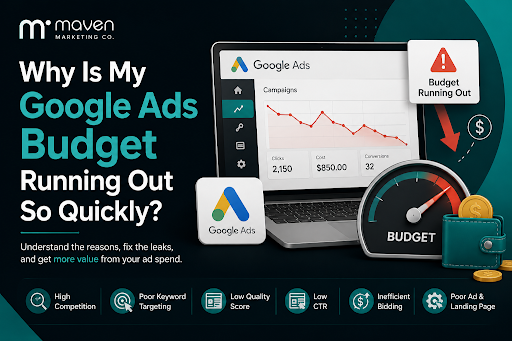
Running a successful Google Ads budget isn’t only about throwing more money at it. It’s more like making every dollar, doing a bit extra. A lot of businesses start a Google Ads campaign with big hopes, then find out their daily budget is gone within a few hours, and that feels weird, right? After that, your ads stop showing effectively, new leads slip away, and your return on investment dips. So if your Google Ads budget is running out too fast, don’t stress. It’s a fairly common issue, and in most situations, it can be repaired with the right approach. There are multiple little things that can drain your advertising money quicker than you expected, from costly keywords to audience targeting that just doesn’t quite fit. In this guide, we’ll walk through why your budget disappears so quickly, how to cut wasteful spend, and the most reliable ways to boost your Google Ads ROI, even if your budget stays the same.